Learning full-body acupressure: what you actually learn, which area comes first and why not the whole body at once
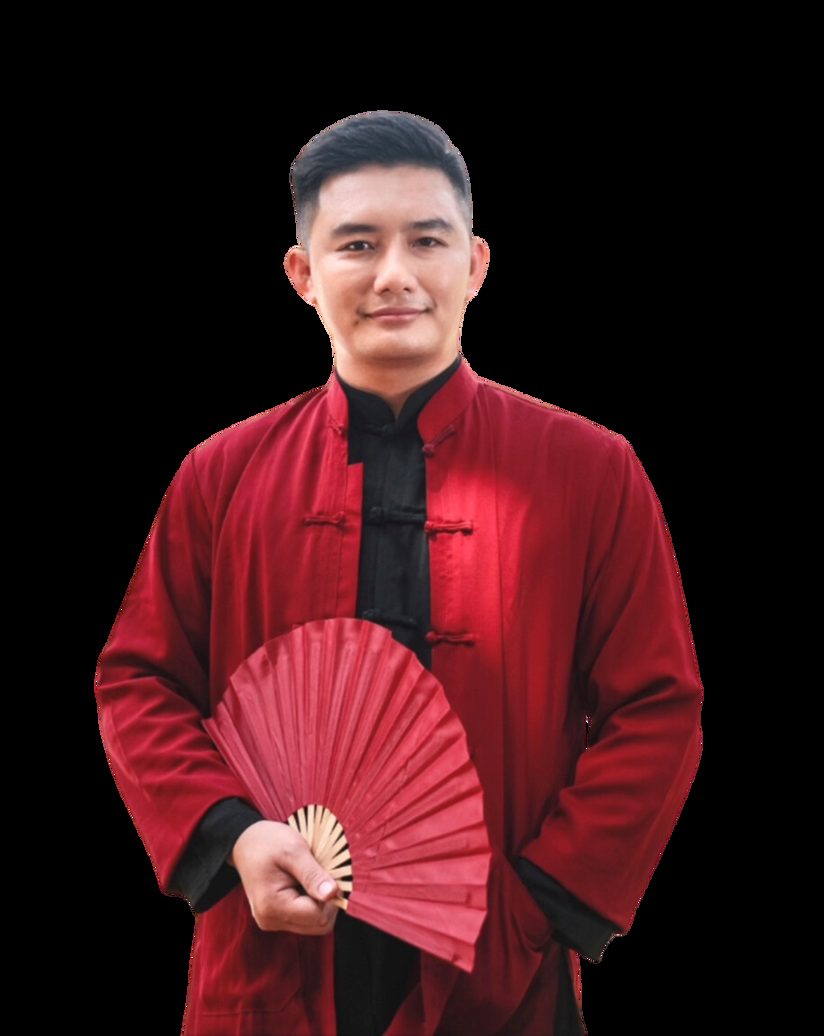
Lương Y (traditional healer) Tống Văn Huynh · Tong Gia Acupoint Wellness (Huyệt Đạo Tống Gia) · 22/11/2026
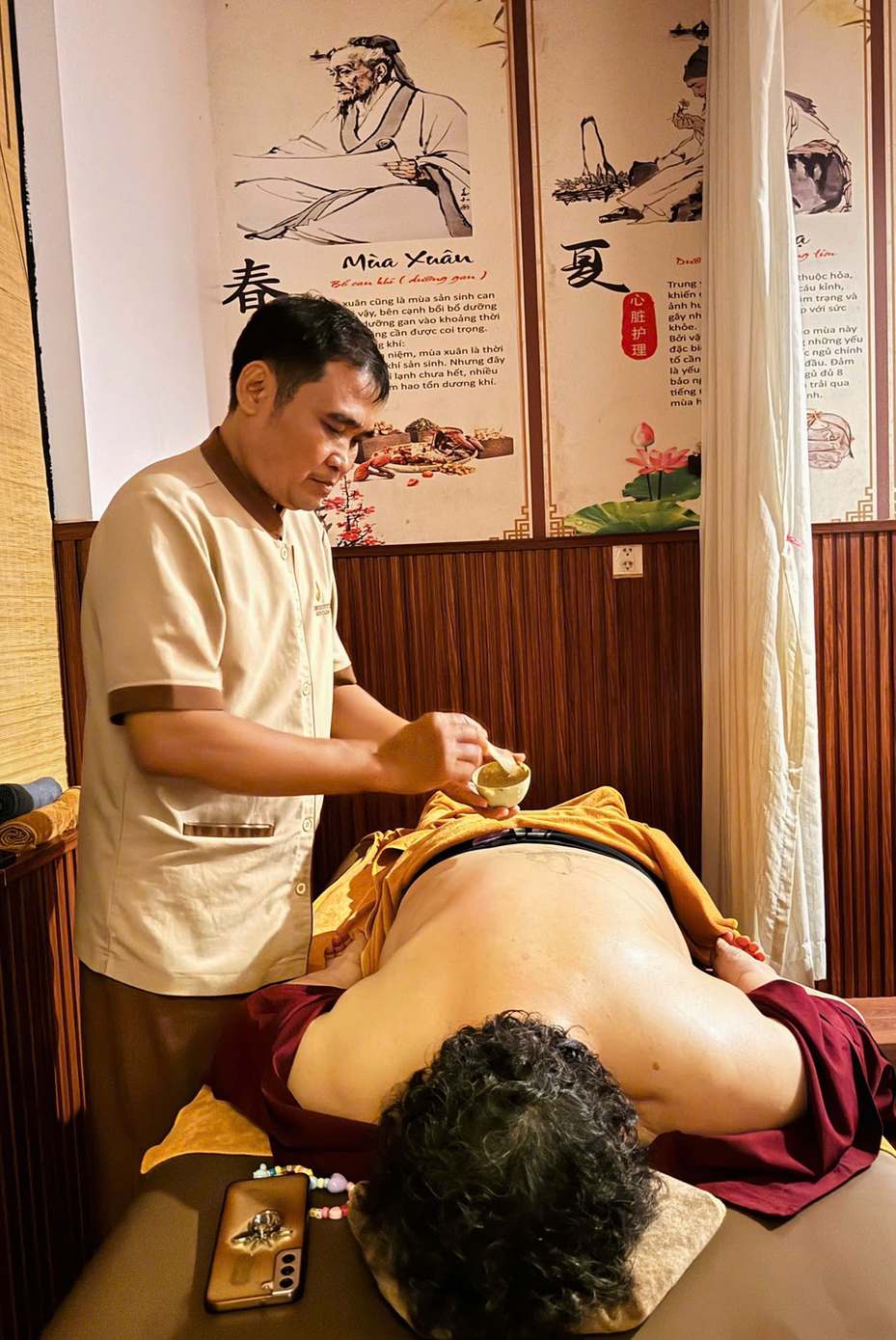
Learning full-body acupressure does not mean memorising hundreds of points at once; it means learning the body area by area in a set order: back, neck and shoulders, legs first; arms, head and face, abdomen later. At Tong Gia Acupoint Wellness (Huyệt Đạo Tống Gia), the base areas sit in L2 Core craft, while reading the spine to link the areas into one full-body session belongs to L3 Specialist.
Questions learners often ask about learning full-body acupressure
I am 27 and work at a spa front desk in District 9. If I want to learn full-body acupressure, which area should I start with?
Start with the back, then neck and shoulders, then legs. The back has thick spinal muscles and vertebrae you can feel easily, so your hands learn pressure quickly. Eastern medicine sees both sides of the spine as the Bladder meridian. This is wellness care, not medicine. Tong Gia teaches at T16-21, Vinhomes Grand Park; hotline 0917 945 259.
I am 41, a homemaker in Thu Duc, and want full-body acupressure to look after my husband and kids. Which level is enough?
L1 covers a few safe self-care points; for proper neck, shoulder, back and leg work, take L2. The front of the neck carries the carotid artery, so you only work the back of the neck. Eastern medicine holds that a weak organ shows outside. If family members have lasting pain or growing numbness or weakness, they should see a medical professional.
Is there a full-body acupressure class in Ho Chi Minh City with practice on real people and hands-on correction for each learner?
Yes. The Tong Gia class at unit T16-21, Manhattan block, Vinhomes Grand Park, Thu Duc City spends about 70% of the time on real people. Lương Y Tống Văn Huynh corrects each person’s hands and teaches feeling the muscle before point names along the meridians. This is wellness care; people with underlying conditions should get checked first. Hotline 0917 945 259.
What does learning full-body acupressure actually involve?
Many people call the class asking to learn full-body acupressure, picturing a chart covered in red dots and a course that makes them memorise every one. The craft does not work like that. Practitioners do not press from a list of points; they work by area. Each area has its own bony landmarks, its own muscle layers, the meridians that run through it, a few key points, a suitable pressure and spots you must never press. "Full body" is what happens once you can work each area with confidence and then join them into one session with a clear start and finish.
This article covers three things: which area to learn first, why not to learn the whole body in one go, and which Tong Gia level each part belongs to. At the end there is a small exercise you can do tonight.
Why not learn the "whole body" at once
- Your hands cannot yet feel pressure. Beginners press the back and the face with the same force. The back can take it; the face cannot. You train your sense of pressure on thick muscle first, so your hands know to ease off on thin areas.
- Each area has different landmarks. On the back you count vertebrae, on the neck you use the base of the skull and the C7 vertebra, on the legs the kneecap and ankle bones. Cram them together and the landmarks blur, so points end up off target.
- Some areas must come later. The front of the neck carries the carotid artery, the eyes sit in a bony rim, and the abdomen has many situations where you must not work. These need steady hands.
- Knowing names without trained hands is useless. Read learning acupressure to see why the class trains hands before memory.
The order of areas when learning full-body acupressure
The table below is a suggested order for beginners that matches the content of Tong Gia’s levels. You can compare it with the 5 pressure levels in massage, from one finger to the whole body.
| Order | Area | What you learn | Why it sits here |
|---|---|---|---|
| 1 | Back | Vertebral landmarks, the two spinal muscle columns, muscle release, pressing along the Bladder meridian | Thick muscle, wide surface, easy to feel pressure, low risk |
| 2 | Neck and shoulders | Base of the skull, C7, upper edge of the trapezius, shoulder blade area | Where clients complain most, but hands must stay at the back of the neck |
| 3 | Legs | Back of the thigh, calf, around the knee, foot | Large muscles, easy to practise; learn to avoid visible veins |
| 4 | Arms | Forearm, hand, the spaces between fingers | Smaller, needs finer finger control |
| 5 | Head and face | Point sequences around the brows, cheeks, temples | Light pressure, close to the eyes, needs steady hands |
| 6 | Abdomen | Circular strokes, knowing when not to work | Many situations call for declining, so it comes last |
Which Tong Gia level covers each part
L1 Introduction to Y Tuong Hoc (Vietnamese physiognomy) (1,500,000 VND) teaches reading the complexion, Five Element body types, daily wellness habits and a few safe self-care points. It is not yet full-body acupressure, but it is the base for looking at a person before touching.
L2 Core craft is where you really learn the three base areas: neck and shoulders, back and legs, along with muscle release, the 90-minute session and talking with clients. See L2 core craft.
L3 Specialist is where the areas are linked. Learners train the sense of reading the spine by hand, sorting zones that are over-active or under-active, first locating the area and then the exact point, using 5 pressure levels, and following a 6-step session: read the face and body, ask, read the spine by hand, choose the area, work, give advice. In other words, full-body work does not mean pressing every area; it means reading the spine to know which area needs work first today. Sessions and fees for L2 and L3 are given by the advisor at enrolment.
Exercise: draw your own area map
- Take a sheet of paper and sketch a human figure seen from behind.
- Circle the 6 areas from the table and number them.
- On the back, mark 3 landmarks: C7 (the most prominent bump when the head bends forward), the lower tip of the shoulder blade (usually level with T7), and the top of the hip bone (usually level with L4).
- Ask a family member to lie face down and find those 3 landmarks by touch. Shade the ones you found; leave blank the ones you are unsure of.
- Bring the sheet to the trial class and ask Lương Y about the blank spots.
The exercise shows you straight away: even before any point names, finding bony landmarks takes effort. Compared with a printed acupoint map, a map you draw yourself trains the hands more than the eyes.
Even after learning, know when not to press
Anyone learning full-body acupressure must decline when the person has a fever, lasting pain, numbness or weakness that keeps increasing, a fresh injury, is pregnant and you were about to work the abdomen, or has an uncontrolled underlying condition. In those cases, advise them to see a medical professional. Acupressure at Tong Gia is hands-on wellness care, not a medical service; Tong Gia does not teach needling or spinal adjustment. Lương Y Tống Văn Huynh has over 13 years in Eastern-medicine wellness; classes are small and about 70% of the time is practice on real people.
How to register
The Sunday morning trial class 9:00–12:00 (10 places) and the Sunday Y Tuong Hoc session with no fee are open sessions for beginners, at unit T16-21, Manhattan block, Vinhomes Grand Park, Thu Duc City, Ho Chi Minh City. Lương Y looks at your hands at the trial class and suggests which level to start from. Book a trial class or call the training hotline 0917 945 259.
Frequently asked questions
Does learning full-body acupressure mean memorising every point? No. You go area by area: landmarks, muscle layers, meridians, a few key points, pressure and no-press spots, then join them into a session.
Which area should I learn first? The back, because the muscle is thick and vertebrae are easy to feel; then neck and shoulders, legs, arms; head, face and abdomen come later.
Which Tong Gia level covers neck, shoulders, back and legs? L2 Core craft: muscle release, acupressure for neck, shoulders, back and legs, the 90-minute session and talking with clients.
When can I say I work the full body? When you can read the spine by hand to choose which area to work first; this is taught in L3 Specialist through the 6-step session.
Where is the trial class? Sunday morning 9:00–12:00 at unit T16-21, Manhattan block, Vinhomes Grand Park, Thu Duc City; call 0917 945 259 to hold a place.
Related articles
- 8 principles of spinal wellness massage: the rules of the hands for Tong Gia learners
- How to use the right pressure in acupressure: measuring force by how the receiver feels
- Hands for wellness massage: soft hands, hard hands and 6 things you must train
- All articles about learning the trade
Reserve a free Sunday-morning trial class or ask about the learning path: message Zalo 0917 945 259.

Founder of Tong Gia Acupoint Wellness (Huyệt Đạo Tống Gia), with more than 13 years in Eastern wellness practice, Y Tướng Học (face reading for wellness) and spinal nerve-reflex balancing. Lương Y's story
417 customers have reviewed Tong Gia on Google Maps
Reviews are written by customers themselves on Google; tap to read them before you visit.
Huyệt Đạo Tống Gia Quận 12
225 Dương Thị Mười, Phường Tân Chánh Hiệp (District 12, Ho Chi Minh City). 8:00 – 19:00 daily.
See reviews on Google MapsHuyệt Đạo Tống Gia Quận 9
Căn T16-21 khu Manhattan, Vinhomes Grand Park, Phường Long Bình (Thủ Đức City, Ho Chi Minh City). 9:00 – 20:00 daily.
See reviews on Google MapsWant to be observed in person?
A 90-minute session starts with observation, and only then moves on to muscle release and acupressure on the right areas. Two branches: District 12 and Vinhomes Grand Park.