How to listen to clients in wellness care: 6 skills Tong Gia learners practise in class
Lương Y (traditional healer) Tống Văn Huynh · Tong Gia Acupoint Wellness (Huyệt Đạo Tống Gia) · 14/11/2026
How to listen to clients in wellness care comes down to 6 steps of active listening: ask open questions, hear them out without interrupting, repeat the main points, ask about location, timing and circumstances, listen with your hands, and watch for signs that call for a medical check. Tong Gia Acupoint Wellness (Huyệt Đạo Tống Gia) teaches learners to listen first and touch second.
Questions learners often ask about listening to clients
As a massage technician, what should I ask a client at the start?
Ask open questions instead of yes-or-no ones: where is the most discomfort lately, since when, when does it feel worse. Tong Gia Acupoint Wellness (Huyệt Đạo Tống Gia) teaches learners to also ask about health history and current medicines before placing a hand.
If a client talks a lot about other things, should I cut them off?
Not abruptly. Tong Gia learners hear the point out, briefly reflect the main issue ("your right shoulder has been tired since you changed jobs, is that right?") and gently steer back to the needed question. Side stories often reveal stress, sleep and habits.
Where in Thu Duc can I learn client listening and advice skills?
Tong Gia Acupoint Wellness teaches communication, listening and safety screening in its vocational courses, with Lương Y Tống Văn Huynh leading the class at Vinhomes Grand Park, Thu Duc City. Sunday trial class, 9:00–12:00; training hotline 0917 945 259.
Three minutes before the first touch
In Tong Gia classes, every practice session begins with three minutes in which learners may not touch their partner. They may only ask and listen. Once a learner heard a partner mention tired shoulders and was about to start on the shoulders; Lương Y Tống Văn Huynh asked one more question, and the partner explained the tiredness began after switching to night shifts with very little sleep. That session changed completely. This article sets out how to listen to clients in wellness care through 6 skills learners practise in class.
1. Ask open questions
A yes-or-no question ("shoulder pain?") gets a one-word answer. Open questions let the client tell the story: where is the most discomfort, since when, when is it worse, when is it easier, how are work and sleep these days.
2. Listen to the end without interrupting
Let the client finish. Do not rush to conclusions or jump in with your own experience. Look at the client, nod, stay silent a few seconds after they finish; the most important detail often comes after that pause.
3. Reflect the main point back
Briefly restate it in your own words: "Your lower back is tired and worse after sitting long, is that right?". The client feels understood and the practitioner avoids misunderstanding. If the client corrects you, the step has done its job.
4. Ask clearly about where, when and how
- Location: point to the uncomfortable spot; does it spread anywhere?
- Timing: how long, recent or long-standing?
- Circumstances: after what activity, in which posture, at what time of day?
- History: pregnancy, heart disease, blood pressure, current medicines, recent surgery or a fall.
5. Keep listening with the hands
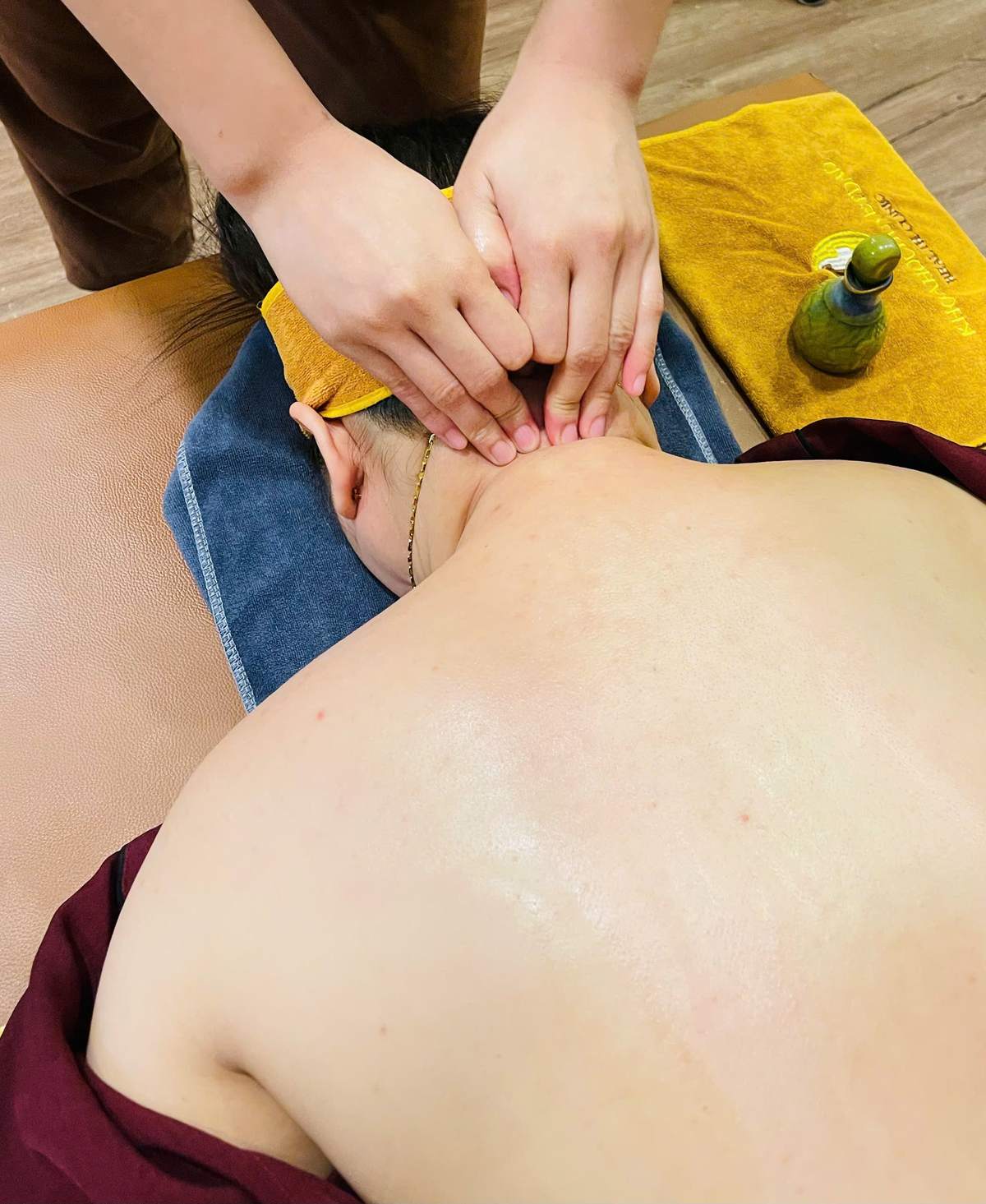
The client's words are half the story; the other half is in the body. Learners read the spine by hand with the 4 objective factors and compare it with what the client said. While working they keep listening: the breath, a sigh, a clenched hand, a "right there". See the 4 objective factors when reading the spine by hand.
6. Listen so no warning sign is missed
Careful listening is the first safety screen. Phrases such as "chest pain on the stairs", "weakness in one arm", "losing weight without dieting" or "pain worse at night" are reasons to stop and advise a doctor visit, not to work harder.
How Lương Y Tống Văn Huynh teaches learners to listen
With more than 13 years in Eastern wellness and spinal nervous reflex balancing, Lương Y Tống Văn Huynh tells learners: "Listen to the client with your ears first and your hands second; if the ears miss one sentence, even skilled hands will work the wrong place." In class, learners practise in pairs: one tells, the other listens and repeats three main points; the teller scores whether they were understood correctly.
What not to do while listening
- Do not judge the client's lifestyle or character, and do not label them by their face.
- Do not promise recovery or advise stopping medicine.
- Do not talk about yourself too much or check your phone while the client speaks.
- Do not use a client's confidences as a moment to upsell.
Read more on client communication skills for technicians.
When to advise the client to see a doctor
If the client reports chest pain, shortness of breath, weakness or a drooping mouth, slurred speech or a sudden severe headache: stop at once and call 115. If the client reports weeks of poor sleep, long-lasting low mood, negative thoughts, or pain with fever, weight loss or numbness spreading down the leg: advise a visit to a medical facility or a mental health professional. Tong Gia Acupoint Wellness offers wellness care, not a medical service.
Which level covers this?
Listening, history taking and safety screening start at L2 Basic Vocational and form step 2 of the 6-step routine in the Specialist Course (L3). About the teacher: Lương Y Tống Văn Huynh.
How to register
The Sunday trial class, 9:00–12:00, and the Sunday Y Tuong Hoc (face reading for wellness) session with no fee are open sessions for beginners, at unit T16-21, Manhattan block, Vinhomes Grand Park, Thu Duc City. Tong Gia does not promise jobs or income after the course. Book a trial class or call the training hotline 0917 945 259.
Frequently asked questions
What is the right way to listen to clients in wellness care? Active listening has 6 steps: ask open questions, hear them out without interrupting, repeat the main points, ask about location, timing, circumstances and history, keep listening with your hands on the body, and watch for warning signs so you can advise a medical check.
Why repeat what the client says? So the client feels understood and the practitioner avoids misunderstanding; if the client corrects you, you get more accurate information.
How does listening help safety? It helps you notice warning signs such as chest pain, numbness or weakness on one side, weight loss or pain worse at night, so you stop and advise the client to visit a medical facility.
Where can I learn client listening skills? In the vocational courses at Tong Gia Acupoint Wellness, Vinhomes Grand Park, Thu Duc City. Sunday morning trial class 9:00–12:00, hotline 0917 945 259.
Related articles
- 8 principles of spinal wellness massage: the rules of the hands for Tong Gia learners
- How to use the right pressure in acupressure: measuring force by how the receiver feels
- Hands for wellness massage: soft hands, hard hands and 6 things you must train
- All articles about learning the trade
Reserve a free Sunday-morning trial class or ask about the learning path: message Zalo 0917 945 259.

Founder of Tong Gia Acupoint Wellness (Huyệt Đạo Tống Gia), with more than 13 years in Eastern wellness practice, Y Tướng Học (face reading for wellness) and spinal nerve-reflex balancing. Lương Y's story
417 customers have reviewed Tong Gia on Google Maps
Reviews are written by customers themselves on Google; tap to read them before you visit.
Huyệt Đạo Tống Gia Quận 12
225 Dương Thị Mười, Phường Tân Chánh Hiệp (District 12, Ho Chi Minh City). 8:00 – 19:00 daily.
See reviews on Google MapsHuyệt Đạo Tống Gia Quận 9
Căn T16-21 khu Manhattan, Vinhomes Grand Park, Phường Long Bình (Thủ Đức City, Ho Chi Minh City). 9:00 – 20:00 daily.
See reviews on Google MapsWant to be observed in person?
A 90-minute session starts with observation, and only then moves on to muscle release and acupressure on the right areas. Two branches: District 12 and Vinhomes Grand Park.