The four examinations (tứ chẩn) of Eastern medicine: which of the four a wellness massage learner may use
Lương Y (traditional healer) Tống Văn Huynh · Tong Gia Acupoint Wellness (Huyệt Đạo Tống Gia) · 22/11/2026
The four examinations (tứ chẩn) of Eastern medicine are four ways of gathering information about a person: looking (vọng), listening and smelling (văn), asking (vấn) and touching, including pulse reading (thiết). At Tong Gia Acupoint Wellness (Huyệt Đạo Tống Gia), wellness massage learners use looking, asking and hands-on touch to choose where to work; reading the pulse to name an illness belongs to licensed medical practitioners.
Questions learners often ask about the four examinations (tứ chẩn)
I’m 29 and work at a spa in Thu Duc. I keep hearing about the four examinations — do massage workers need to learn pulse reading?
No. Reading the pulse to name an illness is for licensed medical practitioners. Massage learners use looking, asking and touch: skin warmth and muscle tension along the spine. Eastern medicine sees outer signs as reflecting the organs within. Lasting pain or growing numbness means seeing a medical professional. Tong Gia Acupoint Wellness teaches this; hotline 0917 945 259.
I live in District 9. Can looking at someone’s complexion really show which organ is weak, what is the Eastern-medicine basis, and how is it different from fortune-telling?
It only gives a hint, not a conclusion. Complexion also depends on sleep, lighting and blood flow under the skin. The basis is looking (vọng) and the idea that “signs show outside, organs sit inside”. Unlike fortune-telling it says nothing about the future; it guides care and must be checked by hand on the spine. A poor complexion that lasts calls for a medical check.
I’m 35, work in an office and live in Vinhomes Grand Park. Where can I learn to read the complexion and read the spine by hand?
Tong Gia Acupoint Wellness runs classes at unit T16-21, Manhattan block, Vinhomes Grand Park, Thu Duc City; the District 12 branch only serves clients. Complexion reflects circulation under the skin, which Eastern medicine reads as a sign of the organs. L1 Introduction to Y Tuong Hoc costs 1,500,000 VND. This is wellness care, not medicine. Lương Y Tống Văn Huynh teaches; hotline 0917 945 259.
What are the four examinations (tứ chẩn)?
The four examinations (tứ chẩn) of Eastern medicine is the traditional name for four ways of gathering information about a person’s body before deciding how to care for them: vọng is looking, văn is listening and smelling, vấn is asking, and thiết is touching and reading the pulse. The four work together; none stands alone. Wellness massage learners often ask whether they need all four, and how far they are allowed to go. This article answers that the way Tong Gia teaches it in class.
One thing first: wellness massage is hands-on care for well-being, not a medical profession. Learners use the four examinations as an orderly way of observing, so they know where to place their hands today, how much pressure to use and when not to work at all. Naming an illness is not a massage learner’s job.
The four methods and the part a massage learner uses
| Method | Meaning | How a wellness massage learner uses it | What not to do |
|---|---|---|---|
| Vọng | Looking at vitality, colour and shape | Observe complexion, standing posture, walk and shoulder balance, following Y Tuong Hoc (Vietnamese physiognomy) | Look at a face and declare one organ damaged or another ill |
| Văn | Listening to voice and breath; smelling | Notice shallow or deep breathing, a tired or lively voice, breath-holding when touched | Use a cough or body odour to say what illness someone has |
| Vấn | Asking | Ask about sleep, work, tired areas, old injuries, underlying conditions and anything prescribed by a medical facility | Ask questions in order to name an illness |
| Thiết | Touching, pulse reading | Hands-on touch: reading the spine, sensing skin warmth, feeling how tight or soft the muscles are | Take the pulse and name an illness |
Looking: observe before you touch
Of the four, looking is the part Tong Gia learners study most closely, because it is the base of Y Tuong Hoc. The principle is “the organs are the cause, the outer signs are the effect”, or “signs show outside, organs sit inside”: what happens within often leaves traces on the complexion and the body’s shape. Learners practise noticing whether a face looks bright or dull, lips rosy or pale, one shoulder higher, the back rounded or straight. Read more on reading the complexion to understand the organs.
But looking only gives you questions, not answers. A dull face may come from a late night, the lighting or a walk in the sun. That is why at Tong Gia every impression from the face must be checked again by hand along the spine.
Listening and asking: hear carefully, ask well
In wellness massage, văn is mostly listening: to the client’s breathing, to their voice on arrival and once they lie down. Someone under strain often breathes high in the chest and talks fast. As for smell, learners only need it to keep the room clean and fresh.
Asking is the method learners use most in every session. Asking before you start helps you avoid areas that must not be touched, such as a fresh injury or a hot, swollen spot. An orderly way of asking is taught in how to ask clients before a massage session. When a client mentions lasting pain, numbness or weakness that keeps growing, fever, unexplained weight loss or an uncontrolled underlying condition, the learner stops and advises them to see a medical professional first.
Touching: the part that belongs to the learner’s hands
In Eastern medicine, thiết has two parts: pulse reading and palpating the body. Reading the pulse to name an illness belongs to licensed medical practitioners. Massage learners do not take the pulse to name a condition, and never tell a client things like “your pulse is weak, your liver has a problem”.
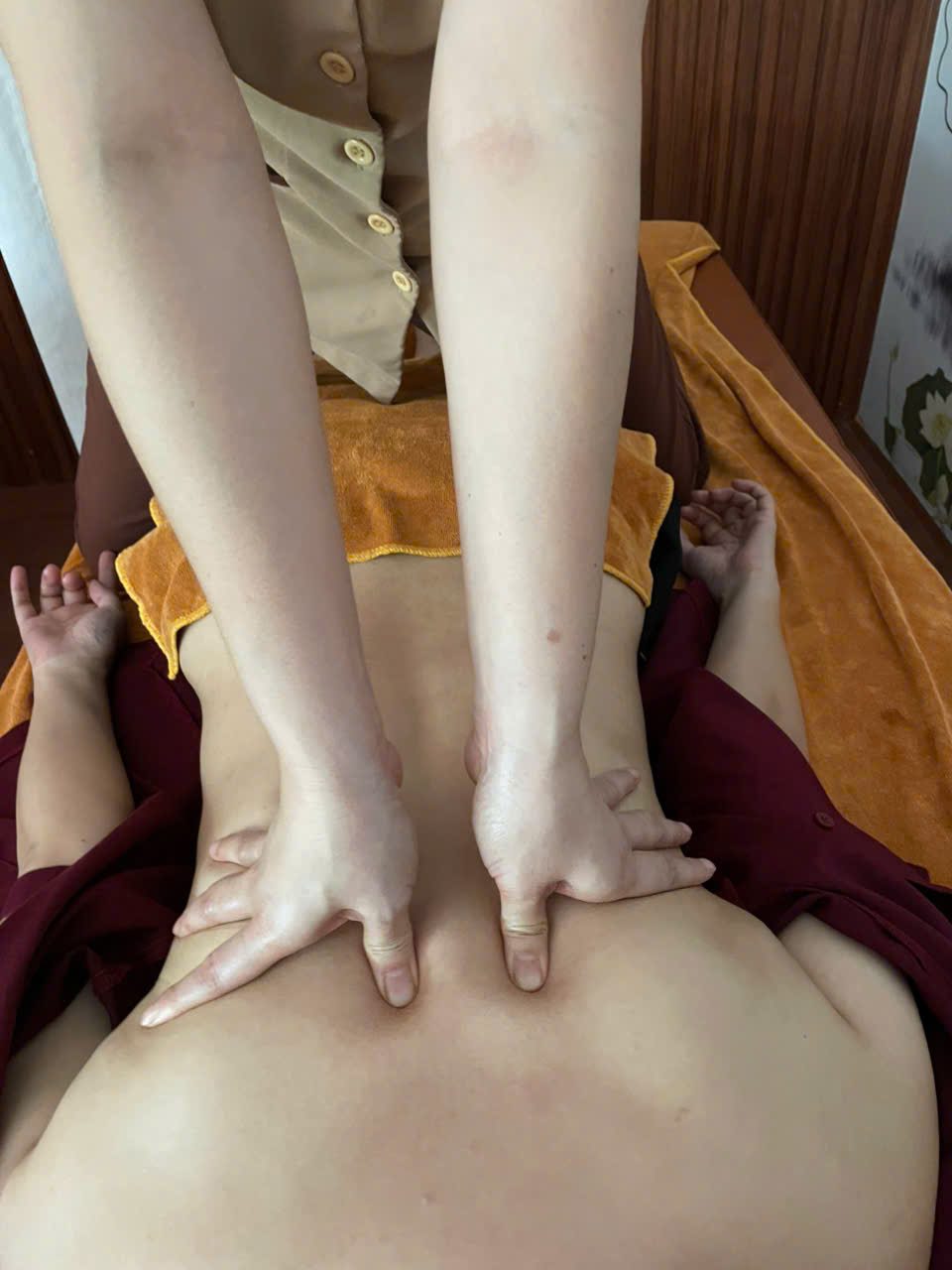
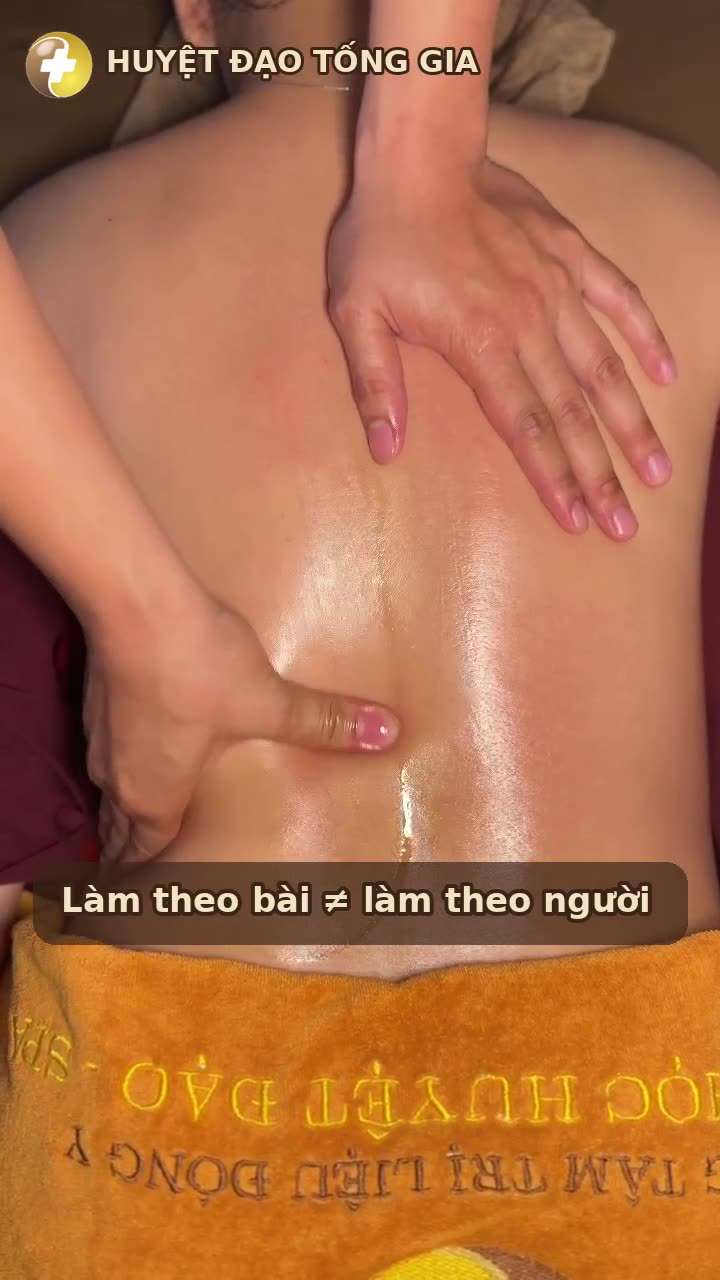
What learners do use is hands-on touch. In class, Lương Y Tống Văn Huynh teaches three jobs for the hands: reading the spine from the nape down to the sacrum, following the step-by-step hand reading of the spine; sensing skin warmth, which areas are warmer and which cooler; and feeling muscle tension, where it is cord-tight and where it is slack. Those three pieces of information decide which area to work first and which pressure level to use.
Where the four examinations sit in a session
A session as Tong Gia teaches it has six steps: read the face and body, ask, read the spine by hand, choose the area, work, give advice. Looking is step one, listening and asking are step two, touch is step three. Those first three steps are exactly the part of the four examinations a massage learner uses, in an order that keeps the hands from running ahead of the eyes and ears.
Try it at home: three methods in ten minutes
- Look (3 minutes): ask a family member to stand naturally in daylight. Write down their complexion, lip colour and which shoulder sits higher. Write only what you see, never an illness.
- Ask (3 minutes): ask three questions: how many hours did you sleep last night, where do you feel tired today, is there any new pain or a recent knock.
- Touch (4 minutes): with them lying face down, rest your palms from the nape to the lower back, pausing a few breaths at each spot. Note warm areas, cool areas and stiff areas.
Then compare your three notes. Where what you saw, what you heard and what your hands felt all point to the same area, that area deserves attention. Where only one method speaks, do not trust it yet.
Where to learn this
At Tong Gia Acupoint Wellness, L1 Introduction to Y Tuong Hoc (1,500,000 VND) teaches reading the complexion, Five Element body types, the three zones of the face and daily wellness habits. Reading the spine by hand and matching facial signs with the spine come in later levels; fees and schedules are given by the advisor at enrolment. About 70% of class time is hands-on practice on real people in small groups, and Lương Y Tống Văn Huynh, with more than 13 years in Eastern-medicine wellness, guides each learner. Tong Gia does not teach needling.
How to register
The Sunday morning trial class 9:00–12:00 (10 places) and the Sunday Y Tuong Hoc session with no fee are open sessions for beginners, at unit T16-21, Manhattan block, Vinhomes Grand Park, Thu Duc City, Ho Chi Minh City. Book a trial class or call the training hotline 0917 945 259.
Frequently asked questions
What are the four examinations (tứ chẩn)? Looking (vọng), listening and smelling (văn), asking (vấn) and touching with pulse reading (thiết). The four work together; none stands alone.
May a wellness massage learner read the pulse? Not to name an illness. That belongs to licensed medical practitioners. Massage learners use hands-on touch: reading the spine, sensing skin warmth and muscle tension.
Is looking at the complexion enough to decide where to work? No. Looking only raises questions; at Tong Gia every impression from the face must be checked again by hand along the spine.
When must a massage learner stop and suggest a medical check? When a client has lasting pain, growing numbness or weakness, fever, unexplained weight loss, a fresh injury or an uncontrolled underlying condition.
Which level starts with reading the complexion? L1 Introduction to Y Tuong Hoc (1,500,000 VND) at unit T16-21, Manhattan block, Vinhomes Grand Park, Thu Duc City; hotline 0917 945 259.
Related articles
- How bone features and flesh features differ: the two layers of the face that learners of Y Tuong Hoc must separate
- How do Dien Chan and Y Tuong Hoc differ? Both look at the face, with different aims and methods
- Eyebrows meeting in the middle, Giao Gia Mi: how Y Tuong Hoc learners read this brow shape
- All articles about learning the trade
Reserve a free Sunday-morning trial class or ask about the learning path: message Zalo 0917 945 259.

Founder of Tong Gia Acupoint Wellness (Huyệt Đạo Tống Gia), with more than 13 years in Eastern wellness practice, Y Tướng Học (face reading for wellness) and spinal nerve-reflex balancing. Lương Y's story
417 customers have reviewed Tong Gia on Google Maps
Reviews are written by customers themselves on Google; tap to read them before you visit.
Huyệt Đạo Tống Gia Quận 12
225 Dương Thị Mười, Phường Tân Chánh Hiệp (District 12, Ho Chi Minh City). 8:00 – 19:00 daily.
See reviews on Google MapsHuyệt Đạo Tống Gia Quận 9
Căn T16-21 khu Manhattan, Vinhomes Grand Park, Phường Long Bình (Thủ Đức City, Ho Chi Minh City). 9:00 – 20:00 daily.
See reviews on Google MapsWant to be observed in person?
A 90-minute session starts with observation, and only then moves on to muscle release and acupressure on the right areas. Two branches: District 12 and Vinhomes Grand Park.