Trigger points in the neck and shoulders: a map of 5 commonly tight muscle areas for massage learners
Lương Y (traditional healer) Tống Văn Huynh · Tong Gia Acupoint Wellness (Huyệt Đạo Tống Gia) · 23/10/2026
Quick summary: Trigger points in the neck and shoulders usually sit in five muscle areas: the top of the shoulder, the angle between neck and shoulder blade, just below the hairline at the nape, on the shoulder blade, and between the two shoulder blades. Each area has its own referral pattern, so the spot a client complains about is not always the tightest muscle. A learner needs to know how to find the tight spot in each area, how much pressure to use, which parts of the neck must never be worked deeply, and why you look at the whole spinal axis rather than just the nape.
Questions learners often ask about trigger points in the neck and shoulders
How long does acupressure massage training spend on the theory of points?
Point theory is not crammed at once; it runs alongside practice, because you remember points only by feeling them on real people. For example, the trapezius and levator scapulae in the neck often tighten, and Eastern practice reads outer signs of the inner organs to choose points. People with chronic conditions should visit a medical facility first; Tong Gia teaches wellness care, not medical services. Free Sunday-morning trial at Vinhomes Grand Park, TP. Thủ Đức; Zalo/WhatsApp +84 917 945 259.
Neck and shoulder trigger points: the client points to one spot, the tight muscle is elsewhere
A client sits down and grabs the back of the neck: “Right here.” A beginner will start rubbing that exact spot. An experienced practitioner asks a few more questions, then places a hand on the top of the shoulder, moves down to the shoulder blade and across to the area between the shoulder blades. The reason lies in how tight muscle points behave: you press one spot but the sensation spreads somewhere else. If the concept is new to you, first read what a trigger point is.
The article acupressure course for the neck and shoulders covered the point groups and neck safety. This article takes a different angle: a map of the muscle areas, where each one tends to refer, and how a practitioner finds them by hand.
5 muscle areas where neck and shoulder trigger points often appear
1. Top of the shoulder (upper trapezius)
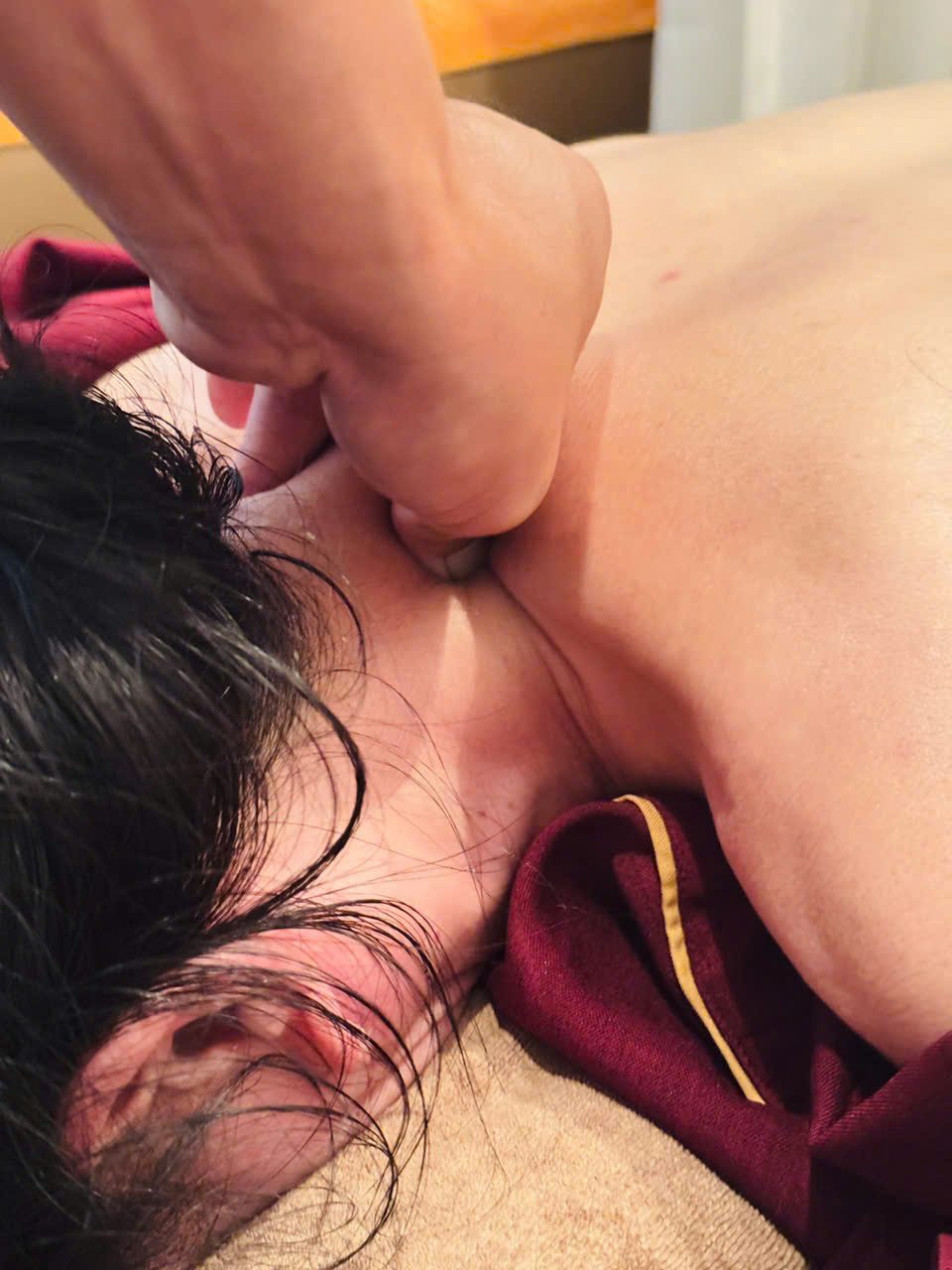
A thick band of muscle running from the nape out to the tip of the shoulder. The tight spot is often around the middle of the shoulder top and feels like a thick rope. The sensation tends to travel back up behind the ear and to the temple, so the client thinks their head feels heavy. How to find it: gently pinch the band between your thumb and fingers, roll it back and forth to locate the hardest spot, then hold with moderate pressure.
2. The angle between neck and shoulder blade
This is where the muscle that lifts the shoulder blade attaches. Clients often describe it like this: they wake up and can't turn their head to one side, so they have to turn their whole body. The tight spot sits close to the upper corner of the shoulder blade. It is easier to feel with the client lying face down or on their side than sitting up.
3. Just below the hairline at the nape
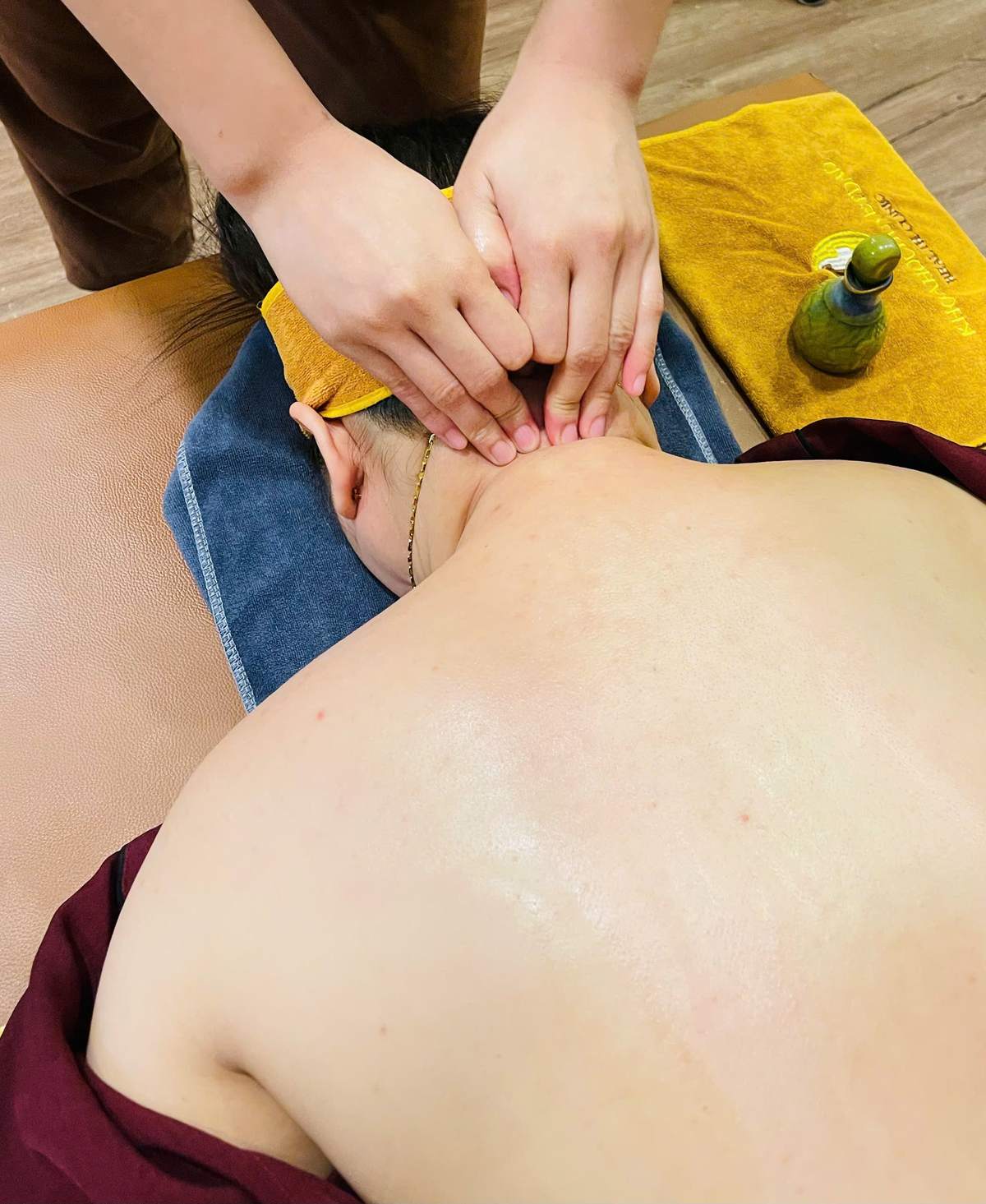
A group of small muscles lies right under the occipital bone. When they tighten, the client feels a heavy head and tiredness around the eye sockets, especially people who look at screens a lot. Use only light pressure here: one hand supports the client's head, the fingers hook gently into the hollow and stay still. No hard pressing, no jerky kneading.
4. The back of the shoulder blade
The muscle covering the shoulder blade is a place where many people are tight without knowing it. Hit the spot and the client often flinches, because the sensation spreads to the front of the shoulder and down the arm. Many clients think their shoulder joint is the problem, yet only pressing on the shoulder blade feels “exactly right”.
5. Between the two shoulder blades
Clients often say they feel “burning in the middle of the back”. The muscle band here is usually overstretched because the person sits hunched, chest closed, shoulders rolled forward. Pressing only between the shoulder blades feels good for a while. A practitioner who understands this also works the front of the chest and front of the shoulders very gently so both sides come back into balance.
Areas never to work deeply: the front and sides of the neck
The front and sides of the neck contain large blood vessels, nerves and many soft structures. There are muscle bands here that tighten too, but a beginner should not look for points and press deeply on their own. Only learn this area with a teacher correcting your hands, and most of the time either work very lightly or skip it. Never crack or twist a client's neck.
When neck and shoulder tension comes with arm numbness
Some clients say that besides tired shoulders they also feel numbness or heaviness in one arm. Tension in the shoulder blade and the top of the shoulder sometimes sends sensation down the arm, so a practitioner needs to know which areas are involved. At Tong Gia there is a dedicated class lesson on hand and arm numbness; the clip below is part 1 of that lesson.
But the boundary must be clear: if numbness keeps increasing, the hand gets weak, the client keeps dropping things, both hands are numb, the pain comes with chest tightness, shortness of breath or dizziness, or the client has an underlying condition, the practitioner stops and advises the client to see a doctor at a medical facility. Tong Gia is a hands-on wellness care service, not a medical service.
A reference framework for working the neck and shoulder area
When looking for neck and shoulder trigger points on a client, the order of work matters as much as hand pressure:
- Ask and observe: does the client sit or bend forward a lot, sleep on a high or low pillow, which shoulder is higher, does the head jut forward.
- Warm up: glide and stroke along the muscle bands a few times, without looking for points yet.
- Find points from the outside in: shoulder blade, between the shoulder blades, top of the shoulder, the neck-shoulder angle, and only last the hairline at the nape, with the lightest pressure.
- Hold pressure and check with the client: stop at the level where the client feels discomfort but can still breathe evenly.
- Settle the area with light strokes, then remind the client to change sitting posture and get up and move during long work hours.
This is only a general framework to help learners picture the order; it is not Tong Gia's 90-minute session procedure, which is taught in person in class.
The root of neck and shoulder tension lies in the spine
The neck is the top section of the spine. Uneven shoulders, a rounded upper back and a forward head all pull on the neck and shoulder muscle bands. That is why Tong Gia teaches on two pillars. The first is Y Tướng Học (face reading for wellness): observing complexion, body shape and shoulder posture before laying hands on. The second is therapeutic-style massage with spinal nerve-reflex balancing: running the hands along the spine to cross-check what the eyes saw. Finding the trigger points in the neck and shoulders is only half the story; understanding why they sit there is what long-time practitioners care about.
Which level covers this
At Tong Gia, recognising neck and shoulder trigger points (Tong Gia calls them tight muscle points) and muscle release in this area belong to level L2 Basic Trade, together with acupressure for the back and legs and how to communicate with clients. The link up to the spine is studied in L3. Newcomers usually start with L1 Introduction to Y Tướng Học, tuition 1.500.000đ; L2 tuition, number of sessions and duration are given by a consultant when you register. About 70% of class time is hands-on practice on real people. The procedure taught in class is the one used every day at the two service branches in District 12 and District 9. See also the page massage course in Ho Chi Minh City.
How to register
You can come to the free trial class from 9:00 to 12:00 on Sunday morning, 10 places each week, at unit T16-21, Manhattan zone, Vinhomes Grand Park, Phường Long Bình, TP. Thủ Đức (Long Binh Ward, Thu Duc City), to place your own hands and find tension points in the shoulder area under the guidance of Lương Y Tống Văn Huynh. The L1 Introduction to Y Tướng Học class runs on a set schedule. Register via hotline 0917 945 259.
Frequently asked questions
Where are neck and shoulder trigger points usually found? They are common on the top of the shoulder, at the angle between neck and shoulder blade, below the hairline at the nape, on the back of the shoulder blade and between the two shoulder blades. The exact location differs from person to person, so you have to find them by hand.
Can tight neck and shoulder muscles cause headaches? Tight spots on the top of the shoulder and below the hairline at the nape can send sensation up behind the ear and to the temple, making the client feel a heavy head. If a headache is severe, sudden or long-lasting, the person needs to see a doctor at a medical facility.
Should someone with tired shoulders and arm numbness get a massage? Mild, passing numbness from poor sitting posture may feel better after muscle release around the shoulders and shoulder blades. But if numbness keeps increasing, the hand gets weak, both hands are numb or there is chest tightness, see a doctor first rather than handling it yourself.
Should you press hard on the sides of the neck? No. The front and sides of the neck have large blood vessels and nerves; a wellness practitioner works this area very lightly or skips it, and never cracks or twists a client's neck.
Which Tong Gia level covers neck and shoulder muscle release? Level L2 Basic Trade. The link from the neck and shoulders to the spinal axis is studied in depth at level L3 with the spinal nerve-reflex balancing method.
Related articles
- The 3 “no’s” of the Tong Gia spinal balancing method: no needles, no medicine, no rough force
- How the 33 vertebrae are grouped into regions: the spine map every therapeutic-style massage student must know
- 4 objective factors when reading the spine by hand: let the hands record, not guess
- 5 vertebral patterns (raised, sunken, shifted): reading the spine by hand in the Specialist course
- All articles on learning the trade
Reserve a free Sunday-morning trial class or ask about the learning path: message Zalo 0917 945 259.

Founder of Tong Gia Acupoint Wellness (Huyệt Đạo Tống Gia), with more than 13 years in Eastern wellness practice, Y Tướng Học (face reading for wellness) and spinal nerve-reflex balancing. Lương Y's story
417 customers have reviewed Tong Gia on Google Maps
Reviews are written by customers themselves on Google; tap to read them before you visit.
Huyệt Đạo Tống Gia Quận 12
225 Dương Thị Mười, Phường Tân Chánh Hiệp (District 12, Ho Chi Minh City). 8:00 – 19:00 daily.
See reviews on Google MapsHuyệt Đạo Tống Gia Quận 9
Căn T16-21 khu Manhattan, Vinhomes Grand Park, Phường Long Bình (Thủ Đức City, Ho Chi Minh City). 9:00 – 20:00 daily.
See reviews on Google MapsWant to be observed in person?
A 90-minute session starts with observation, and only then moves on to muscle release and acupressure on the right areas. Two branches: District 12 and Vinhomes Grand Park.