A forehead with many disordered wrinkles or scars: what Tong Gia Y Tuong Hoc learners read, and what they never judge
Lương Y (traditional healer) Tống Văn Huynh · Tong Gia Acupoint Wellness (Huyệt Đạo Tống Gia) · 14/11/2026
A forehead with many tangled wrinkles or scars, in Western terms, comes from repeated contraction of the frontalis and corrugator muscles, age, sun and dehydrated skin; scars come from knocks and acne. Y Tuong Hoc (face reading for wellness) sees it as a hint that qi and blood in the chest area are not flowing well. Tong Gia Acupoint Wellness (Huyệt Đạo Tống Gia) uses it for observation, not for pronouncing fate.
Questions learners often ask about a forehead with many disordered wrinkles
What does a forehead with many disordered wrinkles mean in Y Tuong Hoc?
The Tong Gia advanced Y Tuong Hoc curriculum groups foreheads with vertical, broken horizontal or criss-cross wrinkles under hints of Tâm–Phế double deficiency and stagnant qi and blood, often with a pressed feeling in the chest, sighing and palpitations. At Tong Gia Acupoint Wellness (Huyệt Đạo Tống Gia), this is only a hint for further examination and questions.
Why does a heavily wrinkled forehead often come with tired shoulders and neck?
The forehead muscle connects through the scalp aponeurosis to the occipital muscle at the back of the head. Long-lasting stress makes the occipitofrontalis and the shoulder-lifting muscles contract together, so people who often frown tend to have a tired nape and shoulders, sometimes spreading to the head. Tong Gia learners check the nape and shoulders when they see this forehead.
Where in Ho Chi Minh City can I learn the forehead section of Y Tuong Hoc?
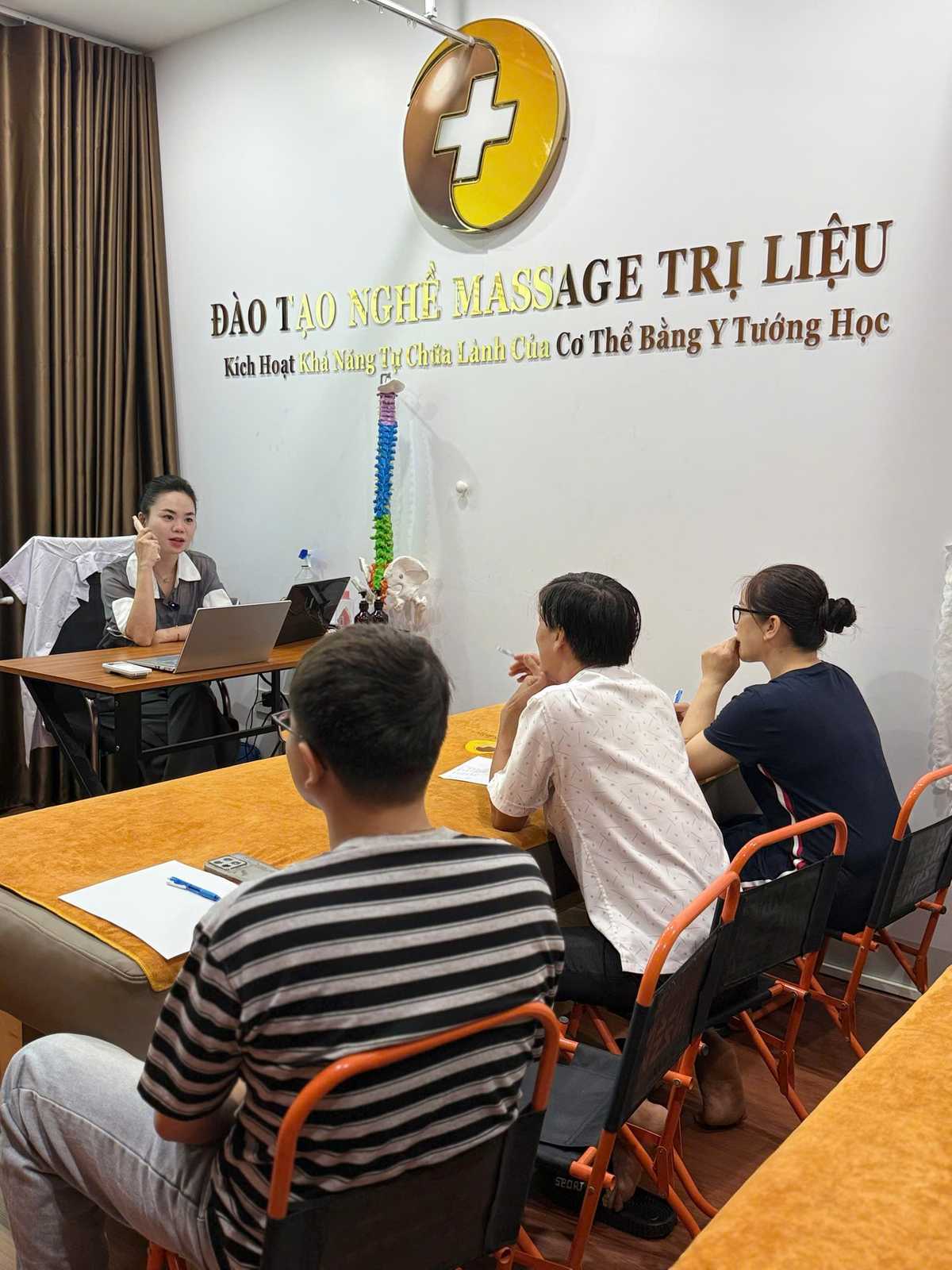
Tong Gia Acupoint Wellness teaches forehead reading in its advanced Y Tuong Hoc section, with Lương Y Tống Văn Huynh leading the class at Vinhomes Grand Park, Thu Duc City. There is a Sunday Y Tuong Hoc session with no fee for beginners; training hotline 0917 945 259.
A forehead and the first question
At a Sunday Y Tuong Hoc session, a learner comments on the partner sitting opposite: many broken horizontal wrinkles on the forehead and a small scar above the left eyebrow. She asks Lương Y Tống Văn Huynh: does this mean "a hard life"? He shakes his head: in this class we do not read a person's life, we read the areas that need care. This article answers what a forehead with many disordered wrinkles or scars means in Y Tuong Hoc, and how learners observe it respectfully.
Recognising this forehead
In the Tong Gia advanced Y Tuong Hoc curriculum, this is the fifth type in the forehead chapter: vertical wrinkles, broken horizontal wrinkles, criss-cross lines like a spider's web, or deep scars cutting across the brow ridges. The forehead skin is often dry and dull. It differs from a forehead with the Sun and Moon corners or a prominent, stubborn forehead.
What Y Tuong Hoc reads about wellbeing
The curriculum notes two tendencies to watch:
- Tâm–Phế double deficiency, Tâm blood stagnation: disordered wrinkles and dry, dull forehead skin are seen as signs of blocked, deeply stagnant qi and blood; the person often feels a pressed chest, sighs, has palpitations, worries and breathes shallowly.
- Tension in the face and nape: long-lasting mental pressure tightens the occipitofrontalis and the shoulder-lifting muscles, giving lasting tiredness in the nape and shoulders, sometimes spreading to the head.
These are hints within the school's theory for knowing what to ask and which areas to examine, not conclusions about disease.
How Western medicine explains forehead wrinkles
Horizontal forehead lines form from the forehead muscle contracting again and again when raising the eyebrows; vertical lines between the brows come from the corrugator muscle contracting when frowning, concentrating, under stress or squinting at screens. Age, sun and dry skin deepen them. Forehead scars usually come from knocks, acne or childhood chickenpox. The forehead muscle connects through the scalp aponeurosis to the occipital muscle at the back of the head, so tension in the forehead and tension in the nape often go together. Learners understand from this that one wrinkle has many causes, and many have nothing to do with the organs.
How learners observe and link it to the back
- Look in natural light, with the face relaxed and the brows not raised.
- Ask first, guess later: where the scar came from, whether they frown while working, how they sleep, whether they often sigh or feel palpitations.
- Check by hand: feel the forehead muscle, the area below the skull base, the trapezius and the shoulder-lifting muscle; then examine the upper back around T3–T5, the area of the Phế and Tâm back points.
- Write in neutral words: "many broken horizontal lines on forehead, small scar above left brow, tight nape", with no disease names and no character notes.
How to move from the face to the back is explained in from face reading to the back areas to examine.
During a care session
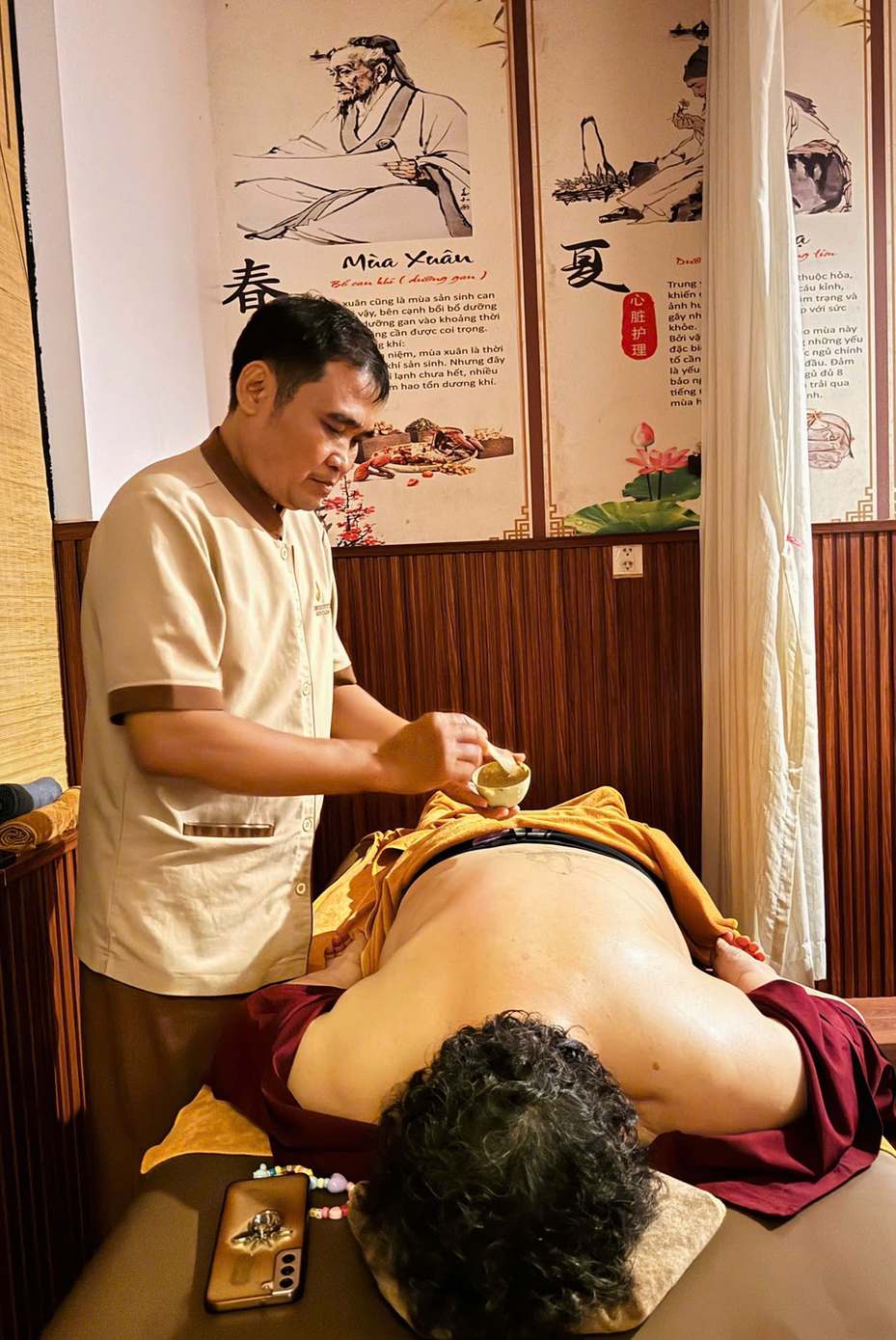
For someone with this forehead and a tight nape, learners usually start with slow breathing, soften the nape, the area below the skull base and the shoulders, then move to the upper back with light pressure and an even rhythm. The forehead and temples are only stroked lightly, with no strong kneading over scars. Clients are reminded to notice frowning while they work and to rest their eyes during long screen time.
How Lương Y Tống Văn Huynh teaches learners to read the forehead without judging
With more than 13 years in Y Tuong Hoc and spinal nervous reflex balancing massage, Lương Y Tống Văn Huynh tells learners: "The lines on a forehead are marks of the times a person braced themselves; we read them to know where they are still bracing and help release it, not to retell their life." In class, learners describe a partner's forehead in three sentences: what they see, what they ask, which area they examine.
When to advise a medical check
A new scar that is swollen, red or oozing; a spot on the forehead that changes colour or grows fast; a sudden severe headache, blurred vision or weakness on one side; chest tightness, breathlessness or lasting palpitations: learners do not handle it alone, but advise the client to visit a medical facility. Tong Gia Acupoint Wellness offers wellness care, not a medical service.
Which level covers this?
The forehead chapter belongs to advanced Y Tuong Hoc, taught in the Specialist Course (L3). Beginners can start with the Sunday Y Tuong Hoc session. Read more on how Y Tuong Hoc and Eastern medicine differ from fortune face reading and the teacher Lương Y Tống Văn Huynh.
How to register
The Sunday trial class, 9:00–12:00, and the Sunday Y Tuong Hoc (face reading for wellness) session with no fee are open sessions for beginners, at unit T16-21, Manhattan block, Vinhomes Grand Park, Thu Duc City. Tong Gia does not promise jobs or income after the course. Book a trial class or call the training hotline 0917 945 259.
Frequently asked questions
What does a forehead with many tangled wrinkles or scars mean in Y Tuong Hoc? Western medicine explains forehead wrinkles by repeated contraction of the frontalis and corrugator muscles, age, sun and dehydrated skin. Y Tuong Hoc sees them as a hint that qi and blood in the chest are not flowing well (deficiency of both Tâm and Phế, Heart blood stasis) and of tension in the occipitofrontal and neck-shoulder muscles; it is only a hint for observation, not a pronouncement of fate or a conclusion about illness.
What causes forehead wrinkles in Western terms? Repeated contraction of the frontalis and corrugator muscles, plus age, sun and dehydrated skin; scars usually come from knocks, acne or chickenpox.
Is the forehead used to guess personality? No. At Tong Gia, learners use the forehead to know which areas to observe and care for, not to pronounce personality or fate.
Where can I study forehead reading? In advanced Y Tuong Hoc, the Specialist Course (L3) at Tong Gia Acupoint Wellness, Vinhomes Grand Park, Thu Duc City. Hotline 0917 945 259.
Related articles
- How bone features and flesh features differ: the two layers of the face that learners of Y Tuong Hoc must separate
- How do Dien Chan and Y Tuong Hoc differ? Both look at the face, with different aims and methods
- Eyebrows meeting in the middle, Giao Gia Mi: how Y Tuong Hoc learners read this brow shape
- All articles about learning the trade
Reserve a free Sunday-morning trial class or ask about the learning path: message Zalo 0917 945 259.

Founder of Tong Gia Acupoint Wellness (Huyệt Đạo Tống Gia), with more than 13 years in Eastern wellness practice, Y Tướng Học (face reading for wellness) and spinal nerve-reflex balancing. Lương Y's story
417 customers have reviewed Tong Gia on Google Maps
Reviews are written by customers themselves on Google; tap to read them before you visit.
Huyệt Đạo Tống Gia Quận 12
225 Dương Thị Mười, Phường Tân Chánh Hiệp (District 12, Ho Chi Minh City). 8:00 – 19:00 daily.
See reviews on Google MapsHuyệt Đạo Tống Gia Quận 9
Căn T16-21 khu Manhattan, Vinhomes Grand Park, Phường Long Bình (Thủ Đức City, Ho Chi Minh City). 9:00 – 20:00 daily.
See reviews on Google MapsWant to be observed in person?
A 90-minute session starts with observation, and only then moves on to muscle release and acupressure on the right areas. Two branches: District 12 and Vinhomes Grand Park.