Heart governs blood and vessels: understanding it properly for five-organ wellness and face reading
Lương Y (traditional healer) Tống Văn Huynh · Tong Gia Acupoint Wellness (Huyệt Đạo Tống Gia) · 09/11/2026
What does “Heart governs blood and vessels” mean? It is how Eastern medicine says the Heart organ pushes blood through the whole body via the vessels; when Heart qi is sufficient, the complexion is rosy and moist and the tongue looks fresh. Learners at Tong Gia observe the complexion first, following the Y Tướng Học idea “the signs show outside, the organs lie inside”: care comes before signs appear.
What does "Heart governs blood and vessels" mean?
In organ-system (zang-fu) theory, each organ has its own "area of responsibility". For the Heart, Eastern medicine texts list four main ideas:
- Governs blood and vessels: the Heart pushes the blood, and the vessels are the channels that carry it. Heart, blood and vessels are closely linked.
- Houses the shen (spirit): the Heart holds the mind and spirit, linked to sleep, mental clarity and emotions.
- Its splendour shows in the face: the state of the Heart and blood appears in the complexion.
- Opens into the tongue: the tongue is the "window" onto the Heart.
“Governs blood and vessels” is the opening idea and also the foundation. Picture the Heart as a pump, blood as water, and the vessels as pipes. A strong pump, enough water and clear pipes keep the water flowing evenly. If any one of the three weakens, the whole system slows down.
How do Heart qi, Heart blood and the vessels work together?
Eastern medicine separates two aspects of the Heart: Heart qi is the driving force, and Heart blood is the nourishing substance. As the classical texts describe it:
- Sufficient Heart qi and blood: the pulse is calm, even and strong; the complexion is rosy, moist and full of vitality; the tongue is fresh pink.
- Weak Heart qi: the person tires easily on exertion, often feels palpitations, and the complexion is pale and lacks freshness.
- Deficient Heart blood: a pale white complexion, pale lips, difficulty sleeping, forgetfulness.
- Blood not flowing freely: a dark complexion, dark purplish lips, dark spots on the tongue.
This is how Eastern medicine interprets signs for observation and wellness care. Learners must never use these signs to draw conclusions about any illness; if someone has chest tightness or pain, shortness of breath or fainting, advise them to go to emergency medical care immediately.
Why do Y Tướng Học learners need to understand "Heart governs blood and vessels"?
Y Tướng Học is the study of observing complexion and body form to understand a person's constitution. The saying "the Heart's splendour shows in the face" (Tâm, kỳ hoa tại diện, 其华在面) is exactly why learners look at the complexion first. At Tong Gia, learners practise telling apart:
- A rosy, bright complexion full of vitality versus one that is flushed red, pale white or greyish dark.
- The colour of the lips, the tip of the tongue and the area between the eyebrows.
- Whether the complexion on arrival differs from the complexion after the massage session.
Read more in a fair, rosy complexion in Y Tướng Học and complexion and vitality in Eastern medicine to see how theory connects with real observation.
How does a therapeutic-style massage practitioner use this knowledge?
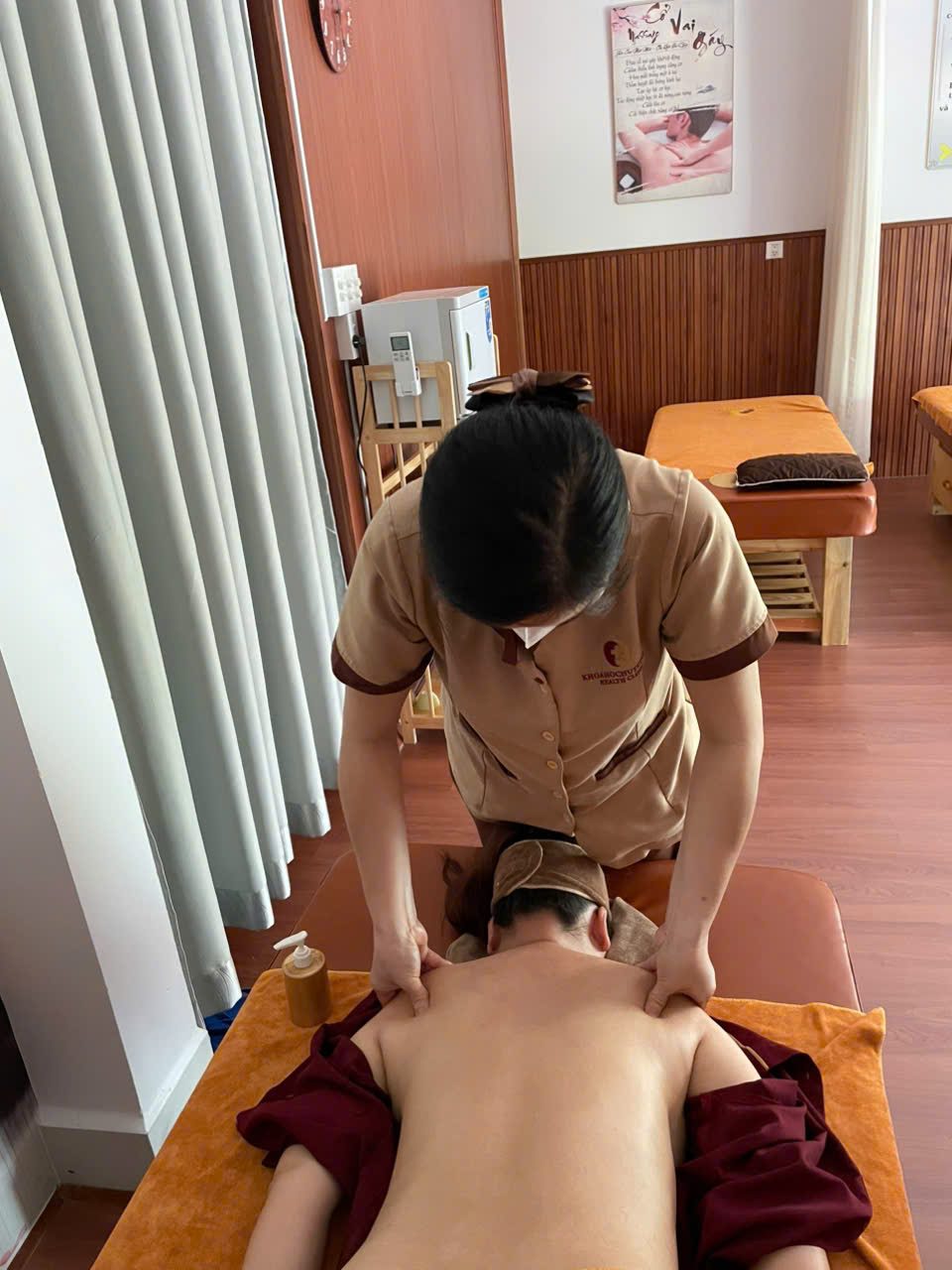
In therapeutic-style massage using spinal nerve-reflex balancing, the upper back from D1 to D5 and the area between the shoulder blades are closely linked to circulation and breathing. The article the D1–D12 back regions explains this part. On the back there are also the Tâm Du (BL15, 心俞) and Quyết Âm Du (BL14, 厥阴俞) points beside the spine, part of the back-shu points group.
Understanding "Heart governs blood and vessels" helps learners:
- Know why people who often feel palpitations or sleep poorly tend to be tight between the shoulder blades.
- Use lighter pressure and a slower rhythm with older people and those with a pale complexion.
- Know when to stop: if the person has an abnormally fast heartbeat, chest pain or shortness of breath, do not massage; advise them to see a doctor.
Massage and acupressure at Tong Gia are wellness care that helps people relax; they do not replace seeing a doctor.
Where can you learn about the five organs in a way that is easy to understand?
Organ-system theory read alone is easy to get lost in. At Tong Gia, Lương Y Tống Văn Huynh teaches the Heart, Liver, Spleen, Lung and Kidney with real examples on the learners themselves, then has them practise right away. The five-organ wellness path is for people learning the trade and also for those learning to care for their family.
How to register
The weekly Sunday-morning trial class, 9:00–12:00, and the free Sunday Y Tướng Học session are the open schedule for beginners, at căn T16-21 khu Manhattan, Vinhomes Grand Park, TP. Thủ Đức (Thu Duc City, Ho Chi Minh City). Register for a trial class or call the training hotline 0917 945 259.
Frequently asked questions
What does "Heart governs blood and vessels" mean? It is how Eastern medicine says the Heart organ drives blood around the whole body through the vessel system; the Heart, blood and vessels work closely together.
Where does "Heart governs blood and vessels" show? In Eastern medicine it shows clearly in the complexion, the colour of the lips and the tongue. When Heart qi and Heart blood are sufficient, the complexion is rosy, moist and full of vitality.
Why must Y Tướng Học learners understand the Heart organ? Because of the saying "the Heart's splendour shows in the face": the freshness of the Heart appears in the face, so observing complexion starts with the face.
How does a massage practitioner use this knowledge? To understand the link between the upper back, the shu points beside the spine and the Heart organ, adjust pressure appropriately, and know when to stop and advise the person to see a doctor.
How are Heart qi and Heart blood different? Heart qi is the driving force; Heart blood is the nourishing substance. According to the classical texts, weak Heart qi means tiring easily on exertion and frequent palpitations; insufficient Heart blood means a pale complexion, pale lips, poor sleep and forgetfulness.
Related articles
- The 12 main meridians: names, pathway rules and peak qi hours, an easy chart for learners
- Tong Gia spinal balancing's 3 no's: no needles, no medicines, no rough force
- Face reading for health: the 3 facial zones in Y Tướng Học, how to divide them and how to read them to care for the body properly
- 30 basic massage techniques learners should know: learn them in groups, not as a list of names
- All articles about learning the trade
Reserve a free Sunday-morning trial class or ask about the learning path: message Zalo 0917 945 259.

Founder of Tong Gia Acupoint Wellness (Huyệt Đạo Tống Gia), with more than 13 years in Eastern wellness practice, Y Tướng Học (face reading for wellness) and spinal nerve-reflex balancing. Lương Y's story
417 customers have reviewed Tong Gia on Google Maps
Reviews are written by customers themselves on Google; tap to read them before you visit.
Huyệt Đạo Tống Gia Quận 12
225 Dương Thị Mười, Phường Tân Chánh Hiệp (District 12, Ho Chi Minh City). 8:00 – 19:00 daily.
See reviews on Google MapsHuyệt Đạo Tống Gia Quận 9
Căn T16-21 khu Manhattan, Vinhomes Grand Park, Phường Long Bình (Thủ Đức City, Ho Chi Minh City). 9:00 – 20:00 daily.
See reviews on Google MapsWant to be observed in person?
A 90-minute session starts with observation, and only then moves on to muscle release and acupressure on the right areas. Two branches: District 12 and Vinhomes Grand Park.