How are the Lung and Large Intestine related: breathing and bowel habits
Lương Y (traditional healer) Tống Văn Huynh · Tong Gia Acupoint Wellness (Huyệt Đạo Tống Gia) · 15/11/2026
How are the Lung and Large Intestine related? In Eastern medicine, both belong to Metal and form an interior–exterior pair: the Lung sends qi downward, giving the Large Intestine the force to move waste; a clear bowel lets Lung qi descend easily. Tong Gia Acupoint Wellness (Huyệt Đạo Tống Gia) teaches learners to care for breathing and the belly together, never in place of a medical check.
Questions learners often ask about the Lung and Large Intestine
Why does Eastern medicine call the Lung and Large Intestine an interior–exterior pair?
Because both belong to Metal and are linked by meridians: the Lung is the inner organ (interior), the Large Intestine the outer bowel (exterior). Lung descending sends qi down to help the Large Intestine move waste; a clear bowel lets Lung qi descend. Tong Gia Acupoint Wellness (Huyệt Đạo Tống Gia) teaches this in the Specialist Course.
What happens when the Lung–Large Intestine balance is lost?
According to the Tong Gia curriculum: weak qi can cause constipation and weak pushing; long constipation can make the chest feel full and breathing uncomfortable. The care idea: when one side flows, the other feels lighter.
Where can I learn organ relationships?
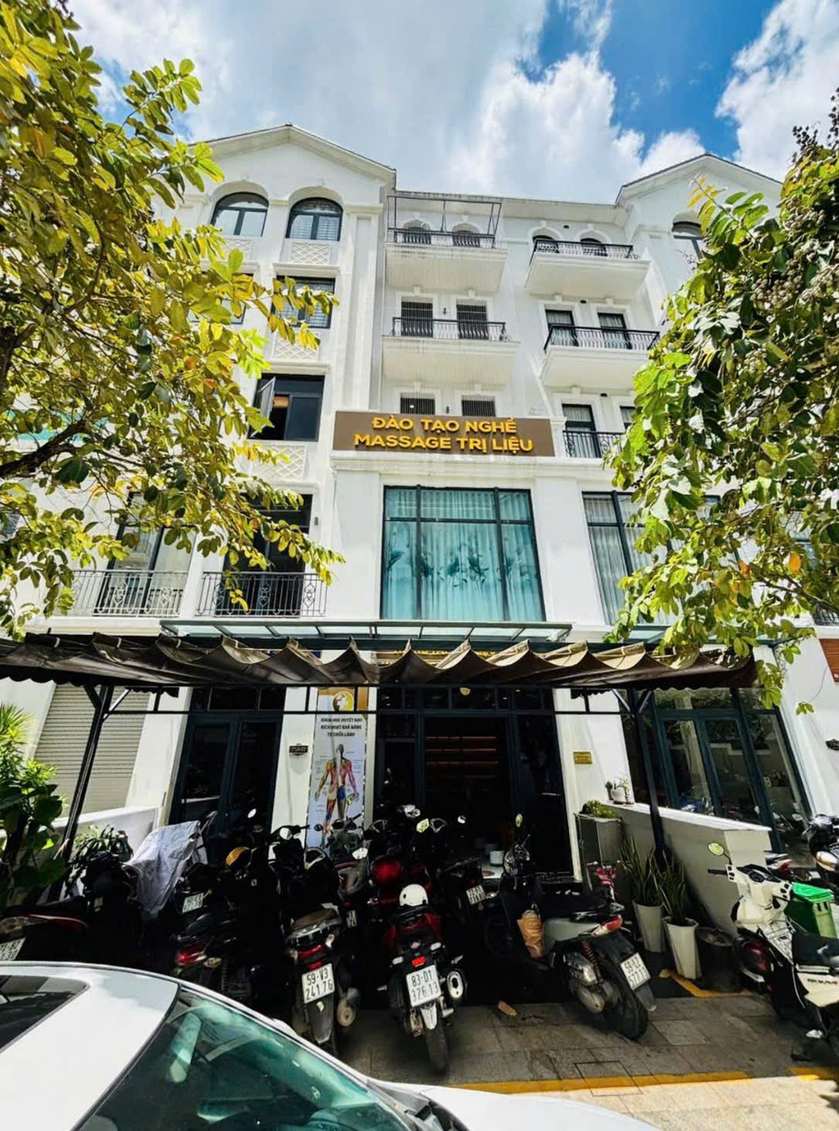
At Tong Gia Acupoint Wellness, Vinhomes Grand Park, Thu Duc City, in the Specialist Course (L3) taught by Lương Y Tống Văn Huynh. Sunday morning trial class, 9:00–12:00; training hotline 0917 945 259.
An odd-sounding question for beginners
The first time they hear the Lương Y say "to care for breathing, ask about bowel habits too", many learners laugh. Yet that is exactly the question how are the Lung and Large Intestine related in Eastern medicine. This article explains the interior–exterior relationship, what happens when it is out of balance, how Western medicine sees breathing and bowel movement, and how learners provide care.
What is an interior–exterior pair?
Eastern medicine pairs each organ with a bowel in interior–exterior couples linked by meridians. The Lung is the organ, on the inside; the Large Intestine is the bowel, on the outside. Both belong to Metal and correspond to autumn. The Lung meridian runs along the inner arm to the thumb; the Large Intestine meridian runs from the index finger up the outer arm to the face, ending beside the nostril. That is why Hợp cốc on the back of the hand, the source point of the Large Intestine, is often mentioned for the face and nose.
How do the Lung and Large Intestine help each other?
- The Lung helps the Large Intestine: the Lung's descending function sends qi and fluids downward. With qi moving down, the Large Intestine has the force to push waste out.
- The Large Intestine helps the Lung: when the bowel is clear, Lung qi descends easily, breathing is smooth and the chest feels light.
When out of balance, the curriculum notes: weak qi can cause constipation and weak pushing; long constipation can make the chest feel full and breathing uncomfortable. The care idea fits in one line: when one side flows, the other feels lighter. Read more: what "the Lung governs qi" means.
How does Western medicine see this link?
Western medicine does not see the lungs and colon as a pair. But there are easy meeting points: the diaphragm is both the main breathing muscle and a source of pressure on the abdomen; during a bowel movement, people breathe in, hold the breath and use the abdominal muscles to push. Slow, deep breathing and regular movement help relaxation and support bowel motility. People who move little, breathe shallowly and sit a lot are more prone to constipation. So the two views do not conflict; they complement each other.
How do learners care based on this?
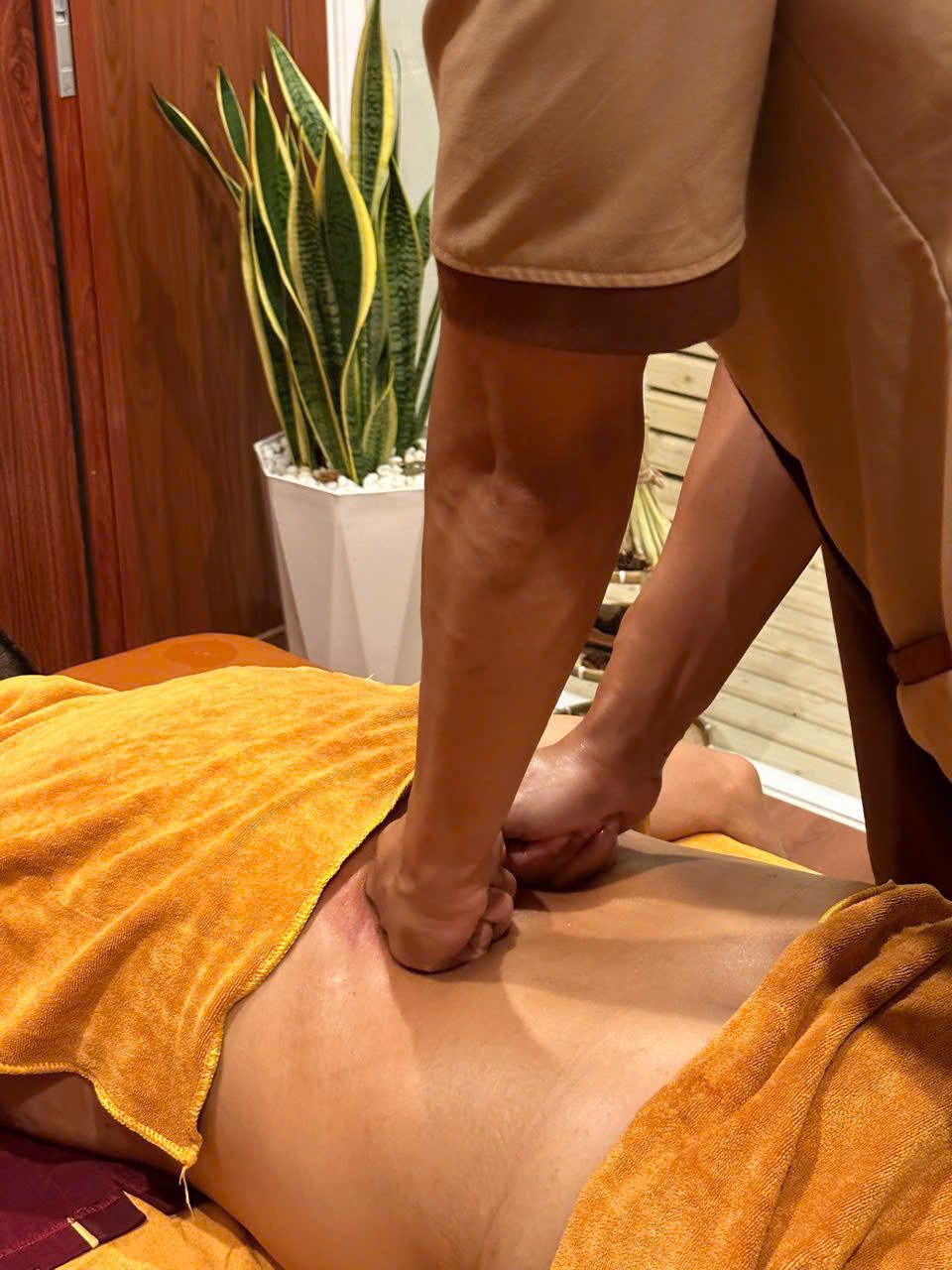
When a client mentions shallow breathing or a full chest, learners also ask about bowel habits, water intake and vegetables. On the back, read D3 around Phế du and the lumbar L4 area around Đại trường du, 1.5 cun from the spine. Open the upper chest with light strokes, then, 1–2 hours after a meal, gently stroke the belly clockwise around the navel. In traditional medicine, Thiên xu beside the navel is the alarm point of the Large Intestine, often used to regulate bowel movements, with results varying by person; Hợp cốc is not used for pregnant women. Guide the client to practise belly breathing, drink enough water and walk daily.
When should the client be advised to get checked?
Black or bloody stools, new constipation in someone over 50, a lasting change in bowel habits, unexplained weight loss, severe abdominal pain; a cough lasting over 2 weeks, coughing blood, breathlessness. See digestive warning signs that need a check right away.
Lương Y Tống Văn Huynh's advice to learners
With more than 13 years in Eastern wellness, Y Tuong Hoc and spinal nervous reflex balancing massage, Lương Y Tống Văn Huynh tells learners: "When the top flows, the bottom runs smoothly; when the bottom runs smoothly, the top feels light. A practitioner must watch both ends of the same thread."
Which level covers this?
The Lung–Large Intestine, Lung–Spleen and Lung–Kidney relationships are studied in the five-organ wellness part of the Specialist Course (L3).
How to register
The Sunday morning trial class, 9:00–12:00, and the Sunday Y Tuong Hoc session with no fee are open sessions for beginners, at unit T16-21, Manhattan block, Vinhomes Grand Park, Thu Duc City. Book a trial class or call the training hotline 0917 945 259.
Frequently asked questions
How are the Lung and Large Intestine related? Both belong to Metal and form an interior–exterior pair: Lung descending helps the Large Intestine move waste; a clear bowel lets Lung qi descend.
Is constipation linked to breathing in Eastern medicine? According to the Tong Gia curriculum, weak qi can cause constipation and weak pushing; long constipation can make the chest feel full and breathing uncomfortable.
Which points relate to the Large Intestine? Thiên xu beside the navel (alarm point), Hợp cốc on the back of the hand (source point, not for pregnant women), Đại trường du beside L4.
Where is this taught? In the Specialist Course (L3) at Tong Gia Acupoint Wellness, Vinhomes Grand Park, Thu Duc City. Hotline 0917 945 259.
Related articles
- What does "the Lung governs qi" mean: breath is the thread linking every organ
- What are the signs of Spleen deficiency with dampness: reading the "heaviness" in a client
- The 12 main meridians: names, pathway rules and peak hours, an easy table for vocational learners
- The 3 "no"s of the Tong Gia spinal balancing method: no needles, no medicine, no rough force
- All articles about learning the trade
Reserve a free Sunday-morning trial class or ask about the learning path: message Zalo 0917 945 259.

Founder of Tong Gia Acupoint Wellness (Huyệt Đạo Tống Gia), with more than 13 years in Eastern wellness practice, Y Tướng Học (face reading for wellness) and spinal nerve-reflex balancing. Lương Y's story
417 customers have reviewed Tong Gia on Google Maps
Reviews are written by customers themselves on Google; tap to read them before you visit.
Huyệt Đạo Tống Gia Quận 12
225 Dương Thị Mười, Phường Tân Chánh Hiệp (District 12, Ho Chi Minh City). 8:00 – 19:00 daily.
See reviews on Google MapsHuyệt Đạo Tống Gia Quận 9
Căn T16-21 khu Manhattan, Vinhomes Grand Park, Phường Long Bình (Thủ Đức City, Ho Chi Minh City). 9:00 – 20:00 daily.
See reviews on Google MapsWant to be observed in person?
A 90-minute session starts with observation, and only then moves on to muscle release and acupressure on the right areas. Two branches: District 12 and Vinhomes Grand Park.