What does "the Lung governs qi" mean: breath is the thread linking every organ
Lương Y (traditional healer) Tống Văn Huynh · Tong Gia Acupoint Wellness (Huyệt Đạo Tống Gia) · 15/11/2026
What does "the Lung governs qi" mean? In Eastern medicine, the Lung rules the qi of breathing and of the whole body: it draws in air and, together with the Spleen, forms Gathering qi that nourishes the body. Weak Lung qi brings shortness of breath, a soft voice and quick tiredness. Tong Gia Acupoint Wellness (Huyệt Đạo Tống Gia) teaches learners this so they can care for clients' breathing.
Questions learners often ask about "the Lung governs qi"
What ideas does "the Lung governs qi" include?
Two ideas: the Lung governs breathing qi, drawing in fresh air and breathing out turbid air; and it governs the qi of the whole body, because air from the Lung and food qi from the Spleen combine into Gathering qi that travels everywhere. Tong Gia Acupoint Wellness (Huyệt Đạo Tống Gia) teaches this in the five-organ wellness part of the Specialist Course.
What are the signs of weak Lung qi?
According to the Tong Gia curriculum: shortness of breath on exertion, a soft voice, reluctance to talk, spontaneous sweating, dislike of wind, frequent colds, a pale face. It is an Eastern medicine concept, not a Western disease name.
Where can I study five-organ wellness?
At Tong Gia Acupoint Wellness, Vinhomes Grand Park, Thu Duc City, in the Specialist Course (L3) taught by Lương Y Tống Văn Huynh. Sunday morning trial class, 9:00–12:00; training hotline 0917 945 259.
Four words every learner meets
Open the Lung section of the Tong Gia curriculum and the first line of the function table reads "the Lung governs qi". Short words, yet many learners only half understand them: what does "the Lung governs qi" mean, and is it simply that the lungs help us breathe? This article explains it in Eastern medicine, compares it with Western medicine, and shows how learners use it when caring for clients.
In Eastern medicine the Lung is more than the lungs
Eastern medicine sees the Lung as a functional system linked to qi, breathing, fluids, the vessels, skin and body hair, nose and throat, voice and resistance. The Lung belongs to the Metal element, is paired with the Large Intestine, its emotion is grief and its season is autumn. It is also called the "delicate organ", tender and easily affected by cold, heat and dryness.
Two meanings of "the Lung governs qi"
- It governs breathing qi: the Lung draws in fresh air and pushes out turbid air. Only with even breathing is there enough qi inside.
- It governs the qi of the whole body: air received by the Lung and food qi produced by the Spleen combine into Gathering qi, which collects in the chest, supports breathing and helps the Heart move blood. That is why the curriculum says "the Heart governs blood, the Lung governs qi – qi is the commander of blood".
When this function weakens, people become short of breath, speak softly and tire quickly. The Lung's other functions—dispersing and descending, regulating the water passages, governing skin and hair, opening into the nose—all rest on this foundation of qi.
How does Western medicine see the lungs?
In Western medicine, the lungs are where gas exchange happens: oxygen enters the blood and CO₂ leaves, through some 300–500 million alveoli covering nearly 70 m². At rest an adult breathes 12–20 times a minute, about 500 ml each time. The lungs are also a protective barrier: nose hairs, mucus, cilia and the cough reflex. The two views complement each other: Western medicine looks at gas exchange; Eastern medicine sees the Lung as the organ that governs qi, regulates fluids and resistance.
How do learners use this when caring for clients?
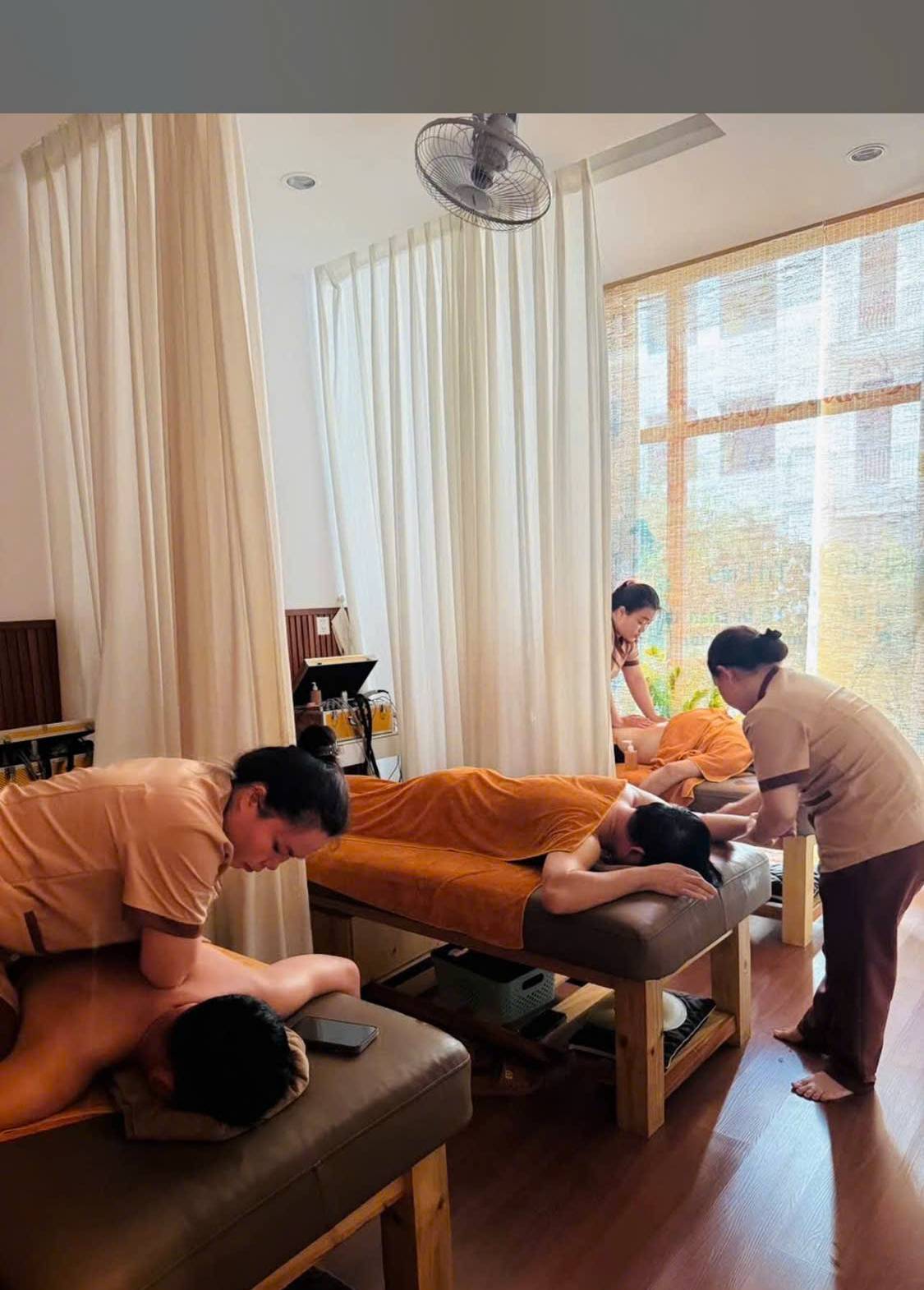
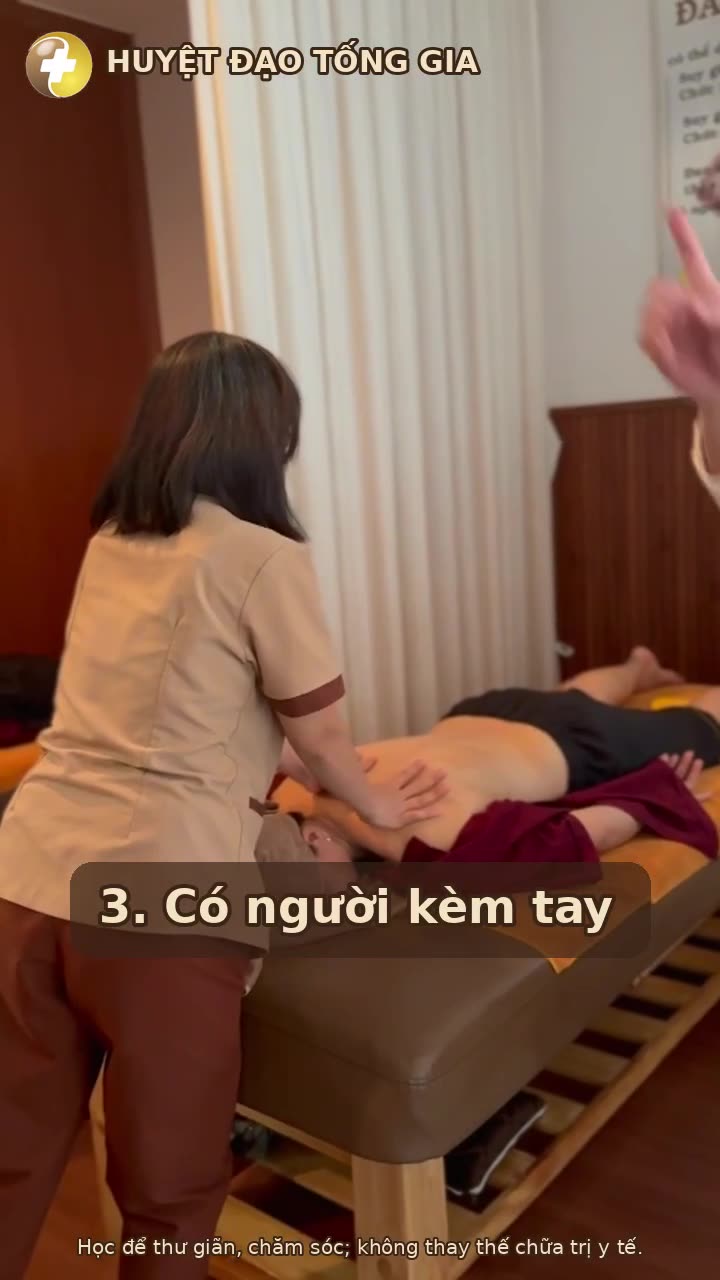
Learners notice the client's breathing while lying down: shallow breaths, breaking off mid-sentence, frequent sighs. On the back, read the area of thoracic vertebra 3, where Phế du lies 1.5 cun from the spine; the curriculum notes that people with weak Lung qi often have tight muscles or a raised vertebra in the upper back around D3, affecting breathing. Soften the muscles between the shoulder blades, open the upper chest with light strokes, then guide the client through slow belly breathing. Because the Spleen is the mother of the Lung, caring for the Lung also means reminding the client to eat in ways that support the Spleen and Stomach. Read more: what Lung qi deficiency is and the Phế du point.
Measured advice
Do not say "you have weak lungs". Say instead: "In Eastern medicine your breathing is a little shallow and Lung qi is not yet full; let's practise belly breathing daily, keep the neck and chest warm and avoid cold wind." A cough lasting more than 2 weeks, coughing blood, breathlessness or chest pain: advise a medical check right away.
Lương Y Tống Văn Huynh on breathing
With more than 13 years in Eastern wellness, Y Tuong Hoc and spinal nervous reflex balancing massage, Lương Y Tống Văn Huynh tells learners: "Before placing your hands on a client's back, listen to three breaths; the breath tells you in advance what your hands are about to meet."
Which level covers this?
The Lung and the other organs are studied in the five-organ wellness part of the Specialist Course (L3).
How to register
The Sunday morning trial class, 9:00–12:00, and the Sunday Y Tuong Hoc session with no fee are open sessions for beginners, at unit T16-21, Manhattan block, Vinhomes Grand Park, Thu Duc City. Book a trial class or call the training hotline 0917 945 259.
Frequently asked questions
What does "the Lung governs qi" mean? The Lung rules breathing qi and the qi of the whole body: it draws in air and, with the Spleen's food qi, forms Gathering qi that nourishes the body and helps the Heart move blood.
What are the signs of weak Lung qi? Shortness of breath on exertion, a soft voice, reluctance to talk, spontaneous sweating, dislike of wind, frequent colds, a pale face.
Which back point relates to the Lung? Phế du, about 1.5 cun to each side of thoracic vertebra 3.
Where can I study five-organ wellness? In the Specialist Course (L3) at Tong Gia Acupoint Wellness, Vinhomes Grand Park, Thu Duc City. Hotline 0917 945 259.
Related articles
- How are the Lung and Large Intestine related: breathing and bowel habits
- What are the signs of Spleen deficiency with dampness: reading the "heaviness" in a client
- The 12 main meridians: names, pathway rules and peak hours, an easy table for vocational learners
- The 3 "no"s of the Tong Gia spinal balancing method: no needles, no medicine, no rough force
- All articles about learning the trade
Reserve a free Sunday-morning trial class or ask about the learning path: message Zalo 0917 945 259.

Founder of Tong Gia Acupoint Wellness (Huyệt Đạo Tống Gia), with more than 13 years in Eastern wellness practice, Y Tướng Học (face reading for wellness) and spinal nerve-reflex balancing. Lương Y's story
417 customers have reviewed Tong Gia on Google Maps
Reviews are written by customers themselves on Google; tap to read them before you visit.
Huyệt Đạo Tống Gia Quận 12
225 Dương Thị Mười, Phường Tân Chánh Hiệp (District 12, Ho Chi Minh City). 8:00 – 19:00 daily.
See reviews on Google MapsHuyệt Đạo Tống Gia Quận 9
Căn T16-21 khu Manhattan, Vinhomes Grand Park, Phường Long Bình (Thủ Đức City, Ho Chi Minh City). 9:00 – 20:00 daily.
See reviews on Google MapsWant to be observed in person?
A 90-minute session starts with observation, and only then moves on to muscle release and acupressure on the right areas. Two branches: District 12 and Vinhomes Grand Park.