What is lung qi deficiency? How wellness massage learners recognise it and care for a client's breathing
Lương Y (traditional healer) Tống Văn Huynh · Tong Gia Acupoint Wellness (Huyệt Đạo Tống Gia) · 13/11/2026
What is lung qi deficiency? In Eastern medicine (TCM) it means weak Lung qi without enough force to move qi: shortness of breath, a soft voice, frequent colds, a pale complexion. It is an Eastern-medicine concept, not a disease name. At Tong Gia Acupoint Wellness (Huyệt Đạo Tống Gia) in Ho Chi Minh City, learners read the voice, breathing and nose shape, then cross-check by hand.
Questions learners often ask about lung qi deficiency
I work at a spa in Thu Duc. Some clients speak softly, get breathless and catch colds often. Does that mean lung qi deficiency?
It can only suggest it. A soft voice, breathlessness and frequent colds are signs of lung qi deficiency in Eastern medicine; Western medicine sees shallow breathing and an underused diaphragm. At Tong Gia, learners cross-check the upper back by hand before giving care. For a lasting cough or difficult breathing, advise the client to see a doctor.
I run a spa in Ho Chi Minh City. Can nose shape really show weak Lungs in Eastern medicine, and how is that different from fortune-telling?
Nose shape is only a hint. Eastern medicine holds that the Lung opens into the nose, so the course material links an upturned nose and slack nostril wings with insufficient Lung qi. Tong Gia does not predict anyone's fate; Lương Y Tống Văn Huynh teaches using the signs to ask the right questions, then checking by hand along the spine.
I'm in my 30s and live in District 12. Where can I learn Lung care and massage that supports deep breathing, and how long does it take?
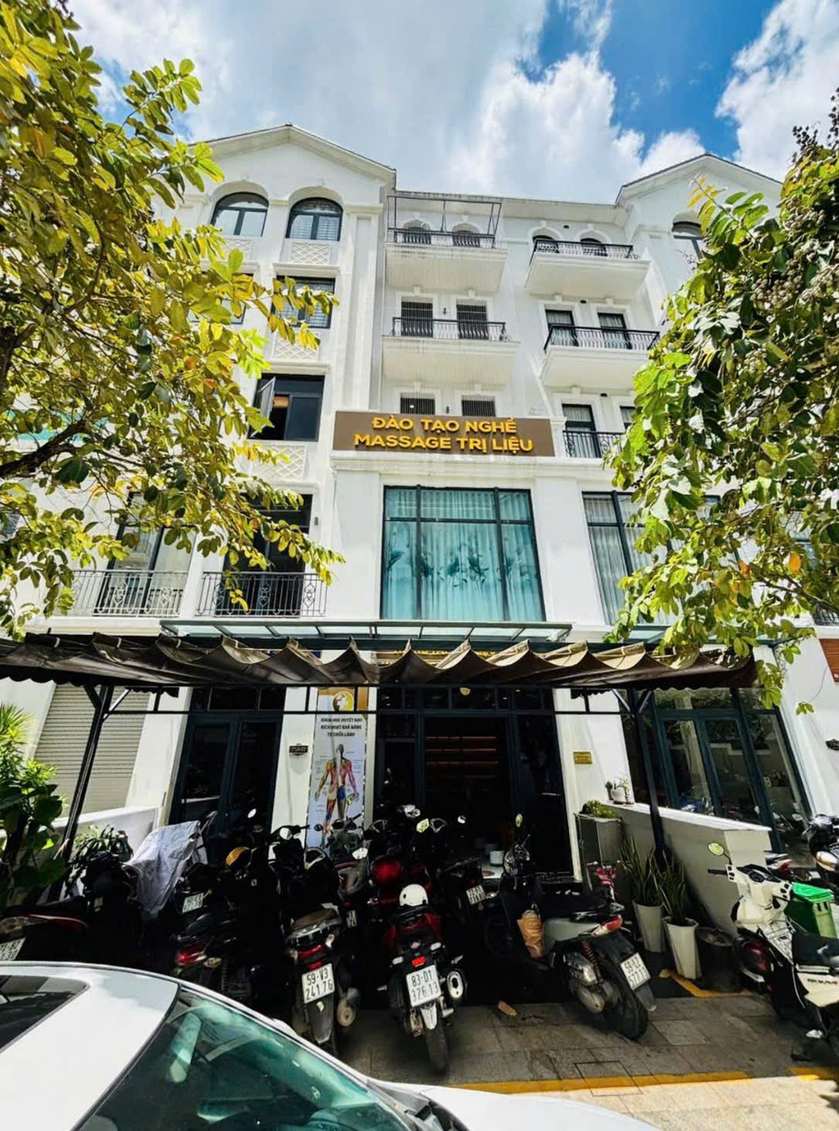
Study at Tong Gia, căn T16-21 khu Manhattan, Vinhomes Grand Park, TP. Thủ Đức (unit T16-21, Manhattan block, Thu Duc City); District 12 is a care branch with no classes. The Lung organ is part of the Specialist Course (L3) taught by Lương Y Tống Văn Huynh; beginners take L1 (1.500.000₫) first. Staff confirm the duration; Zalo 0917 945 259.
The Lung lesson: hands on the upper back, listen to the breath first
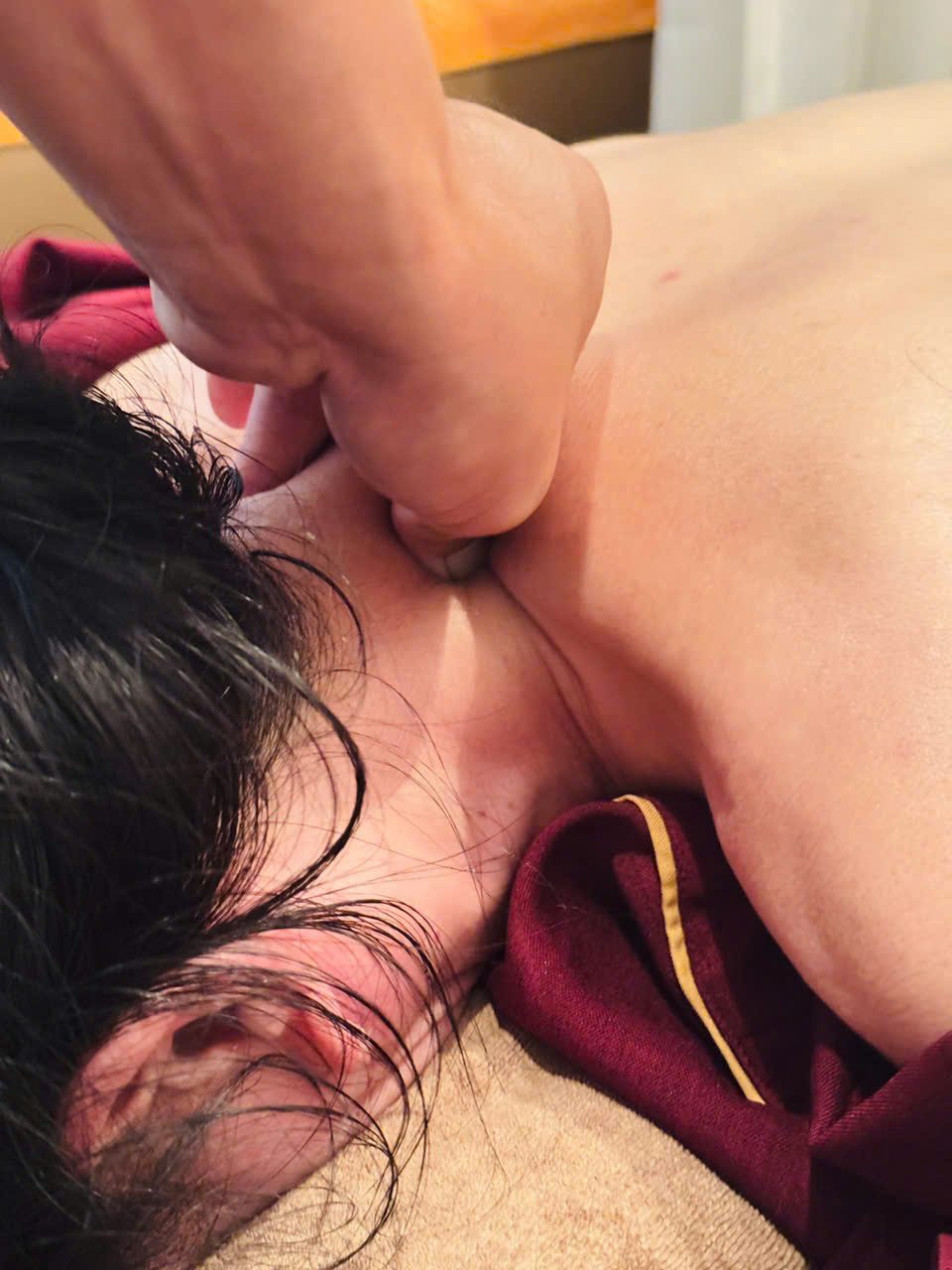
In class at Vinhomes Grand Park, the Lung lesson starts on the upper back. Learners work in pairs: one lies face down, the other places both palms across the level of the third thoracic vertebra. Many learners press the moment their hands land. Lương Y Tống Văn Huynh lifts the learner's hands, sets them down again more lightly, then asks the whole class to stay quiet and listen to their partner breathe: shallow or deep, even or broken. From that moment, the question what is lung qi deficiency becomes something learners can hear and see.
What is lung qi deficiency in Eastern medicine?
Eastern medicine calls the Lung the organ that governs qi: it manages breathing, regulates water and maintains the body's resistance. The Lung belongs to the Metal element, opens into the nose, governs the skin and body hair, and governs the voice. Lung qi deficiency is a lack of force to move qi: not enough qi to breathe deeply, keep the voice strong and hold the protective layer on the skin.
Signs listed in the Tong Gia course material: a weak cough and breathlessness on exertion; a soft voice and reluctance to talk; spontaneous sweating and aversion to wind; frequent colds that linger; a pale complexion; a pale tongue with a white coating. It differs from Lung yin deficiency (a lack of moistening fluids): dry cough, dry throat, hoarse voice and red cheeks in the afternoon. This is an Eastern-medicine concept, not a Western disease name.
The link to breathing in Western medicine
Western medicine sees the lungs as the place where gas exchange happens in the alveoli. At rest, an adult breathes about 12–20 times a minute, about 500 ml of air each time, using the diaphragm and the intercostal muscles. People who breathe shallowly and sit hunched use the diaphragm less, so the lungs do not fully expand; they tire easily, get breathless and tire quickly when talking. Eastern medicine calls this picture weak Lung qi. Read more about acupressure to support deep, relaxed breathing.
Reading with the eyes: voice, breathing, complexion, nose shape
Y Tướng Học (face reading for wellness) teaches "the signs show outside, the organs lie inside". Before placing their hands, learners observe:
- Voice: soft, weak, needing a breath after a few sentences.
- Breathing: count the rate while the client lies at rest; fast, shallow breathing, more from the chest than the belly, frequent sighing.
- Complexion: pale and lacking moisture; unevenly enlarged pores.
- Nose shape: the nose is the gateway of the Lung. An upturned nose that shows the nostrils, with slack nostril wings (露孔鼻), is linked in the course material with insufficient Lung qi; a narrow, sunken Yintang area between the brows (EX-HN3, 印堂) with a vertical crease often goes with shallow breathing.
Then ask: does the client catch colds often, dislike wind, wake at night from coughing? A single sign on its own is not enough to say anything.
Cross-checking by hand on the spine
Every reading from the face must be checked again by hand. The area to read is the upper back, D1–D3, home to Phế du (BL13, 肺俞; below the T3 spinous process, 1.5 cun lateral) and Định suyễn (EX-B1, 定喘; below the C7 spinous process, 0.5 cun lateral). Learners compare both sides by the symmetry principle, looking for areas that are stiff, warm and more tender when pressed. Areas that are cool, slack and low in sensation are not worked directly.
During the massage: breathing and safe steps
- Ask about health history: pregnancy, asthma, heart or lung conditions, fever, a lasting cough.
- Keep the neck and chest warm; do not let a fan blow straight at the client.
- Relax the shoulders, upper back and chest so the rib cage moves more easily; gently knead and press Phế du (BL13, 肺俞), Định suyễn (EX-B1, 定喘), Đản trung (CV17, 膻中) and Thái uyên (LU9, 太渊). Use Hợp cốc (LI4, 合谷) only when you are sure the client is not pregnant. For how to combine points, see basic acupoint combinations.
- Watch the breathing throughout the session: slower, more even breathing means the client is relaxing; holding the breath or breathing fast means the pressure is too strong, so reduce it at once.
- At the end, teach belly breathing: inhale through the nose for about 4 seconds, exhale slowly for about 6 seconds; suggest practising 5–10 minutes a day, rubbing Nghênh hương (LI20, 迎香) on both sides of the nostrils, avoiding smoke and dust, and drinking enough warm water in the dry season.
Do not: tell clients they "have weak lungs", promise the cough will go away, claim massage "detoxes the lungs", pat the back of anyone with severe osteoporosis or a chest injury, or advise clients to drop what their doctor has prescribed.
How Lương Y Tống Văn Huynh teaches learners to talk about lung qi deficiency
With more than 13 years in the craft and hundreds of learners trained, Lương Y Tống Văn Huynh is careful about the words used: "Lung qi deficiency is an Eastern-medicine sign that helps us give the right care, not a disease to announce and worry the client." In class, learners practise phrasing things as questions, and only then place their hands.
When to advise the client to see a doctor
Do not give the care session; advise the client to get checked at a medical facility when there is: coughing up blood or blood-streaked phlegm; breathlessness at rest, needing to sit up to breathe; chest pain on deep inhalation; high fever with cough and cloudy phlegm; a cough lasting more than 2 weeks; bluish lips or fingertips; wheezing or noisy breathing for the first time; unexplained weight loss. Tong Gia Acupoint Wellness offers wellness and health care, not a medical service.
Which level covers this?
The Lung organ is chapter 4 in the five-organ wellness part of the Specialist Course (L3), studied together with advanced Y Tướng Học and spinal nerve-reflex balancing massage. Beginners start with L1 Foundation (1.500.000₫). Staff confirm the L2–L4 fees at registration. Read more about the teacher: Lương Y Tống Văn Huynh.
How to sign up
The trial class on Sunday morning, 9:00–12:00, with no fee, and the Sunday Y Tướng Học class for beginners take place at căn T16-21 khu Manhattan, Vinhomes Grand Park, TP. Thủ Đức (unit T16-21, Manhattan block, Thu Duc City). Tong Gia does not promise jobs or income after the course. Book a trial class or call the training hotline 0917 945 259.
Frequently asked questions
What is lung qi deficiency? In Eastern medicine, lung qi deficiency is a state where the qi of the Lung organ is weak and lacks the force to move qi: breathlessness, a soft voice, frequent colds, aversion to wind, a pale complexion. It is an Eastern-medicine concept, not a Western disease name.
How is lung qi deficiency different from lung yin deficiency? Lung qi deficiency is a lack of force to move qi: breathlessness, a soft voice, spontaneous sweating. Lung yin deficiency is a lack of moistening fluids: dry cough, dry throat, hoarse voice, red cheeks in the afternoon.
How long can a client's cough last before I should advise a doctor? A cough lasting more than 2 weeks, coughing up blood, breathlessness at rest, chest pain on deep breathing, or high fever with cough: advise the client to get checked at a medical facility first, and do not give the care session.
Where can I learn about the Lung organ? In the five-organ wellness part of the Specialist Course (L3) at Tong Gia Acupoint Wellness, Vinhomes Grand Park, Thu Duc City. Trial class Sunday morning 9:00–12:00, hotline 0917 945 259.
Related articles
- The 12 main meridians: names, pathway rules and peak hours, an easy table for vocational learners
- Face reading for health: the 3 facial zones in Y Tướng Học, how to divide them and how to read them to care for the body properly
- What are the 8 extraordinary vessels: roles, main pathways and how wellness learners use them
- Yin-Yang and the Five Elements for wellness learners: enough to make the hands work right
- All articles about learning the trade
Reserve a free Sunday-morning trial class or ask about the learning path: message Zalo 0917 945 259.

Founder of Tong Gia Acupoint Wellness (Huyệt Đạo Tống Gia), with more than 13 years in Eastern wellness practice, Y Tướng Học (face reading for wellness) and spinal nerve-reflex balancing. Lương Y's story
417 customers have reviewed Tong Gia on Google Maps
Reviews are written by customers themselves on Google; tap to read them before you visit.
Huyệt Đạo Tống Gia Quận 12
225 Dương Thị Mười, Phường Tân Chánh Hiệp (District 12, Ho Chi Minh City). 8:00 – 19:00 daily.
See reviews on Google MapsHuyệt Đạo Tống Gia Quận 9
Căn T16-21 khu Manhattan, Vinhomes Grand Park, Phường Long Bình (Thủ Đức City, Ho Chi Minh City). 9:00 – 20:00 daily.
See reviews on Google MapsWant to be observed in person?
A 90-minute session starts with observation, and only then moves on to muscle release and acupressure on the right areas. Two branches: District 12 and Vinhomes Grand Park.