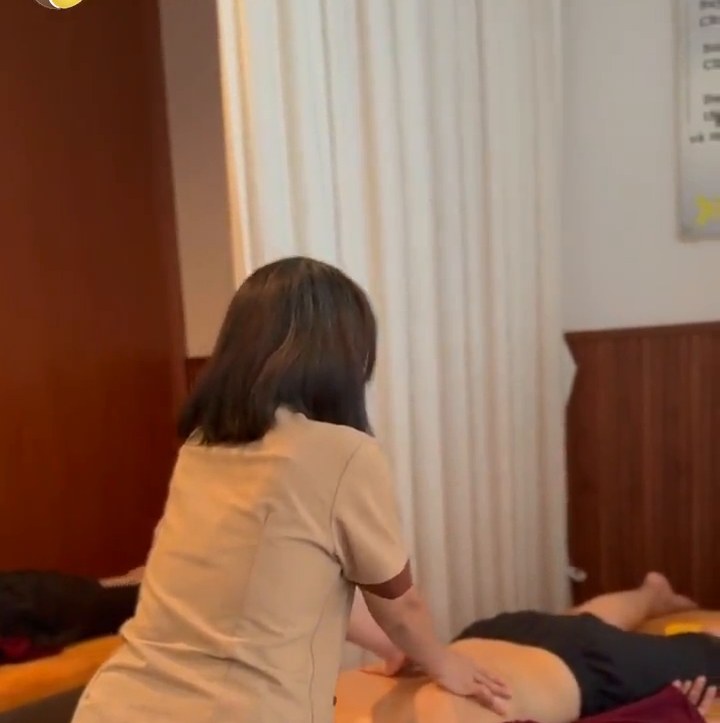
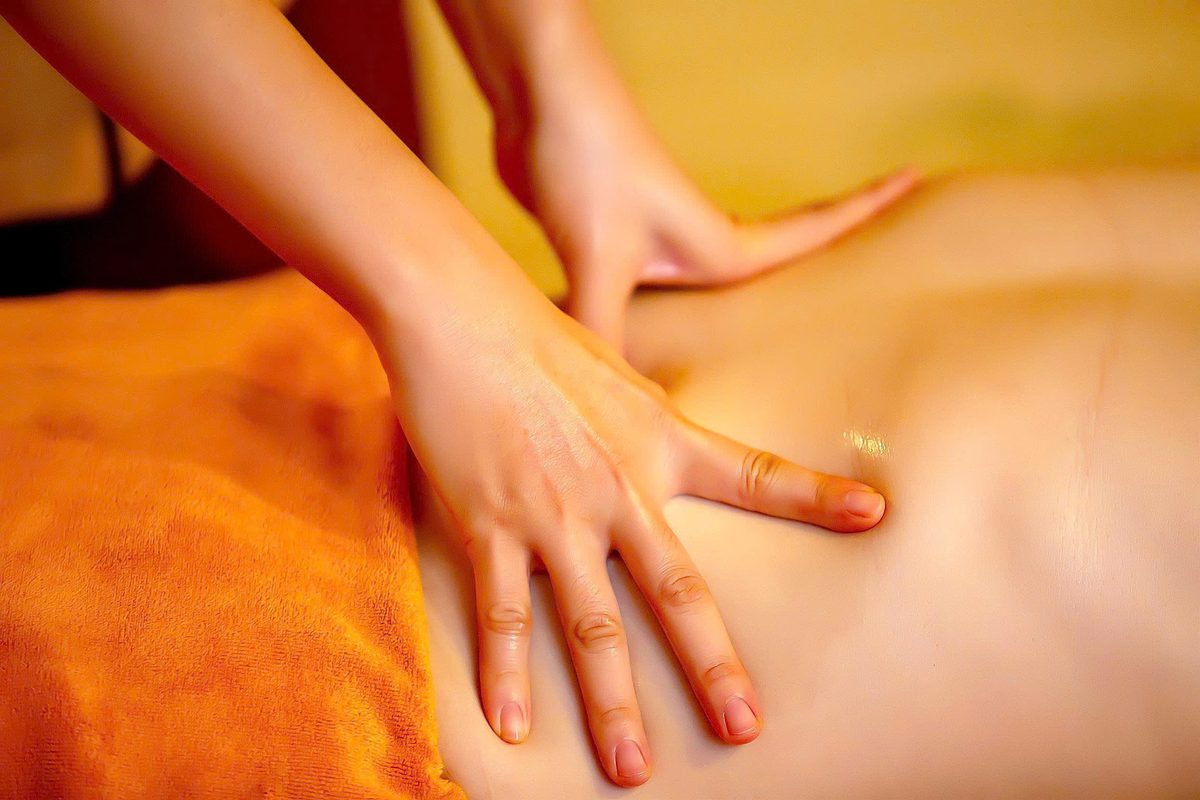
Recognising shifted vertebrae in office workers by hand: read the back before you work
Lương Y (traditional healer) Tống Văn Huynh · Tong Gia Acupoint Wellness (Huyệt Đạo Tống Gia) · 15/11/2026
Shifted vertebrae in office workers can be recognised by hand by gliding along the spinous processes, comparing each vertebra with those above, below and on both sides, and reading skin temperature, the muscle layer and raised, shifted or sunken shapes. Common areas are the neck, upper back and lower back. Tong Gia Acupoint Wellness (Huyệt Đạo Tống Gia) teaches reading for care, not as a replacement for imaging.
Questions learners often ask about reading vertebrae by hand
How do you recognise a shifted vertebra by hand?
Place two fingertips on either side of the spinous processes and glide slowly from the neck to the sacrum, comparing each vertebra with the one above, below and left–right. Note skin temperature, tight or slack muscle, and the shape: raised, raised-shifted, shifted, sunken-shifted, sunken. Tong Gia Acupoint Wellness (Huyệt Đạo Tống Gia) teaches this skill in its vocational and Specialist courses.
Where do office workers usually shift?
Often at the neck C5–C7 from looking down at screens, the upper back D1–D6 from rounded shoulders, and the lower back L4–L5 from long sitting. The muscles on both sides are often asymmetric: one side tight, the other thinner.
Where can I learn to read the spine by hand?
At Tong Gia Acupoint Wellness, Vinhomes Grand Park, Thu Duc City, taught by Lương Y Tống Văn Huynh. Sunday morning trial class, 9:00–12:00; training hotline 0917 945 259.
One class, thirty office backs
Most clients of a city practitioner sit at a desk for 8–10 hours a day. Learners often ask: how do you recognise shifted vertebrae in office workers by hand with confidence, without any imaging machine? This article follows the Tong Gia curriculum: preparation, the gliding sequence, the four factors to read, common areas and the limits of the hands.
What does "shifted" mean in class?
In spinal nervous reflex balancing massage, "shifted" is one of five shapes the fingers can feel: raised, raised-shifted, shifted, sunken-shifted, sunken. It is a surface perception of the spinous process and muscle layer, not a conclusion about bone structure like medical imaging. So learners say "I feel a shift here", never "you have scoliosis".
Preparing to read
- The client lies face down, with a thin pillow under the belly if the lower back sags, arms by the sides.
- The practitioner's hands are warm, nails short, shoulders relaxed.
- Ask first about pain spreading to the arms or legs, numbness, weakness, recent injury, osteoporosis, pregnancy.
The gliding sequence and four factors to read
Place the tips of the middle and index fingers on either side of the spinous processes, glide slowly from C7 to the sacrum, then back up. At each vertebra, the hands answer four questions from the four objective factors:
- Skin temperature: which areas are warmer (excited), which cooler (inhibited)?
- Muscle layer: knotted, hard, slack muscle, or fibrous bands on the spinous process?
- Vertebral shape: is this vertebra raised, shifted or sunken compared with those above and below?
- Sensation: with light probing, is there a local point of pain, numbness or sharpness?
Following the principle of symmetry, learners always compare right with left, top with bottom, spine with periphery. Never conclude after a single pass. Read more: the routine for reading the spine by hand and the five vertebral shapes.
Common areas in office workers
- Neck C5–C7: looking down at screens pushes the head forward; neck muscles are thick and hard, C7 often protrudes.
- Upper back D1–D6: rounded shoulders and a hunch; the muscles between the shoulder blades are tense, sometimes cool.
- Lower back L4–L5: long sitting, rarely standing up; muscles on one side are tight and the other thinner from leaning towards the mouse hand.
In Western terms, sitting long in poor posture shortens the chest muscles, stretches and weakens the upper back muscles, and loads the lumbar muscles continuously. That is why the hands often find asymmetric muscles.
What next after reading?
Excited areas are addressed directly; inhibited areas are not worked on directly but warmed from around them. Pressure goes from light to moderate, along the spinal axis. After the session, guide the client to stand up every 45–60 minutes, set the screen at eye level and keep both feet flat.
When must the hands stop?
If the client has pain spreading to the arms or legs, increasing numbness, muscle weakness, bladder changes, pain after a fall, or fever with back pain: do not work, advise a medical check and imaging as indicated. The hands cannot replace medical imaging.
Lương Y Tống Văn Huynh's advice to learners
With more than 13 years in Eastern wellness, Y Tuong Hoc and spinal nervous reflex balancing massage, Lương Y Tống Văn Huynh tells learners: "One pass is a guess, three passes is a reading; only trust a spot when both hands tell you the same thing."
Which level covers this?
Reading the spine by hand is taught from the L2 vocational course and deepened in the Specialist Course (L3).
How to register
The Sunday morning trial class, 9:00–12:00, and the Sunday Y Tuong Hoc session with no fee are open sessions for beginners, at unit T16-21, Manhattan block, Vinhomes Grand Park, Thu Duc City. Book a trial class or call the training hotline 0917 945 259.
Frequently asked questions
How do you recognise shifted vertebrae in office workers by hand? Glide slowly along both sides of the spinous processes from neck to sacrum, compare each vertebra with those above, below and on both sides, and read skin temperature, muscle layer, raised–shifted–sunken shapes and local tender points.
Can the hands replace imaging? No. The hands only read the surface for care; with spreading pain, numbness, weakness or after an injury, a medical check and imaging as indicated are needed.
What can office workers do to ease back fatigue? Stand up every 45–60 minutes, set the screen at eye level, keep both feet flat and the back supported by the chair.
Where can I learn to read the spine? At Tong Gia Acupoint Wellness, Vinhomes Grand Park, Thu Duc City, in the L2 vocational course and the Specialist Course (L3). Hotline 0917 945 259.
Related articles
- Which spinal area relates to the reproductive–urinary group: from the lower back to the sacrum
- The 12 main meridians: names, pathway rules and peak hours, an easy table for vocational learners
- The 3 "no"s of the Tong Gia spinal balancing method: no needles, no medicine, no rough force
- Face reading for health: the 3 facial zones in Y Tướng Học, how to divide them and how to read them to care for the body properly
- All articles about learning the trade
Reserve a free Sunday-morning trial class or ask about the learning path: message Zalo 0917 945 259.

Founder of Tong Gia Acupoint Wellness (Huyệt Đạo Tống Gia), with more than 13 years in Eastern wellness practice, Y Tướng Học (face reading for wellness) and spinal nerve-reflex balancing. Lương Y's story
417 customers have reviewed Tong Gia on Google Maps
Reviews are written by customers themselves on Google; tap to read them before you visit.
Huyệt Đạo Tống Gia Quận 12
225 Dương Thị Mười, Phường Tân Chánh Hiệp (District 12, Ho Chi Minh City). 8:00 – 19:00 daily.
See reviews on Google MapsHuyệt Đạo Tống Gia Quận 9
Căn T16-21 khu Manhattan, Vinhomes Grand Park, Phường Long Bình (Thủ Đức City, Ho Chi Minh City). 9:00 – 20:00 daily.
See reviews on Google MapsWant to be observed in person?
A 90-minute session starts with observation, and only then moves on to muscle release and acupressure on the right areas. Two branches: District 12 and Vinhomes Grand Park.