Pishu acupoint (Tỳ Du, BL20, 脾俞): location, counting vertebrae to find it, and cautions for acupressure learners
Lương Y (traditional healer) Tống Văn Huynh · Tong Gia Acupoint Wellness (Huyệt Đạo Tống Gia) · 09/11/2026
The Pishu acupoint (BL20, 脾俞) is located on the back, 1.5 cun from the midline of the spine, level with the lower edge of the spinous process of the 11th thoracic vertebra (T11), on the Bladder meridian, and is the Back-Shu point of the Spleen. At Tong Gia, learners find this point when caring for the Spleen, following the idea “the signs show outside, the organs lie inside”: care comes before signs appear.
Where is the Pishu acupoint?
“Tỳ” (Spleen, 脾) is one of the five organs in Eastern traditional wellness theory, linked to digestion and to transforming food into qi and blood. “Du” (俞, shu) is where the qi of an organ enters on the back. Pishu is therefore the point on the back where the ancients considered the qi of the Spleen to gather.
The point belongs to the Bladder meridian, inner line, 1.5 cun from the spinal midline. Going from top to bottom, Pishu lies below Danshu (Đởm Du, BL19, 胆俞) and above Weishu (Vị Du, BL21, 胃俞). The article back-shu points has a chart of the whole row of shu points so you can see their relative positions.
How to find the Pishu acupoint by counting vertebrae
The 11th thoracic vertebra has no obvious landmark like the iliac crest, so learners usually count upward from below.
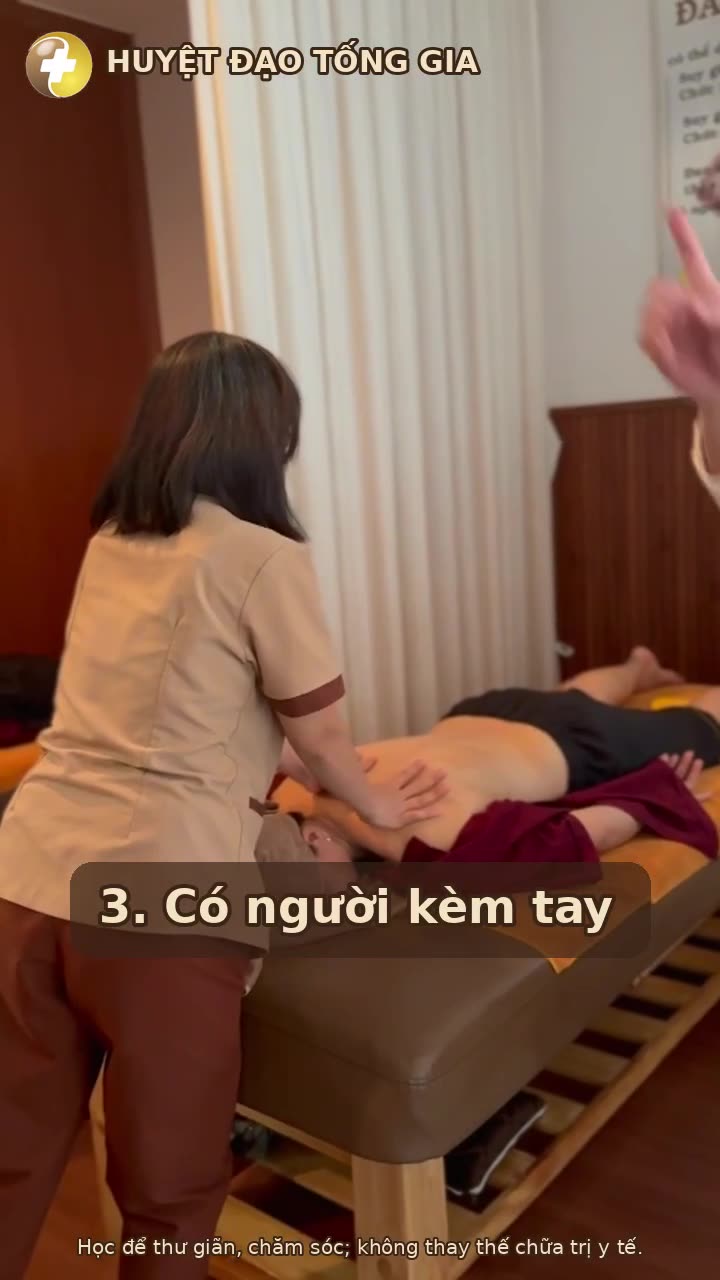
- Have the person receiving care lie face down, arms along the body.
- Place your hands on the two iliac crests. The line joining them is roughly level with the 4th lumbar vertebra (where the Dachangshu acupoint (Đại Trường Du, BL25, 大肠俞) is).
- From there, walk your finger up each spinous process: lumbar 3, 2, 1, then thoracic 12, up to thoracic 11.
- Find the hollow just below the spinous process of T11, then measure 1.5 cun out to each side (about the width of the index and middle fingers held together, using the fingers of the person receiving care).
To double-check: the tip of the last rib (the 12th rib) usually lies near this area. If the two methods give two spots too far apart, count again from the start.
Why do wellness learners need to know Pishu?
In the five-organ wellness section, each organ has a group of points to care for. Pishu is a point on the back and is often paired with points on the legs such as the Zusanli acupoint (Túc Tam Lý, ST36, 足三里). For practitioners, the back at the level of T11–T12 is also where the spinal erector muscles often tighten in people who sit for long periods or bend forward a lot.
In the Tong Gia way of working, before pressing, the learner feels and compares both sides: which side's muscle is thicker, tighter, colder or warmer. This is noted first, and only then is the pressure chosen.
Try it now: pressing Pishu with the right pressure
- Place both thumbs on the two points on either side of the spine, with the other fingers resting lightly on the ribs.
- Press slightly inward at an angle, increasing pressure over 3 breaths, hold for 8–10 seconds, then release slowly.
- Repeat 3–5 times. A dull ache with gentle spreading warmth is just right. If it feels sharp, reduce the pressure.
- Finish by stroking down both sides of the back with your palms, from top to bottom.
Note this: when not to press Pishu?
- Right after a heavy meal or when very hungry and weak.
- A recently injured back, with bruising, swelling or heat.
- Prolonged abdominal or back pain, unexplained weight loss, unusual bowel movements: do not handle it yourself with acupressure; advise the person to see a doctor at a healthcare facility.
- Pregnant women: consult a doctor before working on the back.
Acupressure at Tong Gia is wellness care that helps people relax; it does not replace seeing a doctor when there are unusual signs.
Where to learn back acupressure?
Counting vertebrae, measuring cun and pressing in the right direction need someone guiding your hands to get it right. At Tong Gia Acupoint Wellness, Lương Y Tống Văn Huynh teaches on two pillars: Y Tướng Học (face reading for wellness) to read the face and understand the organs before laying hands on, and therapeutic-style massage with spinal nerve-reflex balancing to cross-check by hand on the spine. About 70% of class time is hands-on practice on real people. Anyone who wants to go deeper into the five organs can read five-organ wellness.
Pishu (BL20) and the back-shu points: location table
People searching for an acupoint usually want to know where one specific point is. On the back, the quickest way to remember is to learn the whole row of back-shu points: they lie on the Bladder meridian, 1.5 cun from the midline, each level with the lower border of a spinous process and named after an organ.
| Point | Code | Level with spinous process | Organ |
|---|---|---|---|
| Feishu | BL13 | T3 | Lung |
| Xinshu | BL15 | T5 | Heart |
| Geshu | BL17 | T7 | (diaphragm) |
| Ganshu | BL18 | T9 | Liver |
| Danshu | BL19 | T10 | Gallbladder |
| Pishu | BL20 | T11 | Spleen |
| Weishu | BL21 | T12 | Stomach |
| Shenshu | BL23 | L2 | Kidney |
| Dachangshu | BL25 | L4 | Large intestine |
Three landmarks for counting vertebrae accurately
- C7: with the head bent forward, the most prominent spinous process at the base of the neck is usually C7. Count down from it: T1, T2, T3…
- Lower angle of the shoulder blade: with the receiver standing or sitting upright, arms relaxed, the line joining both lower angles is usually level with T7. Count four more down to reach T11, where Pishu lies.
- Iliac crest: the line joining both iliac crests is usually level with L4. Count up: L3, L2, L1, then T12, T11.
Counting from two directions (down from the shoulder blades and up from the iliac crests) and comparing is how learners check whether they miscounted. Any landmark can shift in people with curved spines or heavier builds, so feel each spinous process rather than estimating.
Pishu within a back session
In Tong Gia's 90-minute back session, Pishu is not pressed on its own. The practitioner first releases the muscles along both sides of the spine, then presses the back-shu points from top to bottom, comparing tension on each side. One-sided tightness around T11–T12 often goes with sitting crooked or irregular meals; learners note it to ask the client, never to conclude for them. Back pain with fever, weight loss, strong abdominal pain or blood in the urine means stop and advise a medical check-up.
Further reading on this topic: Kunlun (BL60) location and how to locate acupoints · acupressure massage at home: meridians, pressure and safety · Face reading and eating habits: how Tong Gia Y Tuong Hoc learners look at lips, mouth and complexion · Learn acupressure in Ho Chi Minh City: where to start, locating points, force, rhythm, and self-study vs a teacher
How to register
The weekly Sunday-morning trial class, 9:00–12:00, and the free Sunday Y Tướng Học session are open to newcomers, at căn T16-21 khu Manhattan, Vinhomes Grand Park, TP. Thủ Đức (Thu Duc City, Ho Chi Minh City). Sign up for a trial class or call the training hotline 0917 945 259.
Frequently asked questions
Where is the Pishu acupoint? On the back, 1.5 cun to each side of the spinal midline, level with the hollow below the spinous process of the 11th thoracic vertebra.
Which meridian does the Pishu acupoint belong to? The Foot Taiyang Bladder meridian; it is the back-shu point of the Spleen.
How do I find the 11th thoracic vertebra? Use the line joining the two iliac crests as the lumbar 4 landmark, then walk up each spinous process: lumbar 3, 2, 1, thoracic 12, thoracic 11.
When should you not press the Pishu acupoint? Right after a heavy meal, when the back has been recently injured or is swollen and hot, or with prolonged abdominal or back pain or unexplained weight loss. In the latter cases, see a doctor.
What is the Pishu acupoint good for? In Eastern wellness tradition, Pishu is a Back-Shu point, where the qi of the Spleen gathers on the back; the Spleen is linked to transforming food into qi and blood. In 5-organ wellness care, learners press Pishu to care for the Spleen, usually together with Zusanli (ST36). This is relaxation care and does not replace seeing a doctor.
How far from the spine are the back-shu points? The back-shu points on the Bladder meridian lie 1.5 cun from the midline, each level with the lower border of a spinous process; for example, Pishu is level with T11.
How do I find T11 on the back? Find the line between the lower angles of the shoulder blades (usually T7) and count four down, or start from the line between the iliac crests (usually L4) and count up. Count both ways and compare.
What is the difference between Pishu and Weishu? Both are on the Bladder meridian, 1.5 cun from the midline. Pishu is level with T11, Weishu one vertebra lower at T12. Learners usually press them one after the other when caring for the mid back.
Who should not have Pishu pressed? Do not press when the back has a wound or hot swelling, or when the person has a fever; pregnant women should ask a medical facility first. Back pain with strong abdominal pain, weight loss or blood in the urine means stop and advise a check-up.
Which points is Pishu often paired with? In wellness care, Pishu is often combined with Weishu on the back and Zusanli (ST36) on the lower leg, caring for Spleen and Stomach from both the back and the leg. Order and pressure are taught hands-on in class.
Related articles
- The 12 main meridians: names, pathway rules and peak qi hours, an easy-to-remember table for learners
- The 3 zones of the face in Y Tướng Học: how to divide and read them to give the right care
- What are the 8 extraordinary vessels: their role, main pathways and how wellness learners use them
- Yin-Yang and the Five Elements for wellness learners: understand enough for your hands to work correctly
- All articles about learning the trade
Reserve a free Sunday-morning trial class or ask about the learning path: message Zalo 0917 945 259.

Founder of Tong Gia Acupoint Wellness (Huyệt Đạo Tống Gia), with more than 13 years in Eastern wellness practice, Y Tướng Học (face reading for wellness) and spinal nerve-reflex balancing. Lương Y's story
417 customers have reviewed Tong Gia on Google Maps
Reviews are written by customers themselves on Google; tap to read them before you visit.
Huyệt Đạo Tống Gia Quận 12
225 Dương Thị Mười, Phường Tân Chánh Hiệp (District 12, Ho Chi Minh City). 8:00 – 19:00 daily.
See reviews on Google MapsHuyệt Đạo Tống Gia Quận 9
Căn T16-21 khu Manhattan, Vinhomes Grand Park, Phường Long Bình (Thủ Đức City, Ho Chi Minh City). 9:00 – 20:00 daily.
See reviews on Google MapsWant to be observed in person?
A 90-minute session starts with observation, and only then moves on to muscle release and acupressure on the right areas. Two branches: District 12 and Vinhomes Grand Park.