The Tianzhu point (Thiên Trụ): find it at the nape hairline, press upward toward the skull base and know when to stop
Lương Y (traditional healer) Tống Văn Huynh · Tong Gia Acupoint Wellness (Huyệt Đạo Tống Gia) · 22/11/2026
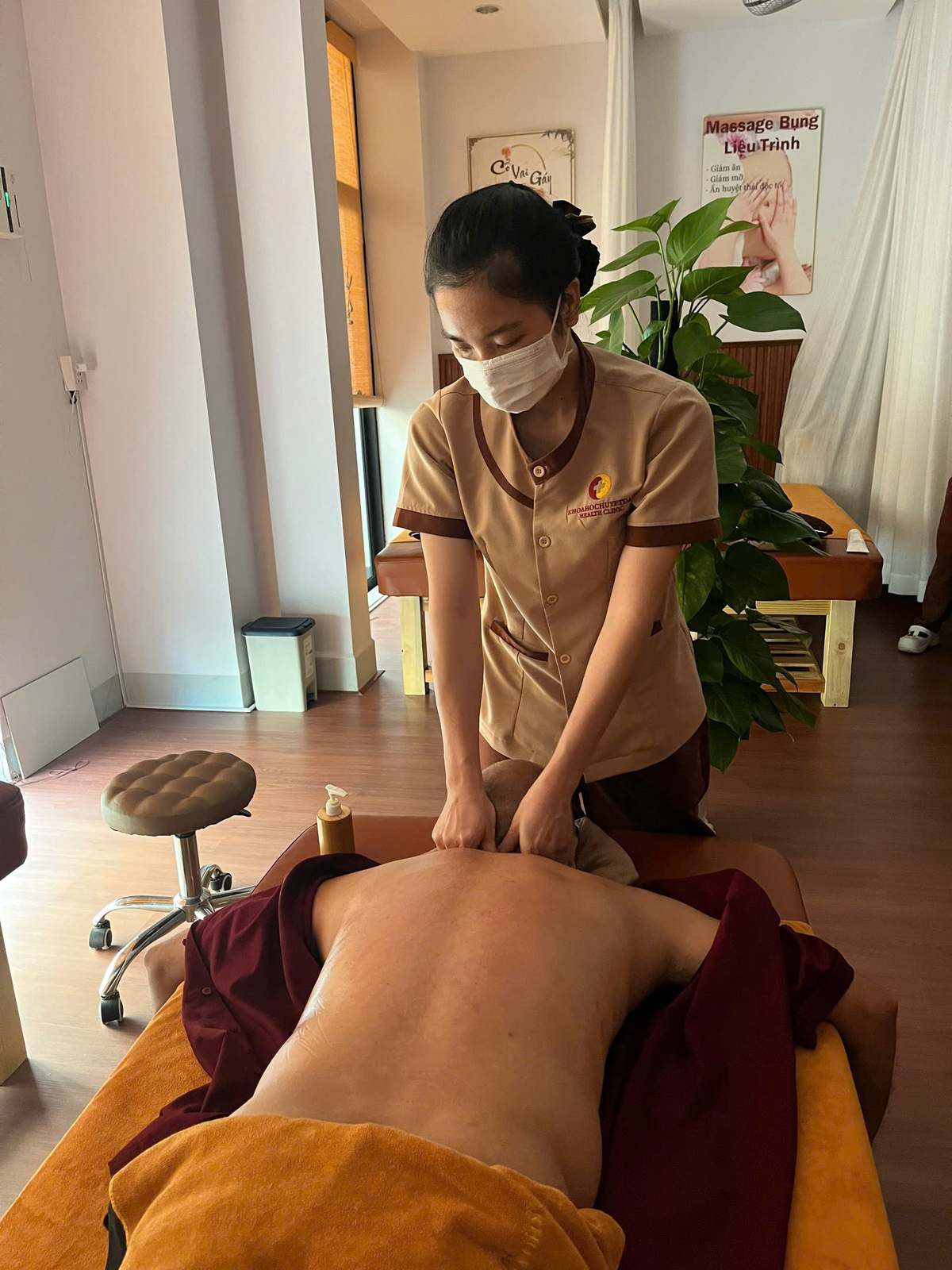
The Tianzhu point (Thiên Trụ) (BL10, Bladder channel) lies within the hairline at the back of the neck, level with the Yamen point (Á Môn), 1.3 cun from the midline, in the hollow just outside the trapezius. As Tong Gia Acupoint Wellness (Huyệt Đạo Tống Gia) teaches, learners use the thumb pad to press upward toward the skull base with light to moderate pressure, hold 5–7 seconds, release, and stop at once if the client feels dizzy or tingling runs down the arm.
Questions learners often ask about the Tianzhu point (Thiên Trụ)
Where exactly is the Tianzhu point (BL10), how do I find it by hand, how long should I press it and who should not?
Thiên Trụ sits within the nape hairline, level with Á Môn, 1.3 cun from the midline, just outside the trapezius. From Á Môn, slide sideways over the thick neck muscle and you drop into a groove. Hold 5–7 seconds, repeat 5–6 times. Skip it after a recent neck injury, with severe dizziness or arm numbness that keeps increasing; see a medical professional.
I am 45, an accountant in Thu Duc City, and my neck feels heavy every afternoon. Is it safe to press Thiên Trụ myself?
Yes, if you press gently and upward toward the skull base. Beneath it lie the trapezius and semispinalis capitis, near the greater occipital nerve, so strong force is not needed. Eastern medicine sees it as where the Bladder channel passes from head to back. This is wellness care, not medicine; lasting heaviness or growing arm numbness needs a medical check.
Where near District 9 or Vinhomes Grand Park can I learn neck acupressure with someone correcting my hands?
Tong Gia Acupoint Wellness at unit T16-21, Manhattan block, Vinhomes Grand Park, Thu Duc City teaches the head, face and neck point sequence, including Thiên Trụ and Phong Trì. Lương Y Tống Văn Huynh teaches; about 70% of class time is hands-on practice on real people, with each learner’s thumb direction corrected; hotline 0917 945 259.
Where is the Tianzhu point?
The Tianzhu point (Thiên Trụ) is one learners meet in the very first neck lesson, because almost everyone who sits at a computer for long hours feels tired exactly here. Its international code is BL10, the tenth point of the Foot Taiyang Bladder channel. “Thiên” means heaven, referring to the head; “trụ” means pillar: two columns of muscle run up either side of the nape and hold the head, and the point sits at the foot of those pillars. Standard location: within the hairline at the back of the neck, level with the Á Môn point on the midline, 1.3 cun from the midline, in the hollow just outside the trapezius.
The cun here is the body’s own measure, taken from the fingers of the person receiving care: the width of the thumb at its knuckle is 1 cun. So 1.3 cun is a little wider than the client’s thumb, not the practitioner’s.
What lies beneath: an anatomical view
On the nape, the first layer your finger meets is the trapezius, a sheet of muscle spreading from the occipital bone to the shoulder. Deeper lies the semispinalis capitis, a thick muscle running up both sides of the cervical spine to the occipital bone; this is the “pillar” you can feel. Close by, the greater occipital nerve travels from deep to superficial, passing through the neck muscles to the back of the scalp. When the neck muscles stay tight for a long time, many people feel heaviness spreading from the nape to the top of the head; learners need to understand this link but must not draw conclusions that belong to a medical facility. Read more in anatomy of the neck and shoulder muscles.
In Eastern medicine, the Bladder channel runs from the inner corner of the eye over the top of the head, down the nape and then in two lines along the back. Thiên Trụ is the gateway where the channel passes from the head to the trunk, so when caring for the back, learners usually open the nape first. See also the Bladder channel along the back.
How to find Thiên Trụ by hand
- The person sits with the chin slightly tucked so the nape lengthens, or lies face down with the forehead on a pillow.
- Place the middle finger on the bony bump at the back of the head and slide straight down the midline to the hollow below the occipital bone, then about half a cun further: this is the Á Môn area, still inside the hairline.
- From Á Môn, slide the finger sideways. It climbs over a thick muscle, firm like a rope: that is the neck column.
- Right at the outer edge of that muscle, the finger drops into a slight groove. That is Thiên Trụ, about 1.3 cun from the midline.
Try it now: sit upright, interlace your hands behind your head and place both thumbs in the two Thiên Trụ grooves. Slowly tuck your chin and lift it three times. As you tuck, the muscle column tightens and the groove becomes clearer; as you lift, the muscle softens. Note which side feels harder and which side feels fuller when pressed. This is the first neck-reading exercise Tong Gia learners do on themselves before working on anyone else.
Pressure and direction
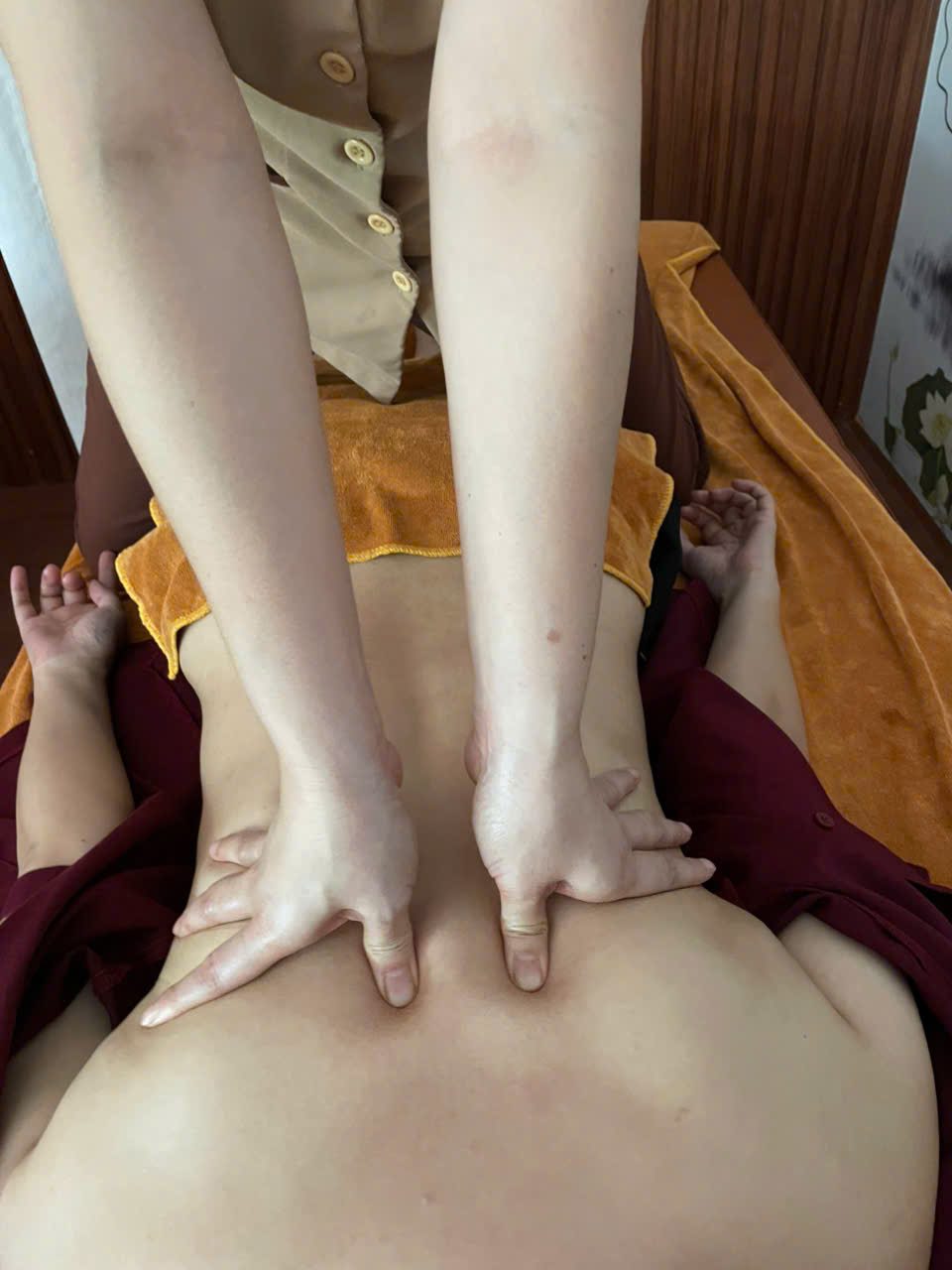
- Finger: the thumb pad, nail trimmed short; the other fingers cradle the client’s head lightly.
- Direction: press upward toward the base of the occipital bone and slightly inward; never straight forward into the neck.
- Pressure: light to moderate, built up gradually; a mild fullness spreading to the back of the head is enough, with no sharp pain and no tingling down the arm.
- Rhythm: hold 5–7 seconds, release 3 seconds, repeat 5–6 times each side; or slow circles for 30–60 seconds.
- Follow-up: glide down the neck column toward the shoulder 5 times so the muscle releases evenly.
In the Specialist course, learners add the 5 pressure levels and how to read excited and inhibited zones along the spine; the pressure at Thiên Trụ is then chosen by what the hands read, not by habit.
Pairing with Phong Trì
Outside and slightly above Thiên Trụ is the Phong Trì point (GB20, Gallbladder channel), in the hollow below the occipital bone between the sternocleidomastoid and the trapezius. The two are often worked in sequence: press Thiên Trụ until the neck column softens, then slide diagonally up and out to Phong Trì. This order keeps the hands moving along one line, so the client is not touched and released again and again. When a client often feels heaviness at the back of the head, read headache at the back of the neck: what practitioners should know to tell when to work and when to stop.
When not to press, and when to advise a medical check
| Situation | Learner should |
|---|---|
| Recent neck injury: a fall, a traffic accident, whiplash | Do not press the nape; advise a visit to a medical facility |
| Severe dizziness, nausea, blurred vision when turning the neck | Stop at once, let the client sit and rest, advise a medical check |
| Arm numbness or weakness that keeps increasing, dropping things | Do not work the neck; advise a medical check |
| Sudden severe headache, fever with a stiff neck | Call emergency services or go for a check at once |
| Tired neck after a long day at the computer | Press lightly, add neck and shoulder release, suggest changing posture |
Acupressure is hands-on wellness care, not a medical service. On the neck, Tong Gia does not teach cracking or jerking twists; the hands use moderate pressure and always ask how the client feels.
Where to learn neck acupressure?
At Tong Gia Acupoint Wellness, Thiên Trụ is taught within the head, face and neck sequence together with Y Tuong Hoc (Vietnamese physiognomy): before touching, learners look at the complexion, the shape of the neck and how the client holds the head, because “the signs show outside, the organs are inside”; every impression is then checked again by hand along the spine. Lương Y Tống Văn Huynh, with more than 13 years in the craft, has learners practise on real people for about 70% of class time in small groups, correcting each person’s thumb direction. See the pathway in learning head, face and neck acupressure.
How to register
The Sunday morning trial class 9:00–12:00 (10 places) and the Sunday Y Tuong Hoc session with no fee are open sessions for beginners, at unit T16-21, Manhattan block, Vinhomes Grand Park, Thu Duc City, Ho Chi Minh City. Book a trial class or call the training hotline 0917 945 259.
Frequently asked questions
Where is the Tianzhu point (Thiên Trụ)? Within the nape hairline, level with the Á Môn point, 1.3 cun from the midline, in the hollow just outside the trapezius; code BL10, Bladder channel.
How do Thiên Trụ and Phong Trì differ? Thiên Trụ is closer to the midline, at the outer edge of the neck column; Phong Trì lies further out and higher, in the hollow below the occipital bone, on the Gallbladder channel.
How long and in which direction should Thiên Trụ be pressed? Hold 5–7 seconds, release 3 seconds, repeat 5–6 times each side, pressing upward toward the occipital base with light to moderate pressure.
When should Thiên Trụ not be pressed? After a recent neck injury, with severe dizziness, increasing arm numbness or weakness, a sudden headache or fever with a stiff neck; then advise a medical check.
Where can I learn neck acupressure in Ho Chi Minh City? Tong Gia Acupoint Wellness, unit T16-21, Manhattan block, Vinhomes Grand Park, Thu Duc City; Sunday morning trial class, hotline 0917 945 259.
Related articles
- Where is the Qiuhou point (Cầu Hậu) and how to press it: finding it on the lower eye-socket rim and pressing gently
- Where is the Juliao point (Cự Liêu) and how to press it: below the cheekbone, level with the nostril, with the right pressure
- Where is the Da Ying point and how to press it: the jaw point where learners must avoid pressing the pulse
- All articles about learning the trade
Reserve a free Sunday-morning trial class or ask about the learning path: message Zalo 0917 945 259.

Founder of Tong Gia Acupoint Wellness (Huyệt Đạo Tống Gia), with more than 13 years in Eastern wellness practice, Y Tướng Học (face reading for wellness) and spinal nerve-reflex balancing. Lương Y's story
417 customers have reviewed Tong Gia on Google Maps
Reviews are written by customers themselves on Google; tap to read them before you visit.
Huyệt Đạo Tống Gia Quận 12
225 Dương Thị Mười, Phường Tân Chánh Hiệp (District 12, Ho Chi Minh City). 8:00 – 19:00 daily.
See reviews on Google MapsHuyệt Đạo Tống Gia Quận 9
Căn T16-21 khu Manhattan, Vinhomes Grand Park, Phường Long Bình (Thủ Đức City, Ho Chi Minh City). 9:00 – 20:00 daily.
See reviews on Google MapsWant to be observed in person?
A 90-minute session starts with observation, and only then moves on to muscle release and acupressure on the right areas. Two branches: District 12 and Vinhomes Grand Park.