What yuan-source and luo-connecting points are: 12 source points, 15 connecting points and a 12-meridian lookup table for learners
Lương Y (traditional healer) Tống Văn Huynh · Tong Gia Acupoint Wellness (Huyệt Đạo Tống Gia) · 29/11/2026
What yuan-source and luo-connecting points are: a yuan-source point (nguyên huyệt) is where the source qi of an organ passes and lingers on its meridian; each main meridian has one, found around the wrist or ankle. A luo-connecting point (lạc huyệt) is where a connecting branch leaves a meridian and joins its interior-exterior partner; there are 15 in all. Learners at Tong Gia Acupoint Wellness (Huyệt Đạo Tống Gia) practise finding each pair on a partner.
Questions learners often ask about yuan-source and luo-connecting points
I am 35 and new to acupressure in Thu Duc. How do yuan-source points differ from luo-connecting points?
A yuan-source point is where the source qi of an organ passes; each meridian has one, around the wrist or ankle. A luo-connecting point is where a branch leaves to join the paired meridian, mostly on the forearm or lower leg. Tong Gia Acupoint Wellness teaches this as wellness knowledge, not as a medical trade.
Which group do Hegu (LI4) and Neiguan (PC6) belong to, where are they, how long to press, and who should avoid it?
Hegu is the source point of the Large Intestine meridian, between the first and second hand bones. Neiguan is the connecting point of the Pericardium meridian, 2 cun above the wrist crease between two tendons. Press with moderate force for 30 seconds to 1 minute. Pregnant women should not have Hegu pressed hard; lasting pain needs a medical check.
As a beginner in Ho Chi Minh City, in what order should I learn the 12 source and 15 connecting points?
Learn the pathways of the 12 meridians first, then the table by six paired meridians, one pair a day, feeling the points on your own limbs before a partner. Lương Y Tống Văn Huynh teaches at unit T16-21, Manhattan block, Vinhomes Grand Park, Thu Duc City; trial class on Sunday morning, training hotline 0917 945 259.
What yuan-source and luo-connecting points are
The short answer to what yuan-source and luo-connecting points are: they are two special groups of points on the 12 main meridians, grouped by role and not by body region. Vietnamese texts call them nguyên huyệt and lạc huyệt. This article is written for people learning wellness care: understand the idea, know the locations, remember the table and use it at a safe level.
Source points: where source qi passes
"Yuan" (nguyên) means origin. In East Asian medical theory, source qi is the root qi of the body; it arises from the Kidney, travels through the Triple Burner to the organs and then out to the limbs. On each main meridian one point is where the source qi of that organ passes and lingers, and it is called the source point. There are 12 source points for the 12 meridians.
The easy thing to remember about location: all 12 lie on the far part of the limbs, around the wrists, ankles, backs of the hands and the feet. On the six yin meridians the source point is the same as the shu-stream point of the five transport points; on the six yang meridians it is a separate point.
Connecting points: where two paired meridians link
"Luo" (lạc) means a net, a side branch. Each main meridian has a connecting vessel that leaves from one point and runs to its interior-exterior partner, for example from the Lung meridian to the Large Intestine meridian. The point where that vessel leaves is the connecting point.
There are 15 connecting points: 12 on the 12 main meridians, plus Jiuwei (Cưu Vĩ) on the Conception vessel, Changqiang (Trường Cường) on the Governing vessel, and Dabao (Đại Bao), the great connecting point of the Spleen. Those of the 12 meridians mostly lie on the forearm and lower leg, a little higher than the source points; Gongsun and Dazhong are the exceptions, on the foot. If the interior-exterior pairing is new to you, read the principles of the meridians first.
Table of the 12 meridians, source points and connecting points
| Meridian | Source point | Connecting point |
|---|---|---|
| Lung | Taiyuan / Thái Uyên (LU9) | Lieque / Liệt Khuyết (LU7) |
| Large Intestine | Hegu / Hợp Cốc (LI4) | Pianli / Thiên Lịch (LI6) |
| Stomach | Chongyang / Xung Dương (ST42) | Fenglong / Phong Long (ST40) |
| Spleen | Taibai / Thái Bạch (SP3) | Gongsun / Công Tôn (SP4) |
| Heart | Shenmen / Thần Môn (HT7) | Tongli / Thông Lý (HT5) |
| Small Intestine | Wangu / Uyển Cốt (SI4) | Zhizheng / Chi Chính (SI7) |
| Bladder | Jinggu / Kinh Cốt (BL64) | Feiyang / Phi Dương (BL58) |
| Kidney | Taixi / Thái Khê (KI3) | Dazhong / Đại Chung (KI4) |
| Pericardium | Daling / Đại Lăng (PC7) | Neiguan / Nội Quan (PC6) |
| Triple Burner | Yangchi / Dương Trì (TE4) | Waiguan / Ngoại Quan (TE5) |
| Gallbladder | Qiuxu / Khâu Khư (GB40) | Guangming / Quang Minh (GB37) |
| Liver | Taichong / Thái Xung (LR3) | Ligou / Lãi Câu (LR5) |
Several points in the table have their own article in the acupoint library, for example the Taiyuan point and the Lieque point of the Lung meridian.
How learners memorise them
- Learn by interior-exterior pairs, two rows at a time: Lung with Large Intestine, Spleen with Stomach, Heart with Small Intestine, Kidney with Bladder, Pericardium with Triple Burner, Liver with Gallbladder.
- Remember the location rule first, names second: source points around the wrists and ankles; connecting points mostly on the forearm and lower leg.
- Remember the word "Tai" (Thái): Taiyuan, Taibai, Taixi and Taichong are all source points of yin meridians.
- Remember the pair of "gates": Neiguan on the inner forearm and Waiguan on the outer forearm, facing each other through the arm.
- Feel the points on your own limbs first, then on a partner; one pair of meridians a day, and the table is done in six days.
If you do not yet know the pathways of the 12 meridians, learn the basics of the meridians before this table, because a point name only means something once you know which meridian it sits on.
How they are used in a wellness care session
Classical books describe pairing the source point of one meridian with the connecting point of its partner, known as the source-connecting combination. At the level of a wellness learner, this knowledge explains why hand and foot care routines so often include kneading and pressing around the wrists and ankles; it is not used to deal with illness.
| Item | How |
|---|---|
| Pressure | Moderate; the person feels a light, pleasant ache |
| Time | About 30 seconds to 1 minute per point, each side |
| Movement | Press and hold, or knead in small circles with the pad of the thumb |
| Go lightly | Taiyuan and Chongyang lie over a pulse; only touch and knead gently |
| Pregnancy | No strong pressure on Hegu; ask carefully before starting |
Do not press on skin that is hot and swollen, wounded or recently injured. Lasting pain, growing numbness or weakness, or an underlying condition needs a check at a medical facility; a learner must know when not to work. Tong Gia Acupoint Wellness is a wellness care service, not a medical service.
Look first, hands second
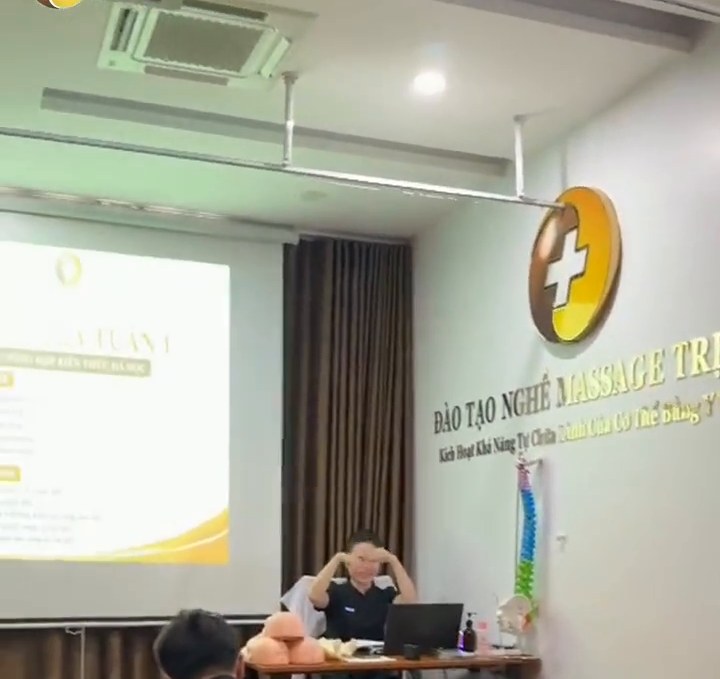
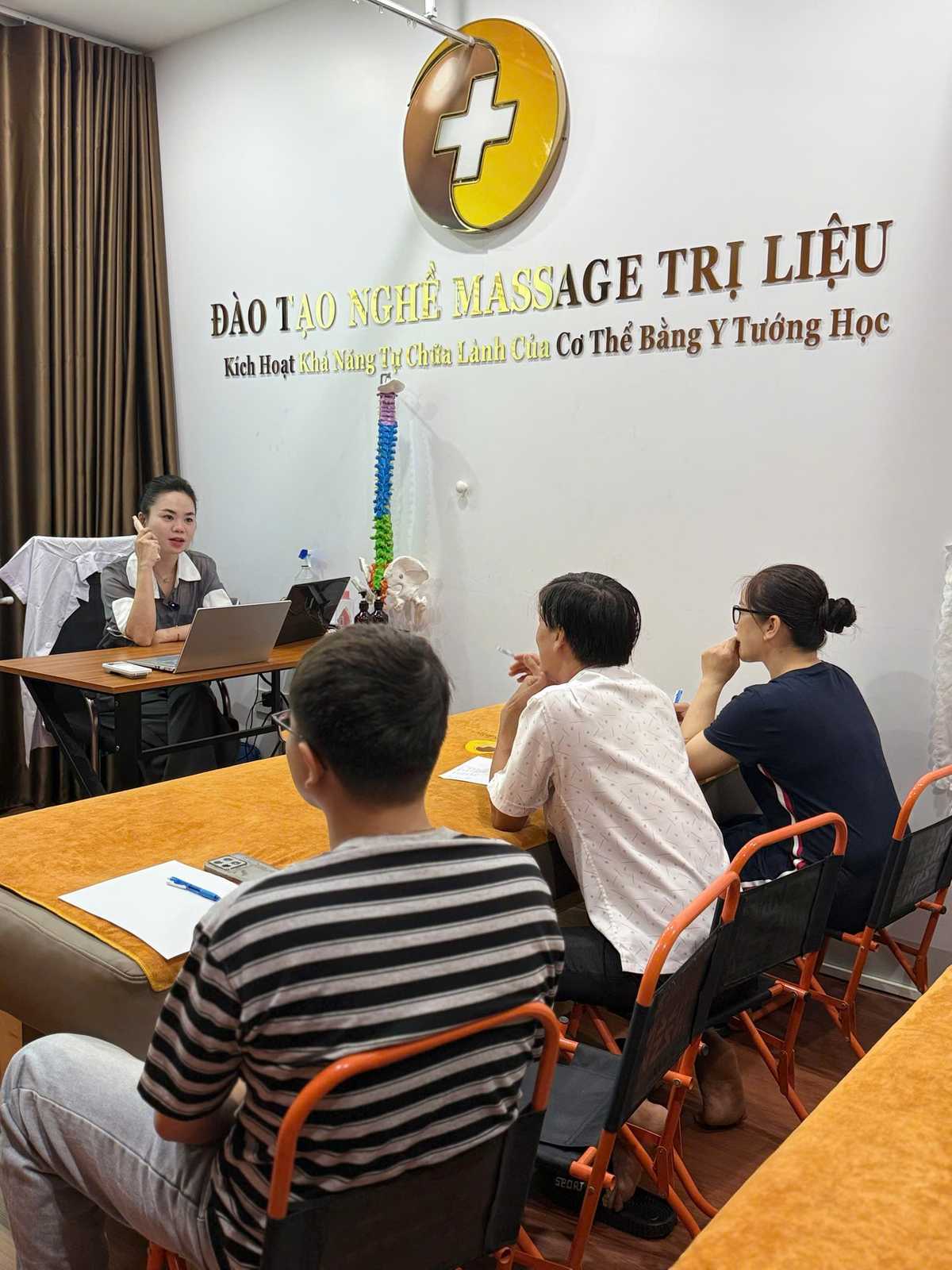
Lương Y Tống Văn Huynh, with over 13 years in the trade, teaches at Tong Gia Acupoint Wellness on two pillars: Y Tuong Hoc (Vietnamese medical face reading) and therapeutic massage that balances the spinal nerve reflex system. Learners look at complexion and build first; every reading from the face is checked again by hand on the spine. The source-connecting table is the theory that goes with it: it lets learners name the spot they are touching on the limbs and understand which organ it corresponds to in the East Asian system.
Beginners start with L1 Introduction to Y Tuong Hoc (1,500,000 VND). Fees and length for L2–L4 are given by the advisor at registration. About 70% of class time is practice in pairs. Tong Gia does not promise jobs or income after the course.
How to register
The class schedule for beginners: the Sunday morning trial class 9:00–12:00 (10 places) and the Sunday Y Tuong Hoc session with no fee, at unit T16-21, Manhattan block, Vinhomes Grand Park, Thu Duc City, Ho Chi Minh City. Book a trial class or call the training hotline 0917 945 259.
Frequently asked questions
What are yuan-source and luo-connecting points? A source point is where the source qi of an organ passes and lingers on its meridian. A connecting point is where a connecting vessel leaves a meridian and joins its interior-exterior partner.
How many source points and connecting points are there? There are 12 source points for the 12 main meridians and 15 connecting points: 12 on the meridians, plus Jiuwei on the Conception vessel, Changqiang on the Governing vessel and Dabao, the great connecting point of the Spleen.
Where on the body are the source points? On the far part of the limbs: around the wrists, ankles, backs of the hands and the feet. For example Taiyuan is on the wrist crease and Taixi is behind the inner ankle bone.
How do source points on yin and yang meridians differ? On the six yin meridians the source point is the same as the shu-stream point of the five transport points. On the six yang meridians it is a separate point located after the shu-stream point.
What is the source-connecting combination, and do wellness learners need it? It is the classical way of pairing the source point of one meridian with the connecting point of its partner. Wellness learners should understand it to see how meridians relate; in practice they only press with moderate force around the wrists and ankles.
Related articles
- Where is the Bingfeng point and how to press it: a point in the middle of the supraspinous fossa, pressed with moderate force in relaxing shoulder care
- Where is the Gao Huang point and how to press it: the point between the shoulder blades in upper-back relaxation
- Where is the Qiuhou point (Cầu Hậu) and how to press it: finding it on the lower eye-socket rim and pressing gently
- Where is the Juliao point (Cự Liêu) and how to press it: below the cheekbone, level with the nostril, with the right pressure
- All articles about learning the trade
Reserve a free Sunday-morning trial class or ask about the learning path: message Zalo 0917 945 259.

Founder of Tong Gia Acupoint Wellness (Huyệt Đạo Tống Gia), with more than 13 years in Eastern wellness practice, Y Tướng Học (face reading for wellness) and spinal nerve-reflex balancing. Lương Y's story
417 customers have reviewed Tong Gia on Google Maps
Reviews are written by customers themselves on Google; tap to read them before you visit.
Huyệt Đạo Tống Gia Quận 12
225 Dương Thị Mười, Phường Tân Chánh Hiệp (District 12, Ho Chi Minh City). 8:00 – 19:00 daily.
See reviews on Google MapsHuyệt Đạo Tống Gia Quận 9
Căn T16-21 khu Manhattan, Vinhomes Grand Park, Phường Long Bình (Thủ Đức City, Ho Chi Minh City). 9:00 – 20:00 daily.
See reviews on Google MapsWant to be observed in person?
A 90-minute session starts with observation, and only then moves on to muscle release and acupressure on the right areas. Two branches: District 12 and Vinhomes Grand Park.