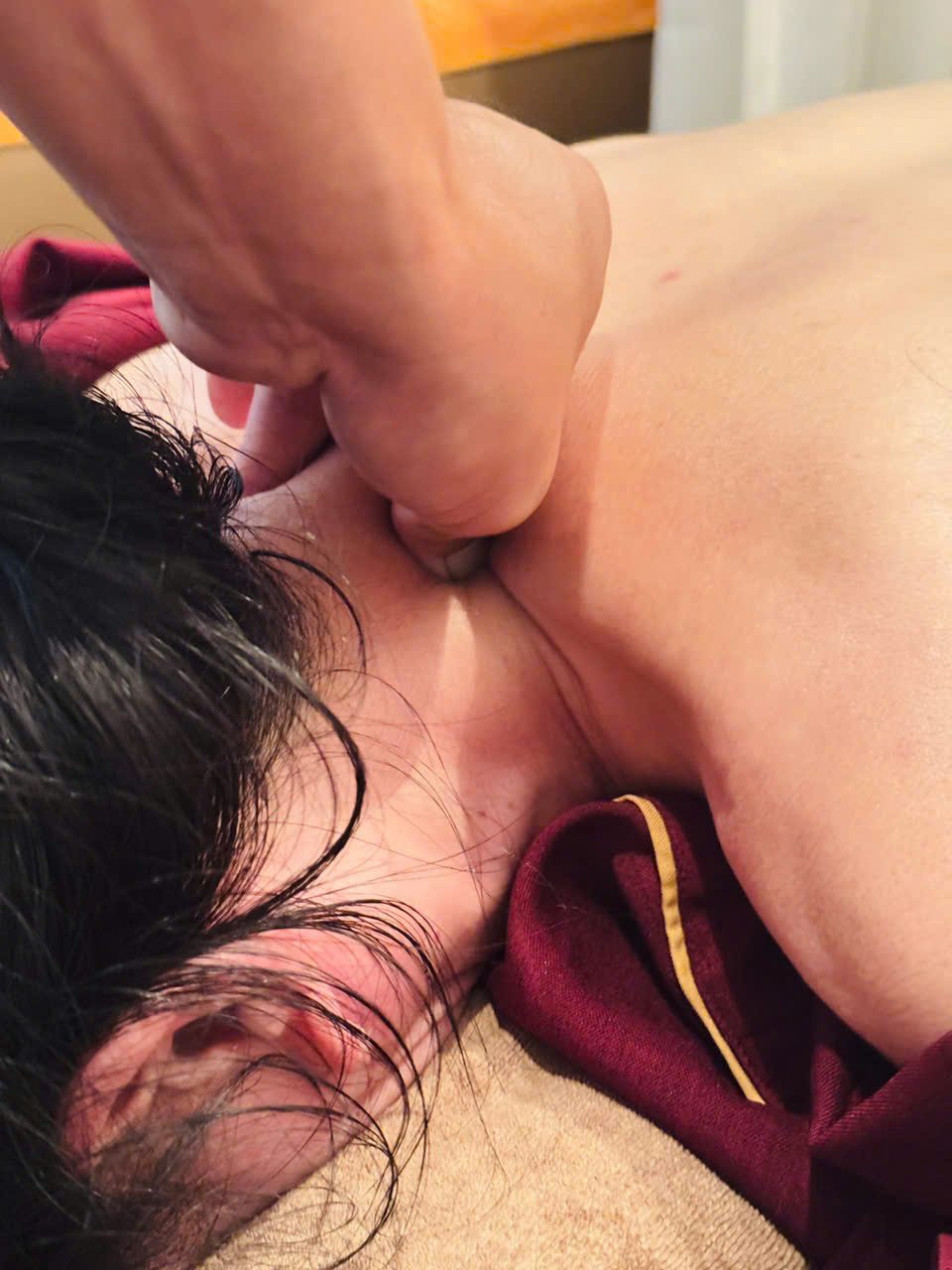
Wellness facial massage course in Vietnam: how it differs from beauty facial massage and what you learn
Lương Y (traditional healer) Tống Văn Huynh · Tong Gia Acupoint Wellness (Huyệt Đạo Tống Gia) · 04/11/2026
Quick answer: A wellness facial massage course teaches you to stroke, glide and gently knead the acupoints of the forehead, eyes, cheeks and jaw following traditional Eastern wellness, so the person receiving it relaxes, feels at ease and lets the facial muscles soften. It does not aim to whiten skin or lift the face like beauty massage. The difference is that you read the complexion before laying your hands on the face. At Tong Gia, wellness facial massage goes together with Y Tướng Học (face reading for wellness) in L1 and acupressure for the head, face and neck in L2.
How wellness facial massage differs from beauty facial massage
Facial massage at a beauty spa usually comes with creams, masks and machines, and its goal is the skin and the facial contours. Wellness facial massage uses only the hands, and its goal is relaxation: the forehead muscles loosen, the jaw clenches less, the eyes feel less tired, and the person receiving it breathes more slowly. The two can go together, but they are two different skills.
- Beauty: works in the direction that lifts the muscles, focuses on products and skin.
- Wellness: follows the meridians, focuses on acupoints, breathing rhythm and complexion.
What steps a wellness facial massage course covers
- Read the complexion first: whether the face is rosy, bluish, yellowish, pale or dull; the circles under the eyes; the lips; the three zones of forehead, nose and cheeks, and chin.
- Warm your hands and rest them on the forehead, then wait a few breaths.
- Glide across the forehead: from the middle of the forehead out to both temples with the thumbs or the three middle fingers.
- Eye area: glide lightly along the arch of the eyebrows, gently knead Toản Trúc (BL2, 攒竹) at the inner end of the eyebrow and Ty Trúc Không (TE23, 丝竹空) at the outer end. Never press on the eyeball.
- Cheeks and nose: knead Nghinh Hương (LI20, 迎香) beside the wing of the nose and Quyền Liêu (SI18, 颧髎) below the cheekbone.
- Jaw area: knead Giáp Xa (ST6, 颊车) at the angle of the jaw, where the chewing muscle bulges when you clench your teeth. People who grind their teeth are often tight here.
- Finish: stroke from the forehead to behind the ears and down the neck, then cup both palms over the eyes for a few breaths.
The pressure on the face is lighter than on any other area. Facial skin is thin and the bones lie close to the surface, so learners have to practise controlling their pressure until the person receiving it feels comfortable rather than "pressed".
Look at the face before laying on hands: the Y Tướng Học part
The face is where a facial massage learner looks the most, so it is also where Y Tướng Học is used most naturally. A furrowed forehead with the inner ends of the eyebrows drawn together usually means someone tense who thinks a lot, so work slowly and for longer on the forehead. A dull face with dark circles under the eyes may mean someone short on sleep, so work lightly and briefly. A broad jaw with prominent chewing muscles means someone who often clenches, so pay attention to the jaw area.
Looking is not for drawing conclusions about health. The organs are the cause, the signs are the effect; what you see only helps you know how to work. See also reading facial complexion in wellness practice.
Why facial massage still requires knowing the cervical spine
The facial muscles, jaw muscles and neck muscles are connected. People with a tight jaw are often tight in the neck muscles on both sides too, with the head pushed forward. At Tong Gia, after the face, learners palpate along the cervical spine and the base of the skull. This is how facial massage links to spinal nerve-reflex balancing: look at the face, then cross-check with the hands on the spine. The article learning acupressure for the head, face and neck covers this part in more detail.
When not to give a facial massage
- The facial skin has inflamed acne, a wound, an allergy or a rash.
- The person has just had a cosmetic procedure on the face.
- Sudden severe headache, a drooping mouth, difficulty speaking or weakness on one side of the body: go to the emergency room immediately.
For lasting pain, numbness or weakness that keeps getting worse, or an underlying illness, see a doctor at a medical facility. Tong Gia is hands-on wellness care, not a medical service.
Who a wellness facial massage course suits
- People working in spas or Vietnamese head spa who want a more systematic facial routine.
- People who want to care for their mother or their spouse in the evening.
- Office workers who want to look after their own eyes and forehead after work.
Which level to study
Reading facial complexion, the three facial zones and a few self-care acupoints are part of L1 Introduction to Y Tướng Học (1.500.000đ). Acupressure for the head, face and neck and the full routine for clients are in L2. Lương Y Tống Văn Huynh guides your hands in person, in small classes. Tong Gia does not promise a job or income after the course.
How to sign up
Free trial class on Sunday morning, 9:00–12:00, and a free Y Tướng Học session on Sunday, at căn T16-21 khu Manhattan, Vinhomes Grand Park, TP. Thủ Đức (Unit T16-21, Manhattan zone, Vinhomes Grand Park, Thu Duc City, Ho Chi Minh City). Sign up for a trial class or call the training hotline 0917 945 259 (Zalo/WhatsApp +84 917 945 259).
Frequently asked questions
Do I need cream for a wellness facial massage? Not necessarily. Wellness facial massage mainly uses the hands; a little light oil can help the hands glide smoothly.
Does wellness facial massage make the skin more beautiful? The goal is relaxation and softening the facial muscles. Tong Gia does not promise beauty results.
How long does it take to learn wellness facial massage? The facial part is included in L1 and L2. A consultant will tell you the exact number of sessions when you sign up.
Which facial acupoints should beginners learn? Toản Trúc (BL2, 攒竹), Ty Trúc Không (TE23, 丝竹空), Thái Dương (EX-HN5, 太阳), Nghinh Hương (LI20, 迎香), Quyền Liêu (SI18, 颧髎) and Giáp Xa (ST6, 颊车) are the points beginners usually learn first.
Related articles
- The 12 main meridians: names, pathway rules and peak qi hours, an easy-to-remember table for learners
- The 3 zones of the face in Y Tướng Học: how to divide them and read them for the right care
- What are the 8 extraordinary vessels: their role, main pathways and how wellness learners use them
- Yin-Yang and the Five Elements for wellness learners: understand enough for your hands to work correctly
- All articles about learning the trade
Reserve a free Sunday-morning trial class or ask about the learning path: message Zalo 0917 945 259.

Founder of Tong Gia Acupoint Wellness (Huyệt Đạo Tống Gia), with more than 13 years in Eastern wellness practice, Y Tướng Học (face reading for wellness) and spinal nerve-reflex balancing. Lương Y's story
417 customers have reviewed Tong Gia on Google Maps
Reviews are written by customers themselves on Google; tap to read them before you visit.
Huyệt Đạo Tống Gia Quận 12
225 Dương Thị Mười, Phường Tân Chánh Hiệp (District 12, Ho Chi Minh City). 8:00 – 19:00 daily.
See reviews on Google MapsHuyệt Đạo Tống Gia Quận 9
Căn T16-21 khu Manhattan, Vinhomes Grand Park, Phường Long Bình (Thủ Đức City, Ho Chi Minh City). 9:00 – 20:00 daily.
See reviews on Google MapsWant to be observed in person?
A 90-minute session starts with observation, and only then moves on to muscle release and acupressure on the right areas. Two branches: District 12 and Vinhomes Grand Park.