Acupressure course for deep breathing and relaxation: which points, how to press, when not to
Lương Y (traditional healer) Tống Văn Huynh · Tong Gia Acupoint Wellness (Huyệt Đạo Tống Gia) · 04/11/2026
Quick answer: Learning acupressure for deep breathing and relaxation means learning a few familiar points such as Nội Quan (PC6, 内关), Đản Trung (CV17, 膻中) and Trung Phủ (LU1, 中府), combined with slow breathing and relaxing the shoulders and upper back. The aim is to help a stressed person breathe more slowly and stop bracing the chest and shoulders; it does not replace seeing a doctor when there is real shortness of breath. At Tong Gia in Ho Chi Minh City, this is part of the wellness lessons taught by Lương Y Tống Văn Huynh.
Why stressed people tend to breathe shallowly
When anxious, under work pressure or hunched over a computer, many people take short breaths in the upper chest, with the shoulders rising on every breath. Over time the muscles of the chest, neck, shoulders and upper back tighten, which makes deep breathing even harder. It is a loop wellness learners often see in office workers, parents of young children and people who sleep poorly.
Acupressure for deep breathing and relaxation does nothing "miraculous". It helps the person receiving it pay attention to their body, let go of areas that are bracing, and follow the slow breathing rhythm of the person giving it.
Learning acupressure for deep breathing and relaxation: points beginners usually learn
- Nội Quan (PC6, 内关): on the inner forearm, about three finger-widths above the wrist crease, between the two tendons. An easy point to press on yourself, often used to relax when feeling restless.
- Đản Trung (CV17, 膻中): in the middle of the chest, roughly level with the midpoint between the nipples in men. Only massage lightly in small circles; do not press hard.
- Trung Phủ (LU1, 中府): on the outer upper chest, below the collarbone, near the hollow of the shoulder. Massage lightly when the upper chest feels tight.
- Kiên Tỉnh (GB21, 肩井): on the top of the shoulder. Gentle squeezing helps the shoulders drop and rise less when breathing.
- Thần Môn (HT7, 神门): on the wrist crease on the little-finger side, often paired with Nội Quan in an evening relaxation routine.
How to combine acupressure with breathing
- Sit with your back straight and shoulders relaxed. The giver rests their hands on the receiver's shoulders and waits a few breaths.
- Breathe in through the nose for 4 counts, breathe out slowly for 6 counts. A longer out-breath than in-breath helps the body settle down.
- Massage the point during the out-breath: increase pressure gradually while breathing out, release while breathing in. 5–8 breaths per point.
- Finish by rubbing the shoulders and upper back from the centre outwards, then let the receiver sit quietly for a minute.
Pregnant women and people with heart problems should ask a qualified professional before receiving acupressure.
The upper back and spine: the part that often gets skipped
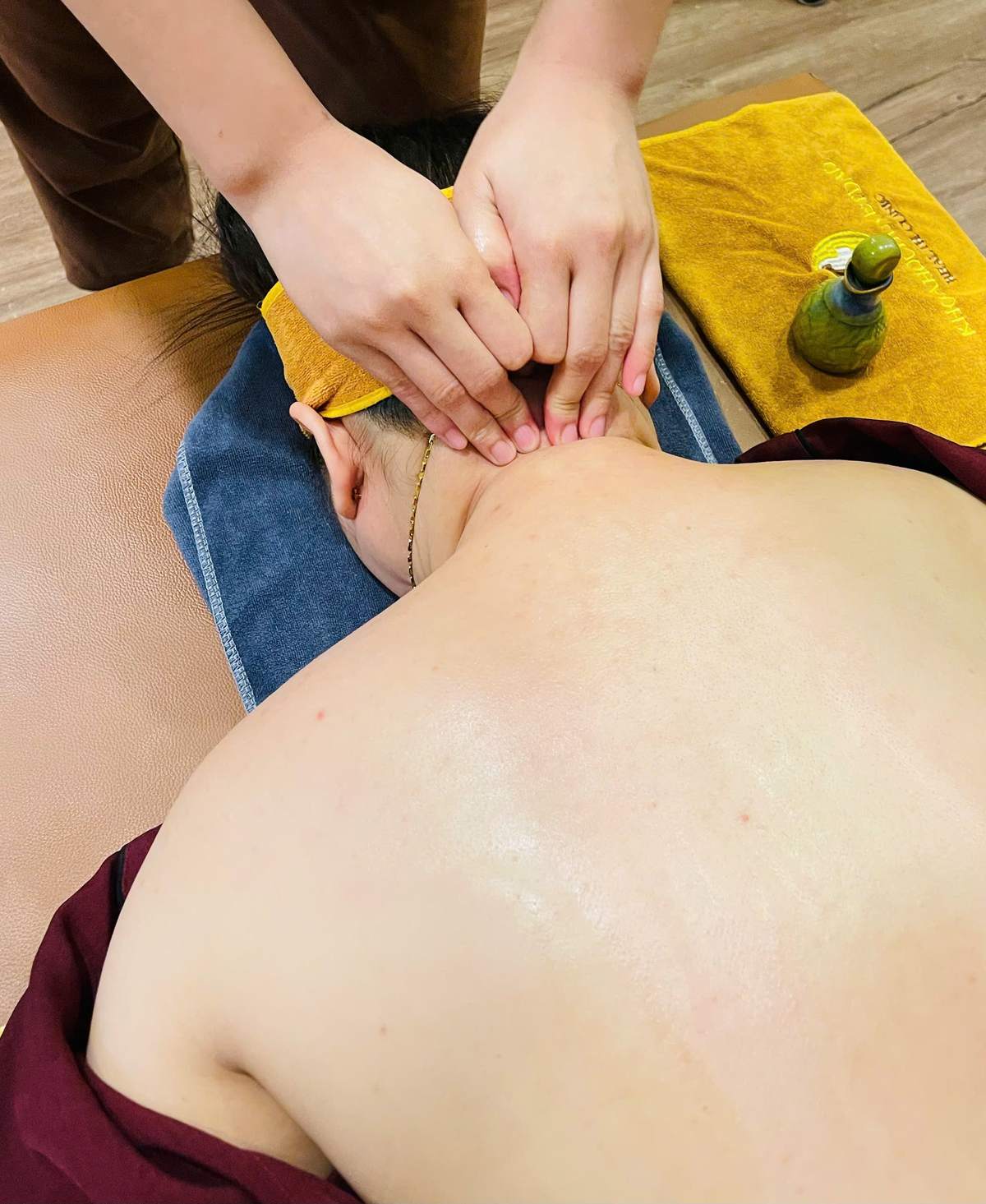
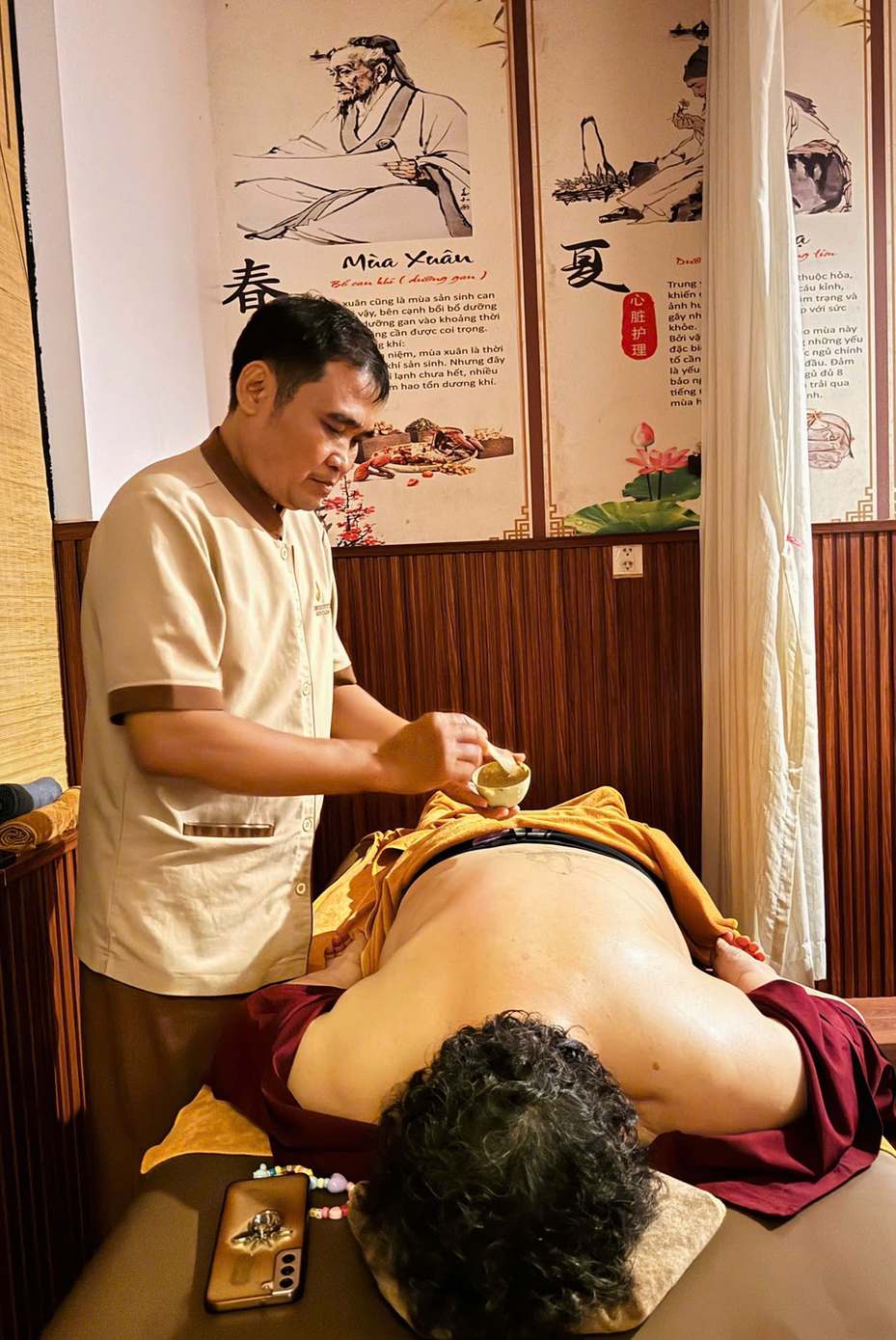
Deep breathing needs a rib cage that can open, and the rib cage is attached to the upper spine. At Tong Gia, learners palpate along both sides of the upper spine, between the shoulder blades, to find tight muscles, then do slow muscle release before pressing points on the chest. This is the link to spinal nerve-reflex balancing, a method that uses only the hands, with no joint cracking and no machines.
Before laying hands on anyone, learners are taught to look: hunched or upright sitting posture, shoulders raised or relaxed, a dull or bright complexion, short or long breaths. That is the Y Tướng Học (face reading for wellness) part, reading the signs to understand the person before working. The article stress and wellness massage says more about how to read a person who is stressed.
When not to use acupressure and see a doctor right away
Sudden shortness of breath, chest pain or tightness, bluish lips, wheezing, a long-lasting cough, fever, or breathlessness that worsens when lying down or walking: this is not a job for someone giving a massage; go to a medical facility right away. People with asthma, lung disease or heart disease who are being followed should keep their check-up schedule. Tong Gia offers hands-on wellness care, not a medical service, and trainees are taught clearly when they must advise a client to see a doctor.
Learning to care for your family
Many people learn this breathing and acupressure routine to do for their parents before bedtime, or for their partner after a stressful working day. Combined with the article self-acupressure for better sleep, you have a small ten-minute habit every evening. A person's truest feng shui is their health.
Which level to study
A few safe self-care points, everyday wellness and how to read a complexion are in L1 Introduction to Y Tướng Học (1.500.000đ). Muscle release of the upper back, neck and shoulders for other people is in L2 Basic Trade. Lương Y Tống Văn Huynh, with more than 13 years in the trade, teaches the classes himself; about 70% of the time is practice in pairs. Tong Gia makes no promise of a job or income after the course.
How to register
Trial class 9:00–12:00 on Sunday mornings and a free Y Tướng Học session on Sundays, at căn T16-21 khu Manhattan, Vinhomes Grand Park, Phường Long Bình, TP. Thủ Đức (Thu Duc City, Ho Chi Minh City). See the trial class section.
Message Zalo 0917 945 259 (WhatsApp +84 917 945 259) with “HỌC THỬ” and your name to hold a place.
Frequently asked questions
Which acupressure points help with deep breathing and relaxation? Beginners usually learn Nội Quan (PC6), Đản Trung (CV17), Trung Phủ (LU1), Kiên Tỉnh (GB21) and Thần Môn (HT7), massaging lightly during a slow out-breath. This is a way to relax, not a replacement for seeing a doctor when breathing is difficult.
Where is the Nội Quan point? On the inner forearm, about three finger-widths above the wrist crease, between the two tendons.
Should I use acupressure when I'm short of breath? Sudden shortness of breath, chest pain or tightness, bluish lips, wheezing or breathlessness that keeps getting worse needs a medical facility right away; do not try acupressure on your own.
Where can I take an acupressure course in Ho Chi Minh City? Tong Gia teaches at Vinhomes Grand Park, Thu Duc City, with a free trial class on Sunday mornings and a free Y Tướng Học session on Sundays.
Related articles
- The 12 main meridians: names, pathway rules and peak qi hours, an easy-to-remember table for learners
- The 3 zones of the face in Y Tướng Học: how to divide them and read them for the right care
- What are the 8 extraordinary vessels: their role, main pathways and how wellness learners use them
- Yin-Yang and the Five Elements for wellness learners: understand enough for your hands to work correctly
- All articles about learning the trade
Reserve a free Sunday-morning trial class or ask about the learning path: message Zalo 0917 945 259.

Founder of Tong Gia Acupoint Wellness (Huyệt Đạo Tống Gia), with more than 13 years in Eastern wellness practice, Y Tướng Học (face reading for wellness) and spinal nerve-reflex balancing. Lương Y's story
417 customers have reviewed Tong Gia on Google Maps
Reviews are written by customers themselves on Google; tap to read them before you visit.
Huyệt Đạo Tống Gia Quận 12
225 Dương Thị Mười, Phường Tân Chánh Hiệp (District 12, Ho Chi Minh City). 8:00 – 19:00 daily.
See reviews on Google MapsHuyệt Đạo Tống Gia Quận 9
Căn T16-21 khu Manhattan, Vinhomes Grand Park, Phường Long Bình (Thủ Đức City, Ho Chi Minh City). 9:00 – 20:00 daily.
See reviews on Google MapsWant to be observed in person?
A 90-minute session starts with observation, and only then moves on to muscle release and acupressure on the right areas. Two branches: District 12 and Vinhomes Grand Park.