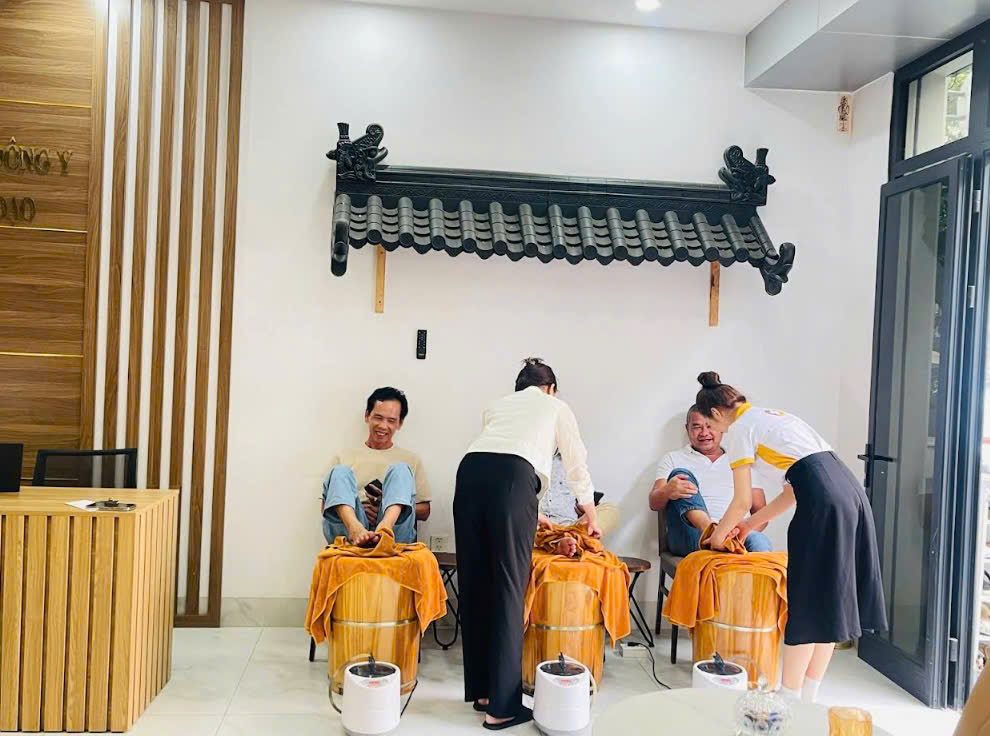
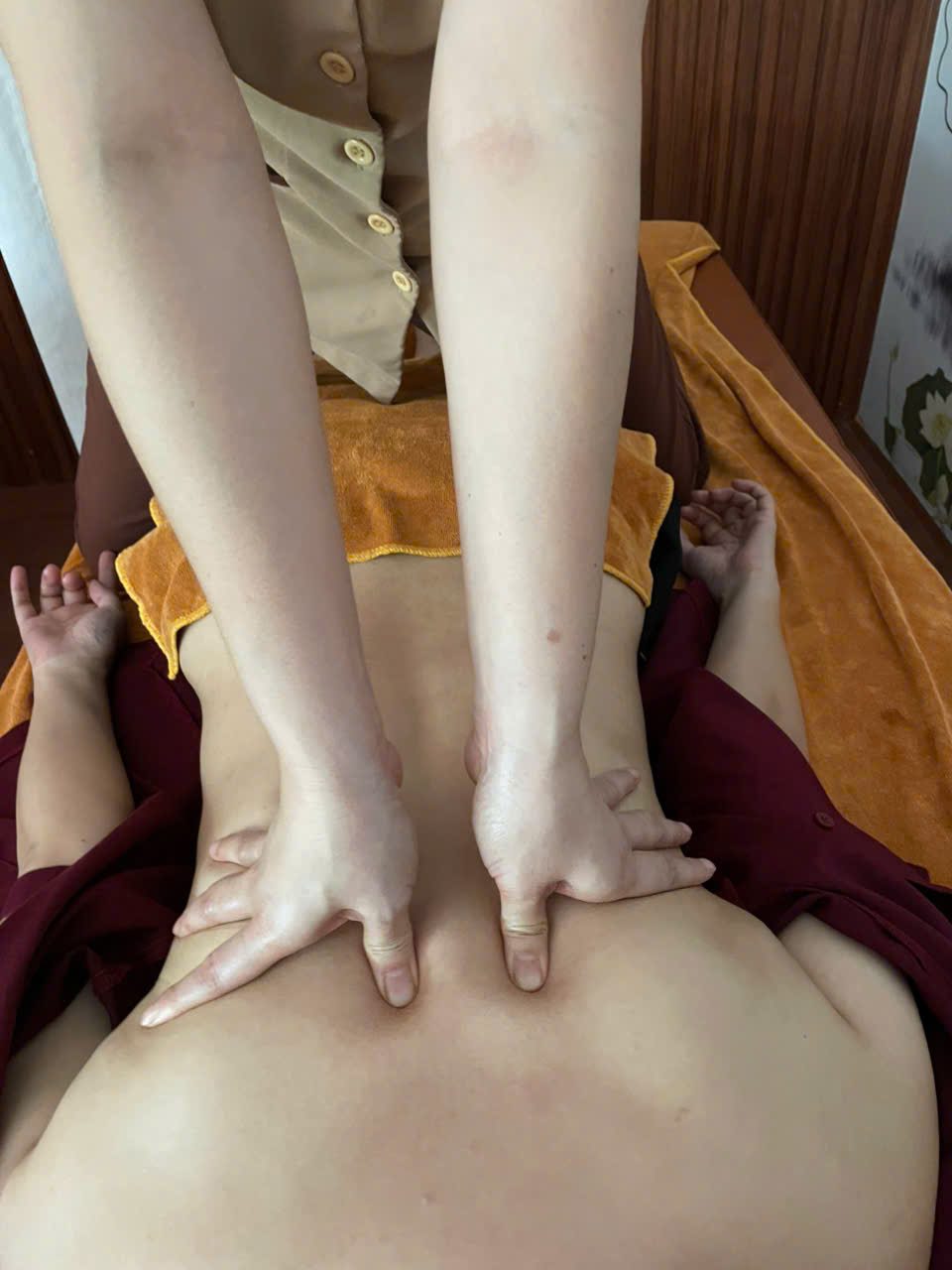
Foot acupressure course: 6 key points, how it differs from foot reflexology, and safe technique
Lương Y (traditional healer) Tống Văn Huynh · Tong Gia Acupoint Wellness (Huyệt Đạo Tống Gia) · 26/10/2026
Quick summary: Learning foot acupressure means learning to find and work the acupoints on the foot and around the ankle, on the meridians that run through the leg such as the Kidney, Liver, Spleen, Stomach and Bladder. Beginners should start with a few key points such as Yongquan, Taichong, Taixi and Kunlun, learn hand pressure and posture carefully, clearly distinguish this from foot reflexology, and know the cases when not to work, such as a person with diabetes who has foot ulcers.
Short answer: Foot acupressure starts with a few key points: Yongquan (KI1), Taichong (LR3), Taixi (KI3) and Kunlun (BL60). The foot has many small bones and tendons, so pressure must stay moderate; Eastern tradition sees the Kidney, Liver and Spleen meridians passing here. Skip anyone with diabetic foot ulcers. Tong Gia teaches this from Level 1; Zalo/WhatsApp +84 917 945 259.
Why many people want to learn foot acupressure
The foot is the easiest area for beginners: the person receiving only needs to sit or lie down without undressing, and the practitioner can sit comfortably. In Eastern wellness many meridians begin or end at the foot, so it is also an area with many familiar acupoints.
That is why learning foot acupressure is often the first step for people who want to care for their family, and a foundation skill for those learning the trade. Although it is easy to start, the foot is an area where practitioners often get careless about safety, especially with older people.
How foot acupressure differs from foot reflexology
These two ideas are often mixed up. In short:
- Foot acupressure is based on the Eastern meridian system: each point lies on a specific meridian, with a location defined by bony landmarks and cun measurements.
- Foot reflexology is based on a map of reflex zones: the sole is divided into zones that correspond to parts of the body, and the practitioner works by zone rather than point by point.
The two approaches overlap and professionals usually know both. If you want to explore the reflex approach, see the article reflexology course and the article foot and spine reflexology. This article focuses on acupoints.
6 key points when learning foot acupressure
The descriptions below are general, to help beginners get oriented. The exact location needs to be adjusted on a real person with a teacher beside you.
- Yongquan (Dũng Tuyền, KI1, 涌泉) (Kidney meridian): on the sole, in the hollow that appears when you curl the toes, about one third of the way back along the sole from the tips of the toes.
- Taichong (Thái Xung, LR3, 太冲) (Liver meridian): on the top of the foot, in the groove between the bones of the big toe and second toe, moving up towards the ankle until you reach a hollow.
- Taixi (Thái Khê, KI3, 太溪) (Kidney meridian): in the hollow between the inner ankle bone and the Achilles tendon.
- Kunlun (Côn Lôn, BL60, 昆仑) (Bladder meridian): in the hollow between the outer ankle bone and the Achilles tendon, opposite Taixi.
- Gongsun (Công Tôn, SP4, 公孙) (Spleen meridian): on the inner edge of the foot, in the hollow in front of and below the base of the first metatarsal bone.
- Neiting (Nội Đình, ST44, 内庭) (Stomach meridian): on the top of the foot, at the end of the web between the second and third toes.
These six points lie on five different meridians, so learning them is also a way to get familiar with the meridians of the leg. For how to measure cun and use bony landmarks, see the article learning to locate acupoints.
Posture, hand pressure and sequence
Posture
The person receiving lies on their back or sits reclined, with a pillow under the knees so the legs are relaxed. The practitioner sits level with the foot, back straight, so as not to bend over, because working that way for long will strain your own back.
Hand pressure
- The skin on the sole is thick; you can use the thumb or the bent knuckle of the index finger, with moderate to fairly firm pressure.
- On the top of the foot and around the ankles the skin is thin and tendons and bones lie close to the surface; use only the pad of the thumb, with lighter pressure.
- Press and hold for a few breaths, then release, or make small circles. Always ask how it feels: a mild ache is enough, a sharp pain is too much.
Suggested sequence
- Warm up the whole foot by rubbing and stroking from the toes to the ankle.
- Sole: Yongquan.
- Inner edge and ankle: Gongsun, Taixi.
- Outer ankle: Kunlun.
- Top of the foot: Taichong, Neiting.
- Finish with light strokes over the whole foot, then move to the other foot.
Who should not have foot acupressure, or needs great care
Learners must master this part before working on anyone else:
- People with diabetes: their feet often have reduced sensation and get scratched without noticing. Do not work when there are ulcers, scratches or discoloured spots; if you do work, use light pressure and check the skin before and after.
- People with varicose veins: do not press or rub along the bulging veins at the ankle and calf.
- A foot that is swollen, hot, red or painful to touch: do not work on it; advise a doctor's visit.
- Fungal infection, open wounds, swollen ingrown nails: skip that area.
- Pregnant women: do not press Kunlun or the other points that wellness texts advise avoiding during pregnancy.
- People who have just eaten a big meal or are very hungry: wait a while before working.
Acupressure is hands-on wellness care and relaxation; it is not a medical service. People with long-lasting heel or foot pain, numbness in the feet that keeps getting worse, swollen feet or underlying conditions should see a doctor at a medical facility. Learners must know when not to work and advise the other person to see a doctor.
Learning foot acupressure to care for family or to work in the trade
If your goal is to care for your parents in the evening, a few key points and safe hand pressure are enough to start. The article learning acupressure at home to care for your parents has more suggestions for this goal.
If your goal is to work in the trade, the foot is only one part. Clients who come to a spa are usually tired in the legs, back, neck and shoulders, so the practitioner needs a seamless routine for the whole session, a way of communicating with clients and, most importantly, the ability to read the body rather than just memorising points.
How Tong Gia teaches the foot
At Tong Gia the foot is not studied in isolation. The first pillar is Y Tướng Học: reading complexion and Five Elements body types to understand the person's condition before laying hands on, because “the organs are the cause, the face shows the effect”. The second pillar is wellness massage with spinal nerve-reflex balancing: everything you see is checked again by hand along the spine before choosing to work on the legs, back or neck and shoulders.
Lương Y Tống Văn Huynh, with more than 13 years in Eastern wellness, teaches the class in person. About 70% of class time is practice on real people; classes are small and Lương Y guides each person. Level L1 Introduction to Y Tướng Học (1.500.000đ) includes a few safe self-care points; level L2 Basic Practitioner covers muscle release, acupressure for the neck and shoulders, back and legs, and the standard 90-minute Tong Gia session routine. Fees from L2 upwards and the number of sessions will be given by the advisor when you register. See the full pathway at 4-level learning ladder. Tong Gia makes no promise of jobs or income after the course.
How to sign up
You can come to the free trial class from 9:00 to 12:00 every Sunday morning, 10 places, at căn T16-21 khu Manhattan, Vinhomes Grand Park, Phường Long Bình, TP. Thủ Đức (Thu Duc, Ho Chi Minh City). Lương Y looks at your hands-on skill and suggests the right level.
The L1 Introduction to Y Tướng Học class runs on a set schedule. Register via hotline 0917 945 259.
Questions learners often ask
Where can I learn foot reflexology and acupressure in Ho Chi Minh City?
You can learn foot acupressure at Tong Gia, Unit T16-21, Vinhomes Grand Park, Thu Duc City, HCMC; the class also explains how it differs from foot reflexology maps. You practise finding Yongquan, Taichong and Taixi on real feet, with moderate pressure around small bones and tendons. Skip feet with ulcers or numbness. Free trial Sunday morning 9:00–12:00; Zalo/WhatsApp +84 917 945 259.
Where can I learn full-body acupressure in Ho Chi Minh City?
Tong Gia teaches full-body acupressure at Unit T16-21, Vinhomes Grand Park, Thu Duc City, HCMC. Students learn key points region by region, using muscles and bones as landmarks, and link them along the Eastern meridians so they are easier to remember. About 70% of class is practice on real people. Free trial Sunday morning 9:00–12:00; Zalo/WhatsApp +84 917 945 259.
What are the main acupoints on the feet, and how can I learn them?
Beginners learn Yongquan (KI1) on the sole, Taichong (LR3) on top of the foot, Taixi (KI3) behind the inner ankle and Kunlun (BL60) behind the outer ankle, each near a bony landmark you can feel. Learn them hands-on with correction: Tong Gia at Vinhomes Grand Park offers a free Sunday morning trial 9:00–12:00; Zalo/WhatsApp +84 917 945 259.
Frequently asked questions
Where is the Yongquan acupoint? Yongquan (KI1) is on the sole, in the hollow that appears when you curl the toes, about one third of the way back along the sole from the tips of the toes.
Are foot acupressure and foot reflexology massage the same? Not exactly. Acupressure is based on points along the meridians, while foot reflexology is based on a map of reflex zones on the sole. The two approaches overlap.
Should people with diabetes have foot acupressure? Great care is needed, because the feet of people with diabetes often have reduced sensation and scratch easily. Do not work when there are ulcers, scratches or discoloured spots, and ask a medical facility for advice first.
When is a good time for foot acupressure? Many people do it in the evening before bed, when the body is already resting. Avoid doing it right after a big meal or when very hungry.
Does Tong Gia teach foot acupressure? Yes. Acupressure for the legs is part of level L2 Basic Practitioner, together with muscle release and acupressure for the neck, shoulders and back. Come to the Sunday-morning trial class and Lương Y will suggest a level.
Related articles
- The 3 no's of Tong Gia's spinal balancing method: no needles, no medication, no rough force
- How many regions do the 33 vertebrae fall into: the spine map every wellness massage learner must know
- 4 objective factors when reading the spine by hand: let your hands record, not guess
- 5 vertebral patterns (raised, sunken, shifted): reading the spine by hand in the Expert course
- All articles about learning the trade
Reserve a free Sunday-morning trial class or ask about the learning path: message Zalo 0917 945 259.

Founder of Tong Gia Acupoint Wellness (Huyệt Đạo Tống Gia), with more than 13 years in Eastern wellness practice, Y Tướng Học (face reading for wellness) and spinal nerve-reflex balancing. Lương Y's story
417 customers have reviewed Tong Gia on Google Maps
Reviews are written by customers themselves on Google; tap to read them before you visit.
Huyệt Đạo Tống Gia Quận 12
225 Dương Thị Mười, Phường Tân Chánh Hiệp (District 12, Ho Chi Minh City). 8:00 – 19:00 daily.
See reviews on Google MapsHuyệt Đạo Tống Gia Quận 9
Căn T16-21 khu Manhattan, Vinhomes Grand Park, Phường Long Bình (Thủ Đức City, Ho Chi Minh City). 9:00 – 20:00 daily.
See reviews on Google MapsWant to be observed in person?
A 90-minute session starts with observation, and only then moves on to muscle release and acupressure on the right areas. Two branches: District 12 and Vinhomes Grand Park.