Helping clients change sleep habits: the practitioner's role beyond the massage table
Lương Y (traditional healer) Tống Văn Huynh · Tong Gia Acupoint Wellness (Huyệt Đạo Tống Gia) · 13/11/2026
Helping clients change sleep habits means asking the right questions about sleep and giving clients a few small, doable steps: bedtime, phone light, dinner, slow breathing and self-massage of the nape. At Tong Gia Acupoint Wellness (Huyệt Đạo Tống Gia) in Ho Chi Minh City, learners do this as wellness care, without promising good sleep or replacing a medical check-up.
Questions learners often ask about helping clients change sleep habits
I do massage in District 9 and my clients often complain of poor sleep. What can I advise without overstepping my role?
Ask about their sleep and suggest one or two small steps: sleep before 11 pm, put the phone face down 30 minutes before bed, eat a light dinner, breathe slowly 4–6. In Eastern medicine, a settled Heart spirit means easier sleep. For weeks of poor sleep, advise a medical check-up. Tong Gia teaches this at Vinhomes Grand Park.
I'm an expat in Ho Chi Minh City learning wellness massage. Do I need Eastern medicine to explain sleep to clients, and at which level?
Yes, at curriculum level: the Heart governs sleep, the Liver stores blood during rest, and the Zi and Chou hours are for deep sleep. At Tong Gia, asking clients and giving aftercare advice start in L1 Foundation (1.500.000₫); Five-Organ Wellness is covered in depth in the Specialist Course (L3), taught by Lương Y Tống Văn Huynh. Zalo 0917 945 259.
I live in Thu Duc. Is there a class that teaches practitioners to give clients lifestyle advice after a session, with a trial first?
Yes. Tong Gia teaches learners to ask about sleep, keep client cards and give aftercare advice following its wellness curriculum, at căn T16-21 khu Manhattan, Vinhomes Grand Park, TP. Thủ Đức (unit T16-21, Manhattan block, Thu Duc City). This is wellness care, not a medical profession. Trial class Sunday morning 9:00–12:00, no fee, Zalo 0917 945 259.
The last ten minutes learners often skip
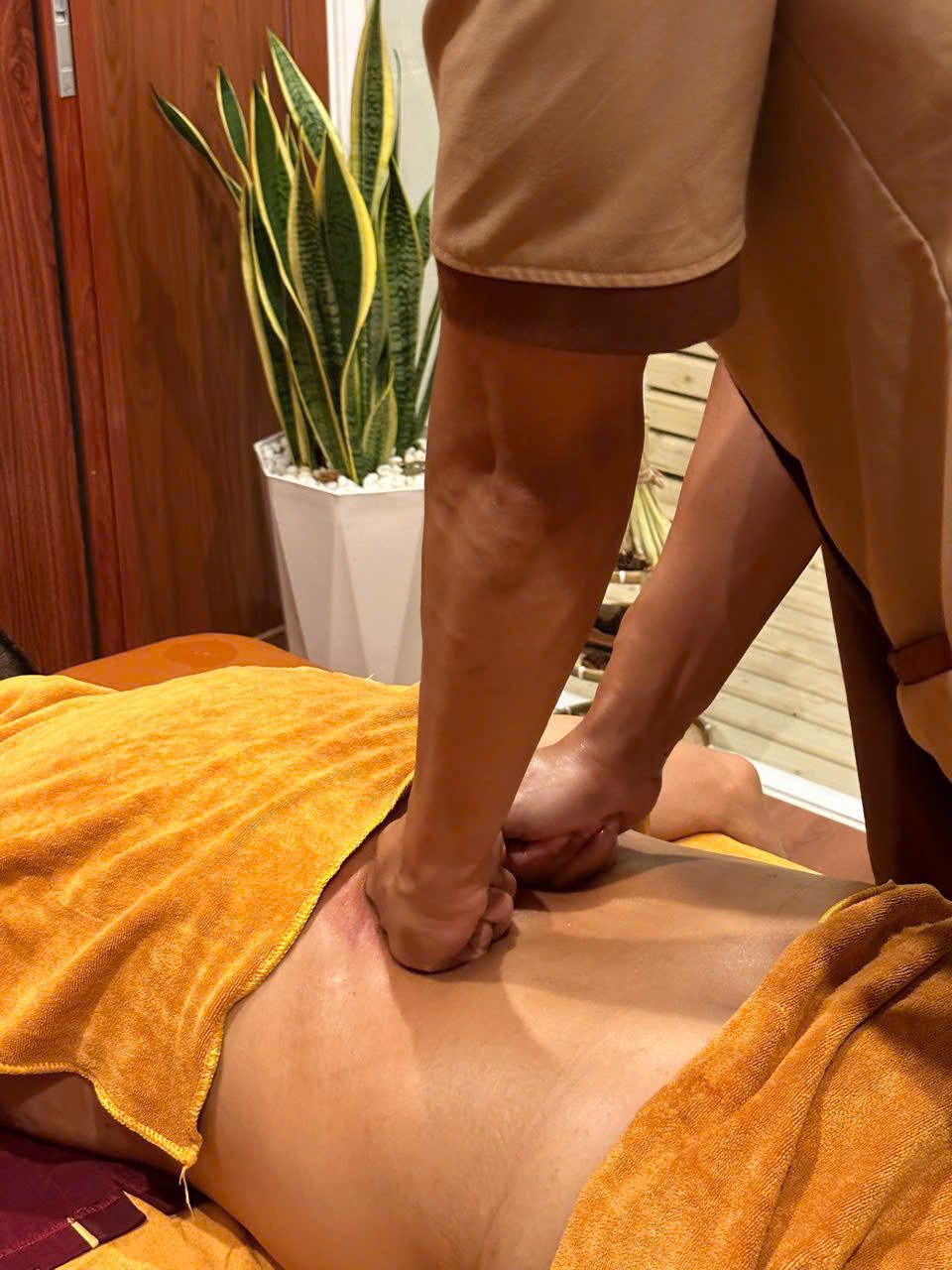
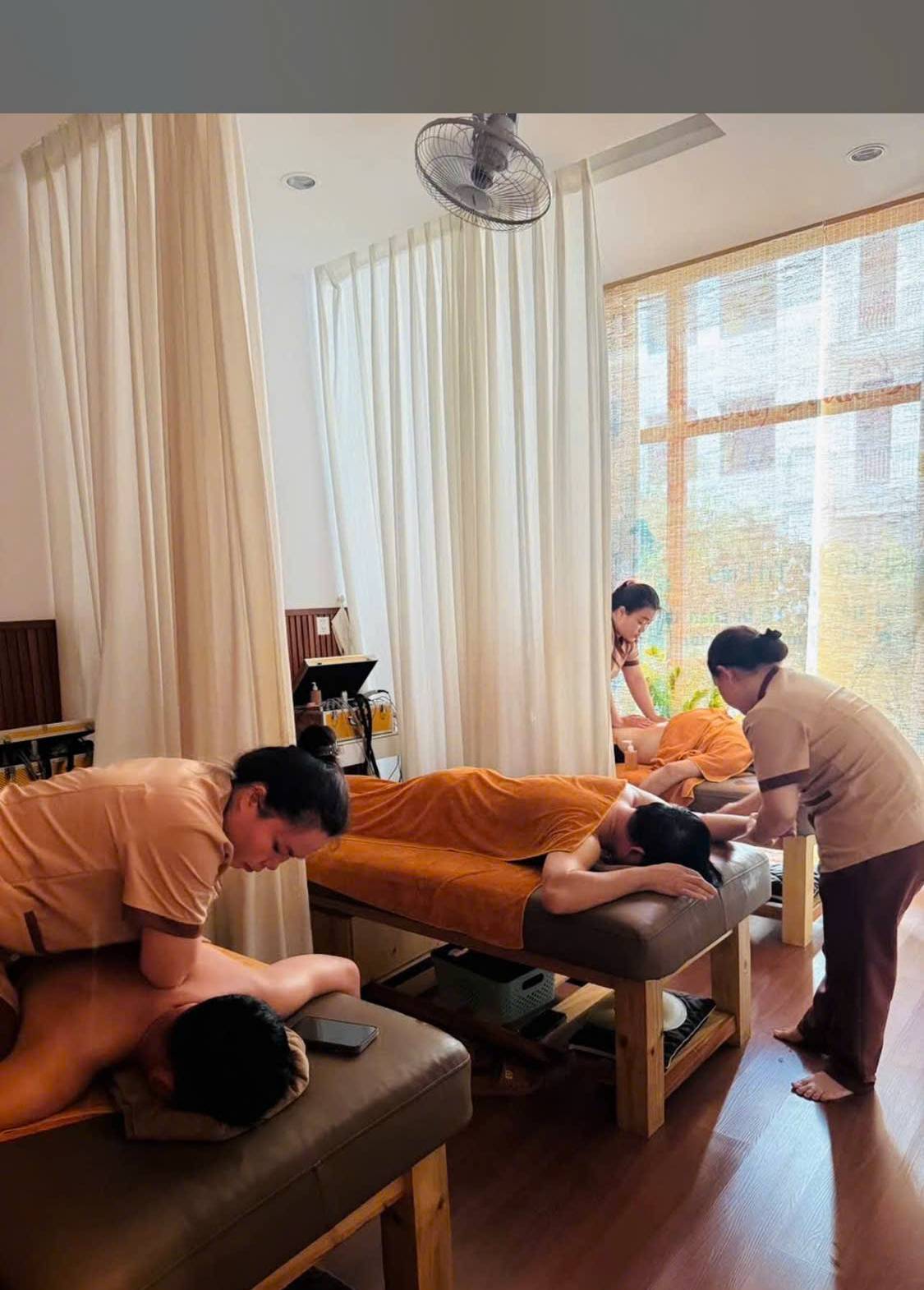
In class at Vinhomes Grand Park, learners finish the back work in pairs, their hands are tired, and the partner lying down has already sat up. Many think the session ends here. Lương Y Tống Văn Huynh keeps them back, tells them to sit beside their partner, ask three questions about sleep again and give exactly one piece of advice for tonight. That is the practitioner's job beyond the massage table, and it is how people in this trade help clients change sleep habits without crossing into the medical profession.
Why practitioners should help clients change sleep habits
A wellness massage session relaxes the muscles and brings the nervous system into rest mode, so the client sleeps more soundly that night. But if they go home and still scroll their phone late, eat dinner late and keep their mind racing, a few days later the neck and nape are as stiff as before. Sleep is the result of daily habits. A practitioner sees clients regularly and has their trust, so they have the chance to suggest small changes. This is care, not prescribing: learners do not promise good sleep and do not replace a medical check-up.
Step 1: Ask about sleep the right way
Keep the questions short and natural, at the start of the session or while filling in the client card:
- What time do you usually go to bed these days, and how long does it take you to fall asleep?
- Do you often wake up at night, and do you feel rested in the morning or still tired?
- What do you usually do before bed: look at your phone, work, eat or drink?
Write the answers down to compare at the next session. Do not fire questions at the client and do not make heavy comments. See also how to keep client cards.
Step 2: Advise little, advise specifically
In each session, choose only one or two pieces of advice that fit the client's answers. The advice in Tong Gia's Five-Organ Wellness curriculum:
- Bedtime: try to sleep before 11 pm and keep the same time every day. Shift workers keep their own sleep time fixed.
- Phone light: put the screen face down and dim the room lights about 30 minutes before bed.
- Dinner: a light dinner, 2–3 hours before bed; limit coffee and strong tea from the afternoon on.
- Slow 4–6 breathing: breathe in through the nose for 4 seconds, breathe out slowly for 6 seconds, for a few minutes once lying down.
- Self-massage of the nape: use the fingertips to rub slow circles on both sides of the nape and along the hairline at the back of the head, lightly, for 1–2 minutes; gently knead Shenmen (HT7, 神门) on the wrist crease, little-finger side, 1–2 minutes on each side.
- A warm foot soak before bed; people with diabetes must check the water temperature very carefully.
At the next session, ask which step the client managed to keep before adding a new one. Helping clients change sleep habits takes many sessions, not a single piece of advice.
Linking to Eastern medicine at curriculum level
The curriculum states: the Heart houses the spirit (shen) and governs the mind, awareness and sleep; the Liver stores blood, and during rest the blood returns to the Liver to be nourished. Too much worry harms the Spleen and drains Heart blood, easily leading to palpitations and poor sleep; Liver fire easily stirs Heart fire, causing restlessness and difficulty falling asleep. By the Eastern medicine body clock, the Zi hour (11 pm–1 am) and the Chou hour (1–3 am) are the time for deep sleep; at the Wu hour (around noon), a short nap of 15–30 minutes. Learners use these ideas to explain simply to clients why sleeping early helps, not to conclude which of the client's organs is weak. Daily rhythm and organ-based habits are covered separately in the article poor sleep and Eastern wellness care.
What learners do not do
- Do not promise clients they will sleep well after a few sessions.
- Do not advise clients to stop or change anything their doctor has prescribed.
- Do not label a client with a weak organ just because they mention poor sleep.
- Do not give too many tasks at once so that the client loses heart.
Lương Y Tống Văn Huynh teaches aftercare advice
With more than 13 years in Eastern wellness care, Y Tướng Học (face reading for wellness) and spinal nerve-reflex balancing, Lương Y Tống Văn Huynh sees aftercare advice as part of the session. He tells learners: “One piece of advice the client can follow is worth more than ten they forget; sleep changes through one small habit kept every night.” In class, learners practise giving advice in two sentences, in everyday words, then practise following up at the next session.
When to advise a medical check-up
If the client reports poor sleep lasting several weeks, daytime tiredness and poor concentration; loud snoring with moments that seem like stopped breathing; lasting sadness or anxiety and loss of interest in everything; palpitations, chest pain or breathlessness at night; or an existing health condition with a clear change in sleep: learners advise the client to see a doctor at a medical facility first, and wellness advice is only supportive after that. Tong Gia offers wellness care, not a medical service.
Which level teaches this skill?
Asking clients, aftercare advice and a few safe self-care acupoints start in L1 Foundation (1.500.000₫); client communication is part of L2 Core Skills. Five-Organ Wellness and spinal nerve-reflex balancing are studied in depth in the Specialist Course (L3); staff quote L2–L4 fees when you register. Read more about Lương Y Tống Văn Huynh.
How to sign up
Newcomers can join the trial class on Sunday morning, 9:00–12:00, with no fee, and the Sunday Y Tướng Học session, at căn T16-21 khu Manhattan, Vinhomes Grand Park, TP. Thủ Đức (unit T16-21, Manhattan block, Thu Duc City). Lương Y checks your hand skills at the trial class and suggests a suitable level. Tong Gia does not promise jobs or income after the course. Book a trial class or call the training hotline 0917 945 259.
Frequently asked questions
What does helping clients change sleep habits involve? Asking clients about their sleep and suggesting a few small, doable steps such as bedtime, phone light, dinner, slow breathing and self-massage of the nape; no promise of good sleep and no replacement for a medical check-up.
How many tips should a practitioner give per session? One or two that fit the client's answers. At the next session, ask which one the client kept before adding a new one.
When must a practitioner advise a client with poor sleep to see a doctor? When poor sleep lasts several weeks, with loud snoring and moments like stopped breathing, lasting anxiety or sadness, palpitations, chest pain or breathlessness at night, or an existing health condition with a clear change in sleep.
Where can I learn client aftercare skills? At Tong Gia, Vinhomes Grand Park, Thu Duc City: start with L1 Foundation, trial class Sunday morning with no fee, hotline 0917 945 259.
Related articles
- The 12 main meridians: names, pathway rules and peak hours, an easy table for vocational learners
- Face reading for health: the 3 facial zones in Y Tướng Học, how to divide them and how to read them to care for the body properly
- What are the 8 extraordinary vessels: roles, main pathways and how wellness learners use them
- Yin-Yang and the Five Elements for wellness learners: enough to make the hands work right
- All articles about learning the trade
Reserve a free Sunday-morning trial class or ask about the learning path: message Zalo 0917 945 259.

Founder of Tong Gia Acupoint Wellness (Huyệt Đạo Tống Gia), with more than 13 years in Eastern wellness practice, Y Tướng Học (face reading for wellness) and spinal nerve-reflex balancing. Lương Y's story
417 customers have reviewed Tong Gia on Google Maps
Reviews are written by customers themselves on Google; tap to read them before you visit.
Huyệt Đạo Tống Gia Quận 12
225 Dương Thị Mười, Phường Tân Chánh Hiệp (District 12, Ho Chi Minh City). 8:00 – 19:00 daily.
See reviews on Google MapsHuyệt Đạo Tống Gia Quận 9
Căn T16-21 khu Manhattan, Vinhomes Grand Park, Phường Long Bình (Thủ Đức City, Ho Chi Minh City). 9:00 – 20:00 daily.
See reviews on Google MapsWant to be observed in person?
A 90-minute session starts with observation, and only then moves on to muscle release and acupressure on the right areas. Two branches: District 12 and Vinhomes Grand Park.