What hidden bone and showing bone say about body condition: how Y Tuong Hoc learners observe, ask and check by hand
Lương Y (traditional healer) Tống Văn Huynh · Tong Gia Acupoint Wellness (Huyệt Đạo Tống Gia) · 29/11/2026
What hidden bone and showing bone say about body condition: in Y Tuong Hoc (Vietnamese medical face reading), hidden bone (cốt ẩn) means bone covered by full flesh, hinting at a well-nourished body; showing bone (cốt lộ) means clearly visible cheekbones, jaw and collarbones, hinting at a body that is thin and worn down. At Tong Gia Acupoint Wellness (Huyệt Đạo Tống Gia), this is only a prompt for asking questions and checking by hand, never a conclusion about illness.
Questions learners often ask about hidden bone and showing bone
I am thin and have had high cheekbones and visible collarbones since childhood. In Y Tuong Hoc, does that mean my body condition is poor?
Not necessarily. Showing bone from birth in thin people, people who exercise a lot or older people is common. Y Tuong Hoc pays attention to change compared with before and to several areas showing at once, then asks about eating and sleeping and checks by hand. Rapid weight loss or lasting fatigue needs a medical facility; wellness care is not medicine.
Hidden bone means a full face. So does a round, full face always mean enough qi and blood and good eating and sleeping?
Not always. Flesh that is full and firm with a fresh facial colour hints at regular eating and sleeping and enough qi and blood. Flesh that is full but soft and slack, a heavy face and tiredness after meals hint at little movement or irregular eating and sleeping. The organs are the cause, the signs are the result: after looking, learners must ask and check by hand.
I want to learn to read hidden and showing bone to understand my parents' condition. Which level in Thu Duc City, and what is the fee?
At Tong Gia Acupoint Wellness, observing body form and facial colour starts in L1 Introduction to Y Tuong Hoc, 1,500,000 VND, guided by Lương Y Tống Văn Huynh. There is a Sunday Y Tuong Hoc session with no fee and a Sunday morning trial 9:00–12:00 at unit T16-21, Manhattan block, Vinhomes Grand Park; hotline 0917 945 259.
What hidden bone and showing bone mean in Y Tuong Hoc
Old face-reading books divide the body form into bone (cốt) and flesh (nhục). Hidden bone (cốt ẩn) is when bone lies covered under full flesh: round cheeks, a soft jawline, shallow hollows at the collarbones. Showing bone (cốt lộ) is when bone stands out: prominent cheekbones, a sharp jaw angle, raised collarbones, sunken temples. Asking what hidden bone and showing bone say about body condition means asking whether the layer of flesh around the frame is thick or thin, and what that hints about how a person is eating, sleeping and working.
Y Tuong Hoc at Tong Gia Acupoint Wellness keeps only this wellness observation. The parts of old face-reading books about wealth, status and fate are not in the course.
Where to look on the body
| Area | Hidden bone | Showing bone |
|---|---|---|
| Cheekbones | Full, round, no bone edge visible | High and prominent, lower cheeks sunken |
| Jaw | Soft jawline covered by flesh | Sharp jaw angle, bone edge clearly visible |
| Temples, eye sockets | Flat, full | Sunken, deep eye sockets |
| Collarbones, shoulders | Shallow hollow above the collarbone, round shoulders | Raised collarbones, deep hollow, pointed shoulder tips |
| Along the spine (by touch) | Thick muscle on both sides, spinous processes hard to feel | Spinous processes stand out, thin muscle on both sides |
Learners do not look at one area and conclude. Inborn bone structure, age and sex all make bone show more or less. Some people have had high cheekbones since childhood and are perfectly well; what matters is change compared with before, and several areas showing at the same time.
What hidden bone hints about body condition
In the wellness view of Eastern medicine, flesh is nourished by the Spleen and Stomach; full flesh and skin with good colour usually go with regular eating and sleeping and enough qi and blood. So hidden bone together with a fresh facial colour and firm flesh hints at a body that is being well nourished.
But hidden bone does not automatically mean being well. Flesh that is full but soft and slack, a heavy face and tiredness after meals hint at little movement, a lot of sweet and fatty food or irregular sleep. Learners are taught to look at how firm the flesh is, not only how thick.
What showing bone hints
When several bony areas show at once, the wellness reading is that the nourishing layer is getting thinner: not eating enough or absorbing poorly, long-term lack of sleep, overwork, a lot of worry. Questions a learner can ask gently:
- Have you been enjoying your food lately, and eating at regular times?
- About how many hours do you sleep each night, and do you wake often?
- Has your weight changed recently?
- Is work more intense than before?
Showing bone in naturally thin people, people who exercise a lot and older people is common and carries no bad meaning. Where there is rapid unexplained weight loss, lasting fatigue or a long period of poor appetite, the learner advises the client to see a medical facility and does not explain it through face reading.
The organs are the cause, the signs are the result: after looking, check by hand
Tong Gia's curriculum repeats the saying "the organs are the cause, the signs are the result": what is seen outside is the result of daily habits and the state inside, so it is used only to raise questions. After looking and asking, the learner places the hands along the spine to check: whether the muscle is thick or thin, warm or cool, soft or tense, and how much the spinous processes stand out. When eyes and hands agree, it is noted; when they differ, it is noted as unclear.
What is noted is used only to adjust the care session: for someone with showing bone and thin muscle, use lighter pressure, avoid leaning straight onto bone, add a towel where bone meets the table and keep them warm. You can read more in how bone form and flesh form differ and the organs are the cause, the signs are the result.
Ethical limits for learners
- No judging: no remarks about being thin or fat, no comments on the client's appearance.
- No predicting fate, wealth or marriage from the bones of the face.
- No conclusions about illness; Tong Gia Acupoint Wellness is a wellness care service, not a medical service.
- Say what you see only when the client wants to hear it, as a caring question and not as a statement.
Which level teaches this
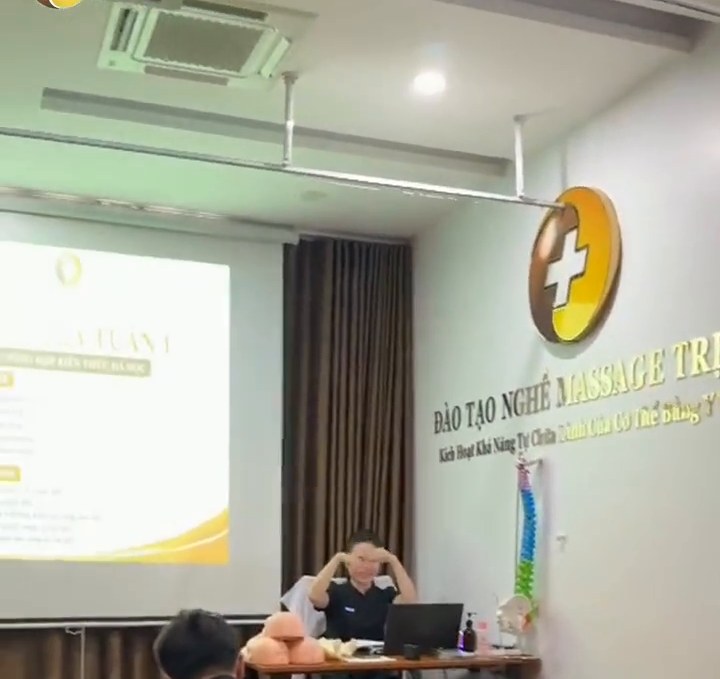
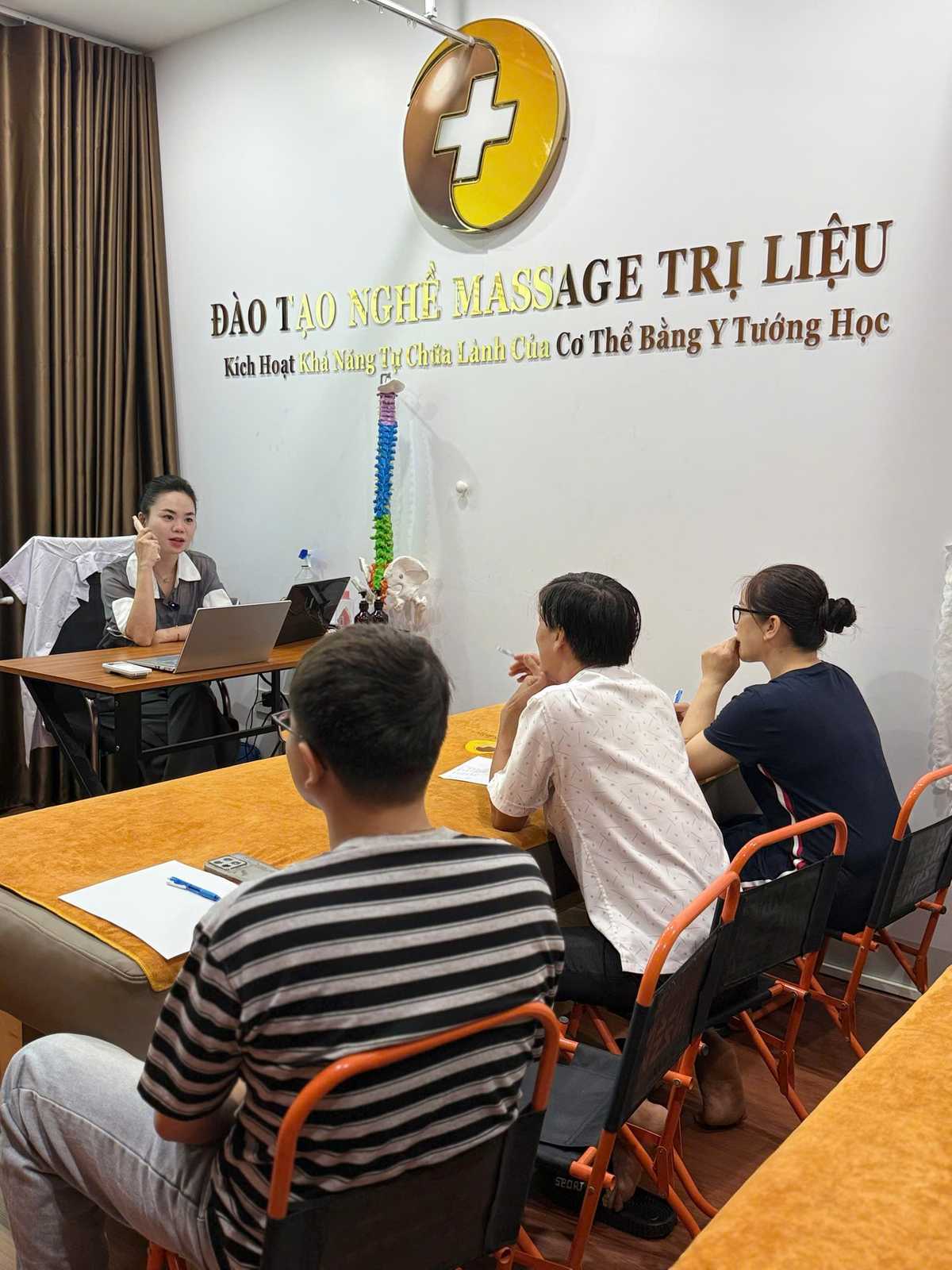
Observing body form, facial colour and the 3 facial zones is taught from L1 Introduction to Y Tuong Hoc, fee 1,500,000 VND, guided by Lương Y Tống Văn Huynh, with over 13 years in the trade. Those who want to go on to massage by the method of balancing the spinal nerve reflex system, to work in the trade, to look after family or to help others, continue with L2 Basic Trade, L3 Expert and L4; the advisor gives fees and length for these levels at registration.
How to register
The Sunday morning trial class 9:00–12:00 (10 places) and the Sunday Y Tuong Hoc session with no fee are open sessions for beginners, at unit T16-21, Manhattan block, Vinhomes Grand Park, Thu Duc City, Ho Chi Minh City. Book a trial class or call the training hotline 0917 945 259.
Frequently asked questions
What do hidden bone and showing bone say about body condition? Hidden bone hints at full flesh and a body that is nourished enough; showing bone hints at thin flesh, possibly from poor eating and sleeping or overwork. It is only a prompt for asking questions and checking by hand.
Where do you look for showing bone? Cheekbones, jaw angle, temples, eye sockets, collarbones, shoulder tips and the spinous processes along the back. Several areas showing together, with change compared with before, are what is worth noting.
Is being naturally thin a bad kind of showing bone? No. Inborn bone structure, age and exercise all make bone show more without any bad meaning.
Can hidden and showing bone show an illness? No. Learners do not conclude illness; with rapid weight loss or lasting fatigue they advise the client to see a medical facility.
Which level teaches observing hidden and showing bone? From L1 Introduction to Y Tuong Hoc, 1,500,000 VND, at Tong Gia Acupoint Wellness. The Sunday Y Tuong Hoc session has no fee; hotline 0917 945 259.
Related articles
- How bone features and flesh features differ: the two layers of the face that learners of Y Tuong Hoc must separate
- How do Dien Chan and Y Tuong Hoc differ? Both look at the face, with different aims and methods
- Eyebrows meeting in the middle, Giao Gia Mi: how Y Tuong Hoc learners read this brow shape
- What are Quỷ Mi eyebrows: a heavy-sounding name that learners should read lightly
- All articles about learning the trade
Reserve a free Sunday-morning trial class or ask about the learning path: message Zalo 0917 945 259.

Founder of Tong Gia Acupoint Wellness (Huyệt Đạo Tống Gia), with more than 13 years in Eastern wellness practice, Y Tướng Học (face reading for wellness) and spinal nerve-reflex balancing. Lương Y's story
417 customers have reviewed Tong Gia on Google Maps
Reviews are written by customers themselves on Google; tap to read them before you visit.
Huyệt Đạo Tống Gia Quận 12
225 Dương Thị Mười, Phường Tân Chánh Hiệp (District 12, Ho Chi Minh City). 8:00 – 19:00 daily.
See reviews on Google MapsHuyệt Đạo Tống Gia Quận 9
Căn T16-21 khu Manhattan, Vinhomes Grand Park, Phường Long Bình (Thủ Đức City, Ho Chi Minh City). 9:00 – 20:00 daily.
See reviews on Google MapsWant to be observed in person?
A 90-minute session starts with observation, and only then moves on to muscle release and acupressure on the right areas. Two branches: District 12 and Vinhomes Grand Park.