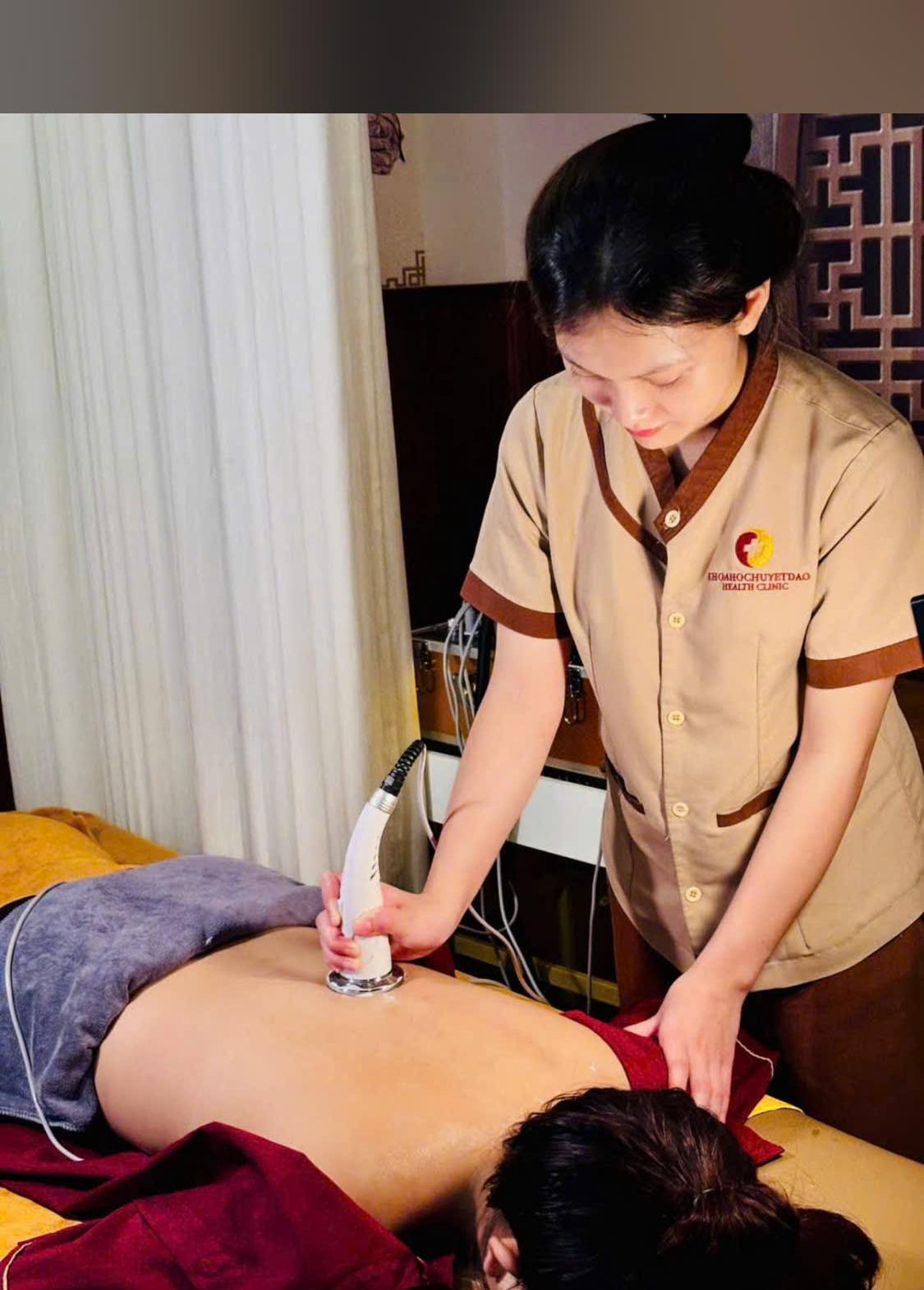
Why clients fall asleep during massage, and what a massage learner should do at that moment
Lương Y (traditional healer) Tống Văn Huynh · Tong Gia Acupoint Wellness (Huyệt Đạo Tống Gia) · 13/11/2026
Why do clients fall asleep during massage? The parasympathetic nervous system puts the body into rest mode, an even hand rhythm and warmth make the brain less alert, and accumulated sleep debt adds to it. At Tong Gia in Ho Chi Minh City, learners are taught to keep the rhythm, ease pressure, keep clients warm and wake them gently.
Questions learners often ask about why clients fall asleep during massage
I just started as a spa practitioner in Thu Duc, and clients often doze off mid-massage. Is that a good or bad sign?
Usually a good sign: the parasympathetic nervous system has put the client into rest mode, and your rhythm is even enough. In Eastern medicine the Heart houses the spirit; a settled spirit sleeps easily. Loud snoring with pauses in breathing? Advise a check at a medical facility. Tong Gia teaches this at Vinhomes Grand Park, Zalo 0917 945 259.
I'm learning massage in Ho Chi Minh City. If my client falls asleep, should I press harder to finish faster?
No. A sleeping person cannot tell you about pain or heaviness, so ease the pressure, keep the rhythm even, keep them warm and avoid deep work on key points that need feedback. Lương Y Tống Văn Huynh teaches learners to lighten pressure without breaking the rhythm, in Tong Gia classes at Vinhomes Grand Park, Thu Duc City.
I'm an expat in Ho Chi Minh City wanting to learn wellness massage. Where do they teach keeping clients relaxed and waking them properly?
Tong Gia teaches this during paired practice: the Wave method, the vibration technique, keeping clients warm and ending the session slowly. Classes are at căn T16-21 khu Manhattan, Vinhomes Grand Park, TP. Thủ Đức (unit T16-21, Manhattan block, Thu Duc City); District 12 is a care branch with no classes. Sunday-morning trial class with no fee, Zalo 0917 945 259.
A relaxed back in the middle of practice
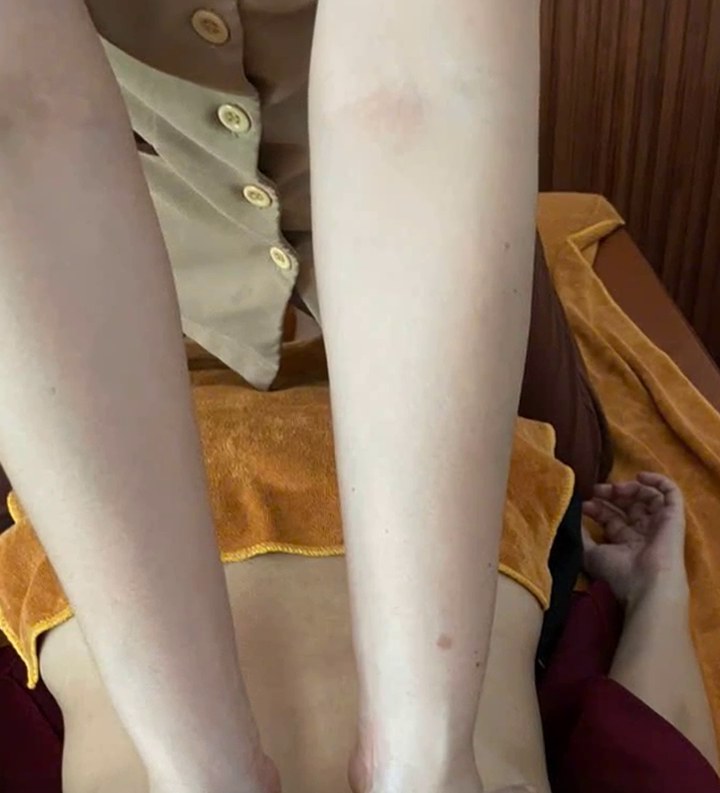
In class at Vinhomes Grand Park, learners practise in pairs: one lies face down, the other places their hands along both sides of the spine. Twenty minutes later the breathing of the person lying down has slowed right down, and some fall fully asleep. The learner hesitates: keep going, press harder, or wake the partner? Lương Y Tống Văn Huynh places his hand over the learner's hand, lowers the pressure by one step and keeps the same rhythm. That is when the whole class asks: why do clients fall asleep during massage, and what should a practitioner do at that moment?
Why clients fall asleep during massage: 4 reasons from the body
1. The nervous system switches to rest mode
The autonomic nervous system has two branches. The sympathetic branch keeps the body ready for action: fast heartbeat, shallow breathing, tense muscles. The parasympathetic branch brings the body back to rest: the heart slows, breathing deepens, muscles soften and digestion gets to work. When a client lies still and is touched with an even hand, the parasympathetic branch takes over; from deep rest to sleep is only a short step.
2. An even, repeated hand rhythm
The human brain is always scanning for change; steady, repeated stimulation with no surprises makes it less alert. That is why the Wave method in the Tong Gia curriculum, which creates regular waves of sensation from the neck down to the tailbone with an even, controlled rhythm, so easily sends clients to sleep. The vibration technique is also described as creating relaxing waves for people with soft, thick muscle and nervous exhaustion. Read more on the compression method and the wave method.
3. Warmth
A moderately warm room, a towel over the body and warm hands make the blood vessels under the skin widen and the muscles soften. A warm, quiet body lets go easily.
4. Accumulated sleep debt
Many working people in Ho Chi Minh City go short on sleep for days in a row. Given the chance to lie still, the body uses it at once to catch up. A client who falls asleep very fast and very deeply is often showing a sleep debt, not only reacting to the practitioner's smooth hands. That is the fourth answer to why clients fall asleep during massage.
How Eastern medicine sees sleep on the massage table
Tong Gia's Five-Organ Wellness curriculum notes: the Heart houses the spirit and governs the mind, awareness and sleep; the Liver stores blood, and during rest the blood returns to the Liver to be nourished. People who worry and stay stressed for a long time often have stagnant Liver qi and a restless Heart spirit; when qi and blood flow freely, the spirit settles and the body returns to its resting rhythm. This is a wellness view for understanding the client, not for drawing conclusions about illness.
Learners spot a client about to sleep with their eyes and their hands
- With the eyes (Y Tướng Học (face reading for wellness)): dark circles, heavy eyelids and a dull complexion suggest the client is short on sleep. The curriculum reminds learners that red eyes or darkened skin have many causes, so simply note them and ask the client.
- With the hands (reading the spine): the cushion of muscle on both sides of the spine gradually softens, the skin warms up, the breathing under your palm becomes slow and even, and sometimes the arms or legs twitch slightly just as the client drifts off.
When the client sleeps: what learners do and do not do
- Keep the rhythm: do not stop suddenly or change speed. A broken rhythm is when clients startle most easily.
- Ease the pressure: a sleeping person cannot tell you about pain or heaviness. So do not increase pressure or work deep on key points that need the client's feedback; switch to gliding, pressing and gentle waves.
- Keep them warm: body temperature drops slightly during sleep, so cover the areas not being worked with a towel and avoid cold air blowing directly on the client.
- Do not wake them abruptly: do not call loudly, slap hard or turn the client over without first telling them quietly.
- Wake them gently at the end: glide slowly over the whole back, speak softly, let the client lie a little longer, remind them to sit up slowly and offer warm water.
Do not: use the client's sleep as a chance to press harder; run the session past the time you agreed; hold private conversations in the room.
Lương Y Tống Văn Huynh teaches learners to protect the client's sleep
With more than 13 years in Eastern wellness and spinal nerve-reflex balancing, and having passed the craft on to hundreds of learners, Lương Y Tống Văn Huynh reminds learners: "When a client sleeps on the table, your hands get lighter but they do not stop; an even rhythm keeps the sleep, a broken rhythm startles the client." In class, learners practise lowering pressure without breaking the rhythm, and waking the person lying down with the hands first and with words after.
When to advise a client to see a doctor
Falling asleep is usually normal. But if a client snores very loudly, sometimes seems to stop breathing and then wakes with a gasp; or says they feel unusually sleepy in the daytime, nod off while driving or in the middle of a conversation; or has had poor sleep for many weeks, with palpitations, chest pain or shortness of breath at night: the learner notes it down and advises the client to get checked at a medical facility. Do not guess what illness the client has. Tong Gia offers wellness care, not a medical service.
Which level teaches this?
Placing the hands and keeping the rhythm begin at L1 Foundation (1.500.000đ). The Wave method, the vibration technique and the Nervous – Mental function group are taught in the Specialist Course (L3); staff give L2–L4 fees when you register. Read more about the teacher: Lương Y Tống Văn Huynh.
How to sign up
Beginners can come to the trial class on Sunday morning, 9:00–12:00, with no fee, and the Sunday Y Tướng Học session, at căn T16-21 khu Manhattan, Vinhomes Grand Park, TP. Thủ Đức (unit T16-21, Manhattan block, Thu Duc City). The Lương Y watches your hands at the trial class and then suggests a suitable level. Tong Gia does not promise jobs or income after the course. Book a trial class or call the training hotline 0917 945 259.
Frequently asked questions
Why do clients fall asleep during massage? The parasympathetic nervous system brings the body into rest mode, an even hand rhythm and warmth make the brain less alert, and many days of accumulated sleep debt add to it.
Should you wake a client who falls asleep during a massage? There is no need to wake them mid-session. Ease the pressure, keep the rhythm and keep them warm; at the end, glide slowly, speak softly and let the client sit up slowly.
Is it a problem if a client snores loudly during massage? Light snoring is usually nothing to worry about. Very loud snoring, moments that look like stopped breathing followed by a gasp, or unusual daytime sleepiness are reasons to advise the client to get checked.
Which level teaches keeping a rhythm that relaxes clients? Placing the hands and keeping the rhythm begin at L1 Foundation; the Wave method and the vibration technique are taught in the Specialist Course (L3) at Tong Gia, Vinhomes Grand Park, Thu Duc City.
Related articles
- The 3 'no's of Tong Gia's spinal balancing method: no needles, no medicines, no rough force
- 33 vertebrae and their regions: the spine map every wellness massage learner must know
- 4 objective factors when reading the spine by hand: let the hands record, not guess
- 5 vertebral forms – raised, sunken, shifted: reading the spine by hand in the Specialist Course
- All articles about learning the trade
Reserve a free Sunday-morning trial class or ask about the learning path: message Zalo 0917 945 259.

Founder of Tong Gia Acupoint Wellness (Huyệt Đạo Tống Gia), with more than 13 years in Eastern wellness practice, Y Tướng Học (face reading for wellness) and spinal nerve-reflex balancing. Lương Y's story
417 customers have reviewed Tong Gia on Google Maps
Reviews are written by customers themselves on Google; tap to read them before you visit.
Huyệt Đạo Tống Gia Quận 12
225 Dương Thị Mười, Phường Tân Chánh Hiệp (District 12, Ho Chi Minh City). 8:00 – 19:00 daily.
See reviews on Google MapsHuyệt Đạo Tống Gia Quận 9
Căn T16-21 khu Manhattan, Vinhomes Grand Park, Phường Long Bình (Thủ Đức City, Ho Chi Minh City). 9:00 – 20:00 daily.
See reviews on Google MapsWant to be observed in person?
A 90-minute session starts with observation, and only then moves on to muscle release and acupressure on the right areas. Two branches: District 12 and Vinhomes Grand Park.