Massage course Vietnam: press-and-lift and press-and-shift (áp nâng, áp rê), the two foundation strokes of therapeutic-style spinal massage
Lương Y (traditional healer) Tống Văn Huynh · Tong Gia Acupoint Wellness (Huyệt Đạo Tống Gia) · 09/11/2026
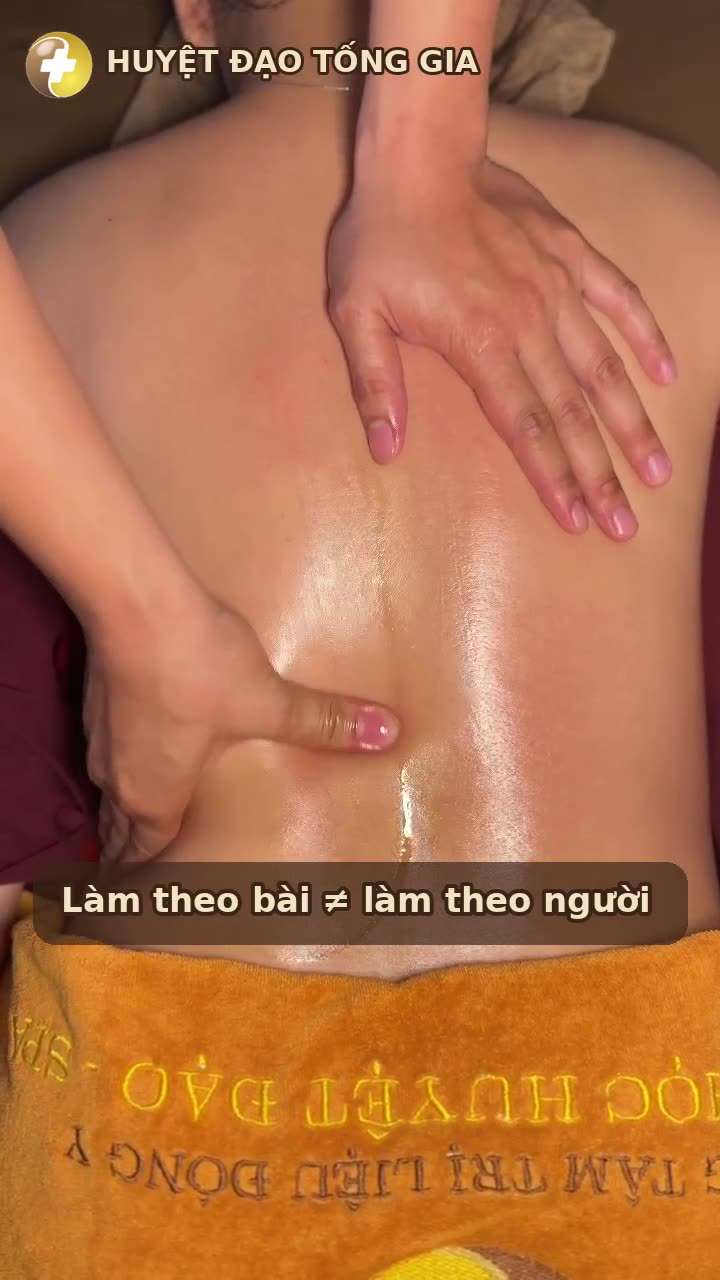
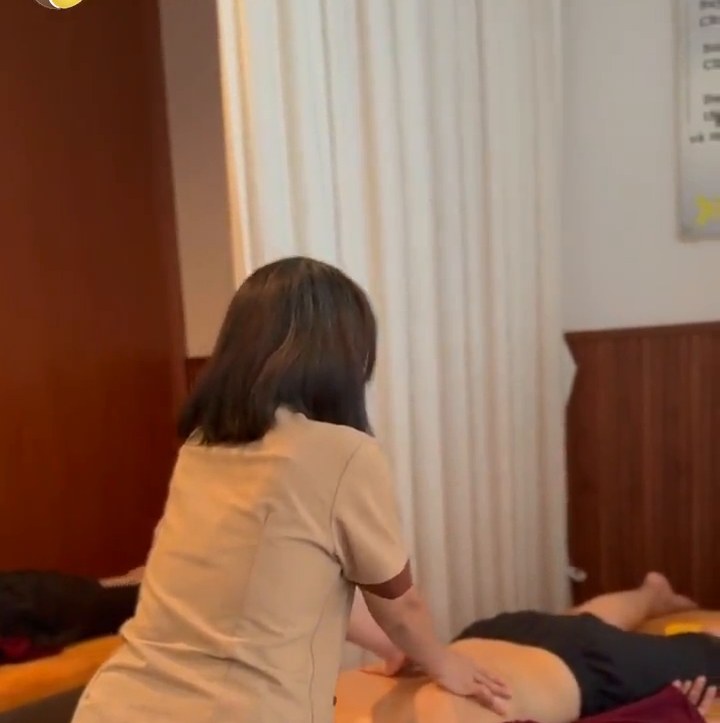
On a massage course in Vietnam with Tong Gia, press-and-lift and press-and-shift (áp nâng, áp rê) are the two foundation strokes of therapeutic-style massage: the whole palm presses on and lifts the muscle mass, or shifts it slowly along the fibres, without sliding over the skin. At Tong Gia, the pressing hand also reads the back, following the Y Tướng Học (face reading for wellness) idea “the signs show outside, the organs lie inside”: care before signs appear.
What is the “press-on” (áp) group of strokes?
In the Tong Gia Specialist curriculum, strokes are arranged in groups: press-on (áp), stroking (vuốt), pressing (ấn), rolling (vê), pushing (đẩy), circling (xoay), plucking (bật), vibrating (rung) and compressing (nén). The press-on group comes first because it is how the practitioner’s hands “greet” the body of the person receiving care. The hand is laid down close, warm, over a wide enough area, so the person lying down feels safe before the force goes deeper.
Press-on differs from stroking in this way: in stroking the hand slides over the skin, while in press-on the hand sticks to the skin, and the skin and the muscle layer beneath move with the hand. Understanding this difference is the first step to reading the back by hand, as in the article hand feel in therapeutic-style massage.
How to do press-and-lift
- The person receiving care lies face down, arms along the body, head resting comfortably.
- The practitioner stands firmly, feet shoulder-width apart, knees slightly bent.
- Lay the whole palm and fingers close on the muscle mass along both sides of the spine, for example the mid-back.
- Press down slightly so the hand “sticks” to the skin, then gently close the fingers and the heel of the hand and lift the muscle mass away from the layer beneath.
- Hold for one breath, then release slowly. Move the hand one hand-width along and continue.
Press-and-lift lets the practitioner feel the thickness and elasticity of the muscle. Where it lifts easily, the muscle is soft; where it will not lift and stays stuck down, that area needs more careful work in the later steps.
How to do press-and-shift
- Lay the palm close as in press-and-lift.
- Keep the hand stuck to the skin and slowly shift the whole tissue mass in the direction of the muscle fibres, a short distance of 2–3 cm.
- Release the force, bring the hand back, then shift the next section beside it.
- Follow the spine axis from top to bottom or from the centre outward, keeping an even rhythm like the breath.
Press-and-shift warms the superficial muscle layer and helps the person receiving care relax. The shifting direction must follow the principle of direction; see the article directing force along the spine axis.
Common mistakes for beginners
- The hand slides over the skin: it becomes stroking, not press-on any more. Fix: press lightly first, then shift.
- Using only the fingertips: the force concentrates on one point and the person lying down feels poked. Press-on must use the whole palm.
- Using wrist strength: the hand tires very quickly. The force must come from body weight passing through a straight arm.
- Lifting too high, pinching the skin: the person feels pain and the muscle tightens. Only lift until the muscle mass separates slightly.
- Working fast: press-on is a slow stroke. Too fast and the person lying down has no time to relax.
The force for press-and-lift and press-and-shift is usually light to medium on the 5 force levels. This is force for relaxing, not force for pressing hard.
Try it now: practise press-and-shift on your own thigh
- Sit on a chair and lay your palm on the front of your thigh.
- Press lightly so the hand sticks to the skin, and shift it 2 cm upward without letting the hand slide.
- Release, bring the hand back, shift the next section. Do this 10 times.
- Notice: do the skin and flesh move with your hand? If so, you are pressing on correctly.
Note: when not to use press-and-lift or press-and-shift
- Skin with a wound, burn, red rash, or hot swelling.
- An area recently knocked, bruised, or with a suspected broken bone.
- Back pain with numbness or weakness in the legs, fever, weight loss, or pain worse at night: advise the person to see a doctor at a medical facility first.
Therapeutic-style massage at Tong Gia is wellness care based on spinal nerve-reflex balancing, keeping the “3 no’s”: no needles, no medicine, no rough force. The method does not replace seeing a doctor.
Where can you learn the press-on strokes?
Press-on strokes look simple but are hard to do right without someone correcting your hands. At Tong Gia, Lương Y Tống Văn Huynh demonstrates on the student’s back, then places his hands over the student’s hands so they feel the stick and the lift. The whole group of strokes is in part CG2 of the Specialist Course; see the page therapeutic-style massage for spinal nerve-reflex balancing. The course fee is given by a consultant when you register.
How to register
The Sunday-morning trial class, 9:00–12:00 every week, and the free Sunday Y Tướng Học session are the open schedule for newcomers, at unit T16-21, Manhattan area, Vinhomes Grand Park, Thủ Đức City (Ho Chi Minh City). Register for a trial class or call the training hotline 0917 945 259.
Frequently asked questions
What are the press-and-lift and press-and-shift strokes? Press-and-lift means laying the palm close on the muscle mass, pressing lightly so the hand sticks to the skin, then lifting the muscle mass, holding for one breath and releasing. Press-and-shift means keeping the hand stuck to the skin and slowly shifting the whole tissue mass along the muscle fibres a short distance of 2–3 cm.
How is press-and-shift different from stroking? In stroking the hand slides over the skin. In press-and-shift the hand sticks to the skin and slowly shifts the whole tissue mass along the fibres; skin and muscle move with the hand.
Is press-and-lift and press-and-shift done with strong or light force? Usually light to medium on the 5 force levels. It is force for warming and relaxing, not deep pressing.
What are the common mistakes when first learning the press-on strokes? The hand slides over the skin, using only the fingertips, using wrist strength, lifting too high and pinching the skin, working too fast.
Where can I learn therapeutic-style spinal massage in Ho Chi Minh City? Tong Gia Acupoint Wellness at Vinhomes Grand Park, Thủ Đức City, holds a Sunday-morning trial class, 9:00–12:00. Call 0917 945 259.
Related articles
- The 3 “no’s” of the Tong Gia spinal balancing method: no needles, no medicine, no rough force
- How the 33 vertebrae are grouped into regions: the spine map every therapeutic-style massage student must know
- 4 objective factors when reading the spine by hand: let the hands record, not guess
- 5 vertebral patterns (raised, sunken, shifted): reading the spine by hand in the Specialist course
- All articles on learning the trade
Reserve a free Sunday-morning trial class or ask about the learning path: message Zalo 0917 945 259.

Founder of Tong Gia Acupoint Wellness (Huyệt Đạo Tống Gia), with more than 13 years in Eastern wellness practice, Y Tướng Học (face reading for wellness) and spinal nerve-reflex balancing. Lương Y's story
417 customers have reviewed Tong Gia on Google Maps
Reviews are written by customers themselves on Google; tap to read them before you visit.
Huyệt Đạo Tống Gia Quận 12
225 Dương Thị Mười, Phường Tân Chánh Hiệp (District 12, Ho Chi Minh City). 8:00 – 19:00 daily.
See reviews on Google MapsHuyệt Đạo Tống Gia Quận 9
Căn T16-21 khu Manhattan, Vinhomes Grand Park, Phường Long Bình (Thủ Đức City, Ho Chi Minh City). 9:00 – 20:00 daily.
See reviews on Google MapsWant to be observed in person?
A 90-minute session starts with observation, and only then moves on to muscle release and acupressure on the right areas. Two branches: District 12 and Vinhomes Grand Park.