Habits bad for the heart: how wellness learners read the Heart, place their hands and advise clients
Lương Y (traditional healer) Tống Văn Huynh · Tong Gia Acupoint Wellness (Huyệt Đạo Tống Gia) · 13/11/2026
Habits bad for the heart include salty, fatty food, alcohol, nicotine smoke, little exercise, stress, late nights and constant worry. At Tong Gia in Ho Chi Minh City, learners read the face, check the Heart Shu area on the back by hand, then advise clients to change habits; chest pain or breathlessness means seeing a doctor at once.
Questions learners often ask about habits bad for the heart
I am in my 30s and run a spa in Thu Duc. Where can I learn hands-on which habits strain the heart, to advise clients?
In the 5-organ wellness module at Tong Gia, taught at Vinhomes Grand Park, Thu Duc City. Lương Y Tống Văn Huynh links heart physiology with the Eastern view of the Heart, reading the face and checking the Heart Shu area by hand. This is wellness care, not a medical profession. Zalo 0917 945 259.
A friend in District 7 says the face and nose tip show a tired heart. What is the Eastern basis, or is it just superstition?
Only as a hint. Eastern medicine says the Heart shows its condition on the face, so a pale or dusky-purple complexion is a reason to ask more about sleep, eating and stress. Tong Gia always confirms by hand and never names a disease. Chest pain or shortness of breath means seeing a doctor.
I'm an expat in Ho Chi Minh City. How long and how much is a heart-care wellness module, and how do I avoid wasting money?
Tong Gia runs L1 Foundation at 1.500.000₫; the 5-organ wellness module sits inside the Specialist Course (L3), and staff give its length and fee when you register. Choose a place with hands-on practice on real people that clearly teaches when to stop. Trial class on Sunday morning at Vinhomes Grand Park, Zalo 0917 945 259.
A session with hands between the shoulder blades
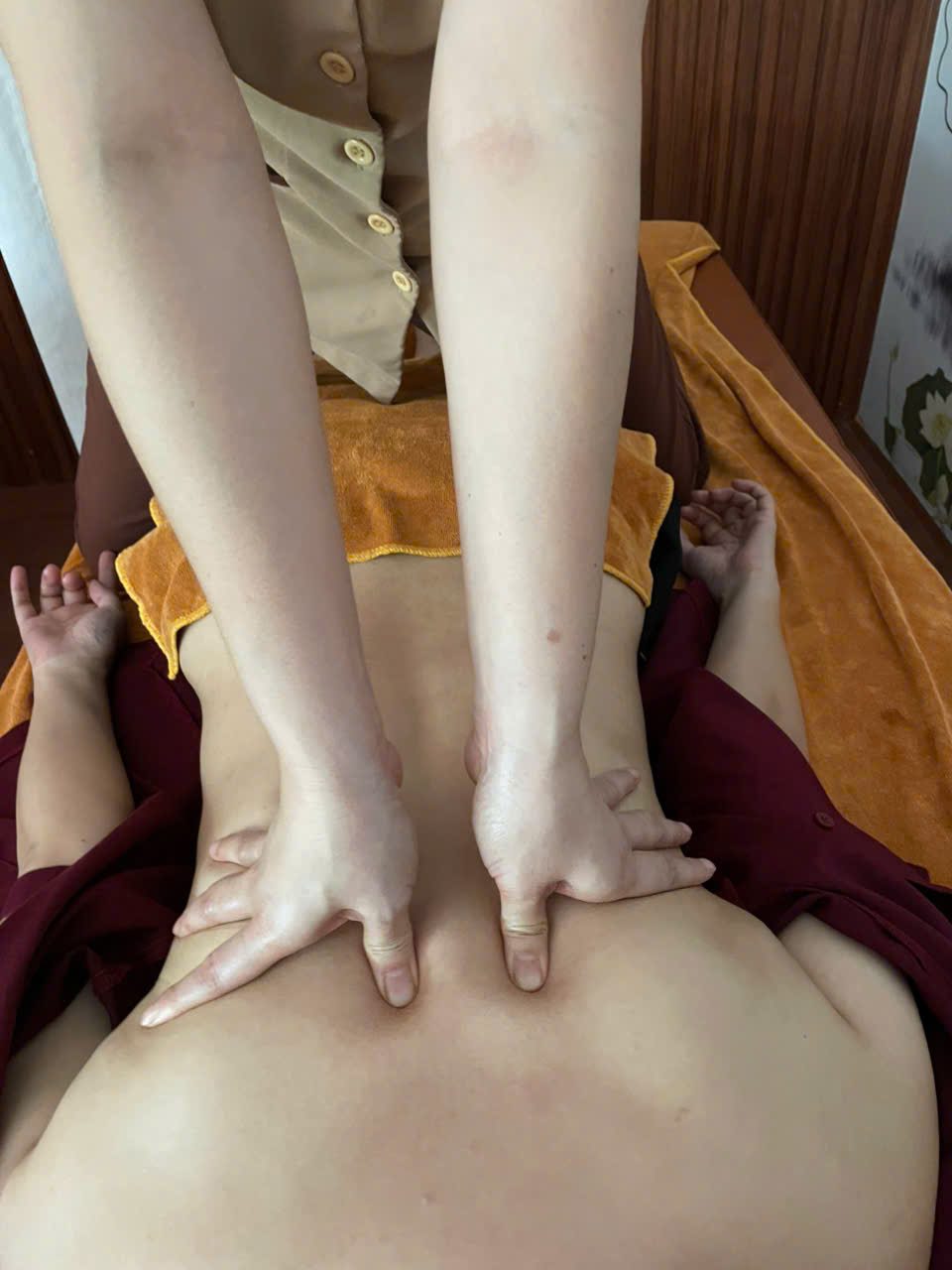
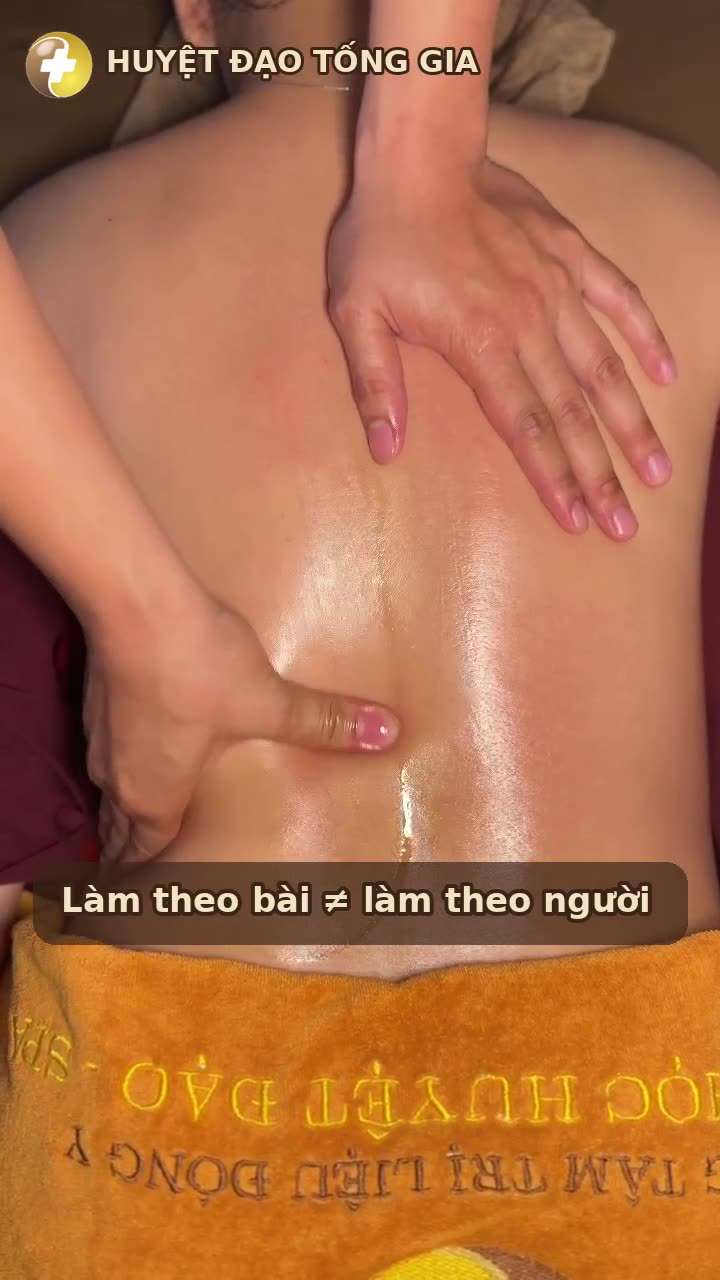
In class at Vinhomes Grand Park, learners work in pairs. One lies face down; the other places a hand between the partner's shoulder blades and feels that the muscle on one side is thicker and warmer. Lương Y Tống Văn Huynh moves the learner's fingers back onto the right line beside the spine, then asks the person lying down: what time do you go to sleep these days, how many cups of coffee do you drink a day, do you often eat salty food? The hand only shows where the tension is; questions about habits bad for the heart tell you why.
The heart in Western medicine, the Heart in Eastern medicine
In Western medicine, the heart is a hollow muscle about the size of a fist. At rest it beats about 60–100 times a minute and pumps about 5 litres of blood a minute. The heart has its own electrical system; the heart muscle is fed by the coronary arteries, and when they slowly narrow from atherosclerosis, the heart muscle runs short of blood.
Eastern medicine calls the Heart the emperor of the organs: it governs blood and vessels, houses the spirit (mind and sleep), opens into the tongue, shows on the face, and sweat is its fluid. The Heart is broader than the physical heart: poor sleep linked to the Heart does not mean heart disease. This foundation is covered in What "the Heart governs blood and vessels" means.
Habits bad for the heart every learner should know
- Salty, fatty food: blood pressure and blood fats rise, and atherosclerotic plaque slowly narrows the vessels.
- Alcohol and nicotine smoke: damage vessel walls, make blood clot more easily and make rhythm disturbances more likely.
- Little exercise: weight gain, metabolic disorders.
- Long-term stress: through the autonomic nervous system, heart rate and blood pressure are pushed up.
- Late nights, poor sleep: Eastern medicine calls this draining Heart blood and an unsettled Heart spirit.
- Too much worry: harms the Spleen and drains Heart blood: palpitations, poor appetite, trouble sleeping.
- Extreme joy or sadness: the emotion of the Heart is Joy; too much excitement also scatters the spirit.
Eastern medicine describes Heart qi deficiency, Heart blood deficiency, Heart yin deficiency and Heart yang deficiency. These are wellness concepts, not disease names; learners do not label clients with them.
What learners observe on the face
- Complexion: rosy, moist and lively means enough Heart blood; pale or dusky purple means ask more carefully.
- Lips, tongue: pale lips, a red tongue tip and tongue sores are linked to the Heart in Eastern medicine.
- Between the eyebrows: deep vertical lines and tight muscles are common in people who sigh often or feel palpitations.
- Nose tip: Y Tướng Học (face reading for wellness) sees it as the mirror of the heart; a bluish-grey tip or small purple-red veins are a reason to advise the client to get a cardiovascular check.
The signs show outside, the organs lie inside: everything you see is only a hint for asking questions, not a conclusion.
Checking by hand on the spine
In wellness massage based on spinal nerve-reflex balancing, the D1–D12 zone relates to circulation, breathing and digestion (see the D1–D12 back zone). Tâm Du (BL15, 心俞) lies below the spinous process of the 5th thoracic vertebra, Quyết Âm Du (BL14, 厥阴俞) below that of the 4th, both 1.5 cun out to the side. Learners read skin temperature, the muscle cushion, the shape of the spine and sensation, comparing right with left. The face hints; the hand confirms.
During a session: what to do, what not to do
Do: ask about any history of heart disease or blood pressure, stents, pacemakers, blood thinners, pregnancy; start with slow breathing, in for 4 seconds, out for 6 seconds; gently knead Tâm Du, Quyết Âm Du, Nội Quan (PC6, 内关), Thần Môn (HT7, 神门); finish at Bách Hội (GV20, 百会).
Don't: never press hard on the chest or over an implanted device; for people on blood thinners, use only light pressure. Never say "massage opens up the coronary arteries", never say "your heart is already weak", never tell a client to drop their blood-pressure prescription on their own.
How practitioners remind clients to change habits
The curriculum names four habits: eat less salt (under 5 g a day), give up nicotine smoke, move about 150 minutes a week, sleep enough. Add a 15–30 minute midday nap, a few minutes of slow breathing every day and regular blood-pressure checks. A well-judged reminder: "In Eastern medicine terms, you show signs of Heart qi deficiency; this is a wellness concept, not a conclusion that you have heart disease."
Lương Y Tống Văn Huynh teaches learners to advise clients through habits
With more than 13 years in the craft and hundreds of learners trained, Lương Y Tống Văn Huynh teaches client advice as part of hand skill: "The hands only help the client relax for one session; the habits the client takes home decide whether the heart works easy or hard."
When to advise a client to see a doctor
First: chest pain, shortness of breath or signs of stroke mean stop and call 115 right away. See a doctor or get emergency care for: chest pain or tightness lasting 5–10 minutes, spreading to the left arm, shoulder, neck or jaw; sudden breathlessness or breathlessness when lying down; fainting or nearly fainting; racing palpitations with dizziness; cold sweats; leg swelling that keeps increasing; a drooping mouth, weakness on one side, difficulty speaking. See also heart warning signs that need an emergency call. Tong Gia offers wellness care, not a medical service.
Which level teaches this?
The Heart chapter is part of 5-organ wellness in the Specialist Course (L3). Beginners start with L1 Foundation (1.500.000₫). Read more about the teacher: Lương Y Tống Văn Huynh.
How to sign up
The trial class on Sunday morning, 9:00–12:00, with no fee, and the Sunday Y Tướng Học class are the open sessions for beginners, at căn T16-21 khu Manhattan, Vinhomes Grand Park, TP. Thủ Đức (unit T16-21, Manhattan block, Thu Duc City). Understanding habits bad for the heart is the first lesson of the Heart chapter. Tong Gia does not promise jobs or income after the course. Book a trial class or call the training hotline 0917 945 259.
Frequently asked questions
Which habits are bad for the heart? Salty, fatty food, alcohol, nicotine smoke, little exercise, long-term stress, late nights with poor sleep, and too much worry. Eastern medicine adds: extreme joy or sadness also unsettles the Heart spirit.
Is the Heart in Eastern medicine the same as the physical heart? Not exactly. In Eastern medicine the Heart covers both blood vessels and the mind: spirit, sleep, emotions. Poor sleep linked to the Heart does not mean heart disease.
Where is the Tâm Du point? Below the spinous process of the 5th thoracic vertebra, 1.5 cun out on each side. In a session it is only kneaded gently, together with slow breathing.
When must a practitioner stop and call 115? When the client has lasting chest pain or tightness, pain spreading to the left arm, sudden breathlessness, fainting, cold sweats, or a drooping mouth, weakness on one side, difficulty speaking.
Related articles
- The 12 main meridians: names, pathway rules and peak hours, an easy table for vocational learners
- Face reading for health: the 3 facial zones in Y Tướng Học, how to divide them and how to read them to care for the body properly
- What are the 8 extraordinary vessels: roles, main pathways and how wellness learners use them
- Yin-Yang and the Five Elements for wellness learners: enough to make the hands work right
- All articles about learning the trade
Reserve a free Sunday-morning trial class or ask about the learning path: message Zalo 0917 945 259.

Founder of Tong Gia Acupoint Wellness (Huyệt Đạo Tống Gia), with more than 13 years in Eastern wellness practice, Y Tướng Học (face reading for wellness) and spinal nerve-reflex balancing. Lương Y's story
417 customers have reviewed Tong Gia on Google Maps
Reviews are written by customers themselves on Google; tap to read them before you visit.
Huyệt Đạo Tống Gia Quận 12
225 Dương Thị Mười, Phường Tân Chánh Hiệp (District 12, Ho Chi Minh City). 8:00 – 19:00 daily.
See reviews on Google MapsHuyệt Đạo Tống Gia Quận 9
Căn T16-21 khu Manhattan, Vinhomes Grand Park, Phường Long Bình (Thủ Đức City, Ho Chi Minh City). 9:00 – 20:00 daily.
See reviews on Google MapsWant to be observed in person?
A 90-minute session starts with observation, and only then moves on to muscle release and acupressure on the right areas. Two branches: District 12 and Vinhomes Grand Park.