Kidney yin deficiency vs kidney yang deficiency: how wellness massage learners read hot and cold
Lương Y (traditional healer) Tống Văn Huynh · Tong Gia Acupoint Wellness (Huyệt Đạo Tống Gia) · 13/11/2026
Kidney yin deficiency and kidney yang deficiency differ at the root: yin deficiency lacks "cooling water", so heat builds inside; yang deficiency lacks "warming fire", so cold sets in. Yin deficiency: hot palms, night sweats. Yang deficiency: fear of cold, cold hands and feet, night urination. Learners at Tong Gia Acupoint Wellness (Huyệt Đạo Tống Gia) only note a direction.
Questions learners often ask about kidney yin deficiency vs kidney yang deficiency
I'm in my thirties, learning wellness massage in Thu Duc. How do I tell if a client leans toward kidney yin or yang deficiency?
You tell them apart by hot versus cold. Yin deficiency shows hot palms and soles, night sweats, a dry mouth and poor sleep; yang deficiency shows fear of cold, cold hands and feet and night urination. At Tong Gia, Vinhomes Grand Park, learners ask the client, read lower-back warmth by hand, and only note a care direction, never a conclusion.
Can looking at someone's ears and complexion really show weak Kidneys? What's the Eastern medicine basis, or is it superstition?
It is only a hint, not a conclusion. Eastern medicine holds that the Kidney opens into the ears, so ear shape and complexion reflect part of Kidney strength: "the signs show outside, the organs lie inside". Lương Y Tống Văn Huynh teaches cross-checking by hand on the spine. If anything looks unusual, advise the client to see a doctor.
I live in Ho Chi Minh City. Which level covers Kidney care and ear reading, and what are the fees, so I don't waste money?
The Kidney chapter of Five-Organ Wellness and ear reading are part of the Specialist Course (L3) at Tong Gia, held at căn T16-21 khu Manhattan, Vinhomes Grand Park, TP. Thủ Đức (unit T16-21, Manhattan block, Thu Duc City). Beginners take L1 first (1.500.000₫); staff confirm L2–L4 fees when you register. Join a Sunday morning trial first, Zalo 0917 945 259.
Two backs, two feelings under the hand
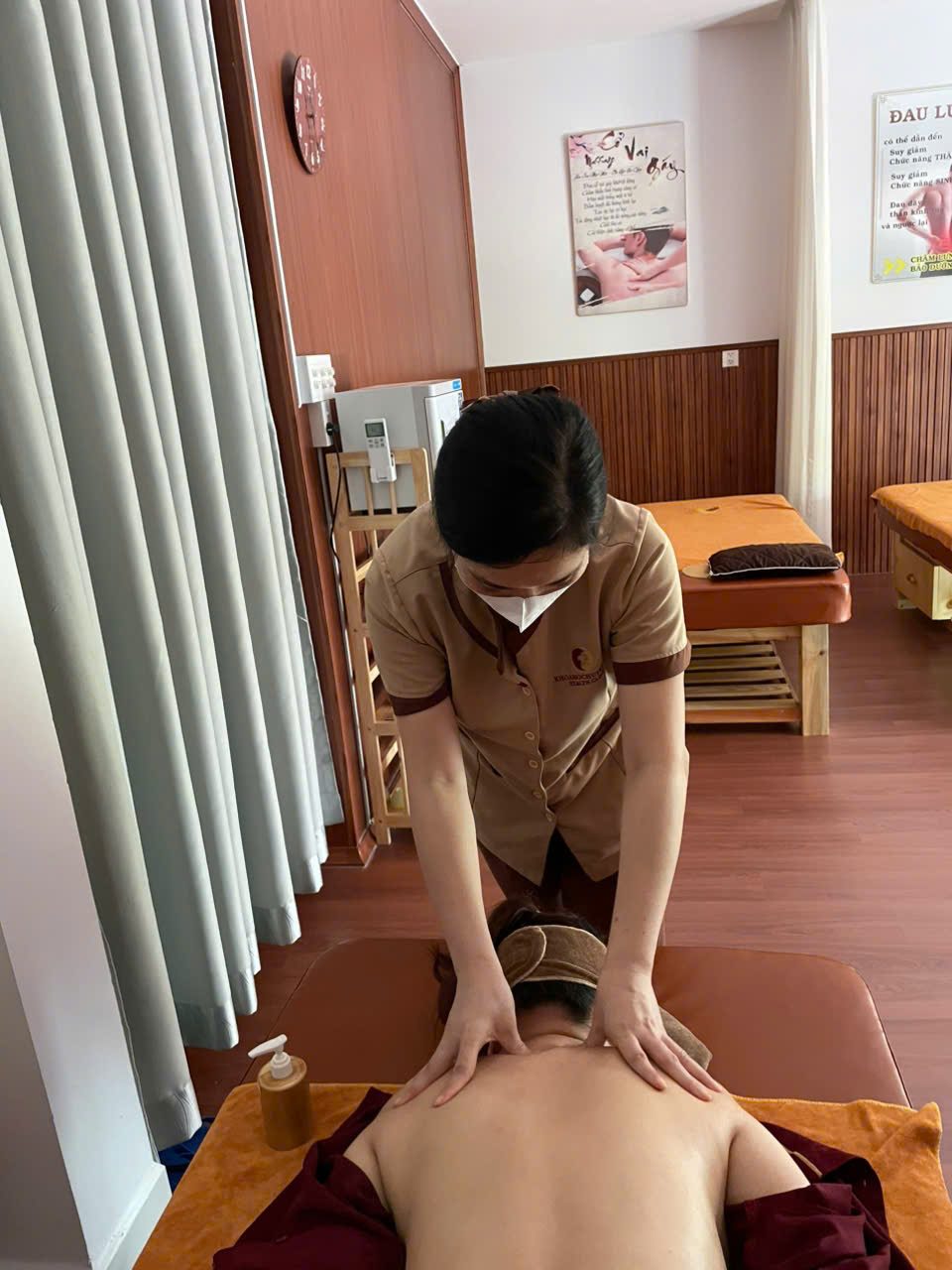
In the Kidney chapter class, one learner places a palm on a partner's lower back and finds the skin warm, the partner's palms slightly hot. At the next table the lower back feels cool, and the person lying down asks for another towel. Lương Y Tống Văn Huynh flattens the learner's hand, has them hold still for a few breaths, then lets them carry on. Those two backs are the easiest way to see how kidney yin deficiency and kidney yang deficiency differ.
Where do kidney yin deficiency and kidney yang deficiency differ at the root?
In Eastern medicine the Kidney is the "root of the innate constitution", belongs to the Water element, opens into the ears, and holds both Kidney yin and Kidney yang. Tong Gia's curriculum sums it up in two images: yin deficiency is a lack of "cooling water", which creates inner heat; yang deficiency is a lack of "warming fire", which creates cold.
These are concepts of traditional medicine, not Western disease names; Eastern "Kidney deficiency" is also different from Western "nephrotic syndrome". Mixing the two terms up can easily alarm a client.
Comparison of signs according to the curriculum
Kidney yin deficiency direction: heat inside
- Hot palms and soles.
- Hot flushes in the afternoon, night sweats.
- Dry mouth, dry throat.
- Poor sleep, lots of dreaming.
- Sore lower back and knees, ringing in the ears.
- Red tongue with little coating.
- Care direction: sleep early, avoid late nights, cut down on spicy, heating food.
Kidney yang deficiency direction: cold inside
- Fear of cold, cold hands and feet.
- Cold, sore lower back and knees.
- Clear, frequent urination, night urination.
- Tiredness, sluggishness, lower libido.
- Mild puffiness, loose stools early in the morning.
- Pale, puffy tongue.
- Care direction: keep the lower back, belly and feet warm; soak the feet in warm water.
Both share a sore lower back and knees, so one sign on its own is not enough. General signs of weakened Kidneys have their own article: signs of weak Kidneys in Eastern medicine. This article only separates hot from cold.
Reading with the eyes: ear signs and complexion
Because the Kidney opens into the ears, Y Tướng Học (face reading for wellness) looks at the ears first. Thick ears with a clear rim and a rosy, moist colour are the sign of ample Kidney qi. Paper-thin ears with a rim that folds backward are placed by the curriculum in the Kidney yin deficiency direction; large, soft, flabby ears with a dull colour that feel cold to the touch belong to the Kidney yang deficiency direction. A flat mastoid bone behind the ear is another hint; see the bone behind the ear.
Complexion adds more: the yin deficiency direction often brings a hot face in the afternoon and dry lips and mouth; the yang deficiency direction tends toward slightly puffy eyelids in the morning and a sluggish posture. Signs are only the looking step; "the signs show outside, the organs lie inside", so you must also ask and touch.
Reading with the hands: lower-back warmth
The kidneys sit behind the peritoneum, on both sides of the spine, roughly level with T12 to L3. In the curriculum the L1–L5 lumbar area relates to digestion, the kidneys, the urinary tract and the lower limbs; read more on the L1 to L5 lumbar area. Learners use press-and-lift and press-and-shift to read skin temperature, compare right with left, then ask the client about sleep, night sweats and night urination. Warm areas with tight muscle are excited areas; cool, slack, low-sensation areas are inhibited areas and are not worked on directly.
Why do massage learners need to tell these two directions apart?
- Warmth: clients in the yang deficiency direction need a warm room, towels over the lower back, belly and feet, and the practitioner's hands warmed before touching. Clients in the yin deficiency direction should not be wrapped too hot.
- Pressure: both start light across the 5 pressure levels; yin deficiency clients who sleep poorly need a slow, even rhythm.
- Lower-back area: open the Bladder meridian on both sides of the spine, knead and press Thận du (BL23, 肾俞), Chí thất (BL52, 志室) and Mệnh môn (GV4, 命门) following the routine; on the legs there are Thái khê (KI3, 太溪), Phục lưu (KI7, 复溜) and Dũng tuyền (KI1, 涌泉). Do not use Tam âm giao (SP6, 三阴交), and be careful with Quan nguyên (CV4, 关元), for pregnant women.
- Temperature: follow the skin in the right direction: bring hot down, warm cool up.
What NOT to do: do not tell a client "you have Kidney deficiency", do not suggest herbs or Kidney tonic products of unknown origin, and do not press hard on the flank and lower back when the client has pain there.
Lương Y Tống Văn Huynh teaches learners to read hot and cold before applying pressure
With more than 13 years in the trade and hundreds of learners trained, Lương Y Tống Văn Huynh reminds the class: "Yin or yang deficiency is something your hands must know, not a label you stick on the client; if it's hot, keep it cool, if it's cold, keep it warm, and both start with light pressure." In class, learners must say whether they feel hot or cold, and where, before choosing a technique.
When to advise a client to see a doctor
Advise the client to get checked at a medical facility, and never use a care session in place of a medical check, when there is: blood in the urine; foamy urine that lasts; a puffy face or swollen legs; very little urine; cramping flank pain spreading to the lower belly; fever with flank pain or burning urination; frequent night urination that lasts; high blood pressure that is hard to control; ongoing tiredness, nausea or itching with no clear cause. Tong Gia Acupoint Wellness is wellness care, not a medical service.
Which level covers this?
Beginners get used to reading complexion, daily wellness habits and a few self-care acupoints in L1 Foundation. The Kidney chapter of Five-Organ Wellness, ear reading and the Kidney care routine within a session belong to the Specialist Course (L3). Read more about the teacher: Lương Y Tống Văn Huynh.
How to sign up
The Sunday morning trial class, 9:00–12:00, with no fee, and the Sunday Y Tướng Học session are open sessions for beginners, at căn T16-21 khu Manhattan, Vinhomes Grand Park, TP. Thủ Đức (unit T16-21, Manhattan block, Thu Duc City). Tong Gia does not promise jobs or income after the course. Book a trial class or call the training hotline 0917 945 259.
Frequently asked questions
How do kidney yin deficiency and kidney yang deficiency differ? Yin deficiency is a lack of cooling water, so heat builds inside, often with hot palms and soles and night sweats. Yang deficiency is a lack of warming fire, so cold sets in, often with fear of cold, cold hands and feet and night urination.
Is Eastern "Kidney deficiency" the same as Western nephrotic syndrome? No. Eastern Kidney deficiency is a pattern of weakened Kidney qi, yin or yang; Western nephrotic syndrome is a glomerular disease that causes protein loss. They are two different concepts.
What should a massage practitioner watch for with a client in the yang deficiency direction? Keep the room warm, cover the lower back, belly and feet with towels, warm your hands before touching and use light pressure. Do not press hard directly on cool, slack areas.
Where can I learn to tell yin deficiency from yang deficiency? In the Specialist Course (L3) at Tong Gia Acupoint Wellness, Vinhomes Grand Park, Thu Duc City. Trial class Sunday morning 9:00–12:00, hotline 0917 945 259.
Related articles
- The 12 main meridians: names, pathway rules and peak hours, an easy table for vocational learners
- Face reading for health: the 3 facial zones in Y Tướng Học, how to divide them and how to read them to care for the body properly
- What are the 8 extraordinary vessels: roles, main pathways and how wellness learners use them
- Yin-Yang and the Five Elements for wellness learners: enough to make the hands work right
- All articles about learning the trade
Reserve a free Sunday-morning trial class or ask about the learning path: message Zalo 0917 945 259.

Founder of Tong Gia Acupoint Wellness (Huyệt Đạo Tống Gia), with more than 13 years in Eastern wellness practice, Y Tướng Học (face reading for wellness) and spinal nerve-reflex balancing. Lương Y's story
417 customers have reviewed Tong Gia on Google Maps
Reviews are written by customers themselves on Google; tap to read them before you visit.
Huyệt Đạo Tống Gia Quận 12
225 Dương Thị Mười, Phường Tân Chánh Hiệp (District 12, Ho Chi Minh City). 8:00 – 19:00 daily.
See reviews on Google MapsHuyệt Đạo Tống Gia Quận 9
Căn T16-21 khu Manhattan, Vinhomes Grand Park, Phường Long Bình (Thủ Đức City, Ho Chi Minh City). 9:00 – 20:00 daily.
See reviews on Google MapsWant to be observed in person?
A 90-minute session starts with observation, and only then moves on to muscle release and acupressure on the right areas. Two branches: District 12 and Vinhomes Grand Park.