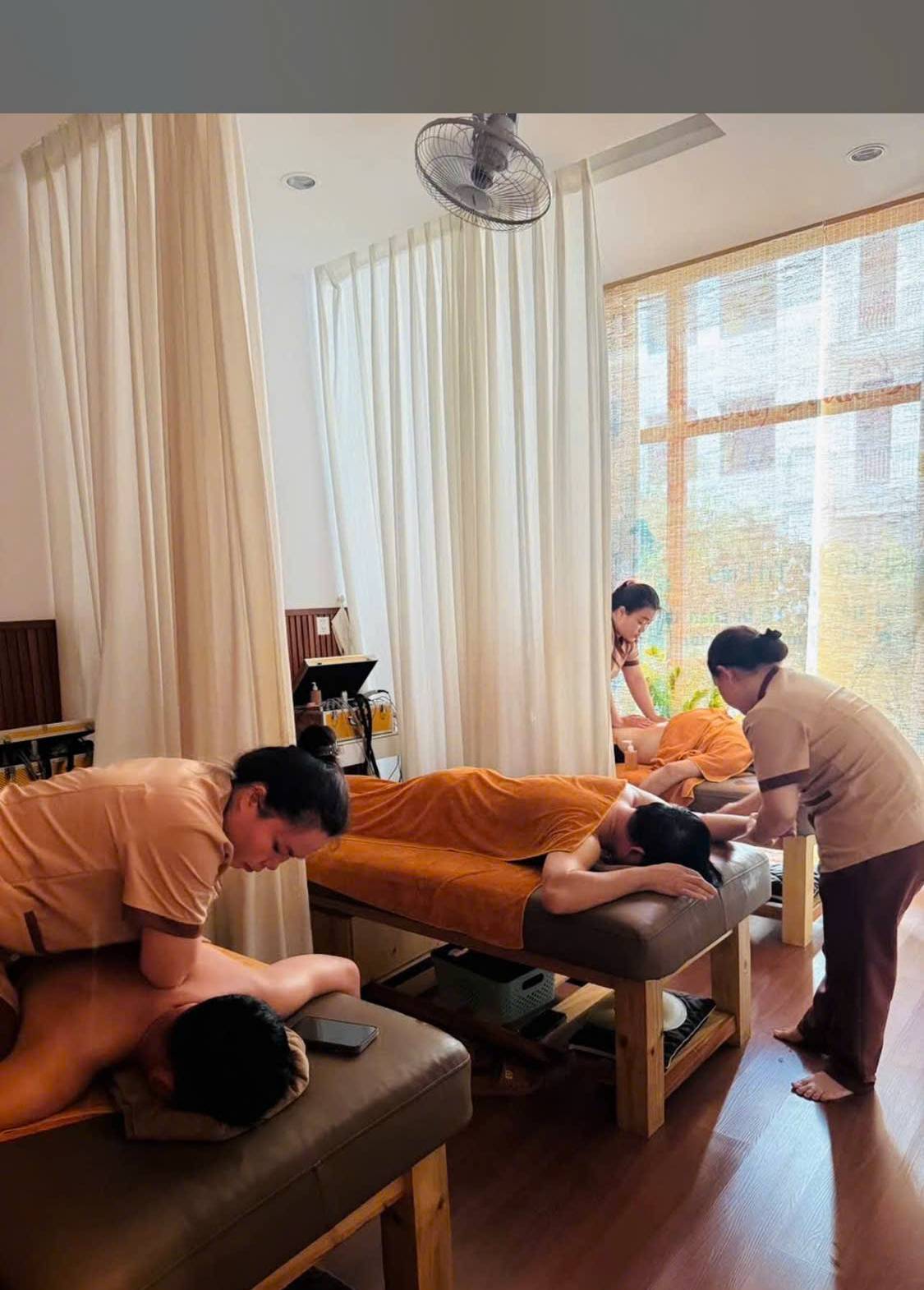
What does a basic massage and acupressure course cover? Main content and how to choose
Lương Y (traditional healer) Tống Văn Huynh · Tong Gia Acupoint Wellness (Huyệt Đạo Tống Gia) · 22/11/2026
A basic massage and acupressure course usually covers six parts: basic Eastern-medicine theory, body anatomy, meridians and common points, massage techniques, acupressure routines by body area, and safety with practice. At Tong Gia Acupoint Wellness (Huyệt Đạo Tống Gia) these parts are taught across levels L1–L4, each tied to what your hands can actually do; the advisor explains end-of-course papers at registration.
Questions learners often ask about basic massage and acupressure courses
I am 30 and live in District 12. I want a basic massage and acupressure course to work in the trade. What does it cover?
Usually Eastern-medicine theory, anatomy, meridians and points, massage techniques, acupressure by area and supervised practice. Eastern medicine holds that the signs show outside while the organs are inside. Tong Gia teaches level by level at Vinhomes Grand Park (District 12 is a care branch, not a classroom); Sunday morning trial, 0917 945 259.
Does a basic course include anatomy? I was weak at biology.
Yes, but at a practical level: bones, large muscle groups and nerve paths in the neck, back and legs, so you know where to press and where to avoid. Tong Gia teaches anatomy through touch, not rote memorising. It is wellness care, not medicine. Hotline 0917 945 259.
Is there a class in Thu Duc that teaches massage and acupressure from scratch with lots of practice?
Yes. Tong Gia Acupoint Wellness teaches at unit T16-21, Manhattan block, Vinhomes Grand Park, Thu Duc City; beginners start at L1, then L2 Basic Trade, practising in pairs while Lương Y Tống Văn Huynh corrects their hands. Sunday morning trial class, hotline 0917 945 259.
What a basic massage and acupressure course is
In Vietnam, "sơ cấp" is the name of a short vocational level, usually a few months to under a year, run by licensed vocational institutions. People searching for what a basic massage and acupressure course covers want to know in advance what they will study and whether it leans to theory or practice, so they do not pay the wrong place. This article gathers the parts commonly found in a basic programme, then compares them with how Tong Gia teaches by level.
Six parts usually found in the programme
- Basic Eastern-medicine theory: yin and yang, the Five Elements, qi and blood, the functions of the five organs. This is the foundation for understanding why one point is used and not another.
- Body anatomy: bones, large muscle groups, the spine, and where blood vessels and superficial nerves lie, so you know where deep pressure is fine and where to avoid it.
- Meridians and common points: the paths of the main meridians, how to measure in cun, how to find points from bony landmarks. See also the acupoint map.
- Massage techniques: rubbing, stroking, gliding, circular kneading, squeezing, rolling, pressing, point pressing, vibration… each with its own pressure, direction and rhythm.
- Acupressure by area: head, face and neck, shoulders, back, arms, legs; the order of work and time for each area.
- Safety and practice: when not to work, when to stop, how to ask clients before a session, and many hours of practice with someone correcting your hands.
Where beginners tend to fall short
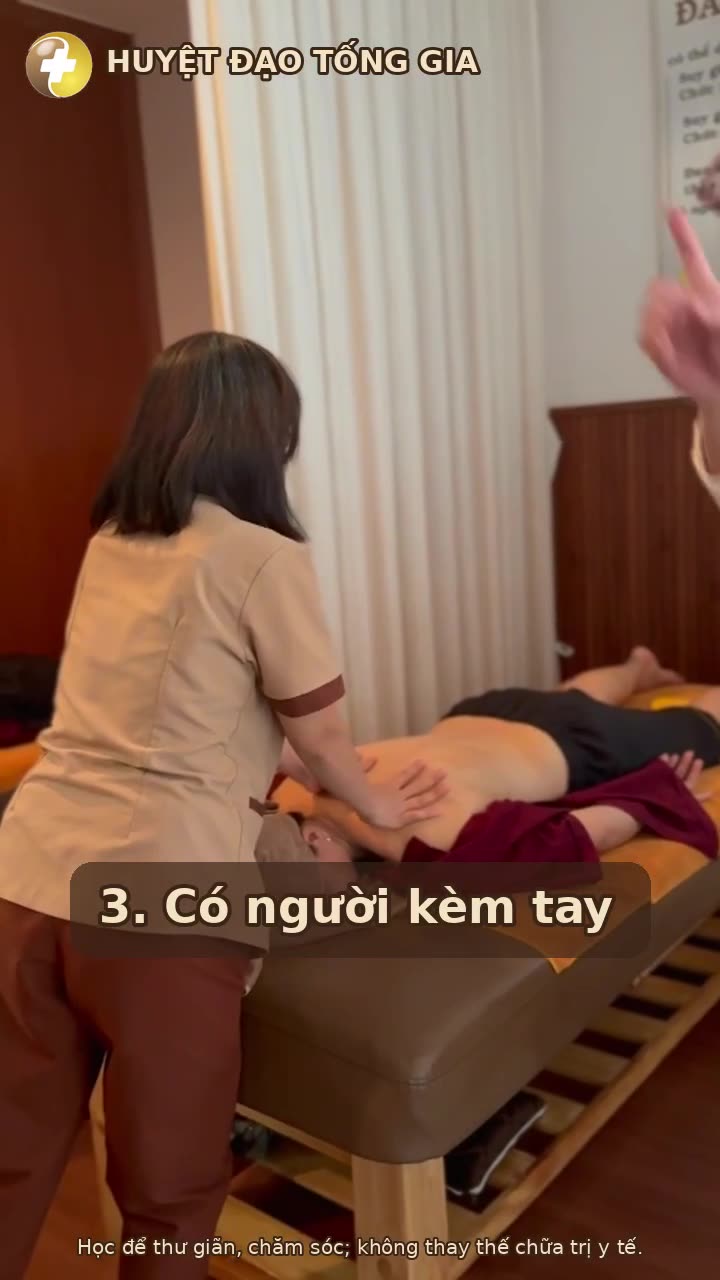
According to Lương Y Tống Văn Huynh, beginners memorise point names quickly but fall short in two places: hand pressure and safety. Knowing where a point is is not enough; you must know how deep to press, how long to hold and how to read the client's reaction. Safety is often skimmed, yet it is what keeps practitioners from causing harm. A good programme gives many hours of practice with someone standing beside you to adjust your hands, not just slides.
How Tong Gia teaches these parts
| Content | Level at Tong Gia | What you can do afterwards |
|---|---|---|
| Eastern-medicine theory, Y Tuong Hoc | L1 Introduction (1,500,000 VND) | Read the complexion and Five Element body types, care for a few safe points yourself |
| Anatomy, techniques, acupressure by area | L2 Basic Trade | Give a complete 90-minute care session for neck and shoulders, back and legs |
| Reading the spine by hand, reflex balancing | L3 Specialist | Work with the spinal reflex-nervous-system balancing method |
| Operating procedures, training staff | L4 Master and Transfer | Open and run a wellness place |
Fees for L2–L4, number of sessions and duration are given by the advisor at registration. On end-of-course papers, read whether massage and acupressure courses come with a certificate before you choose.
Five questions to ask before paying
- Does the programme state what each part covers and how many hours of practice there are?
- Who teaches, and does that person still work in the trade?
- Who do you practise on, and does someone correct each learner's hands?
- Are safety and professional limits taught as a separate part?
- Can you continue to a higher level at the same place afterwards?
Professional limits
Wellness massage and acupressure are health care in the everyday sense, not medicine. If a client has lasting pain, numbness or weakness that keeps increasing, a fever or an uncontrolled underlying condition, the practitioner stops and advises a visit to a medical facility.
How to register
The quickest way to see whether a programme suits you is to sit in on one session. The Sunday morning trial class 9:00–12:00 (10 places) and the Sunday Y Tuong Hoc session with no fee are open sessions for beginners, at unit T16-21, Manhattan block, Vinhomes Grand Park, Thu Duc City, Ho Chi Minh City. Book a trial class or call the training hotline 0917 945 259.
Frequently asked questions
What does a basic massage and acupressure course cover? Usually basic Eastern-medicine theory, anatomy, meridians and points, massage techniques, acupressure by area, safety and practice.
How long is a basic-level course? The basic vocational level usually runs from a few months to under a year depending on the programme. At Tong Gia the advisor gives the number of sessions per level at registration.
Do I have to study anatomy? Yes, at a practical level: bones, large muscle groups, the spine, and where vessels and superficial nerves lie so you know where not to press deeply.
Does Tong Gia issue papers at the end of the course? The advisor or reception explains the type of end-of-course papers at registration; ask clearly before paying the fee.
Where does a beginner start? With L1 Introduction to Y Tuong Hoc (1,500,000 VND), then L2 Basic Trade; Sunday morning trial class, hotline 0917 945 259.
Related articles
- Do massage and acupressure courses practise on real people? How Tong Gia classes practise
- The 12 main meridians: names, pathway rules and peak hours, an easy table for vocational learners
- The 3 'no's of Tong Gia's spinal balancing method: no needles, no medicines, no rough force
- Face reading for health: the 3 facial zones in Y Tướng Học, how to divide them and how to read them to care for the body properly
- All articles about learning the trade
Reserve a free Sunday-morning trial class or ask about the learning path: message Zalo 0917 945 259.

Founder of Tong Gia Acupoint Wellness (Huyệt Đạo Tống Gia), with more than 13 years in Eastern wellness practice, Y Tướng Học (face reading for wellness) and spinal nerve-reflex balancing. Lương Y's story
417 customers have reviewed Tong Gia on Google Maps
Reviews are written by customers themselves on Google; tap to read them before you visit.
Huyệt Đạo Tống Gia Quận 12
225 Dương Thị Mười, Phường Tân Chánh Hiệp (District 12, Ho Chi Minh City). 8:00 – 19:00 daily.
See reviews on Google MapsHuyệt Đạo Tống Gia Quận 9
Căn T16-21 khu Manhattan, Vinhomes Grand Park, Phường Long Bình (Thủ Đức City, Ho Chi Minh City). 9:00 – 20:00 daily.
See reviews on Google MapsWant to be observed in person?
A 90-minute session starts with observation, and only then moves on to muscle release and acupressure on the right areas. Two branches: District 12 and Vinhomes Grand Park.