Pale, greenish face in TCM: how Y Tướng Học (face reading for wellness) learners observe, compare and know their limits
Lương Y (traditional healer) Tống Văn Huynh · Tong Gia Acupoint Wellness (Huyệt Đạo Tống Gia) · 13/11/2026
A pale, greenish face in TCM is linked to the Liver, weak qi and blood, or cold; Western medicine points to anemia, cold or stress. At Tong Gia Acupoint Wellness (Huyệt Đạo Tống Gia) in Ho Chi Minh City, learners note it only as a hint, observe in natural light, compare nails, lips and back, and never name an illness.
Questions learners often ask about a pale, greenish face in TCM
I live in Ho Chi Minh City. Can a pale, greenish face really show which organ is weak, and how is that different from fortune-telling?
It only shows where to look more closely, not which organ is weak. TCM links a greenish color to the Liver, weak qi and blood, or cold; Western medicine points to anemia, cold or stress. Tong Gia teaches learners to compare nails, lips and back; if the paleness lasts, advise a medical check-up and blood test.
I'm 35 and work at a spa near District 9. Where can I learn to read complexion, like a pale face, to understand my clients?
Tong Gia teaches complexion reading in L1 Introduction to Y Tướng Học (1.500.000₫) and in the advanced Y Tướng Học part of the Specialist Course (L3). Lương Y Tống Văn Huynh teaches at căn T16-21 Manhattan, Vinhomes Grand Park, TP. Thủ Đức (unit T16-21, Thu Duc City), close to former District 9. Zalo 0917 945 259.
My client in Ho Chi Minh City looks greenish, has pale lips and tires easily. What should I do, and when do I refer them?
Work gently, keep the client warm and never name an illness. A greenish face and pale lips may come from anemia, cold or stress; TCM reads them as weak qi and blood. If the paleness lasts, with heavy fatigue, breathlessness or dizziness, advise a medical check-up and blood test. Tong Gia offers wellness care, not a medical service.
In class: one greenish face and three extra checks
In a Y Tướng Học session, two learners sit facing each other near the window. One remarks that the partner's face "looks a bit greenish". Lương Y Tống Văn Huynh does not nod right away; instead he has the learner do three more things: look at the fingernails, look at the lips, then lay a hand on the partner's back. Only after that does the learner ask: how have you been sleeping lately, are you eating regular meals, do your hands and feet often feel cold?
That approach answers most questions about a greenish face: seeing the color is the moment to start asking, not the moment to conclude.
Greenish and pale: three ways TCM reads it
Among the five colors, green is linked to the Liver; the article reading the face to understand the organs covers all five. This article goes deep into one color only: greenish, wan, pale. According to the Tong Gia curriculum, there are three common readings.
Liver and stress
The Liver stores blood, governs smooth flow and regulates the movement of qi. People under long-term stress, who are irritable, sleep lightly, cramp often or have dry eyes may also show a greenish face. The curriculum places pale, brittle, ridged nails among the signs that call for Liver care.
Weak qi and blood
When there is not enough blood to nourish the body, the face and lips turn pale, with frequent blurred vision, dizziness, palpitations and shortness of breath. The advanced Y Tướng Học part notes that a 目-shaped face (long, narrow, with little flesh) often goes with weak qi and blood, Liver blood too deficient to nourish the eyes; thin lips, with poorly nourished muscles, go with a greenish or sallow yellow face.
Cold
Cold makes qi and blood stagnate. People who dislike cold, have cold hands and feet, and look pale green early in the morning or when the weather turns cold are usually read as a cold pattern and need to keep warm.
Linking to physiology: common reasons
The Heart section of the curriculum notes: the heart sends blood to nourish the organs; when this weakens, the skin turns pale, the hands and feet get cold and the person feels tired. The Spleen-Stomach and Kidney sections also carry the line "anemia, pale skin, fatigue". From a Western medicine view, a pale face often comes from:
- Anemia: fewer red blood cells, pale skin and mucous membranes. Only a blood test can tell whether there is anemia.
- Cold: the vessels under the skin contract to keep heat in, so the face turns pale.
- Stress, lack of sleep: the sympathetic nervous system is very active, peripheral vessels contract, the face looks less fresh.
- Poor nutrition, irregular meals.
This list is there so learners understand why they must not draw conclusions. One skin color has many causes, and many of them can only be identified at a medical facility.
How learners observe a pale, greenish face in TCM
- Natural light: sit near a window, in daytime. White lamps make the face look paler than it really is.
- Bare face, after resting a few minutes: right after coming in from the cold or the rain, a pale face is normal.
- Compare the nails: nail color, brittle or ridged nails; press the nail tip lightly, release, and see whether the pink returns quickly or slowly. Read more: nails and the Liver.
- Compare the lips: pink and moist, or pale and dry.
- Compare by hand on the back: lay the back of the hand along both sides of the spine and check whether the area around D9 (Can Du, BL18, 肝俞) is tight, whether the muscles along the spine are thin or slack, and whether the lower back feels cold.
- Write in neutral words: "light greenish complexion", "pale lips", "cold hands", never the name of an illness.
During the session: what to do, what not to do
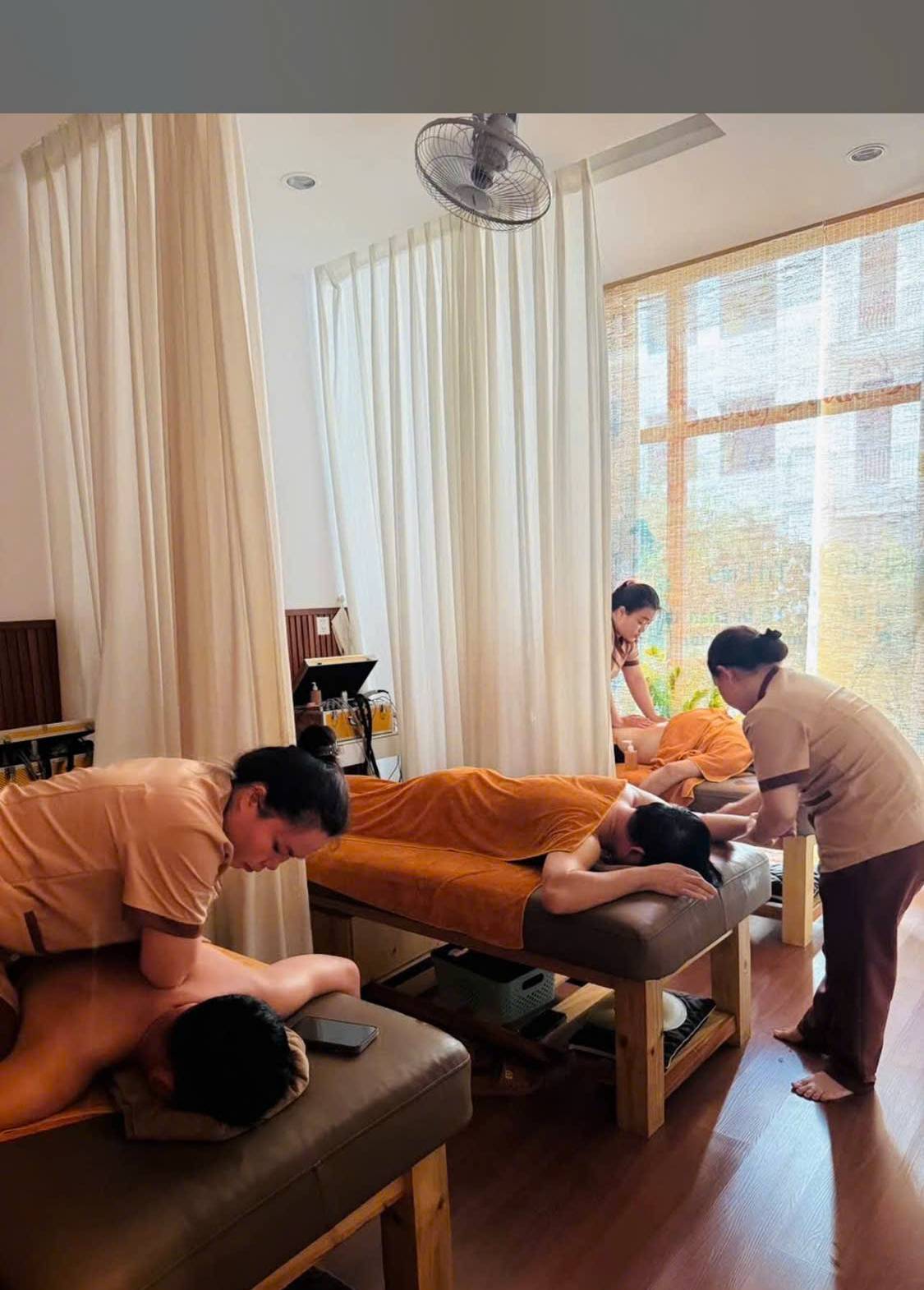
- Keep the room warm and cover the parts of the body not being worked on with a towel.
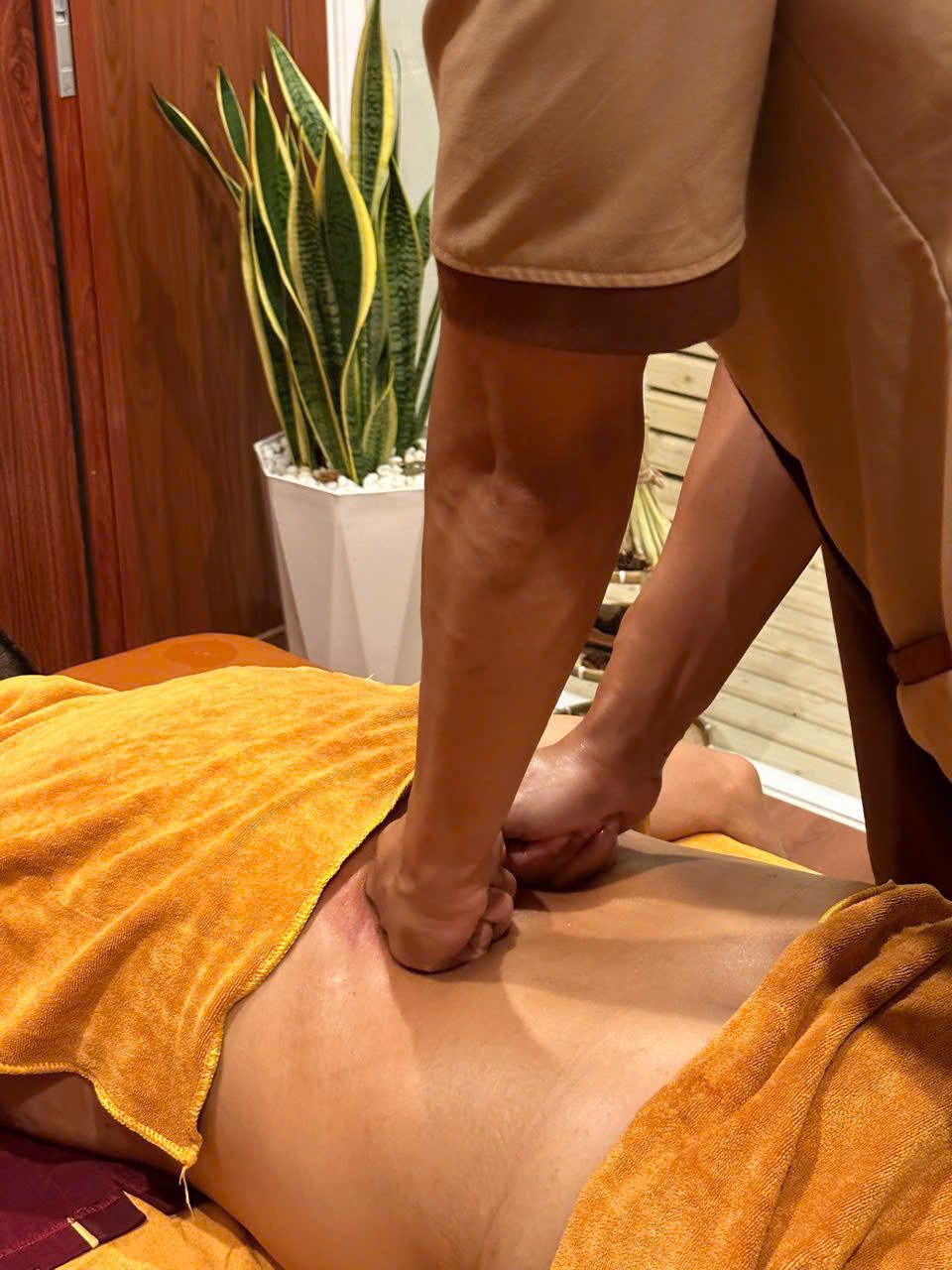
- Light pressure, steady rhythm. The curriculum notes that on a back with thin, slack muscles you use gentle techniques such as vibration and light pinch-lifting.
- Remind the client to eat regular meals, sleep enough and keep hands and feet warm.
- Never say "you're anemic" or "your liver is weak". Never advise the client to buy something to drink to build up the blood or the liver.
How Lương Y Tống Văn Huynh teaches learners to read a greenish face without passing judgment
Lương Y Tống Văn Huynh, founder of Tong Gia, with more than 13 years in Y Tướng Học and Eastern wellness care, teaches complexion with one sentence: "A greenish face is a reminder to look more closely, not an excuse to talk more; if it lasts, our job is to advise the client to get a blood test." In class, learners practice turning observations into questions, for example "Have your hands and feet often felt cold lately?", instead of statements.
When to advise a client to see a doctor
Paleness lasting several weeks, with heavy fatigue, breathlessness or shortness of breath on light effort, palpitations, dizziness or past fainting; bluish lips or fingertips; unexplained weight loss; bleeding gums or easy bruising; black stools; heavy, prolonged periods: advise the client to get a check-up and tests at a medical facility. A pale face with cold sweat and sudden chest pain: call 115. Y Tướng Học does not name illnesses; Tong Gia offers wellness care, not a medical service.
Which level teaches this?
Reading the face is the opening part of L1 Introduction to Y Tướng Học (1.500.000₫), together with the 3 face zones and the Five Elements body types. The cross method of face reading and comparing face signs with the back are taught in the Specialist Course (L3); staff give the L2–L4 fees when you register. Read more about the teacher: Lương Y Tống Văn Huynh.
How to sign up
The trial class on Sunday morning, 9:00–12:00, with no fee, and the Sunday Y Tướng Học session are open to beginners, at căn T16-21 khu Manhattan, Vinhomes Grand Park, TP. Thủ Đức (unit T16-21, Manhattan block, Thu Duc City). Tong Gia does not promise jobs or income after the course. Book a trial class or call the training hotline 0917 945 259.
Frequently asked questions
What is a pale, greenish face in TCM? A greenish, wan or pale face that TCM usually links to the Liver, weak qi and blood, or cold. It is only a hint for care, not a conclusion about illness.
Does a pale face mean anemia? It may, but it can also come from cold, stress or lack of sleep. Only a blood test at a medical facility can confirm it.
Why observe the face in natural light? White light makes the face look paler, yellow light makes it look more yellow. Daylight near a window gives a truer skin color.
Where can I learn complexion reading in Ho Chi Minh City? At Tong Gia Acupoint Wellness, căn T16-21 khu Manhattan, Vinhomes Grand Park, TP. Thủ Đức (Thu Duc City): L1 Introduction to Y Tướng Học and the Sunday Y Tướng Học session. Hotline 0917 945 259.
Related articles
- The 12 main meridians: names, pathway rules and peak hours, an easy table for vocational learners
- Face reading for health: the 3 facial zones in Y Tướng Học, how to divide them and how to read them to care for the body properly
- What are the 8 extraordinary vessels: roles, main pathways and how wellness learners use them
- Yin-Yang and the Five Elements for wellness learners: enough to make the hands work right
- All articles about learning the trade
Reserve a free Sunday-morning trial class or ask about the learning path: message Zalo 0917 945 259.

Founder of Tong Gia Acupoint Wellness (Huyệt Đạo Tống Gia), with more than 13 years in Eastern wellness practice, Y Tướng Học (face reading for wellness) and spinal nerve-reflex balancing. Lương Y's story
417 customers have reviewed Tong Gia on Google Maps
Reviews are written by customers themselves on Google; tap to read them before you visit.
Huyệt Đạo Tống Gia Quận 12
225 Dương Thị Mười, Phường Tân Chánh Hiệp (District 12, Ho Chi Minh City). 8:00 – 19:00 daily.
See reviews on Google MapsHuyệt Đạo Tống Gia Quận 9
Căn T16-21 khu Manhattan, Vinhomes Grand Park, Phường Long Bình (Thủ Đức City, Ho Chi Minh City). 9:00 – 20:00 daily.
See reviews on Google MapsWant to be observed in person?
A 90-minute session starts with observation, and only then moves on to muscle release and acupressure on the right areas. Two branches: District 12 and Vinhomes Grand Park.