What does “liver heat” really mean in Eastern wellness? What learners of 5-organ wellness need to understand
Lương Y (traditional healer) Tống Văn Huynh · Tong Gia Acupoint Wellness (Huyệt Đạo Tống Gia) · 08/11/2026
What does “liver heat” really mean in Eastern wellness? It is not a disease of the liver organ but a folk name for Liver qi stagnation or rising Liver fire: getting irritable easily, red eyes, a bitter taste in the mouth, poor sleep. Tong Gia guides wellness self-care: going to bed on time, eating and drinking in moderation, keeping a calm mind.
Why does everyone talk about “liver heat”?
A client has breakouts, a dry mouth, gets irritable, has red eyes… and the familiar line is “I must have liver heat”. Care practitioners hear this every day. If you just nod and start pressing points, you miss the chance to help the client understand correctly. If you slip and say “your liver has a problem”, you are making a judgement you have no right to make.
So what does “liver heat” really mean in Eastern wellness? First we need to separate two things: the “liver” of modern medicine is an organ that can be tested in a lab; the “Liver (Can)” of Eastern wellness is a functional system. The two concepts overlap in places but are not the same.
What does the Liver do in Eastern wellness?
- Governs free flow: keeps qi moving through the body without getting stuck. When Liver qi flows freely, mood is relaxed and digestion is easy.
- Stores blood: holds and regulates blood, explained in detail in the article What does “the Liver stores blood” mean.
- Opens into the eyes, governs the sinews: the eyes and the tendons are seen as places that reflect the Liver.
- Linked with anger: prolonged anger and frustration cause Liver qi to stagnate.
Which states does “liver heat” in Eastern wellness actually describe?
Liver qi stagnation
Long-term stress and bottled-up feelings keep qi from flowing. The person sighs often, feels tightness in the flanks, a bloated belly and changeable moods. This is the kind of “liver heat” often seen in office workers and people under pressure.
Rising Liver fire
Long-standing stagnation turns into heat, or it comes from staying up late, alcohol and spicy, heating food. The signs are what people commonly call heat: a red face, red eyes, a bitter mouth, quick temper, trouble sleeping, a tense headache.
These two states are how Eastern wellness describes and classifies conditions for care. They are not conclusions about liver function. Learners use them only as observation hints, then ask more questions and confirm by hand.
Try it now: observing someone who “often has liver heat”
- Look: is the complexion red or pale green, are the eyes red, does the client often rub the flanks?
- Ask: bedtime, whether they often stay up past 11 pm, how stressful their work is, eating habits, alcohol.
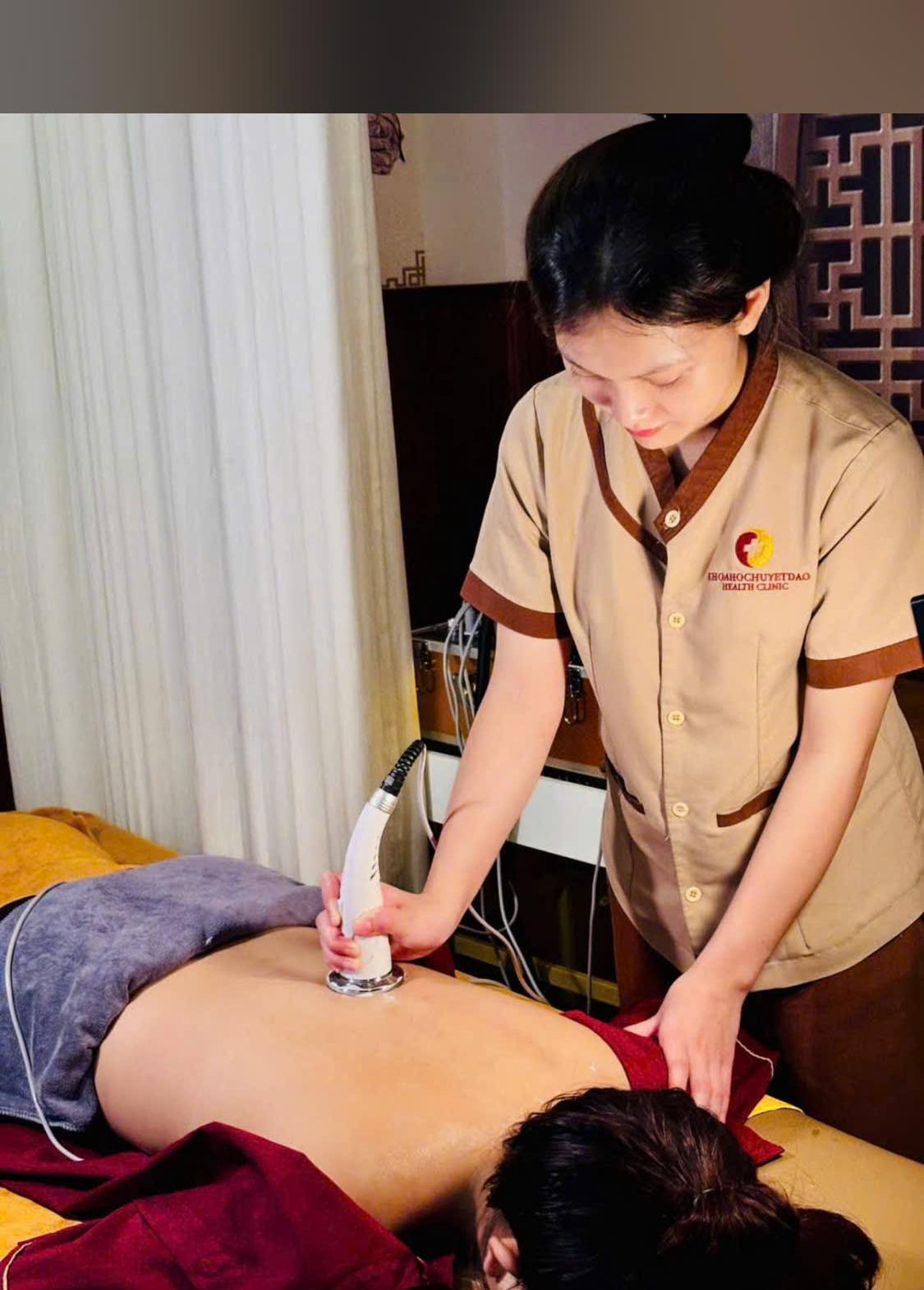
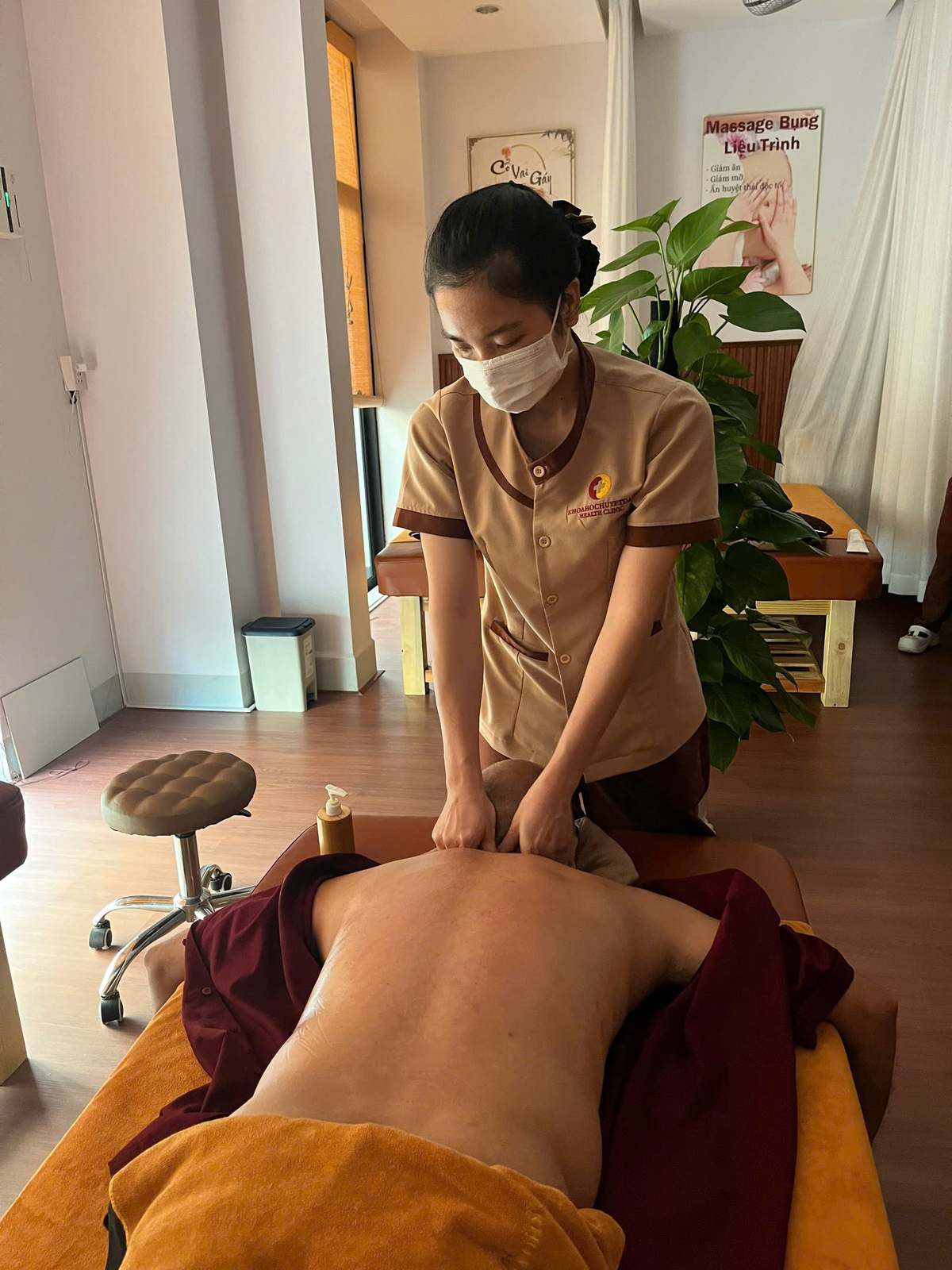
- Read by hand: feel the back at the level of the Ganshu point (BL18, 肝俞; below the spinous process of the 9th thoracic vertebra, out to both sides) and compare tension and warmth on both sides.
- Write down the three points above and draw no conclusion until you have enough.
Wellness care for people who often have “liver heat”
- Sleep before 11 pm. Eastern wellness considers 1–3 am the peak hours of the Liver meridian, so this is when the body needs rest.
- Cut down on alcohol, fried and spicy food; drink enough water and eat green vegetables.
- Move gently, walk, stretch the flanks; practise slow breathing when stressed.
- Gently massage the Taichong (Thái Xung, LR3, 太冲) point on the top of the foot with moderate pressure, combined with releasing the neck and shoulders.
- Do not take “liver-cooling medicine” or “detox tea” just because others recommend it. These misconceptions are covered in the article common misconceptions about liver detox.
Write it down: when must you advise the client to see a doctor?
Yellowing of the skin or the whites of the eyes, dark urine, persistent aching under the right ribs, unexplained fatigue and weight loss, or years of heavy drinking: this is no longer a matter of “liver heat”. The learner stops and advises the client to see a doctor at a medical facility. Tong Gia offers hands-on wellness care; it is not a medical service and does not replace a medical check-up.
Where to learn this?
Liver functions, points, seasons, emotions and the care routine for each organ are taught in the 5-organ wellness module of the Expert L3 course, taught by Lương Y Tống Văn Huynh. Learners study how to read the face for hints, then confirm by hand along the spine, following the saying “the organs are the cause, the face shows the effect”. The advisor will tell you the course fee when you register.
How to sign up
The Sunday-morning trial class, 9:00–12:00 every week, and the free Sunday Y Tướng Học session are the open schedule for newcomers, at căn T16-21 khu Manhattan, Vinhomes Grand Park, TP. Thủ Đức (Thu Duc, Ho Chi Minh City). Register for a trial class or call the training hotline 0917 945 259.
Frequently asked questions
Is “liver heat” a liver disease? Not really. “Liver heat” is the folk name for Liver qi stagnation or rising Liver fire in Eastern wellness, not a conclusion about liver function.
What does “liver heat” really mean in Eastern wellness? It is the folk name for Liver qi stagnation or rising Liver fire, usually described as getting irritable easily, red eyes, a bitter taste in the mouth, internal heat, poor sleep and tightness along the flanks. This is only a hint for observation, not a conclusion about the liver.
Why does staying up late easily cause “liver heat”? Eastern wellness considers 1–3 am the peak hours of the Liver meridian, when the body needs rest; staying up late regularly easily throws the Liver off balance.
Which acupoint should be pressed for “liver heat”? Wellness practice often uses gentle massage of the Taichong point (LR3) on the top of the foot and releasing the neck and shoulders. With unusual signs such as yellow skin, see a doctor.
Where to learn Liver wellness care? This content is part of the 5-organ wellness module of the Expert L3 course at Tong Gia Acupoint Wellness, with a trial class on Sunday mornings.
Related articles
- The 12 main meridians: names, pathway rules and peak qi hours, an easy-to-remember table for learners
- The 3 zones of the face in Y Tướng Học: how to divide them and read them for the right care
- What are the 8 extraordinary vessels: their role, main pathways and how wellness learners use them
- Yin-Yang and the Five Elements for wellness learners: understand enough for your hands to work correctly
- All articles about learning the trade
Reserve a free Sunday-morning trial class or ask about the learning path: message Zalo 0917 945 259.

Founder of Tong Gia Acupoint Wellness (Huyệt Đạo Tống Gia), with more than 13 years in Eastern wellness practice, Y Tướng Học (face reading for wellness) and spinal nerve-reflex balancing. Lương Y's story
417 customers have reviewed Tong Gia on Google Maps
Reviews are written by customers themselves on Google; tap to read them before you visit.
Huyệt Đạo Tống Gia Quận 12
225 Dương Thị Mười, Phường Tân Chánh Hiệp (District 12, Ho Chi Minh City). 8:00 – 19:00 daily.
See reviews on Google MapsHuyệt Đạo Tống Gia Quận 9
Căn T16-21 khu Manhattan, Vinhomes Grand Park, Phường Long Bình (Thủ Đức City, Ho Chi Minh City). 9:00 – 20:00 daily.
See reviews on Google MapsWant to be observed in person?
A 90-minute session starts with observation, and only then moves on to muscle release and acupressure on the right areas. Two branches: District 12 and Vinhomes Grand Park.