Client breathing during massage: how Tong Gia learners read the breath to adjust their hands
Lương Y (traditional healer) Tống Văn Huynh · Tong Gia Acupoint Wellness (Huyệt Đạo Tống Gia) · 13/11/2026
What does client breathing during massage tell you? Shallow or held breath shows tension; even, deep breathing with a long exhale shows the client is letting go. At Tong Gia Acupoint Wellness (Huyệt Đạo Tống Gia) in Ho Chi Minh City, learners pace their hands to the breath, ease off at a held breath and stop if breathing gets difficult.
Questions learners often ask about client breathing during massage
I work at a spa in Thu Duc. Clients hold their breath when I press their back. Too much pressure, or are they nervous?
Usually the body is resisting pressure that is more than it can take, or the client is nervous. A held breath with a stiff back means the sympathetic branch still dominates. At Tong Gia, learners drop one pressure level and wait for the exhale; with difficult breathing or chest tightness, they stop and advise a check at a medical facility.
I'm in Ho Chi Minh City and want to learn to read clients' breathing. Which level, and do I need Eastern medicine first?
No Eastern medicine background is needed. Beginners start with L1 Foundation (1.500.000₫); the Wave method and 8 principles are in the Specialist Course (L3). Lương Y Tống Văn Huynh teaches at căn T16-21 khu Manhattan, Vinhomes Grand Park, TP. Thủ Đức (unit T16-21, Manhattan block, Thu Duc City). Trial class on Sunday morning, Zalo 0917 945 259.
I live near former District 9 and my clients keep sighing during massage. What does Eastern medicine say, and what should I do?
One sigh followed by the body softening usually means letting go. Eastern medicine links repeated sighing with tiredness to the Lung (sadness, worry) and Liver qi stagnation. Tong Gia learners keep a slow rhythm and note it to ask the client later, without conclusions; if tiredness lasts, they advise a check-up.
The silent exercise for listening to the breath
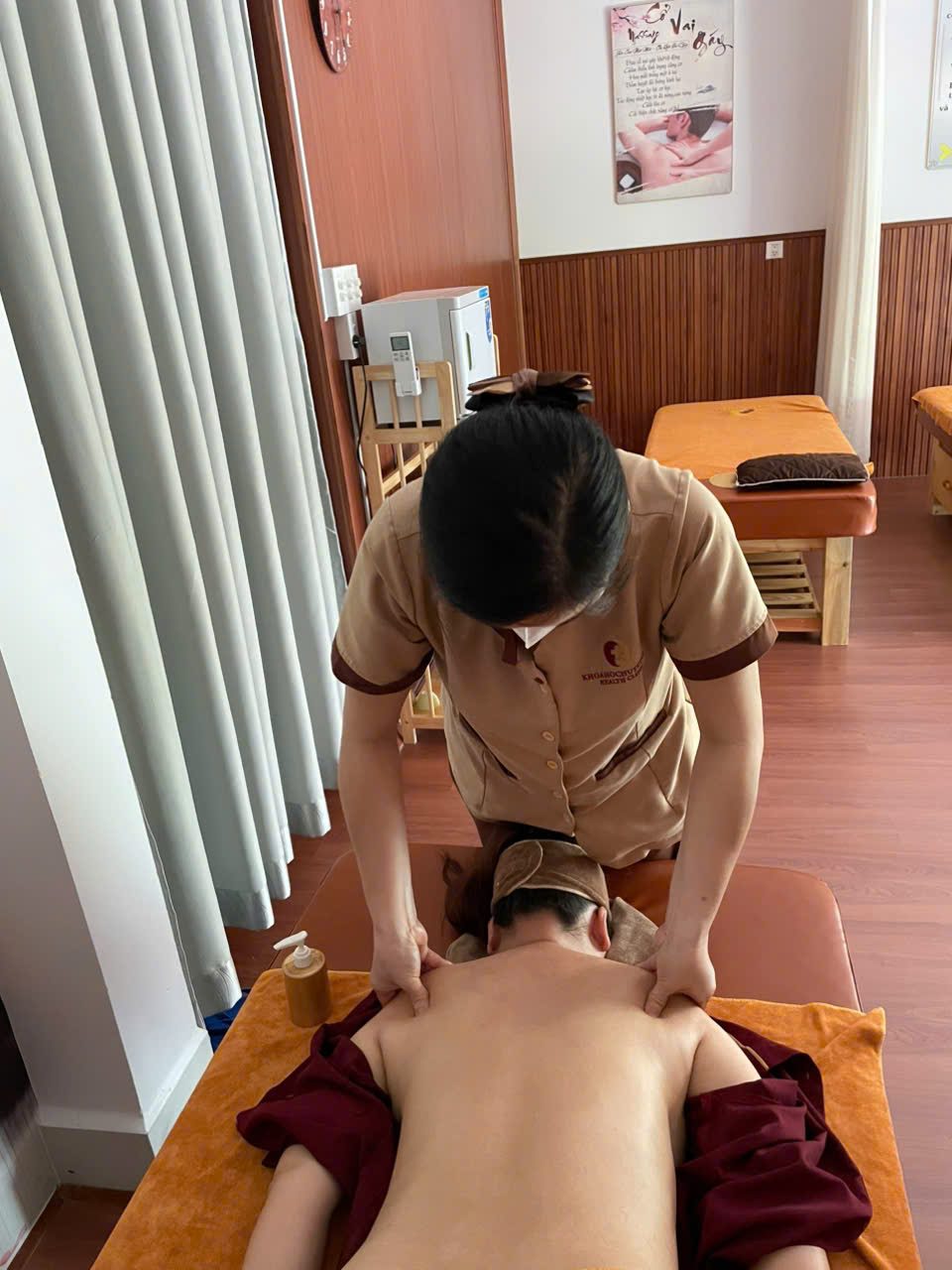
In class at Vinhomes Grand Park there is one exercise: place both hands on your partner's back, no pressing, no stroking, just feel the back rise and fall. Lương Y Tống Văn Huynh walks past, gently lifts a learner's wrist and asks how the partner is breathing. Anyone who cannot answer puts their hands back. This exercise answers the question what client breathing during massage tells you, and why a practitioner has to hear the breath before using any pressure.
What does client breathing during massage say about the nervous system?
Breathing is both automatic and under conscious control, so it is a small window onto the client's autonomic nervous system.
Western physiology divides the autonomic nervous system into two branches. The sympathetic branch puts the body on alert: a faster heart, fast and shallow breathing, braced muscles. The parasympathetic branch brings the body back to rest: slow breathing, a long exhale, softening muscles, active digestion. The Tong Gia curriculum links the spine to the autonomic nervous system; the back area D1–D12 relates to circulation, breathing and digestion.
On the back, learners read with the pair excitation – inhibition: excited areas have warm skin and tight, hard muscle; inhibited areas have cool skin and slack muscle. The breath tells you whether the whole body is tensing up or calming down.
Four breathing patterns learners often meet
Shallow breathing, upper chest bobbing
Short breaths, shoulders lifting with them, the belly barely moving: the sympathetic branch is still dominant. The Lung section of the curriculum notes that shallow breathing and a hunched sitting posture keep the diaphragm underused, which makes people tire easily and feel tense. The learner reduces pressure and slows down.
Holding the breath when the hands touch
The client holds their breath as soon as the hands press, and the back stiffens: the pressure is more than they can take, or they are nervous. Following the pressure-grading principle, the learner drops one level and waits for the client to exhale before going on.
Sighing, one breath at a time
If the body softens after a sigh, it is letting go; keep the hand rhythm as it is. If the client sighs repeatedly and often complains of tiredness, Eastern medicine links frequent sadness, sighing and worry to the Lung; long-held resentment and anger cause Liver qi stagnation and make it hard to relax. The learner notes it down to ask the client after the session, without drawing conclusions.
Even, deep breathing with a long exhale
The belly rises and falls evenly, and sometimes the client dozes off. The parasympathetic branch is dominant. Only now does the learner gradually increase pressure at the key points.
Pacing the hands with the breath: the Wave method
The curriculum describes the Wave method as creating periodic waves of sensation area by area, from the Neck down to the Sacrum and Coccyx, keeping an even, controlled rhythm. Tong Gia learners practise matching the wave rhythm to the client's breathing:
- Place your hands and count a few of the client's breaths before starting.
- Apply pressure on the exhale, hold the pressure as the client inhales.
- Each time the client holds their breath, drop back one pressure level.
- Only when the breathing becomes even and gradually slower do the hands go deeper at the key points.
- Towards the end of the session, slow the hand rhythm so the client's breathing slows with it.
Read more on the difference between the Compression method and the Wave method and how to tell apart excited and inhibited areas on the back.
First-time clients: the breath says what the client has not said
A first-time client does not yet know how the practitioner will use pressure; many say „just go ahead“ but still hold their breath for the first few touches. The curriculum says to observe whether the breathing is shallow or deep, chest or belly breathing. Learners should:
- Say beforehand which area they are about to work on and how much pressure they will use.
- Open with a few minutes of slow 4–6 breathing: breathe in through the nose for 4 seconds, breathe out slowly for 6 seconds.
- Ask about pressure after the first few minutes, not at the end of the session.
- Not comment on the client's breathing or body as if giving a verdict.
Understanding what client breathing during massage tells you helps learners put first-time clients at ease, not just perform the technique correctly.
Lương Y Tống Văn Huynh teaches learners to listen to the breath before using pressure
With more than 13 years in the craft and hundreds of learners trained, Lương Y Tống Văn Huynh tells his learners: „When a client holds their breath, the body is saying „not ready yet“; your hands must hear that before the client has a chance to say it.“ In class, he places his hand next to the learner's to feel the partner's breathing together: when the breath stops, ease off; only when the breath lengthens, go on.
When to advise a client to get checked
An adult's resting breathing rate is about 12–20 breaths per minute, smooth and even, able to finish a full sentence without running out of breath. If a client has difficulty breathing, chest tightness, chest pain, breathes faster than 20 times a minute at rest, wheezes, has noisy breathing, blue lips, or has to sit up to breathe: stop at once and do not continue massage or acupressure. For lasting chest tightness or sudden difficulty breathing, call 115; otherwise advise the client to get checked at a medical facility. Tong Gia Acupoint Wellness offers wellness care, not a medical service.
Which level teaches reading a client's breathing?
Beginners start from L1 Foundation (1.500.000₫), practising in pairs. The Wave method, the 8 principles and reading excited – inhibited areas along the spine are taught in the Specialist Course (L3). Read more about the teacher: Lương Y Tống Văn Huynh.
How to sign up
The trial class on Sunday morning, 9:00–12:00, with no fee, and the Sunday Y Tướng Học (face reading for wellness) class are for beginners, at căn T16-21 khu Manhattan, Vinhomes Grand Park, TP. Thủ Đức (unit T16-21, Manhattan block, Thu Duc City). Lương Y reviews your hand skills at the trial class and then suggests a suitable level. Tong Gia does not promise jobs or income after the course. Book a trial class or call the training hotline 0917 945 259.
Frequently asked questions
What does client breathing during massage tell you? Shallow breathing or a held breath shows the client is tense or the pressure is more than they can take; even, deep breathing with a long exhale shows the body is letting go. Learners use this to adjust their hand rhythm and pressure.
What should you do when a client holds their breath during massage? Drop back one pressure level following the pressure-grading principle, and wait for the client to exhale before going on. If the client has difficulty breathing or chest tightness, stop completely.
How is the Wave method related to the client's breathing? The Wave method creates even, controlled waves of sensation from the Neck down to the Sacrum and Coccyx. Tong Gia learners match the wave rhythm to the client's breathing so the body calms down with the rhythm of the hands.
When must you stop a massage because of the client's breathing? When the client has difficulty breathing, chest tightness, chest pain, breathes faster than 20 times a minute at rest, has blue lips or has to sit up to breathe. Stop at once and advise the client to get checked; for lasting chest pain or sudden difficulty breathing, call 115.
Related articles
- The 3 'no's of Tong Gia's spinal balancing method: no needles, no medicines, no rough force
- 33 vertebrae and their regions: the spine map every wellness massage learner must know
- 4 objective factors when reading the spine by hand: let the hands record, not guess
- 5 vertebral forms – raised, sunken, shifted: reading the spine by hand in the Specialist Course
- All articles about learning the trade
Reserve a free Sunday-morning trial class or ask about the learning path: message Zalo 0917 945 259.

Founder of Tong Gia Acupoint Wellness (Huyệt Đạo Tống Gia), with more than 13 years in Eastern wellness practice, Y Tướng Học (face reading for wellness) and spinal nerve-reflex balancing. Lương Y's story
417 customers have reviewed Tong Gia on Google Maps
Reviews are written by customers themselves on Google; tap to read them before you visit.
Huyệt Đạo Tống Gia Quận 12
225 Dương Thị Mười, Phường Tân Chánh Hiệp (District 12, Ho Chi Minh City). 8:00 – 19:00 daily.
See reviews on Google MapsHuyệt Đạo Tống Gia Quận 9
Căn T16-21 khu Manhattan, Vinhomes Grand Park, Phường Long Bình (Thủ Đức City, Ho Chi Minh City). 9:00 – 20:00 daily.
See reviews on Google MapsWant to be observed in person?
A 90-minute session starts with observation, and only then moves on to muscle release and acupressure on the right areas. Two branches: District 12 and Vinhomes Grand Park.