Face reading for women's health: how Y Tướng Học reads complexion, spirit and form to care the right way
Lương Y (traditional healer) Tống Văn Huynh · Tong Gia Acupoint Wellness (Huyệt Đạo Tống Gia) · 10/11/2026
Face reading for women, seen through Y Tướng Học (face reading for wellness) at Tong Gia, is not used to predict fate or personality. Learners observe skin colour, the eyes, posture, the forehead, the area around the eyes, the lips and chin to understand a person's condition, and then choose care that suits each woman at each stage of life.
How is general face reading different from Y Tướng Học?
Face reading (nhân tướng học) is the general name for studying a person's appearance. Online, most articles on face reading for women talk about destiny, love life, wealth or poverty. Y Tướng Học is the branch that leans toward health: it looks at complexion, spirit and body shape to understand how the body is doing, so care can be given the right way. At Tong Gia, learners study only this angle. Read more: learning face reading for health.
Why look at women separately?
In Eastern medicine, a woman's body is closely tied to blood and to the stages of menstruation, pregnancy, the postpartum period and perimenopause. At each stage qi and blood change, and that change often shows on the face before anyone notices. A wellness practitioner, or a son or daughter caring for their mother, who can see these changes will know when to work gently, when to rest, and when to suggest seeing a doctor.
5 areas Y Tướng Học observes on a woman's face
1. Overall skin colour
Rosy, moist skin with a slight sheen is usually seen as a sign of ample qi and blood. Pale, dull skin, or skin darkened in patches, is a sign to pay attention to rest and diet. See the article complexion in Eastern medicine.
2. The eyes and the area around them
Y Tướng Học regards the eyes as the place to read the spirit (thần). Bright, lively eyes show good spirits. Tired eyes, darkened skin under the eyes and puffy eyelids often go with late nights and long-term stress.
3. The lips
Lip colour is used to observe the blood. Learners practise looking at how pink and how dry the lips are and whether the lip line is clear or faint, and they record it over time instead of drawing a conclusion from one look.
4. The forehead and both temples
The forehead reflects how tense or relaxed the mind is. Deep frown lines between the eyebrows in a young person are often seen in people who worry a lot.
5. The chin and the area around the mouth
Y Tướng Học links the lower part of the face with the later stage of life and with the strength of the lower body. Learners look at fullness, skin colour and spots that tend to appear with the cycle.
What do you do after looking?
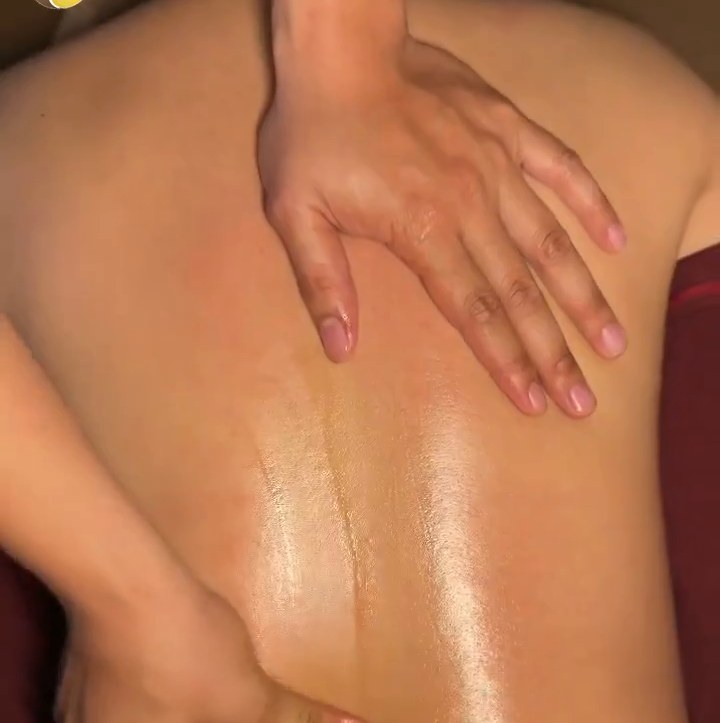
Looking is only the first step. At Tong Gia, after looking, the practitioner reads the spine by hand to cross-check: which areas of the back are tight and which need a gentle touch. These two steps are the foundation of the therapeutic-style massage method of spinal nerve-reflex balancing. Every observation is only a hint for care and is never used to draw conclusions about illness. If unusual signs persist, advise the person to see a doctor at a medical facility.
Try it now: look at your mother's face or your own
- Choose natural morning light, with no make-up.
- Note 3 things: skin colour, the eyes, lip colour.
- Repeat after a week of going to bed earlier, and compare.
This way of taking notes is the very first exercise in the Y Tướng Học class. Newcomers wondering how hard it is can read is face reading hard to learn?
Who should learn?
- Women who want to understand their own body through each stage of life.
- Sons and daughters who want to care for their mother or grandmother at home.
- Wellness practitioners and wellness spa owners who want to advise female clients better.
Where to learn Y Tướng Học?
Lương Y Tống Văn Huynh teaches Y Tướng Học in person at Tong Gia, combined with therapeutic-style massage so learners both know how to look and know how to work. The free Sunday Y Tướng Học session and the Sunday-morning trial class, 9:00–12:00, are open to newcomers, at căn T16-21 khu Manhattan, Vinhomes Grand Park, TP. Thủ Đức (Thủ Đức City, Ho Chi Minh City). Sign up for a trial class or call the training hotline 0917 945 259.
Questions learners often ask
Is Eastern face reading worth learning, and where in Saigon?
Face reading for fortune-telling has no basis, but Y Tướng Học, wellness face reading, is useful: complexion, eyes and posture reflect sleep and circulation, and Eastern tradition says outer signs mirror inner organs. It never replaces a medical check. Tong Gia teaches it in Level 1 (1,500,000 VND) at Vinhomes Grand Park, Thu Duc City; Zalo/WhatsApp +84 917 945 259.
What does face reading say about women's facial features?
In wellness face reading, women's features are not used to judge character or fate. Practitioners look at skin tone, the area around the eyes, lips and chin to notice tiredness, poor sleep or weak blood and qi, then choose suitable care for each life stage. Ongoing menstrual problems need a medical check. Tong Gia teaches this approach; Zalo/WhatsApp +84 917 945 259.
Where can I learn to read facial complexion for wellness observation?
Tong Gia teaches complexion reading through Y Tướng Học at Unit T16-21, Vinhomes Grand Park, Thu Duc City, HCMC. You learn what skin tone, lips and puffiness suggest, how Eastern tradition links colour to organs, and why each impression is checked by hand on the spine. Yellow skin or blue lips need a medical facility. Zalo/WhatsApp +84 917 945 259.
Frequently asked questions
What is face reading for women in Y Tướng Học? It means observing skin colour, the eyes, lips, forehead, chin and posture to understand a person's condition for wellness care, not to predict fate.
Can Y Tướng Học tell what illness someone has from their face? No. Observation is only a hint for giving the right care. Unusual signs that persist call for a visit to a doctor at a medical facility.
Why do women need their complexion read separately? In Eastern medicine, a woman's body is tied to blood and changes with each stage, such as menstruation, the postpartum period and perimenopause.
Can people outside the profession learn Y Tướng Học? Yes. Many people learn it to understand their own body and to care for their parents at home.
Where can I learn Y Tướng Học in Ho Chi Minh City? Tong Gia holds a free Sunday Y Tướng Học session at Vinhomes Grand Park, Thủ Đức City. Call 0917 945 259.
Related articles
- How bone features and flesh features differ: the two layers of the face that learners of Y Tuong Hoc must separate
- Eyebrows meeting in the middle, Giao Gia Mi: how Y Tuong Hoc learners read this brow shape
- What are Quỷ Mi eyebrows: a heavy-sounding name that learners should read lightly
- Rat eyes (Thu Nhan) in Y Tuong Hoc: the eyelids tell the story of the Spleen
- All articles about learning the trade
Reserve a free Sunday-morning trial class or ask about the learning path: message Zalo 0917 945 259.

Founder of Tong Gia Acupoint Wellness (Huyệt Đạo Tống Gia), with more than 13 years in Eastern wellness practice, Y Tướng Học (face reading for wellness) and spinal nerve-reflex balancing. Lương Y's story
417 customers have reviewed Tong Gia on Google Maps
Reviews are written by customers themselves on Google; tap to read them before you visit.
Huyệt Đạo Tống Gia Quận 12
225 Dương Thị Mười, Phường Tân Chánh Hiệp (District 12, Ho Chi Minh City). 8:00 – 19:00 daily.
See reviews on Google MapsHuyệt Đạo Tống Gia Quận 9
Căn T16-21 khu Manhattan, Vinhomes Grand Park, Phường Long Bình (Thủ Đức City, Ho Chi Minh City). 9:00 – 20:00 daily.
See reviews on Google MapsWant to be observed in person?
A 90-minute session starts with observation, and only then moves on to muscle release and acupressure on the right areas. Two branches: District 12 and Vinhomes Grand Park.