The symmetry principle in wellness massage: 4 rules every practitioner needs
Lương Y (traditional healer) Tống Văn Huynh · Tong Gia Acupoint Wellness (Huyệt Đạo Tống Gia) · 08/11/2026
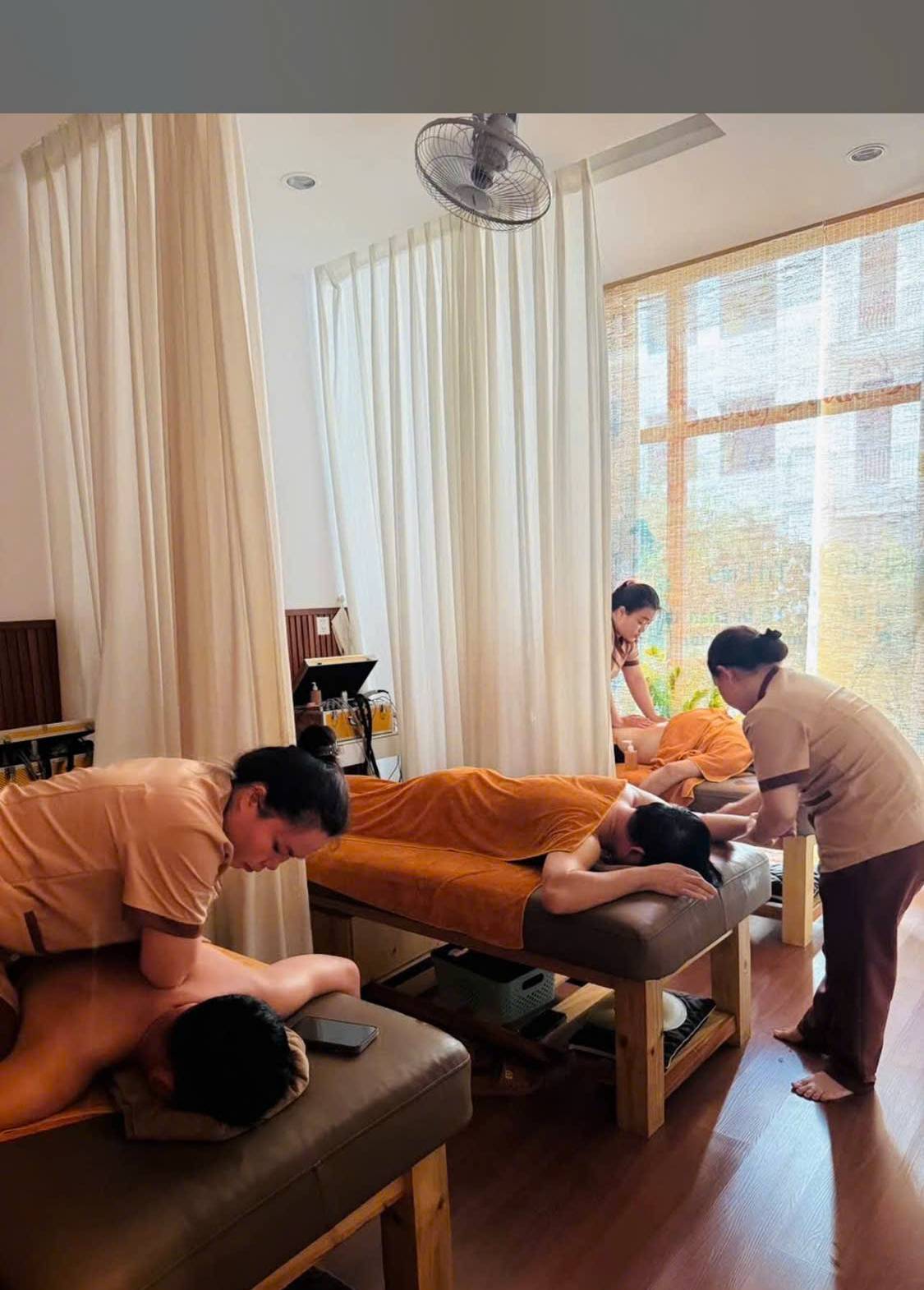
The symmetry principle in wellness massage means reading, comparing and working on both sides of the body, not just the spot where the client says it aches. Pressure is weighed by what your hands read, the tighter side gets more attention, and the session ends when both sides are in balance. Tong Gia teaches this principle in the Expert L3 course.
Why work on the left shoulder when the client's right shoulder aches?
After years in the trade, have you ever seen this: the client points to the right shoulder, you put all your effort into the right shoulder, the client says it feels great, and two days later the same spot aches again? A common reason is that the other side was forgotten. The body works in pairs: the muscles on both sides of the spine pull against each other to keep you upright. When one side is tight, the other side is often compensating.
That is why the symmetry principle in wellness massage is one of the first principles learners are reminded of when studying spinal nerve-reflex balancing.
What do you see in your client?
- One shoulder is higher and the head tilts slightly.
- With the client lying face down, one side of the back bulges more than the other.
- The client habitually carries a bag on one side, holds a child with one arm or cradles the phone on one shoulder.
These are observation hints. Y Tướng Học (face reading for wellness) teaches you to look at how a person stands and sits before laying hands on; your hands then confirm what your eyes saw.
4 rules of the symmetry principle in wellness massage
1. Read both sides before you start
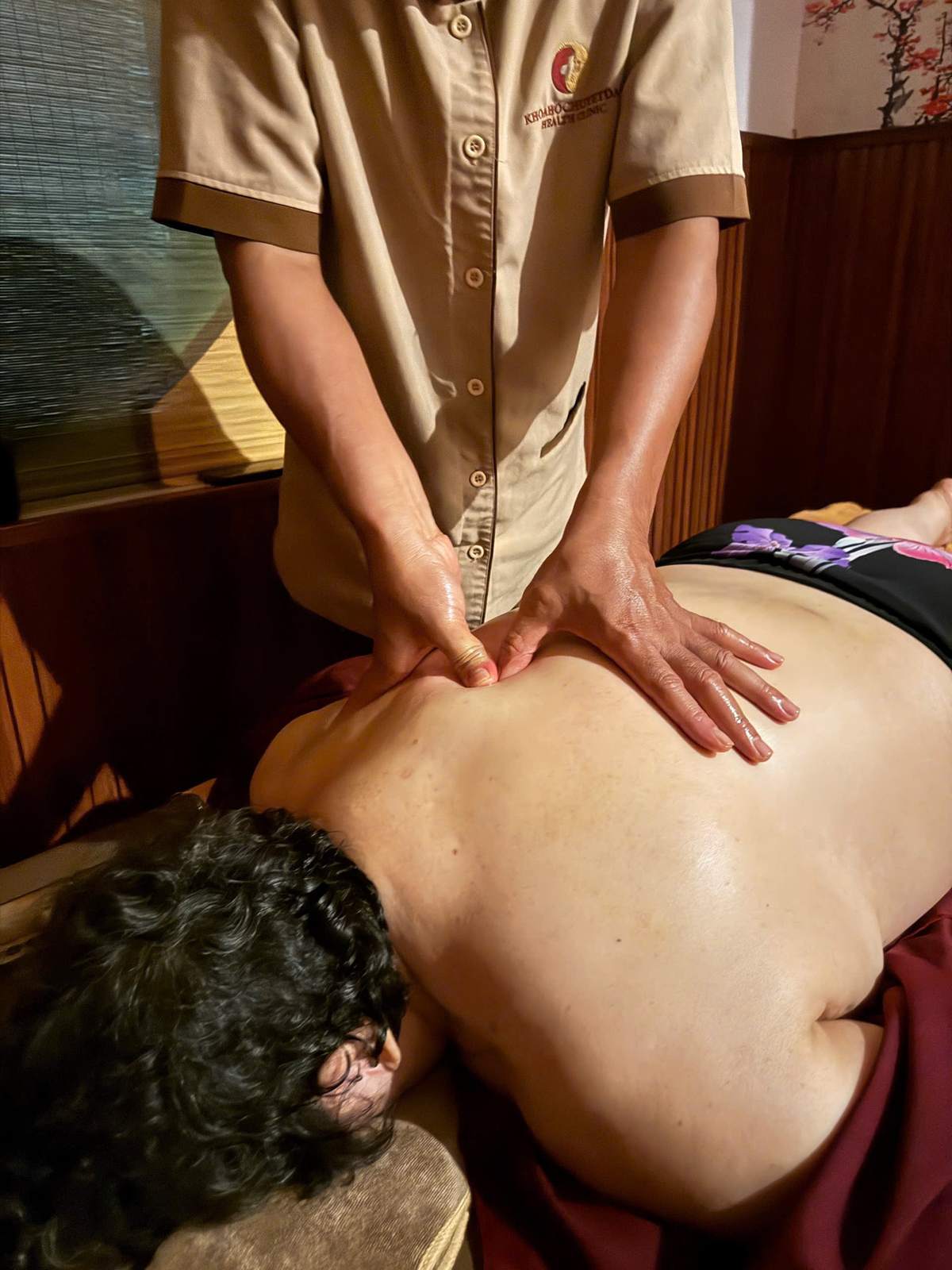
Place your hands on both sides of the spine at the same level and compare temperature, tension and hollowness. How to read is explained in the article palpation in wellness massage. Working without reading first is working on guesswork.
2. Work on both sides, skip neither
Even if the client complains about only one side, the session still covers both. The “not sore” side may be the one bracing to hold up the other.
3. Symmetry means balance, not splitting in half
The two sides do not need exactly equal time. The tighter side gets more careful work, but pressure must never exceed what the client can comfortably take. The other side is still released with lighter pressure so both sides return to balance together.
4. Recheck both sides before finishing
At the end of the session, place your hands and compare again as you did at the start. If one side is still clearly different, note it down to continue next session; do not try to force it all in one session.
Try it now: a 3-minute symmetry exercise
- The client lies face down. Place both palms on the two shoulder blades, hold still for 10 seconds and feel which side is warmer or tighter.
- Slide down to the middle of the back, then to the lower back, and repeat.
- Write the three levels on paper, one letter per level: “R” if the right side is different, “L” if the left side is different, “=” if they are the same.
- Repeat after the session and compare with the first time.
Remember to account for objective factors such as lying position, pillows and room temperature; see the article 4 objective factors when reading the spine by hand.
Write it down: safety notes
- Never use rough force to “pull things even”. The Tong Gia method keeps 3 no's: no needles, no medicines, no rough force.
- Strong pain on one side, numbness spreading down the arm or leg, increasing weakness, or a newly visible lean in the body: stop and advise the client to see a doctor at a medical facility.
- Wellness massage is hands-on wellness care; it is not a medical service and does not replace a medical check-up.
Where to learn this?
The symmetry principle, reading excitation and inhibition zones, zone-and-point location and the 5 pressure levels are taught in the therapeutic-style massage with spinal nerve-reflex balancing module of the Expert L3 course, taught by Lương Y Tống Văn Huynh. Theory in the morning, guided practice on real people in the afternoon. The advisor will tell you the course fee when you register.
How to sign up
The Sunday-morning trial class, 9:00–12:00 every week, and the free Sunday Y Tướng Học session are the open schedule for newcomers, at căn T16-21 khu Manhattan, Vinhomes Grand Park, TP. Thủ Đức (Thu Duc, Ho Chi Minh City). Register for a trial class or call the training hotline 0917 945 259.
Frequently asked questions
What is the symmetry principle in wellness massage? It means reading and comparing both sides of the body, working on both sides, weighing pressure and time by what your hands read, then checking both sides again before finishing.
If the client aches on only one side, do I need to work on the other? Yes. The muscles on both sides work in pairs; the side that does not ache may be bracing to compensate for the other.
Does symmetry mean working both sides exactly the same? No. The tighter side gets more attention, but pressure always stays within what the client can take, and the session aims for both sides to be in balance.
When should I stop and advise the client to see a doctor? When one side is very painful, numbness spreads down the arms or legs, weakness increases or the body has newly started to lean. In that case the client should see a doctor at a medical facility.
Where to learn spinal-balancing wellness massage? Tong Gia Acupoint Wellness teaches this in the Expert L3 course, with a trial class on Sunday mornings at Vinhomes Grand Park, Thu Duc City, Ho Chi Minh City.
Related articles
- The 3 no's of Tong Gia's spinal balancing method: no needles, no medication, no rough force
- How many regions do the 33 vertebrae fall into: the spine map every wellness massage learner must know
- 4 objective factors when reading the spine by hand: let your hands record, not guess
- 5 vertebral patterns (raised, sunken, shifted): reading the spine by hand in the Expert course
- All articles about learning the trade
Reserve a free Sunday-morning trial class or ask about the learning path: message Zalo 0917 945 259.

Founder of Tong Gia Acupoint Wellness (Huyệt Đạo Tống Gia), with more than 13 years in Eastern wellness practice, Y Tướng Học (face reading for wellness) and spinal nerve-reflex balancing. Lương Y's story
417 customers have reviewed Tong Gia on Google Maps
Reviews are written by customers themselves on Google; tap to read them before you visit.
Huyệt Đạo Tống Gia Quận 12
225 Dương Thị Mười, Phường Tân Chánh Hiệp (District 12, Ho Chi Minh City). 8:00 – 19:00 daily.
See reviews on Google MapsHuyệt Đạo Tống Gia Quận 9
Căn T16-21 khu Manhattan, Vinhomes Grand Park, Phường Long Bình (Thủ Đức City, Ho Chi Minh City). 9:00 – 20:00 daily.
See reviews on Google MapsWant to be observed in person?
A 90-minute session starts with observation, and only then moves on to muscle release and acupressure on the right areas. Two branches: District 12 and Vinhomes Grand Park.