How head massage affects the nervous system: what wellness massage learners need to understand
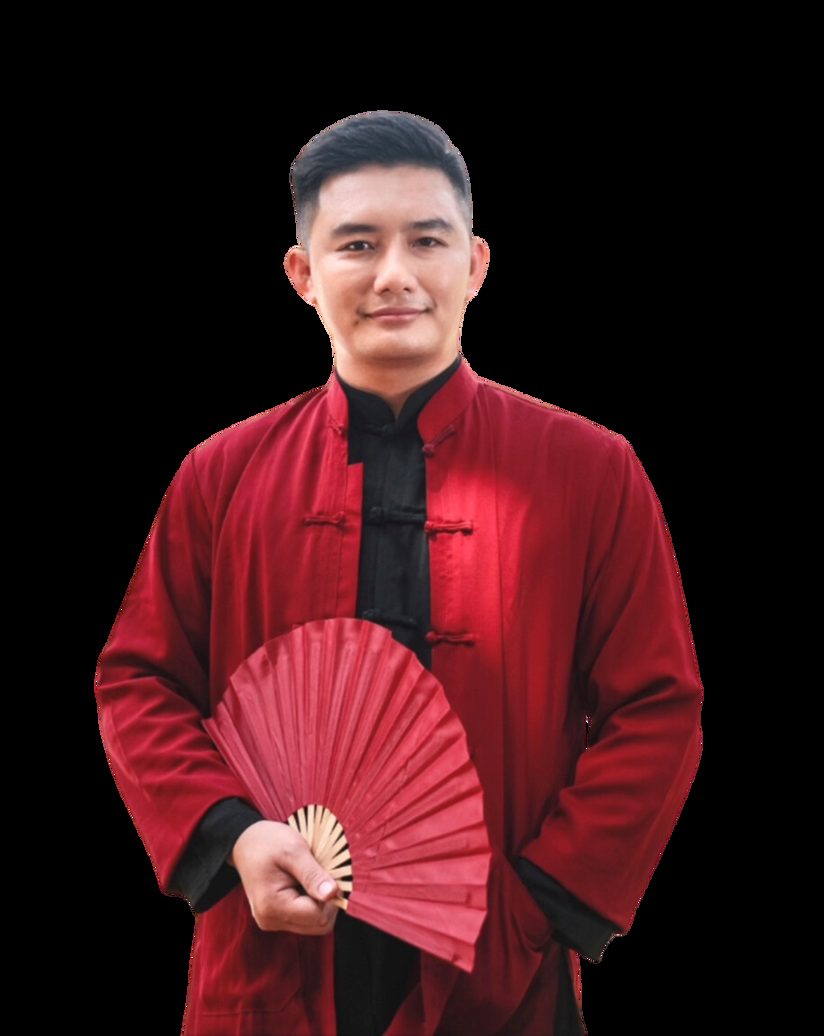
Lương Y (traditional healer) Tống Văn Huynh · Tong Gia Acupoint Wellness (Huyệt Đạo Tống Gia) · 13/11/2026
How head massage affects the nervous system: through scalp sensation, head and neck muscle tension and the rhythm of the hands. Slow, even touch usually helps the body shift into a resting state. At Tong Gia Acupoint Wellness (Huyệt Đạo Tống Gia) in Ho Chi Minh City, learners first read the nape by hand, then work to the client's breathing.
Questions learners often ask about how head massage affects the nervous system
I'm 30-something and run a spa in Thu Duc. Where can I learn head massage for stressed clients, practising on real people?
Tong Gia teaches head and neck massage with practice on real people at căn T16-21 khu Manhattan, Vinhomes Grand Park, TP. Thủ Đức (Thu Duc City), taught by Lương Y Tống Văn Huynh. Learners practise placing their hands to the client's breathing. This is wellness care, not a medical profession. Sunday morning trial class, Zalo 0917 945 259.
I'm new to massage in District 2. Does head massage really help stressed clients sleep, and can a beginner grasp the nerve mechanism?
Yes, as relaxation: light, even hands slow the client's breathing and soften the nape muscles, because scalp signals raise no alarm. The school sees the head as the command centre and the spine as what keeps the body running. For severe headaches or worsening numbness and weakness, advise a medical check. Tong Gia teaches this at Vinhomes Grand Park.
I live near District 9, Vinhomes Grand Park. What do head-and-neck massage classes cost and when are they, so I don't waste money?
Try a class first: Tong Gia runs a trial class on Sunday morning, 9:00–12:00, with no fee, at Vinhomes Grand Park. L1 Foundation is 1.500.000đ; staff give the L2–L4 fees when you register. Before you pay, ask reception about the share of hands-on practice and about documents after the course. Zalo 0917 945 259.
Practice session: placing your hands on a classmate's head
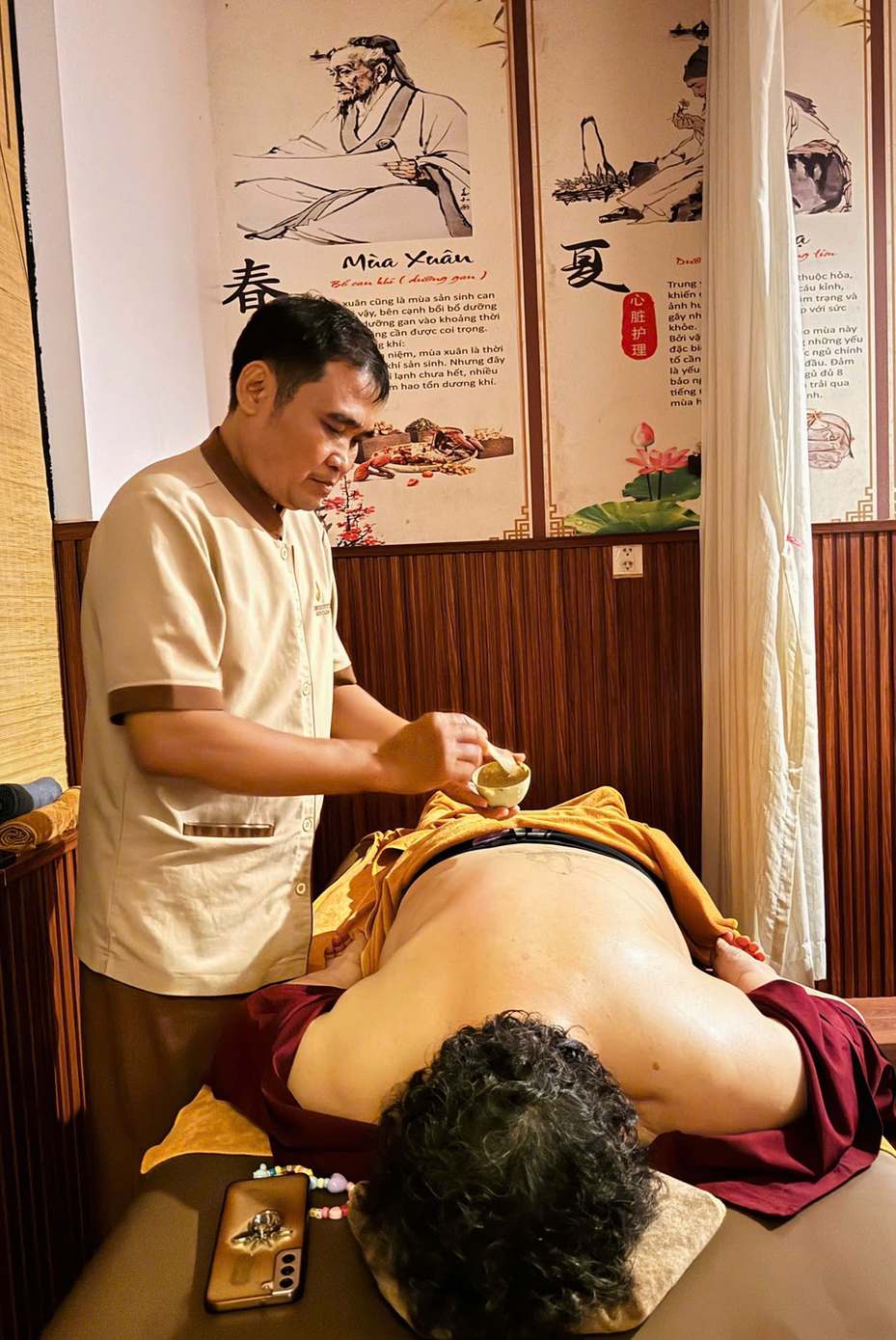
In class at Vinhomes Grand Park there is one exercise beginners often fumble: sit at the head of the table, place all ten fingertips on a classmate's scalp and simply hold still for a few breaths. Out of habit, many people press at once and rub fast. Lương Y Tống Văn Huynh gently lifts the learner's wrist, lowers the pressure, sets the hand back down on the soft pads of the fingers, then asks the class to watch the person lying down: the breathing slows, the shoulders sit lower. That exercise opens the question of this article: how head massage affects the nervous system, and why you need to understand it before learning any movement.
How head massage affects the nervous system: the anatomy
The skull protects the cerebrum, the cerebellum and the medulla. Hands cannot touch the brain; what they touch is the scalp, the thin layer of muscle over the skull (the frontalis at the front and the occipitalis at the back, joined by the galea aponeurotica), the temporalis on each side and the small suboccipital muscles that link the head to the neck.
The scalp has a great many sensory nerve endings. The forehead receives sensation through the trigeminal nerve; the back of the head through branches of the occipital nerves from the upper neck, C2–C3. When the touch is even and slow, the signals reaching the brain raise no alarm; the body usually shifts into a resting state governed by the parasympathetic branch of the autonomic nervous system: slower breathing, relaxed face and nape muscles. Hard, jerky pressure is a "something is wrong" signal, and the body tenses up. Massage does not "load" anything into the brain, and it does not replace a medical check-up.
Why working on the head means reading the nape and upper back too
Tong Gia's curriculum of wellness massage for spinal nerve-reflex balancing takes the head and the spine as its foundation. The head is the centre of the central nervous system: awareness, thinking, command. The spine holds the spinal cord and is linked to the autonomic nervous system, which keeps automatic functions running, such as breathing, heart rhythm and digestion. The sensing-hands technique (Cảm thủ) uses the soft pads of the fingertips to work gently on both of these centres.
That is why the head is never worked in isolation. For the Nervous – Mental functional group, the curriculum combines the neck area C1–C7, the upper back D1–D3 and the sacral area S. This is a supportive approach based on the school's own materials and does not replace a doctor's follow-up. Read more: how the spine and the nervous system are connected.
Excitation and inhibition: read with the hands before you work
Before working, the hands read 4 objective factors: skin temperature, the cushioning muscle layer, the shape of the vertebrae and any pain or numbness at the point. For the head and neck, the learner lays a palm on the nape to compare both sides, then strokes down the groove of the neck from the occiput to C7.
- Excited area: warmer skin, tight muscle, more pain when pressed. This is where you focus, increasing pressure gradually.
- Inhibited area: cooler skin, slack muscle, low sensation. Do not work on it directly; work the surrounding area and keep it warm.
People who are often stressed tend to have a warm nape and stiff suboccipital muscles. See also excited and inhibited areas on the back.
Bringing relaxation and the client's state of mind into the session
- Ask first: sleep, what kind of headache and since when, and whether they have high blood pressure or a heart condition, or take blood thinners.
- Watch the client: first-timers often tense their shoulders and hold their breath when hands touch their head. Say what you are about to do, and ask whether the pressure feels right.
- Rhythm and pressure: go from one finger up to the whole hand, keep an even rhythm with the client's breathing and never skip pressure levels.
- Keep warm, keep quiet: no draughts on the head, soft light, little talking once the client is breathing slowly.
- After the session: tell the client to rest a few minutes before sitting up.
What a practitioner does not do: no cracking or twisting the neck; no strong pressure on the temples; no work when a client has a severe headache of unknown cause; never say "I'll make your headache go away".
How Lương Y Tống Văn Huynh teaches learners to place their hands on a client's head
With more than 13 years in the craft and hundreds of learners trained, Lương Y Tống Văn Huynh teaches the head work with one line: "Hands on a client's head must be lighter than you think and slower than you want; once the head lets go, the neck and shoulders will follow." Learners practise watching their classmate's breathing and shoulders to tell whether their pressure is right or wrong, and only then learn the techniques.
When to advise a client to see a doctor
Stop and advise the client to get checked at a medical facility if there is: a sudden, severe headache; headache with fever, a stiff neck or vomiting; pain after a blow to the head; headaches that worsen over several weeks; sudden numbness or weakness in the arms or legs, difficulty speaking, a drooping mouth or blurred vision. If there are signs of a stroke, call 115 at once. For clients with high blood pressure, a heart condition or a stent: ask carefully and work lightly. Tong Gia offers wellness care, not a medical service.
Which level teaches this
Hand placement and head-and-neck relaxation start at L1 Foundation (1.500.000đ) and L2 Basic Practice. Sensing hands, excitation – inhibition and the Nervous – Mental group are taught in the Specialist Course (L3); staff give the L2–L4 fees when you register. Read more about the teacher: Lương Y Tống Văn Huynh.
How to sign up
The trial class on Sunday morning, 9:00–12:00, with no fee, and the Sunday Y Tướng Học (face reading for wellness) class are open to beginners, at căn T16-21 khu Manhattan, Vinhomes Grand Park, TP. Thủ Đức (unit T16-21, Manhattan block, Thu Duc City). Tong Gia does not promise jobs or income after the course. Book a trial class or call the training hotline 0917 945 259.
Frequently asked questions
How does head massage affect the nervous system? Through sensation from the scalp, the tension of the head and neck muscles and the rhythm of the hands. Slow, even touch usually helps the body shift into a resting state: slower breathing, relaxed muscles.
Does head massage make headaches go away? Head massage helps you relax; it does not replace a medical check-up. A severe or sudden headache, or one with fever, vomiting, numbness or weakness, needs a check at a medical facility.
Why does head massage also include the neck and upper back? Because the head and the spine are the two centres of the nervous system. Tong Gia's curriculum combines the neck C1–C7, the upper back D1–D3 and the sacral area when caring for the Nervous – Mental group.
Where can I learn head massage in Ho Chi Minh City? At Tong Gia, căn T16-21 khu Manhattan, Vinhomes Grand Park, TP. Thủ Đức (Thu Duc City). Sunday morning trial class 9:00–12:00 with no fee, hotline 0917 945 259.
Related articles
- The 3 'no's of Tong Gia's spinal balancing method: no needles, no medicines, no rough force
- 33 vertebrae and their regions: the spine map every wellness massage learner must know
- 4 objective factors when reading the spine by hand: let the hands record, not guess
- 5 vertebral forms – raised, sunken, shifted: reading the spine by hand in the Specialist Course
- All articles about learning the trade
Reserve a free Sunday-morning trial class or ask about the learning path: message Zalo 0917 945 259.

Founder of Tong Gia Acupoint Wellness (Huyệt Đạo Tống Gia), with more than 13 years in Eastern wellness practice, Y Tướng Học (face reading for wellness) and spinal nerve-reflex balancing. Lương Y's story
417 customers have reviewed Tong Gia on Google Maps
Reviews are written by customers themselves on Google; tap to read them before you visit.
Huyệt Đạo Tống Gia Quận 12
225 Dương Thị Mười, Phường Tân Chánh Hiệp (District 12, Ho Chi Minh City). 8:00 – 19:00 daily.
See reviews on Google MapsHuyệt Đạo Tống Gia Quận 9
Căn T16-21 khu Manhattan, Vinhomes Grand Park, Phường Long Bình (Thủ Đức City, Ho Chi Minh City). 9:00 – 20:00 daily.
See reviews on Google MapsWant to be observed in person?
A 90-minute session starts with observation, and only then moves on to muscle release and acupressure on the right areas. Two branches: District 12 and Vinhomes Grand Park.