Wellness massage with herbal patches and steam: the order and limits every learner must know
Lương Y (traditional healer) Tống Văn Huynh · Tong Gia Acupoint Wellness (Huyệt Đạo Tống Gia) · 13/11/2026
Wellness massage combined with herbal patches and steam uses warmth and a herbal plaster to support the hands, not replace them. At Tong Gia Acupoint Wellness (Huyệt Đạo Tống Gia) in Ho Chi Minh City, learners read the spine by hand first, steam next and apply the patch last, always asking who must not have steam or a patch.
Questions learners often ask about wellness massage with herbal patches and steam
I'm a spa practitioner in Thu Duc. Where can I learn wellness massage with herbal patches and steam, done safely?
The supporting part, herbal patches and steam, sits in the Specialist Course (L3) at Tong Gia, learned after the 8 principles of spinal balancing massage. Lương Y Tống Văn Huynh teaches at căn T16-21 Manhattan, Vinhomes Grand Park, TP. Thủ Đức (unit T16-21, Thu Duc City). Trial class Sunday morning, Zalo 0917 945 259.
I'm learning massage in Ho Chi Minh City. Does steam come before or after the hands, and when does the patch go on?
Read the spine by hand first, while the skin is at its natural temperature; steam after that; apply the herbal patch at the end to hold the feeling. Warmth widens the vessels under the skin and lets muscles slacken; by the temperature principle, a hot area gets no extra heat. Tong Gia teaches this order in the Specialist Course (L3).
Some of my clients in Saigon have high blood pressure, are pregnant or have allergy-prone skin. Is massage with steam and patches okay for them?
Not until they have asked a doctor. Heat widens the vessels and easily causes dizziness when blood pressure is unstable; allergy-prone skin reacts easily to a herbal patch. Tong Gia offers wellness care, not a medical profession; learners are taught to stop and advise the client to get checked at a medical facility. Zalo 0917 945 259.
In class: the hands read the back first, heat comes later
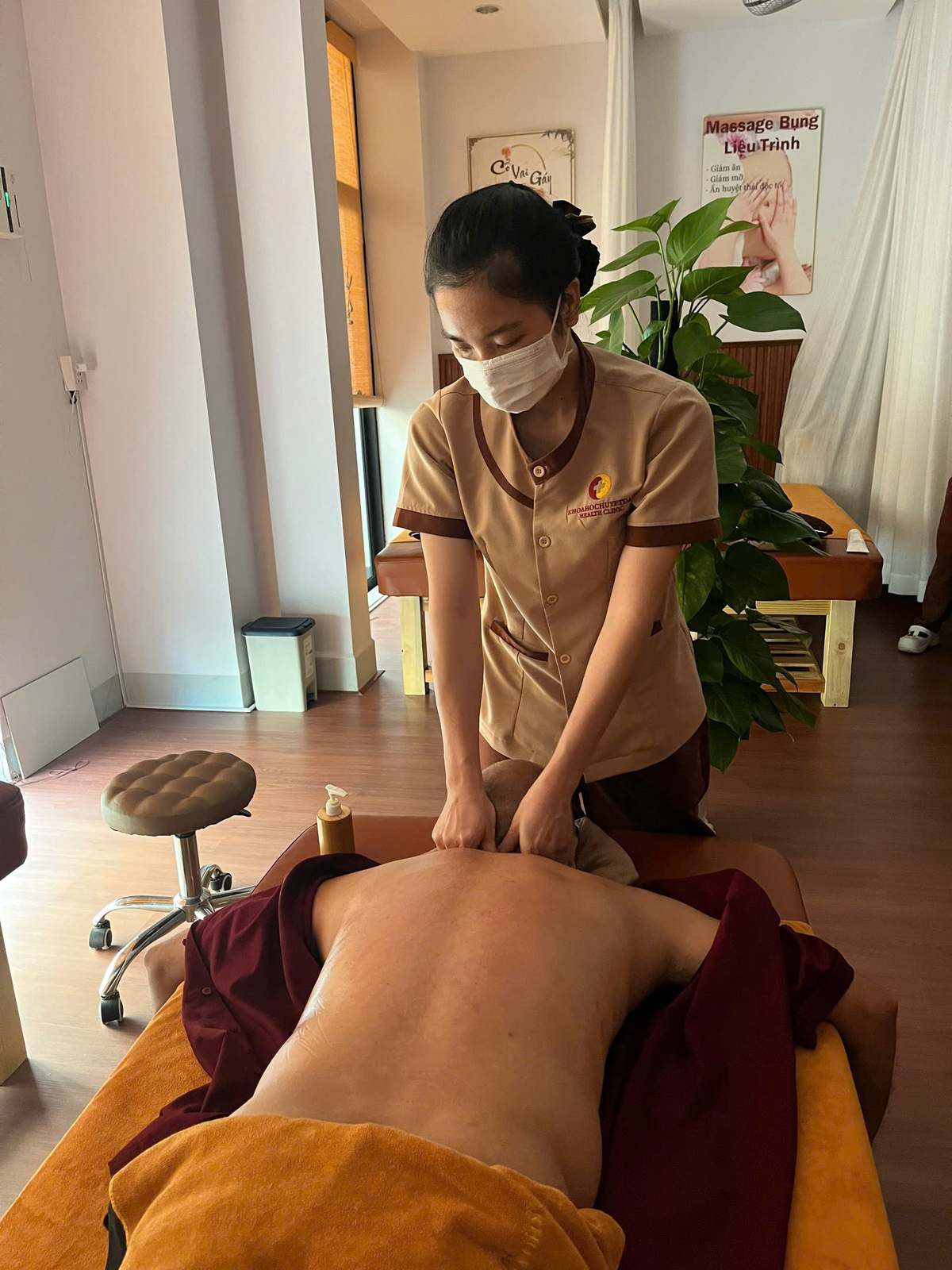
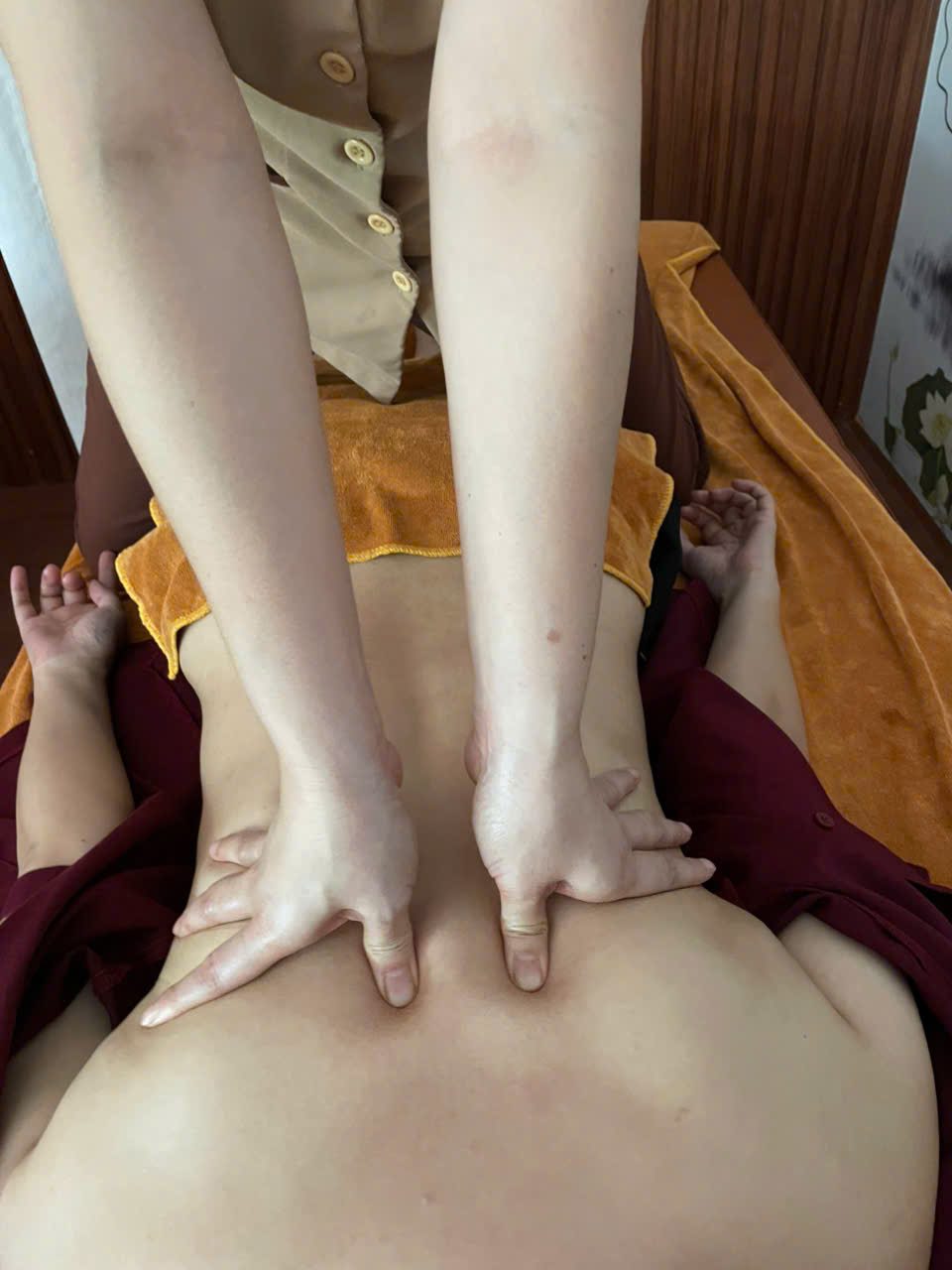
In class at Vinhomes Grand Park, learners practise in pairs: one lies face down, the other places the back of the hand along both sides of the partner's spine and compares right with left. Lương Y Tống Văn Huynh goes from pair to pair, correcting the angle of the hands. When the slides reach the “supporting methods” page, a common question comes up: why not steam first to soften the muscles?
Once the skin has been warmed evenly, the hand can no longer tell which areas are warm and which are cool. That is the basis of the whole supporting part: the hand reads first, heat and the herbal patch only come along with it.
What the curriculum says about supporting methods
Tong Gia's training slides on spinal nerve-reflex balancing massage include a “supporting methods” page listing three options:
- Herbal patches: keep the effect of the work going after the session.
- Herbal powder or field-crab poultices: help release tension quickly.
- Steam: strengthens the effect on one area or on the whole body.
The word to remember is “supporting”. The main part is still the hand reading the spine, finding the key point, setting the pressure and the dosage. Steam and patches keep the pleasant feeling longer; they do not do the hands' job.
Why combine: physiology and Eastern medicine
Physiologically, warmth widens the blood vessels under the skin, more blood reaches the muscles, the muscles slacken and the feeling of tightness eases. That is why steam suits the relaxation part of a session.
In Eastern medicine, cold makes qi and blood stagnate, while warmth helps qi and blood flow.
The temperature principle decides where extra warmth is allowed
The eighth principle in the curriculum is temperature: bring a hot area down, bring a cool area up. So skin that is hot, red or swollen gets no extra heat; a cool area is better kept warm.
The order of a wellness massage session with herbal patches and steam
- Ask and screen: blood pressure, heart condition, pregnancy, allergies, whether the client has just eaten a big meal or is hungry.
- Read the spine while the skin is at its natural temperature: place the hands to sense temperature, compare both sides, mark the key zone. See the article on sensing skin temperature by hand.
- Do the main work by hand: following the 8 principles, pressure from light to strong.
- Steam one area or the whole body if suitable: moderate heat, short time, keep asking how the client feels.
- Apply the herbal patch at the end: on clean, dry skin that has been worked, to hold the feeling after the session.
- Advise the client: stay warm, no cold shower right away, remove the patch if it itches or stings.
Heat and skin: what learners must watch
- Learners test the steam on their own wrist first.
- Slightly pink skin is normal; bright red or stinging skin, a rash or blisters mean stop at once.
- People with diabetes and older people may have reduced skin sensation; the curriculum specifically reminds you to test the temperature carefully with people who have diabetes.
- If the client feels dizzy, has blurred vision, a racing heart or trouble breathing during steam: stop and let them sit and rest somewhere airy.
- Apply the patch on clean, dry skin; never on scraped skin, inflamed pimples or surgical scars.
Who should not have steam or a herbal patch
- Damaged skin: scrapes, open wounds, sunburn, dermatitis, areas still red after cupping or coin scraping (gua sha).
- Allergies: past itching or rash from herbs, essential oils or adhesive.
- Blood pressure: high blood pressure that is not yet stable, low blood pressure or dizziness; heat widens the vessels and can easily cause fainting.
- Heart conditions: heart disease, a stent or a pacemaker needs a doctor's opinion before any work.
- Pregnancy: no full-body hot steam, no patches on the belly, lower back or sacrum; ask an obstetrician first.
- Running a fever or drunk.
When unsure, no steam and no patch; a hands-only session is enough.
Learner's corner: three common mistakes
- Steaming first and reading the back afterwards, which wipes out the skin-temperature information.
- Using heat to make up for unsteady hands: the client feels comfortable but the key point has not been found.
- Forgetting to ask about allergies, pregnancy and blood pressure before steam or patches.
Cupping and coin scraping have their own limits, see the cupping course.
Lương Y Tống Văn Huynh teaches learners to keep steam and patches in their place
With more than 13 years in Eastern wellness care and spinal nerve-reflex balancing, Lương Y Tống Văn Huynh sums up the supporting part in one sentence: “Steam and patches only follow the hands; until the hands have finished reading the back, heat must not touch the client's skin.” In class, learners must say which areas of their partner's back are warm and which are cool before there is any talk of steam or patches.
When to advise a client to see a doctor
Back pain with fever, numbness or weakness in the limbs that keeps getting worse, chest pain, shortness of breath; dizziness or fainting during steam; a spreading rash, blisters or swelling after a herbal patch; an underlying heart, blood pressure or diabetes condition with no doctor's advice yet: stop and advise the client to get checked at a medical facility. Tong Gia offers wellness care, not a medical service.
Which level teaches this
Supporting methods are the last page of the slide set on spinal nerve-reflex balancing wellness massage, part of the Specialist Course (L3). Beginners start with L1 Foundation (1.500.000₫); staff give the fees for L2–L4 at registration. Read more about the teacher: Lương Y Tống Văn Huynh.
How to sign up
The trial class on Sunday morning, 9:00–12:00, with no fee, and the Sunday Y Tướng Học (face reading for wellness) session are open sessions for beginners, at căn T16-21 khu Manhattan, Vinhomes Grand Park, TP. Thủ Đức (unit T16-21, Manhattan block, Thu Duc City). Tong Gia does not promise jobs or income after the course. Book a trial class or call the training hotline 0917 945 259.
Frequently asked questions
What does wellness massage with herbal patches and steam do? Steam warms the body, helps the muscles slacken and helps the client relax; the herbal patch helps hold the pleasant feeling after the session. Both only support; the main part is still the hands reading and working on the spine.
Why read the back by hand before steaming? Because the symmetry and temperature principles rely on skin temperature. Steaming first warms the skin evenly, so the hand can no longer tell warm areas from cool ones.
Who should not use a herbal patch? People with scraped skin, dermatitis, sunburn, or a past allergy to adhesive or herbs. Pregnant women should not have patches on the belly, lower back or sacrum without asking a doctor first.
Where can I learn the supporting methods? In the Specialist Course (L3) at Tong Gia, căn T16-21 khu Manhattan, Vinhomes Grand Park, TP. Thủ Đức (Thu Duc City). Trial class Sunday 9:00–12:00, hotline 0917 945 259.
Related articles
- The 3 'no's of Tong Gia's spinal balancing method: no needles, no medicines, no rough force
- 33 vertebrae and their regions: the spine map every wellness massage learner must know
- 4 objective factors when reading the spine by hand: let the hands record, not guess
- 5 vertebral forms – raised, sunken, shifted: reading the spine by hand in the Specialist Course
- All articles about learning the trade
Reserve a free Sunday-morning trial class or ask about the learning path: message Zalo 0917 945 259.

Founder of Tong Gia Acupoint Wellness (Huyệt Đạo Tống Gia), with more than 13 years in Eastern wellness practice, Y Tướng Học (face reading for wellness) and spinal nerve-reflex balancing. Lương Y's story
417 customers have reviewed Tong Gia on Google Maps
Reviews are written by customers themselves on Google; tap to read them before you visit.
Huyệt Đạo Tống Gia Quận 12
225 Dương Thị Mười, Phường Tân Chánh Hiệp (District 12, Ho Chi Minh City). 8:00 – 19:00 daily.
See reviews on Google MapsHuyệt Đạo Tống Gia Quận 9
Căn T16-21 khu Manhattan, Vinhomes Grand Park, Phường Long Bình (Thủ Đức City, Ho Chi Minh City). 9:00 – 20:00 daily.
See reviews on Google MapsWant to be observed in person?
A 90-minute session starts with observation, and only then moves on to muscle release and acupressure on the right areas. Two branches: District 12 and Vinhomes Grand Park.