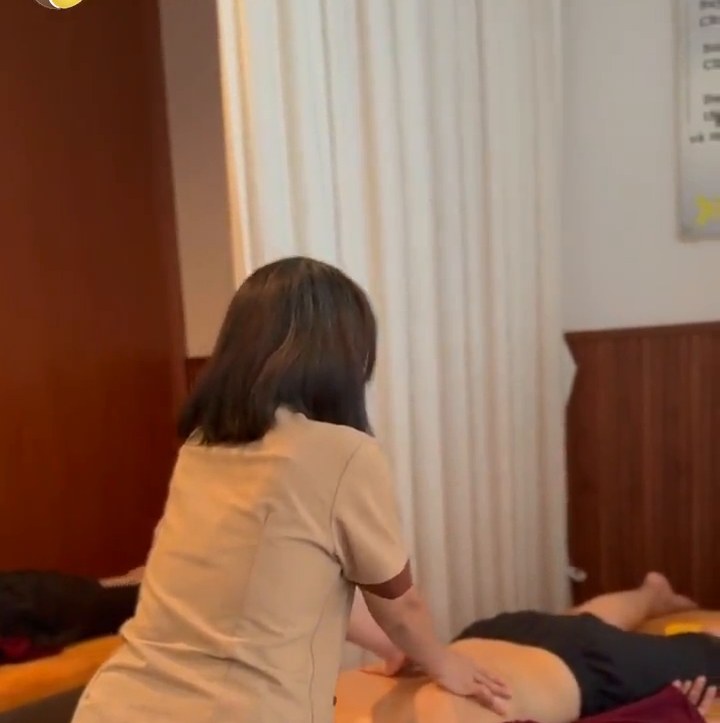
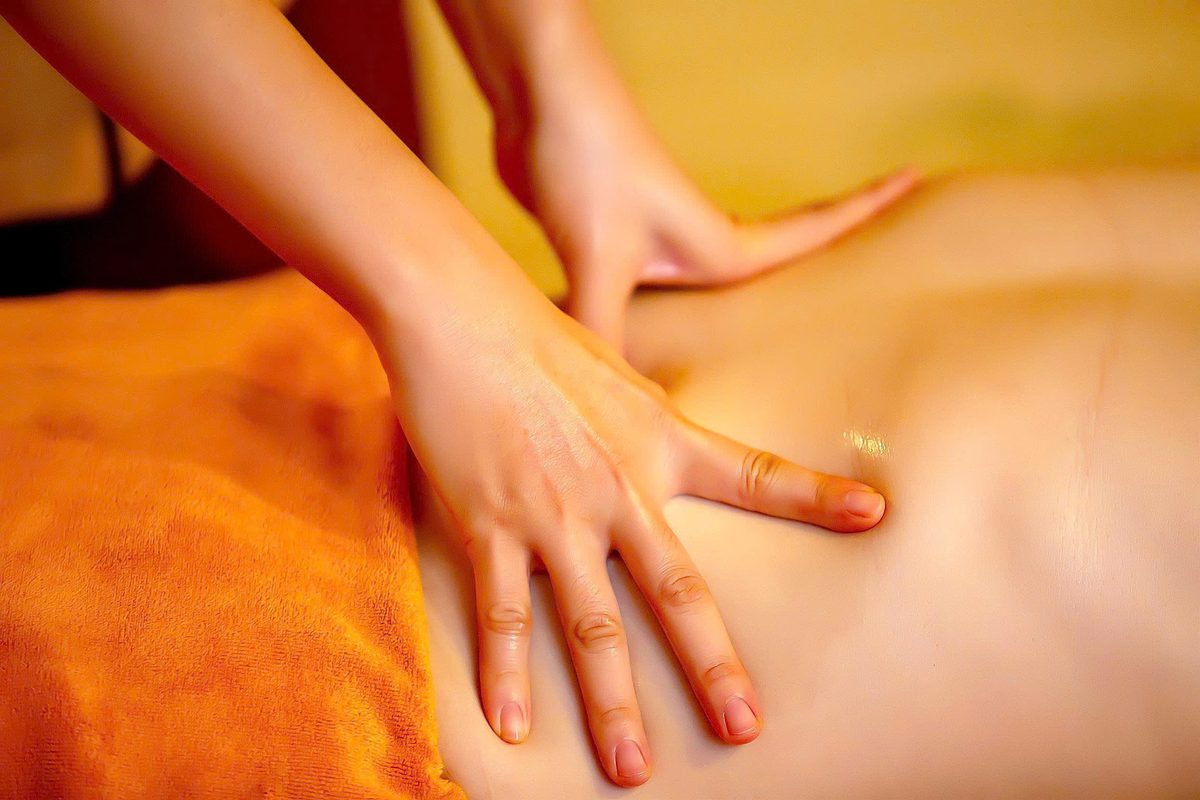
The Fengmen point (Phong Môn): finding the “wind gate” below T2, pressing moderately and warming the upper back
Lương Y (traditional healer) Tống Văn Huynh · Tong Gia Acupoint Wellness (Huyệt Đạo Tống Gia) · 22/11/2026
The Fengmen point (Phong Môn) (BL12, Bladder channel) lies level with the hollow below the spinous process of the second thoracic vertebra (T2, written D2 in Vietnamese), 1.5 cun out from the spinal midline on each side. As Tong Gia Acupoint Wellness (Huyệt Đạo Tống Gia) teaches, learners find the most prominent vertebra at the nape, C7, count down two vertebrae, press moderately and then warm the upper back, never pressing deep because the chest cavity lies beneath.
Questions learners often ask about the Fengmen point (Phong Môn)
Where exactly is the Fengmen point (BL12), how do I find it by hand, how long should I press it and who should not?
Phong Môn lies below the T2 spinous process, 1.5 cun out on each side. Bow the head, find C7, count down two vertebrae and move out about two finger-widths. Press moderately for 30–60 seconds, then warm the area. With high fever, a lingering cough, breathlessness or chest pain, do not press; see a medical professional. Tong Gia teaches this carefully.
I am 50 and live in Vinhomes Grand Park. Sitting in air conditioning chills my upper back. Can I rub the Fengmen point myself?
Yes, if you warm it with light rubbing and moderate pressure. Beneath it lie the trapezius, rhomboids and erector spinae, and deeper the chest cavity, so never press deep. Eastern medicine calls Phong Môn the wind gate, and keeping it warm is everyday wellness. A lingering cough, fever or breathlessness needs a medical facility.
I am 30 and work at a spa in District 9. Where in Ho Chi Minh City can I learn upper-back acupressure with someone correcting my hands?
Tong Gia Acupoint Wellness at unit T16-21, Manhattan block, Vinhomes Grand Park, Thu Duc City teaches back points along the Bladder channel, always checked by hand on the spine. Lương Y Tống Văn Huynh teaches and adjusts each person’s pressure. This is wellness care, not medicine; hotline 0917 945 259.
Where is the Fengmen point?
The Fengmen point (Phong Môn) is the 12th point of the Foot Taiyang Bladder channel, international code BL12. Standard location: level with the hollow below the spinous process of the second thoracic vertebra (T2), 1.5 cun out from the spinal midline on each side. Everyone has two Fengmen points, mirrored on either side of the spine in the upper back, slightly above the middle of the shoulder blades.
The cun here is the body’s own cun: 1.5 cun equals the width of the index and middle fingers held together, measured on the person receiving care.
Why is it called the “wind gate”?
“Phong” means wind and “môn” means gate. Eastern medicine regards wind as an external factor that tends to enter through the nape and upper back when the body is chilled or caught in a draught. Phong Môn is pictured as that gate, so traditional advice is to keep this area warm: cover the nape when out at night and do not let an air-conditioning draught blow straight onto the back. This is an Eastern-medicine view used for everyday wellness; it does not replace a medical check.
What lies beneath: an anatomical view
From the surface inward: skin, trapezius, rhomboids (joining the spine to the inner edge of the shoulder blade), then the erector spinae running along both sides of the spine. Beneath these muscles are the ribs and the chest cavity, which holds the top of the lungs. So with Phong Môn, learners press only moderately, angle the pressure slightly toward the spine, never drive it deep and never insert anything sharp here. Tong Gia does not teach needling. The T1–T4 section is also where the thoracic nerves exit; see the T1–T12 back region and its links to circulation, breathing and digestion.
How to find Phong Môn by hand
- The person sits with the head slightly bowed, or lies face down with a thin pillow under the chest.
- Feel the nape for the vertebra that stands out most when the head bows: that is C7. To be sure, ask them to tilt the head back slightly; C6 sinks in while C7 stays prominent under your finger.
- Count down from C7: the next spinous process is T1, then T2. The hollow just below T2 is your horizontal line.
- From that line, move out 1.5 cun on each side. Where your finger meets the muscle ridge along the spine, in a slight dip, is Phong Môn.
Related landmarks: above it is Dazhu (BL11, below T1); below it is the Feishu point (Phế Du) (BL13, below T3). The three sit one after another on the Bladder channel, the long line down the back. If you are not yet used to dividing the spine into sections, read how the 33 vertebrae are grouped.
How to press and warm the upper back
- Fingers: the thumb pad, or the index, middle and ring fingers together; nails trimmed short.
- Pressure: light to moderate; a mild fullness and spreading warmth is enough, never a sharp pain.
- Time: hold 5–10 seconds, release, repeat, 30–60 seconds in total on each side.
- Warming: rub your palms until hot, rest them between the shoulder blades, circle, then glide down both sides of the spine from T1 to T4 for 1–2 minutes.
- Afterwards: cover the back with a towel and remind the client not to step straight into cold wind.
A small exercise: count vertebrae on a family member
Tonight, ask a family member to sit with the head bowed. Place your middle finger on C7, count down to T2, then mark the two Fengmen points with small pieces of paper tape. Remove the tape, wait a few minutes and find them again from scratch. If the two attempts differ by more than half a vertebra, keep practising until your hands find the spot without looking.
When not to work
| Situation | Learner should |
|---|---|
| High fever, chills | Do not press; advise a medical check |
| Cough lasting several weeks, phlegm with blood | Stop; advise a visit to a medical facility |
| Breathlessness, chest pain, pain spreading to the left arm | Call emergency services at once; do nothing else |
| Rash, scratches or an unhealed scar on the back | Do not touch that area |
| Tired, chilled upper back from air conditioning | Warm, press moderately, keep the back covered |
Acupressure is wellness care, not a medical service. With lasting pain, numbness or weakness that keeps increasing, or an uncontrolled underlying condition, advise the client to see a medical professional. Practitioners must say this clearly.
Where to learn back acupressure?
At Tong Gia Acupoint Wellness, back points are taught along the channels together with therapeutic massage that balances the spinal nerve reflex system: learners read the spine by hand first and only then choose points. Before touching, they also read the complexion through Y Tuong Hoc (Vietnamese physiognomy), because “the signs show outside, the organs are inside”, and check again on the spine. Lương Y Tống Văn Huynh, with more than 13 years in the craft, has learners spend about 70% of class time practising on real people and adjusts each person’s pressure.
How to register
The Sunday morning trial class 9:00–12:00 (10 places) and the Sunday Y Tuong Hoc session with no fee are open sessions for beginners, at unit T16-21, Manhattan block, Vinhomes Grand Park, Thu Duc City, Ho Chi Minh City. Book a trial class or call the training hotline 0917 945 259.
Frequently asked questions
Where is the Fengmen point (Phong Môn)? Level with the hollow below the T2 spinous process, 1.5 cun out from the spinal midline on each side; code BL12, Bladder channel.
Why is it called Phong Môn? Phong means wind and môn means gate. Eastern medicine sees it as the wind gate of the upper back, so it advises keeping this area warm in cold weather or air conditioning.
How long should Phong Môn be pressed? Hold 5–10 seconds and release, 30–60 seconds in total on each side, then warm along T1–T4 for 1–2 minutes.
Why must Phong Môn not be pressed deeply? Beneath the trapezius, rhomboids and erector spinae lie the ribs and chest cavity, so press only moderately, never deep, and never insert anything sharp.
When should Phong Môn not be pressed? With high fever, a lingering cough, breathlessness, chest pain or damaged skin on the back; in these cases advise a visit to a medical facility.
Related articles
- Where is the Qiuhou point (Cầu Hậu) and how to press it: finding it on the lower eye-socket rim and pressing gently
- Where is the Juliao point (Cự Liêu) and how to press it: below the cheekbone, level with the nostril, with the right pressure
- Where is the Da Ying point and how to press it: the jaw point where learners must avoid pressing the pulse
- All articles about learning the trade
Reserve a free Sunday-morning trial class or ask about the learning path: message Zalo 0917 945 259.

Founder of Tong Gia Acupoint Wellness (Huyệt Đạo Tống Gia), with more than 13 years in Eastern wellness practice, Y Tướng Học (face reading for wellness) and spinal nerve-reflex balancing. Lương Y's story
417 customers have reviewed Tong Gia on Google Maps
Reviews are written by customers themselves on Google; tap to read them before you visit.
Huyệt Đạo Tống Gia Quận 12
225 Dương Thị Mười, Phường Tân Chánh Hiệp (District 12, Ho Chi Minh City). 8:00 – 19:00 daily.
See reviews on Google MapsHuyệt Đạo Tống Gia Quận 9
Căn T16-21 khu Manhattan, Vinhomes Grand Park, Phường Long Bình (Thủ Đức City, Ho Chi Minh City). 9:00 – 20:00 daily.
See reviews on Google MapsWant to be observed in person?
A 90-minute session starts with observation, and only then moves on to muscle release and acupressure on the right areas. Two branches: District 12 and Vinhomes Grand Park.