Acupressure points for the Heart in TCM: how learners find the points, keep a light hand and know when to stop
Lương Y (traditional healer) Tống Văn Huynh · Tong Gia Acupoint Wellness (Huyệt Đạo Tống Gia) · 13/11/2026
Acupressure points for the Heart in TCM in Tong Gia's Heart chapter are Tâm Du, Quyết Âm Du, Thần Môn, Thông Lý, Âm Khích, Nội Quan, Gian Sử, Đản Trung, Cự Khuyết and Bách Hội. They support calm, not the coronary arteries. Tong Gia in Ho Chi Minh City teaches gentle 1–2 minute kneading; for chest pain, call 115.
Questions learners often ask about acupressure points for the Heart in TCM
I massage clients in District 9, HCMC. Where's Thần Môn (HT7), how do I find it, how long to press, who should skip?
Thần Môn (HT7, 神門) lies on the wrist crease, in the hollow on the outer edge of the flexor carpi ulnaris tendon, little-finger side. Palm up, wrist slightly flexed so the tendon shows. Knead gently 1–2 minutes per side. With chest pain or breathlessness, do not press; call 115. Tong Gia teaches this at Vinhomes Grand Park.
I'm in my 30s, working at a spa in Thu Duc. Where can I learn Heart acupoints hands-on to help clients sleep more easily?
Learn it in Tong Gia's Five-organ wellness module, at căn T16-21 khu Manhattan, Vinhomes Grand Park, TP. Thủ Đức (Thu Duc City). Lương Y Tống Văn Huynh teaches finding Thần Môn and Nội Quan on real people, linking the autonomic nervous system with the Heart housing the spirit. This is wellness care, not medical practice. Zalo 0917 945 259.
Can Heart acupressure replace heart check-ups? And what does a course cost in Ho Chi Minh City, so I don't waste money?
No. The Tong Gia curriculum states the points do not act on the heart muscle or the coronary arteries; they only support relaxation and calm, and clients with heart disease stay under their doctor's care. L1 Foundation is 1.500.000₫; staff confirm the Specialist Course (L3) fee when you register. Trial class Sunday mornings, Zalo 0917 945 259.
What is the Shenmen point used for in acupressure for sleep?
Shenmen (HT7) is pressed gently before bed to help people relax and drift off more easily; in Eastern tradition it belongs to the Heart meridian, linked with calming the mind. It is wellness care, not a substitute for a check-up. Insomnia lasting weeks, palpitations or chest pain need a medical facility. Tong Gia teaches the technique; Zalo/WhatsApp +84 917 945 259.
Where is the Shenmen point on the wrist crease?
Shenmen sits at the little-finger end of the wrist crease, in the hollow on the thumb side of the tendon that tightens when you bend the wrist. It is easily confused with Daling and Taiyuan on the same crease. Press lightly for one to two minutes per side. Tong Gia corrects your hands in class; Zalo/WhatsApp +84 917 945 259.
The class where the thumb goes on the wrist
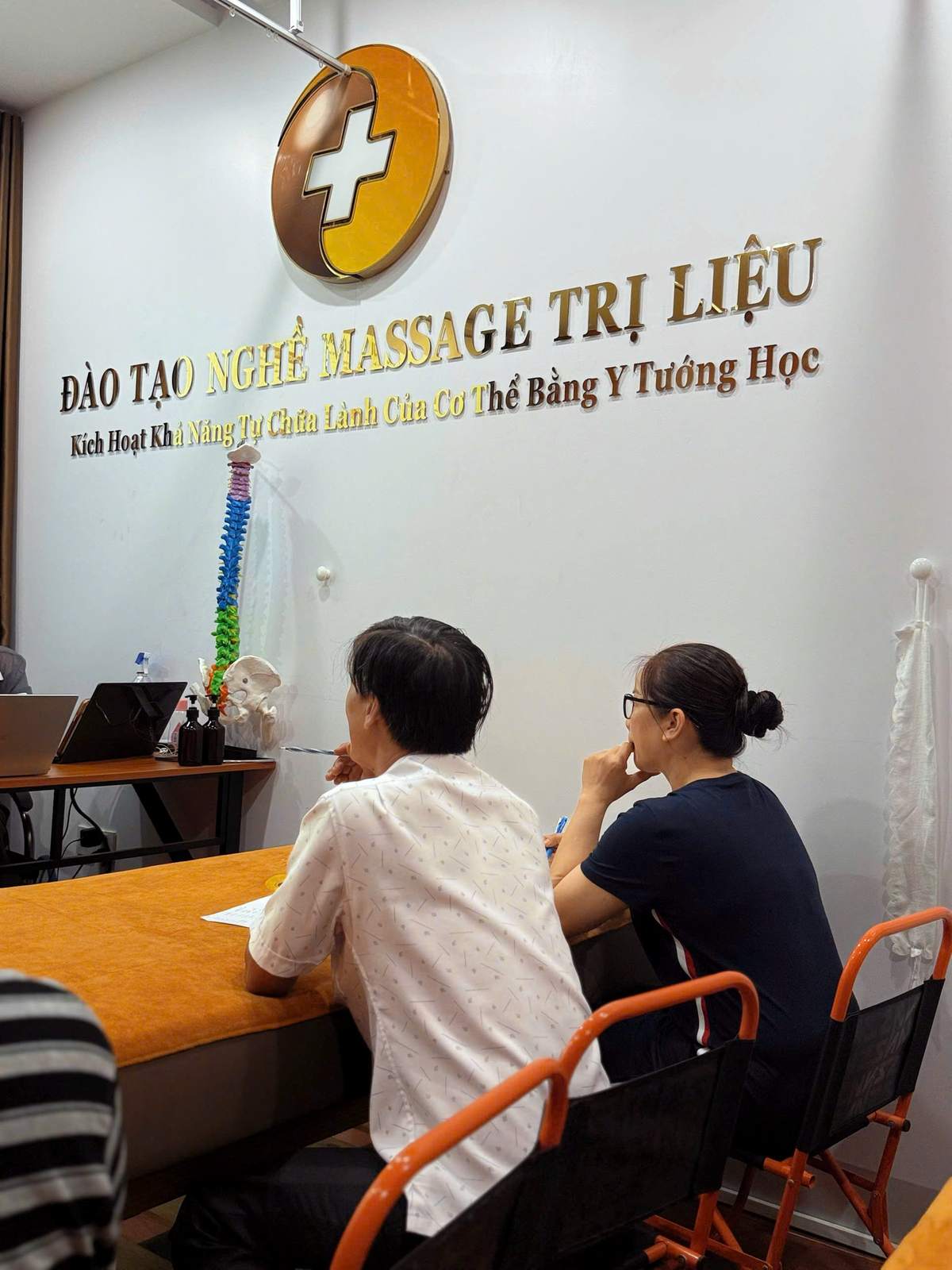
In class at Vinhomes Grand Park, learners sit facing each other; one holds the other's wrist, palm turned up. Many press hard straight away and their partner winces. Lương Y Tống Văn Huynh takes the learner's thumb, places it back right against the edge of the small bone on the little-finger side, and reminds them to ease off and watch the breathing of the person opposite. With acupressure points for the Heart in TCM, finding the right spot and keeping a light hand matter more than pressing deep.
What acupressure points for the Heart aim to do
In Western medicine, the heart is a muscle that pumps blood, with its own electrical system, and it is influenced by the autonomic nervous system: stress raises the heart rate and blood pressure. Eastern medicine calls the Heart the ruler of the organs; it governs blood and vessels, houses the spirit (shen), and keeps the mind and sleep steady. The curriculum's goal: nourish Heart qi and Heart blood, calm the spirit, ease stress and palpitations. The curriculum also states clearly: the points do not act directly on the heart muscle or the coronary arteries and do not replace a doctor's heart monitoring. Habits that tire the Heart are covered in habits bad for the heart; this article focuses on the points. Heart points are quite different from Túc Tam Lý (ST36, 足三里) or Thủ Tam Lý (LI10, 手三里), which beginners often mix up because the names sound alike.
The wrist chain: Thần Môn, Âm Khích, Thông Lý
All three points lie on the Hand Shaoyin Heart meridian, in one straight line on the little-finger side. How to find them: the client turns the palm up and flexes the wrist slightly so the tendons show; feel the flexor carpi ulnaris tendon running toward the small bone at the base of the hand on the little-finger side.
- Thần Môn (HT7, 神門): on the wrist crease, in the hollow on the outer edge of the flexor carpi ulnaris tendon. The source (yuan) point of the Heart meridian, commonly used to calm the spirit and support sleep.
- Âm Khích (HT6, 陰郄): 0.5 cun above Thần Môn, on the same line. The cleft (xi) point, used for palpitations and night sweats.
- Thông Lý (HT5, 通里): 1 cun above Thần Môn. The connecting (luo) point, used for palpitations.
Learners walk the thumb from below upward and compare the feel of both hands.
Two Pericardium points between the two tendons
- Nội Quan (PC6, 內關): 2 cun above the wrist crease, between the two palmar tendons; the client's three fingers held together, placed from the crease, give a close estimate. Used for chest tightness, palpitations and nausea. Detailed location in where is the Nội Quan point.
- Gian Sử (PC5, 間使): 3 cun above the wrist crease, in the same groove, that is, the width of the client's four fingers held together. The river (jing) point of the Pericardium meridian, used to calm the spirit.
Points on the back, chest, upper abdomen and crown
- Tâm Du (BL15, 心俞): below the spinous process of the 5th thoracic vertebra, 1.5 cun to the side. From the lower angle of the shoulder blade (level with T7), count up two spinous processes.
- Quyết Âm Du (BL14, 厥陰俞): below the spinous process of T4, 1.5 cun to the side, just above Tâm Du.
- Đản Trung (CV17, 膻中): mid-sternum, level with the 4th intercostal space; knead gently only. See the Đản Trung point.
- Cự Khuyết (CV14, 巨闕): 6 cun above the navel, on the midline of the abdomen. The front-mu point of the Heart; the curriculum says not to press hard.
- Bách Hội (GV20, 百會): crown of the head, where the midline of the head meets the line joining the tops of the ears. Used to close the session.
Pressure, timing and order in a session
Reference routine: ask about the client's health history first; open with slow breathing, in for 4 seconds, out for 6 seconds; knead Tâm Du and Quyết Âm Du gently; then the wrist: Nội Quan, Gian Sử, Thần Môn, Thông Lý, Âm Khích, 1–2 minutes per side, light pressure; Đản Trung with light pressure, Cự Khuyết never pressed hard; finish at Bách Hội. Tell the client to knead Thần Môn on each side for 1–2 minutes before sleep, with slow breathing.
Who should not receive it, and which areas to avoid
- People with heart disease, a stent or a pacemaker: get a doctor's opinion first; avoid strong work on the chest and over the device.
- People on blood thinners: light pressure only, avoid bruised areas.
- Pregnant women: ask before the session and check with a doctor.
- Never say “acupressure lowers blood pressure, you can drop your prescription”; never advise a client to stop a doctor's prescription on their own.
Lương Y Tống Văn Huynh teaches learners to keep a light hand with the Heart
With more than 13 years in the craft and hundreds of learners trained, Lương Y Tống Văn Huynh sums up the Heart chapter in one line: “Caring for the Heart, the hand must be as light as a soft voice; once the client's breathing slows, the point has responded, and pressing harder only makes the client tense up more.” In class, learners knead while counting their partner's breaths; until the breathing slows, they do not move on to the next point.
When to advise a client to see a doctor
The curriculum's first rule: with chest pain, shortness of breath or signs of a stroke, stop, no massage or acupressure, and call 115 (Vietnam's emergency number) at once. Advise a check at a medical facility for chest pain or tightness that lasts or spreads to the left arm, shoulder, neck or jaw; fainting or near-fainting; racing palpitations with dizziness; leg swelling that keeps increasing. The full list is in heart warning signs that need an emergency call: what practitioners must know. Tong Gia offers wellness care, not a medical service.
Which level covers this?
The Heart chapter is part of Five-organ wellness care in the Specialist Course (L3). Beginners start at L1 Foundation (1.500.000₫) to get used to measuring cun on a client's hand. More about the teacher: Lương Y Tống Văn Huynh.
How to sign up
The trial class on Sunday morning, 9:00–12:00, with no fee, and the Sunday Y Tướng Học (face reading for wellness) class are the open sessions for beginners, at căn T16-21 khu Manhattan, Vinhomes Grand Park, TP. Thủ Đức (unit T16-21, Manhattan block, Vinhomes Grand Park, Thu Duc City). Heart acupoints are practised in pairs, with an instructor correcting your hands. Tong Gia does not promise jobs or income after the course. Book a trial class or call the training hotline 0917 945 259.
Frequently asked questions
Which acupressure points nourish the Heart in TCM? The Heart chapter of the Tong Gia curriculum lists Tâm Du, Quyết Âm Du, Thần Môn, Thông Lý, Âm Khích, Nội Quan, Gian Sử, Đản Trung, Cự Khuyết and Bách Hội.
Where is the Thần Môn point? On the wrist crease, in the hollow on the outer edge of the flexor carpi ulnaris tendon, on the little-finger side. Knead gently 1–2 minutes per side before sleep, with slow breathing.
Can acupressure open up the coronary arteries? No. The points do not act directly on the heart muscle or the coronary arteries; acupressure only supports relaxation and calm in Eastern medicine terms.
What should I do if a client has chest pain during acupressure? Stop at once, no further massage or acupressure, and call 115. Chest pain without a clear cause needs to be assessed by a doctor.
Related articles
- The 12 main meridians: names, pathway rules and peak hours, an easy table for vocational learners
- Face reading for health: the 3 facial zones in Y Tướng Học, how to divide them and how to read them to care for the body properly
- What are the 8 extraordinary vessels: roles, main pathways and how wellness learners use them
- Yin-Yang and the Five Elements for wellness learners: enough to make the hands work right
- All articles about learning the trade
Reserve a free Sunday-morning trial class or ask about the learning path: message Zalo 0917 945 259.

Founder of Tong Gia Acupoint Wellness (Huyệt Đạo Tống Gia), with more than 13 years in Eastern wellness practice, Y Tướng Học (face reading for wellness) and spinal nerve-reflex balancing. Lương Y's story
417 customers have reviewed Tong Gia on Google Maps
Reviews are written by customers themselves on Google; tap to read them before you visit.
Huyệt Đạo Tống Gia Quận 12
225 Dương Thị Mười, Phường Tân Chánh Hiệp (District 12, Ho Chi Minh City). 8:00 – 19:00 daily.
See reviews on Google MapsHuyệt Đạo Tống Gia Quận 9
Căn T16-21 khu Manhattan, Vinhomes Grand Park, Phường Long Bình (Thủ Đức City, Ho Chi Minh City). 9:00 – 20:00 daily.
See reviews on Google MapsWant to be observed in person?
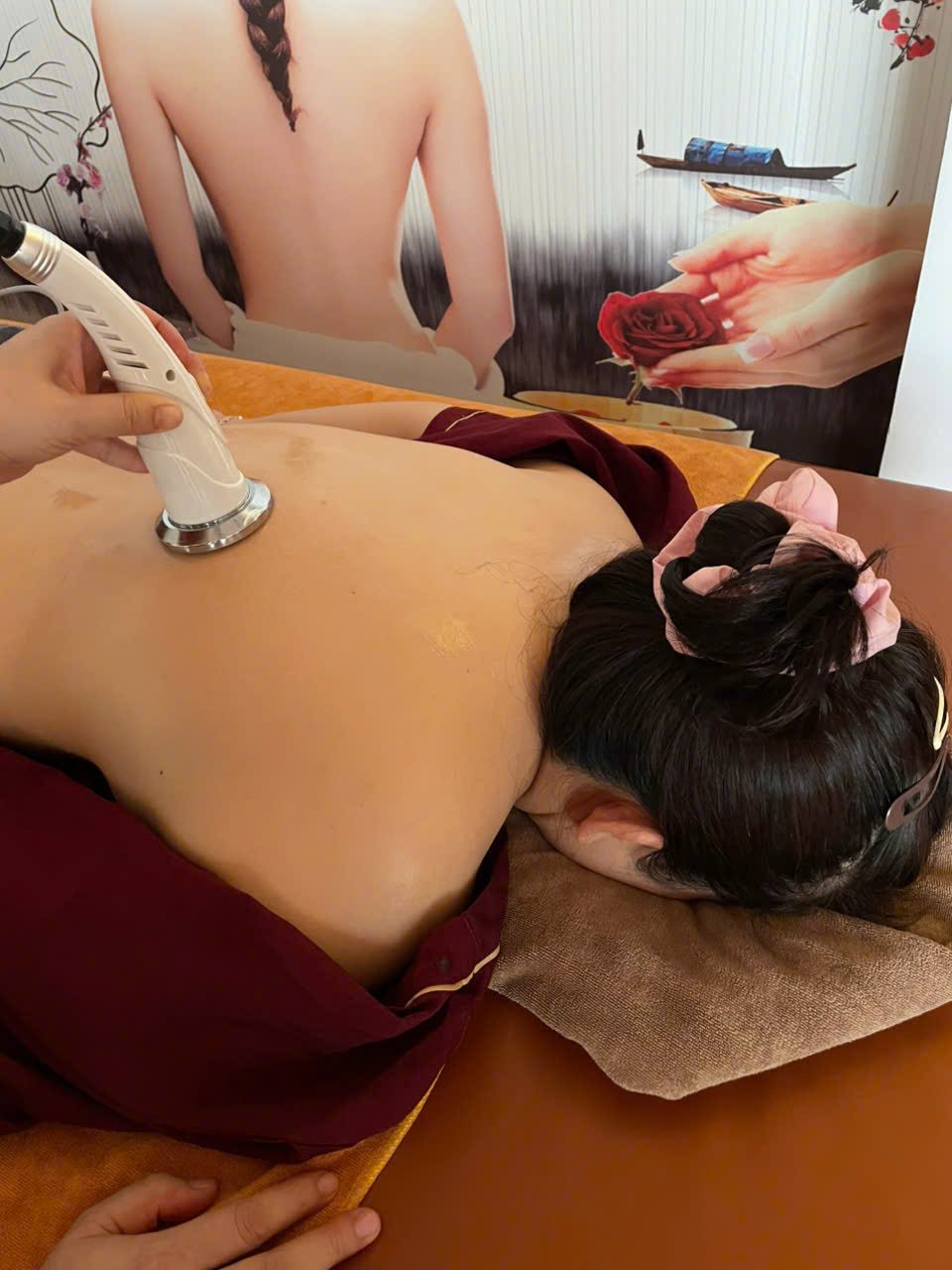
A 90-minute session starts with observation, and only then moves on to muscle release and acupressure on the right areas. Two branches: District 12 and Vinhomes Grand Park.