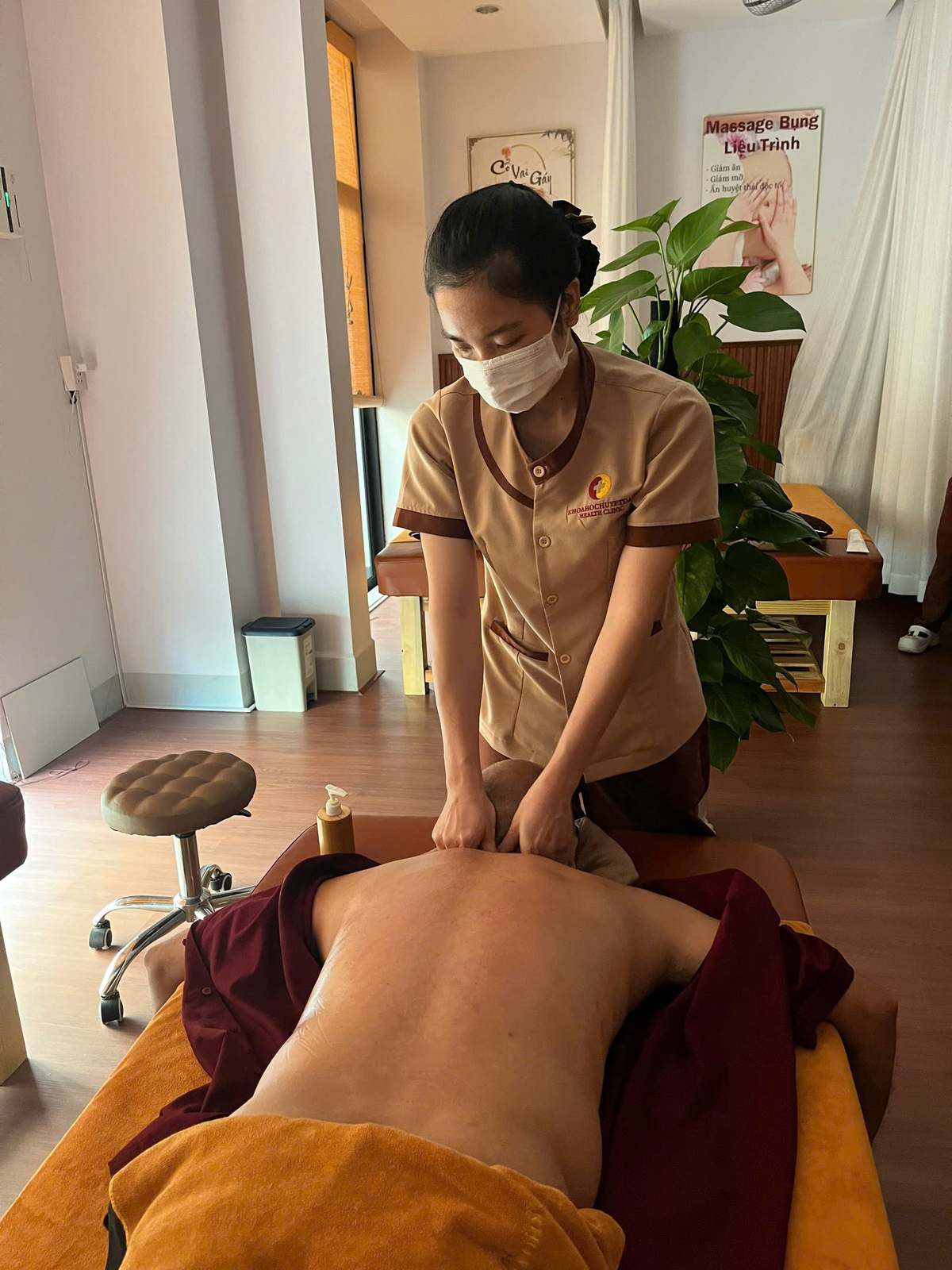
Dachangshu acupoint (BL25, 大肠俞): location at the iliac crest line, how to find it and cautions for acupressure learners
Lương Y (traditional healer) Tống Văn Huynh · Tong Gia Acupoint Wellness (Huyệt Đạo Tống Gia) · 08/11/2026
The Dachangshu acupoint (Đại Trường Du, BL25, 大肠俞) lies on the lower back, 1.5 cun to each side of the spinal midline, level with the hollow below the spinous process of the 4th lumbar vertebra, on the Bladder meridian. Its landmark is the line joining the two iliac crests, so for learners at Tong Gia it is usually the first lower-back point they can find.
Where is the Dachangshu acupoint?
“Dachang” (Đại Trường) means the large intestine, and “shu” (Du) is the place where qi flows in. Dachangshu is the back-shu point of the Large Intestine, the point on the back that the ancients saw as the gathering place of the Large Intestine’s qi. The back-shu points form a vertical row on both sides of the spine, with one point for each organ.
The point belongs to the Bladder meridian, which runs in two parallel lines on each side of the spine. Dachangshu lies on the inner line, the same line as Shenshu (Thận Du, BL23, 肾俞) above it. See the article on back-shu points of the back for the order of the shu points from the neck down to the lower back.
How to find the Dachangshu acupoint in 4 steps
- Have the person receiving care lie face down, with a thin pillow under the belly so the lower back does not sag.
- Place your hands on the two iliac crests. The line joining the two iliac crests crosses the spine at about the 4th lumbar vertebra.
- Find the hollow just below the spinous process of the 4th lumbar vertebra on the midline.
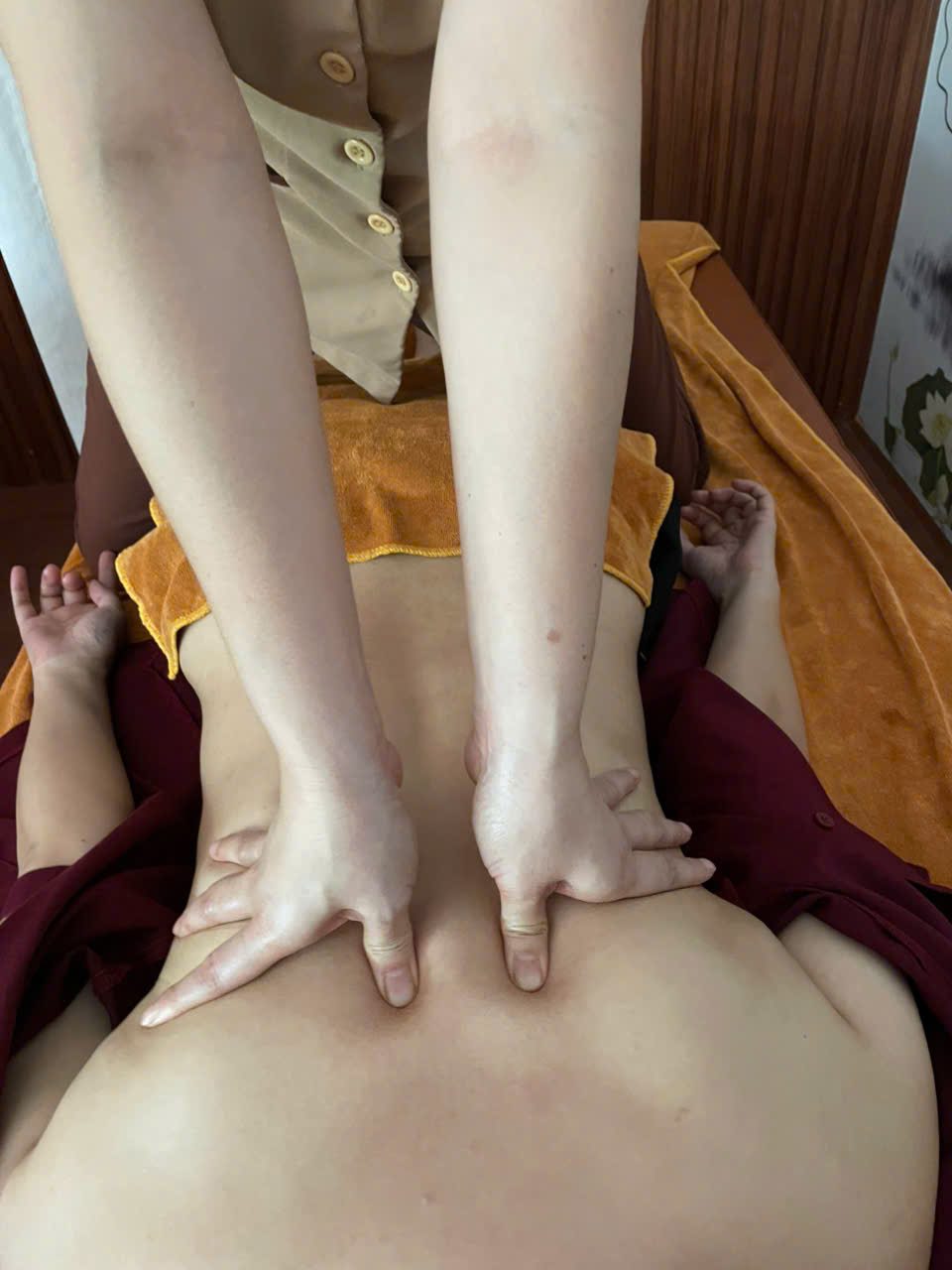
- From there, measure 1.5 cun out to each side, about the width of the index and middle fingers of the person receiving care. The point lies on the erector spinae muscle and usually feels tender when pressed.
Because the iliac crest landmark is so clear, Tong Gia often uses Dachangshu as the starting point for counting vertebrae: 2 vertebrae up brings you level with the Mingmen acupoint (Mệnh Môn, GV4, 命门) and Shenshu, and below it lies the sacral area.
Why do massage learners need to know Dachangshu?
The lower back is where many people who sit for long hours, lift loads or stand a lot feel tired. In a care session, Dachangshu sits right at the junction between the back and the buttocks and hips. Softening the muscle around the point makes the work on the hips and the back of the legs gentler.
With the spinal nerve-reflex balancing method, learners also practise comparing both sides: are the muscles on the left and right at the level of the 4th lumbar vertebra even, which side is tighter, warmer or cooler? That is information to note down before choosing the hand pressure.
Try it now: press Dachangshu with the right pressure
- Place both thumbs on the points on either side, with the other fingers lightly cupping the hips.
- Press slightly inward toward the spine, increasing pressure slowly over 3 breaths, and hold for about 8–10 seconds.
- Release slowly and repeat 3–5 times. Ask how it feels: a pleasant heavy ache is right; a sharp, stabbing pain means reduce the pressure.
- Finish by rubbing across the lower back with your palms to warm it.
Note it down: when not to press Dachangshu?
- Pregnant women: do not press the lower back or the sacrococcygeal area.
- A recently injured back, after a fall, with bruising, swelling or heat: do not work on it.
- Lower back pain spreading to the buttocks and legs, numbness, or leg weakness that keeps getting worse: stop immediately and advise the client to see a doctor at a medical facility.
- People with spinal conditions or previous back surgery: do not work on the area on your own without guidance.
Acupressure at Tong Gia is wellness care that helps the body relax; it does not replace seeing a doctor when there are unusual signs.
Where to learn lower-back acupressure?
Measuring cun, counting vertebrae and bringing pressure into the erector spinae muscle are skills that need someone guiding your hands. At Tong Gia, Lương Y Tống Văn Huynh teaches on two pillars: Y Tướng Học (face reading for wellness), to read the face and understand the organs before laying hands on the body, and therapeutic-style massage with spinal nerve-reflex balancing, to cross-check by hand along the spine. About 70% of class time is hands-on practice on real people.
How to register
The Sunday-morning trial class, 9:00–12:00 every week, and the free Sunday Y Tướng Học session are the open classes for newcomers, at căn T16-21 khu Manhattan, Vinhomes Grand Park, TP. Thủ Đức (Thu Duc, Ho Chi Minh City). Register for a trial class or call the training hotline 0917 945 259.
Frequently asked questions
Where is the Dachangshu acupoint? On the lower back, 1.5 cun to each side of the spinal midline, level with the hollow below the spinous process of the 4th lumbar vertebra, close to the line joining the two iliac crests.
Which meridian does the Dachangshu acupoint belong to? The Foot Taiyang Bladder meridian; it is the back-shu point of the Large Intestine.
How much is 1.5 cun? About the width of the index and middle fingers held together, measured on the person receiving care.
When should you not press the Dachangshu acupoint? During pregnancy, when the back has just been injured or is swollen and hot, or when pain spreads down the leg with numbness and weakness that keep getting worse. In that last case, see a doctor.
What is the Dachangshu acupoint used for? The point sits at the junction between the back and the buttocks and hips, where people who sit for long hours or lift loads often feel tired. Softening the muscle around the point makes the work on the hips and the back of the legs gentler; learners also compare the two sides at the level of the 4th lumbar vertebra.
Related articles
- The 12 main meridians: names, pathway rules and peak qi hours, an easy-to-remember table for learners
- The 3 zones of the face in Y Tướng Học: how to divide them and read them for the right care
- What are the 8 extraordinary vessels: their role, main pathways and how wellness learners use them
- Yin-Yang and the Five Elements for wellness learners: understand enough for your hands to work correctly
- All articles about learning the trade
Reserve a free Sunday-morning trial class or ask about the learning path: message Zalo 0917 945 259.

Founder of Tong Gia Acupoint Wellness (Huyệt Đạo Tống Gia), with more than 13 years in Eastern wellness practice, Y Tướng Học (face reading for wellness) and spinal nerve-reflex balancing. Lương Y's story
417 customers have reviewed Tong Gia on Google Maps
Reviews are written by customers themselves on Google; tap to read them before you visit.
Huyệt Đạo Tống Gia Quận 12
225 Dương Thị Mười, Phường Tân Chánh Hiệp (District 12, Ho Chi Minh City). 8:00 – 19:00 daily.
See reviews on Google MapsHuyệt Đạo Tống Gia Quận 9
Căn T16-21 khu Manhattan, Vinhomes Grand Park, Phường Long Bình (Thủ Đức City, Ho Chi Minh City). 9:00 – 20:00 daily.
See reviews on Google MapsWant to be observed in person?
A 90-minute session starts with observation, and only then moves on to muscle release and acupressure on the right areas. Two branches: District 12 and Vinhomes Grand Park.