Geshu acupoint (Cách Du, BL17, 膈俞): location, the shoulder-blade landmark for finding it, and notes for acupressure learners
Lương Y (traditional healer) Tống Văn Huynh · Tong Gia Acupoint Wellness (Huyệt Đạo Tống Gia) · 09/11/2026
The Geshu acupoint (Cách Du, BL17, 膈俞) is on the back, 1.5 cun from the spinal midline, level with the area below the spinous process of the 7th thoracic vertebra, on the Bladder meridian, and is the Influential Point of Blood. Quick landmark: the line joining the lower tips of the two shoulder blades. Tong Gia teaches finding the point following the Y Tướng Học (face reading for wellness) idea “the signs show outside, the organs lie inside”: take care before signs appear.
Where is the Geshu acupoint?
“Cách” (膈, ge) is the diaphragm, the sheet of muscle separating the chest from the abdomen. “Du” (俞, shu) is where qi enters on the back. The name tells you the location: on the back, at the level of the diaphragm.
Geshu belongs to the inner line of the Bladder meridian, 1.5 cun from the spinal midline. Going from top to bottom, it lies below Xinshu (Tâm Du, BL15, 心俞; 5th thoracic vertebra) and Dushu (Đốc Du, BL16, 督俞; 6th thoracic vertebra), and above Ganshu (Can Du, BL18, 肝俞; 9th thoracic vertebra). The article back-shu points gives the order of the whole row of shu points so you can place Geshu in the right spot.
In Eastern traditional texts, Geshu is called the “meeting point of blood”, the place where blood gathers. That is why wellness learners often mention Geshu together with the Xuehai acupoint (Huyết Hải, SP10, 血海) on the thigh when talking about caring for qi and blood.
How to find the Geshu acupoint using the shoulder-blade landmark
- Have the person receiving care lie face down, both arms close along the body, shoulders relaxed.
- Feel for the lower tip of each shoulder blade, the sharpest point of bone at the bottom.
- Join these two tips with a horizontal line; the line usually passes around the spinous process of the 7th thoracic vertebra.
- Find the hollow just below that spinous process and measure 1.5 cun out to each side (the width of the index and middle fingers held together, of the person receiving care).
How to double-check: count down seven spinous processes from the 7th cervical vertebra (C7, the most prominent one when the head is bent forward). If the client raises their arms or props up on their elbows, the shoulder blades slide and the landmark will be wrong, so always keep the arms down when measuring.
Why do people learning the trade need to know Geshu?
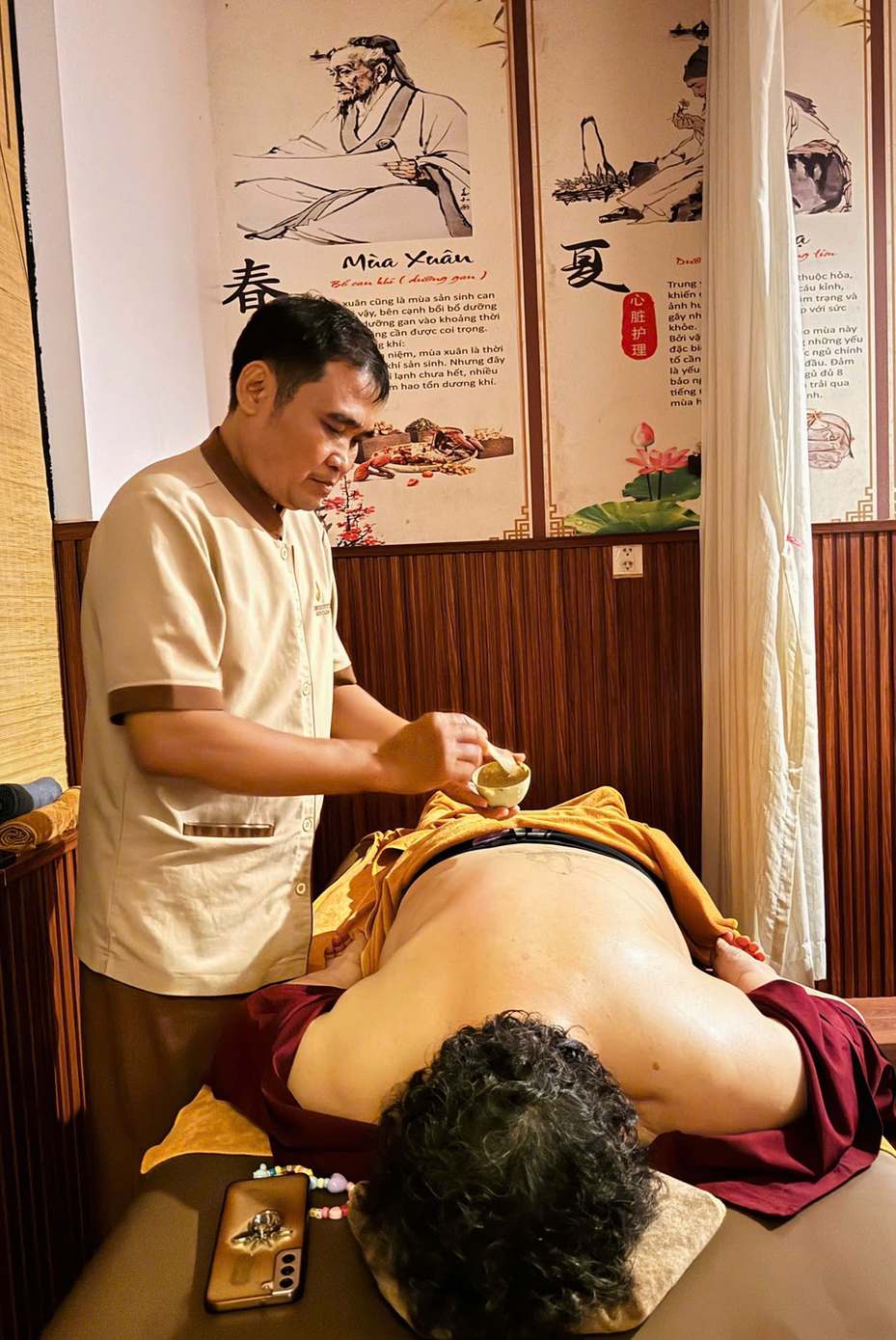
The mid-back at the level of the 7th thoracic vertebra is where many people who sit at a computer or drive for long hours feel tight and stiff. During muscle release on the back, a technician passes through this area in almost every session. Knowing exactly where Geshu is helps you press the right spot instead of pressing blindly.
In the Tong Gia way of working, before pressing, the learner places both palms to compare the two sides: which side has thicker, tighter muscle, which feels warmer or cooler. This is the hand-sensing part of therapeutic-style massage with spinal nerve-reflex balancing. Note it down, then choose the pressure.
Try it now: pressing the Geshu acupoint in the right direction
- Place both thumbs on the two Geshu points, with the other fingers resting lightly on the ribs.
- Keep your wrists straight and lean forward so your body weight sinks down, pressing slightly angled toward the spine.
- Increase the pressure over 3 of the client’s breaths, hold 8–10 seconds, release slowly. Repeat 3–5 times.
- Finish by stroking down both sides of the back with your palms, from top to bottom.
A mild ache with warmth spreading out is just right. If the client grimaces or holds their breath, reduce the pressure immediately.
Note it down: when not to press Geshu?
- The back has just been knocked, or has a bruise, swelling or heat.
- Right after a big meal, or when the client is exhausted.
- Mid-back pain with chest tightness, shortness of breath, or pain spreading to the arm: do not apply acupressure; advise the client to see a doctor at a medical facility right away.
- Pregnant women: ask a doctor before working on the back area.
Acupressure at Tong Gia is wellness health care that helps you relax; it does not replace a medical check-up when there are unusual signs.
Where to learn back acupressure?
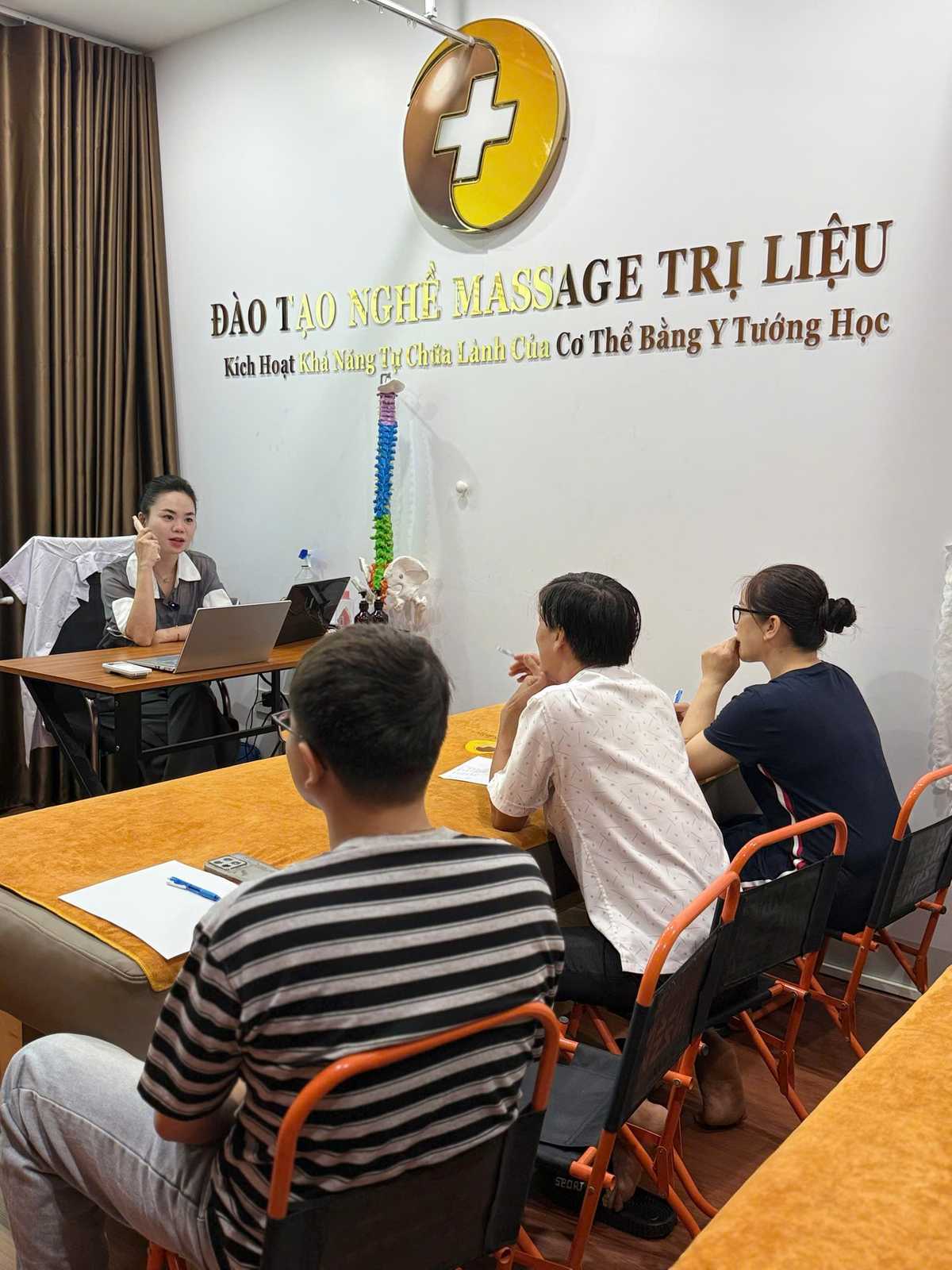
Counting vertebrae, measuring cun and pressing in the right direction all need someone guiding your hands. At Tong Gia, Lương Y Tống Văn Huynh teaches on two pillars: Y Tướng Học (face reading for wellness), to read a person’s features and understand their constitution before laying on hands, and spinal nerve-reflex balancing, to cross-check by hand on the back. About 70% of class time is hands-on practice on real people. A neighbouring point on the same line: Pishu acupoint (Tỳ Du, BL20, 脾俞).
How to sign up
The Sunday-morning trial class, 9:00–12:00 every week, and the free Sunday Y Tướng Học session are the open schedule for newcomers, at Căn T16-21 khu Manhattan, Vinhomes Grand Park, Thủ Đức City (Ho Chi Minh City). Sign up for a trial class or call the training hotline 0917 945 259.
Frequently asked questions
Where is the Geshu acupoint? On the back, 1.5 cun to each side of the spinal midline, level with the hollow below the spinous process of the 7th thoracic vertebra.
Which meridian does the Geshu acupoint belong to? It belongs to the Foot Taiyang Bladder meridian (Túc Thái Dương Bàng Quang) and is called the meeting point of blood in Eastern traditional texts.
What is the quickest way to find the Geshu acupoint? Have the person lie face down with arms along the body, join the lower tips of the two shoulder blades to find the 7th thoracic vertebra, then measure 1.5 cun out to each side.
When should you not press the Geshu acupoint? When the back has a fresh injury, swelling or heat, right after a big meal, or when back pain comes with chest tightness or shortness of breath. In that last case, the person needs to see a doctor right away.
What is the Geshu acupoint used for? Eastern medicine texts call Geshu the “Influential Point of Blood”, where blood converges, so wellness learners often mention it together with Xuehai (Huyết Hải, SP10, 血海) when caring for qi and blood. The back at the level of the 7th thoracic vertebra often gets tight in people who sit at a computer or drive for long periods; knowing the exact Geshu point helps you press the right spot.
Related articles
- The 12 main meridians: names, pathway rules and peak qi hours, an easy-to-remember table for learners
- The 3 zones of the face in Y Tướng Học: how to divide them and read them for the right care
- What are the 8 extraordinary vessels: their role, main pathways and how wellness learners use them
- Yin-Yang and the Five Elements for wellness learners: understand enough for your hands to work correctly
- All articles about learning the trade
Reserve a free Sunday-morning trial class or ask about the learning path: message Zalo 0917 945 259.

Founder of Tong Gia Acupoint Wellness (Huyệt Đạo Tống Gia), with more than 13 years in Eastern wellness practice, Y Tướng Học (face reading for wellness) and spinal nerve-reflex balancing. Lương Y's story
417 customers have reviewed Tong Gia on Google Maps
Reviews are written by customers themselves on Google; tap to read them before you visit.
Huyệt Đạo Tống Gia Quận 12
225 Dương Thị Mười, Phường Tân Chánh Hiệp (District 12, Ho Chi Minh City). 8:00 – 19:00 daily.
See reviews on Google MapsHuyệt Đạo Tống Gia Quận 9
Căn T16-21 khu Manhattan, Vinhomes Grand Park, Phường Long Bình (Thủ Đức City, Ho Chi Minh City). 9:00 – 20:00 daily.
See reviews on Google MapsWant to be observed in person?
A 90-minute session starts with observation, and only then moves on to muscle release and acupressure on the right areas. Two branches: District 12 and Vinhomes Grand Park.