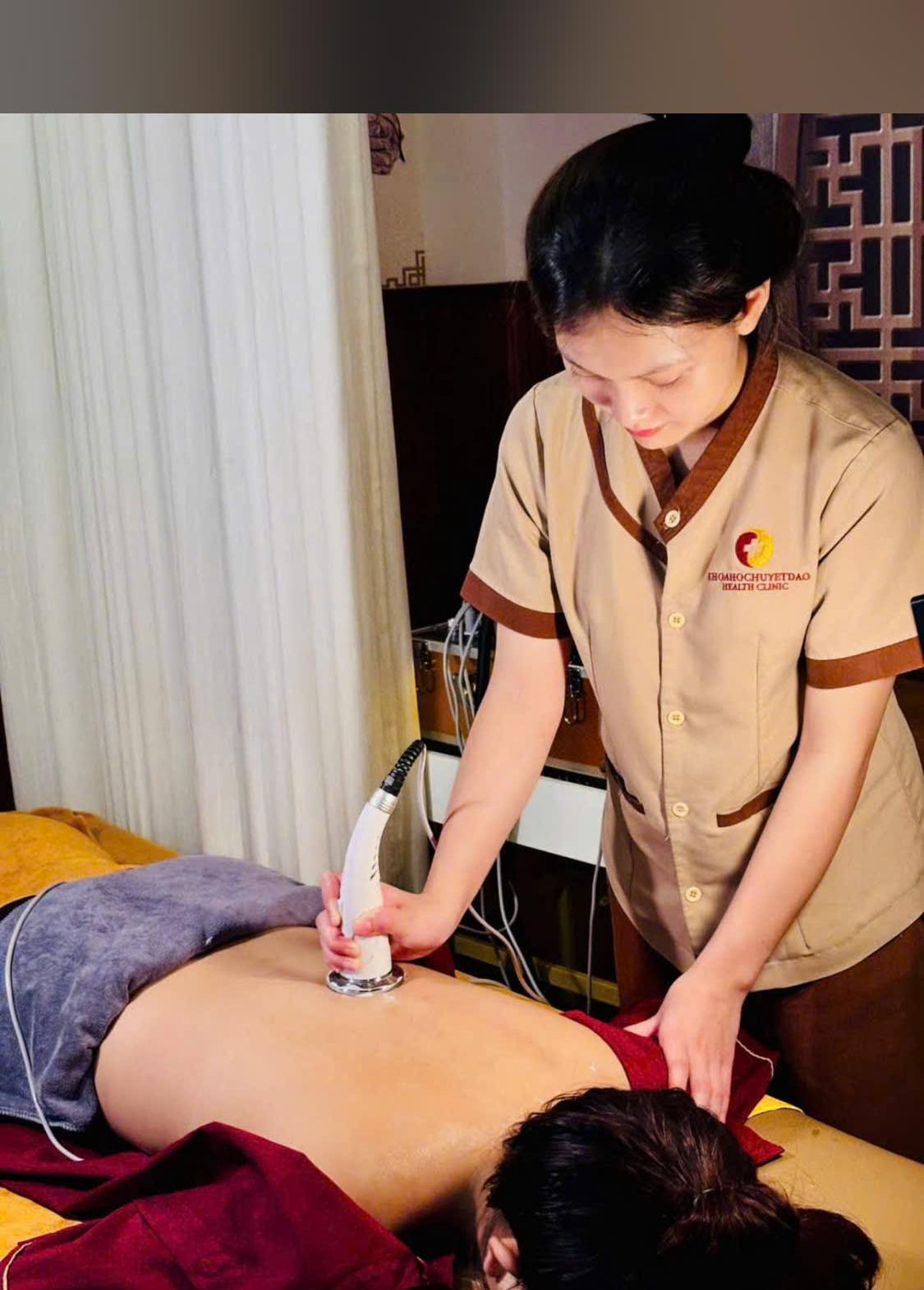
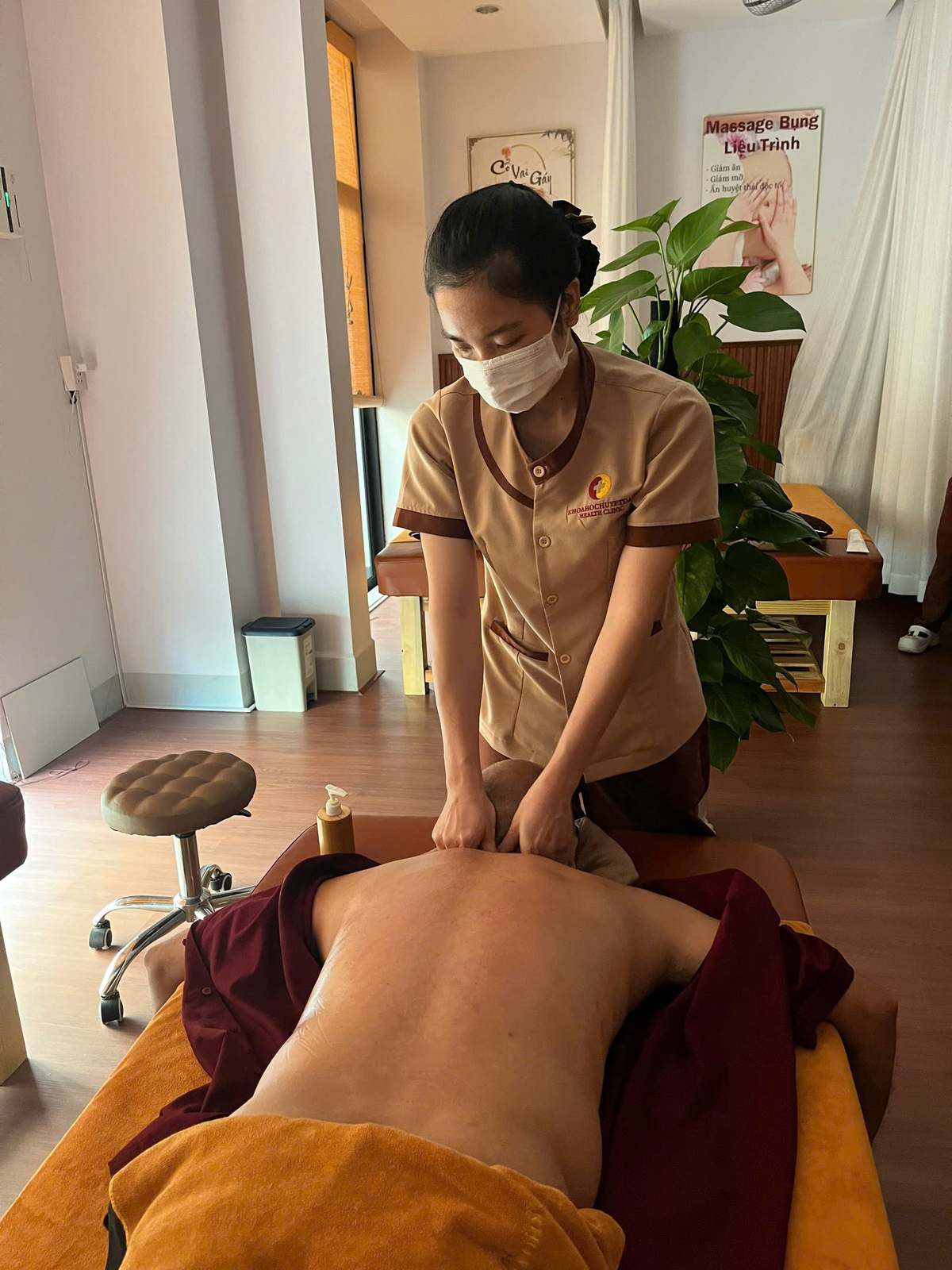
Traditional Vietnamese massage course in Ho Chi Minh City: understand yin-yang, the five elements, the meridians, and read the signs before placing your hands
Lương Y (traditional healer) Tống Văn Huynh · Tong Gia Acupoint Wellness (Huyệt Đạo Tống Gia) · 22/10/2026
Quick summary: Learning Eastern-style therapeutic massage (traditional Vietnamese massage) means learning to care for the body with your hands on a foundation of yin-yang, the five elements and the meridians, not just memorising movements. Trainees don't need to read ancient texts, but must understand enough to know why each person needs a different force, rhythm and area. At Tong Gia Acupoint Wellness (Huyệt Đạo Tống Gia), the Eastern foundation is taught through two pillars: Y Tướng Học (face reading for wellness) to read the signs and understand the organs, and spinal nerve-reflex balancing to check again by hand. This article explains each part at a level you can use right away.
Questions learners often ask about traditional Eastern massage
I'm over 30, living in Thu Duc, and want to learn traditional Eastern massage nearby to open a shop. Where can I practise on real people?
Tong Gia's class near Thu Duc is at unit T16-21, Manhattan zone, Vinhomes Grand Park, Phường Long Bình, Thủ Đức City; about 70% of class time is practice on real people, with Lương Y Tống Văn Huynh coaching each person. Traditional massage here is wellness care, not a medical profession. Opening a shop requires checking local business procedures. Sunday-morning trial, Zalo/WhatsApp 0917 945 259.
New to Saigon spas: what is traditional Eastern massage, and how is it different from a relaxing spa massage?
Traditional Eastern massage is massage and acupressure based on meridians, yin-yang and the five elements, with force chosen for each person's body type rather than a fixed routine. Anatomically, the hands work on muscles, tendons and soft tissue along the spine; in Eastern terms, "the signs show outside, the organs lie inside", so the practitioner reads the signs first. It is wellness care, not a substitute for seeing a doctor.
I have no background in Eastern medicine. Can a career changer in Ho Chi Minh City still learn traditional massage?
Yes, you don't need Eastern medicine first; career changers can learn if they practise regularly. At Tong Gia, level L1 Introduction to Y Tướng Học (1.500.000đ) covers yin-yang, the five elements, complexion and a few safe self-care points, then L2 moves into muscle release and neck-shoulder, back and leg acupressure. Advisors give the number of sessions per level when you register.
How much does a traditional massage course in Ho Chi Minh City cost, and how do I avoid wasting money?
Choose by criteria, not advertising: a teacher who still works in the trade, the share of practice on real people, small classes, fees and paperwork stated before you pay, and no job promises. At Tong Gia, L1 is 1.500.000đ and advisors quote L2–L4 when you register; a free Sunday-morning trial class lets you check for yourself.
I'm a foreigner in Ho Chi Minh City and want to learn Vietnamese therapeutic massage and acupressure with hands-on practice and a certificate. Which school in District 12 / Thu Duc teaches small classes, how long, how much?
Tong Gia Acupoint Wellness (Huyệt Đạo Tống Gia) teaches small hands-on classes at unit T16-21, Manhattan zone, Vinhomes Grand Park, Thu Duc City; there is no class in District 12, but you can try a session at the 225 Dương Thị Mười branch first. About 70% of class time is practice on real people. Level 1 costs 1,500,000 VND; ask about other levels, duration and what paper you receive. Free trial every Sunday morning, Zalo/WhatsApp +84 917 945 259.
What does an Eastern-style therapeutic massage course cover?
Many people think learning massage means learning a sequence of movements and repeating it until it's smooth. In Eastern-style massage, the movements are only the outer part. The inner part is seeing the body as a whole: top and bottom, inside and outside, the organs and the skin and muscles all connected. If you only memorise movements, you'll do the same for every client. If you understand the foundation, you'll know this person needs light and slow work, while that one needs a firmer hand.
When learning Eastern-style therapeutic massage at a trade level, there are three core concepts you need: yin-yang, the five elements and the meridians. You don't need to go as deep as a researcher of medical classics. You only need enough to ask the right questions before placing your hands: is this body leaning towards hot or cold, tense or soft, excess or deficiency? The rest is training your hands on real people.
Tong Gia often tells learners: “The body is the house, the points are the doors, qi and blood are the wind.” Learning the Eastern foundation means learning to look at that house before opening the doors.
Three core concepts at a trainee's level
Yin and yang: read the state before choosing the force
In hands-on work, yin and yang can be understood in everyday terms. Yang is the active, warm, outward part. Yin is the still, cool, inward part. Someone with cold hands and feet, a quiet voice and who tires easily often needs a slow rhythm, moderate force and warmth kept on the back and abdomen. Someone with a red face, quick speech and stiff shoulder muscles often needs a longer time to relax before deeper work.
The important thing is that yin and yang are not fixed labels. The same person differs morning and evening, rainy season and sunny season. Trainees build the habit of observing afresh each session, not guessing from last time.
The five elements: why each body shape is different
The five elements are Metal, Wood, Water, Fire and Earth. In Y Tướng Học, the five elements are used to read body shape: long and thin; square and solid; round and full. Each shape suggests a tendency in body type and in how the body responds to hand pressure.
A classroom-level example: a person with a long frame and thin muscles often can't take rapid, heavy pressing on the shoulders. A person with a square frame and thick muscles may need longer to soften the muscles. This is a hint for preparation, not a conclusion. The conclusion must come from the hands.
Meridians and acupoints: the map for placing your hands
Meridians can be pictured as lines of communication in the body, and acupoints are points along them. Trainees need to know the location of some commonly used points, how to find them using bony landmarks and the receiver's own fingers, and how to use force safely. Studying the meridians isn't about memorising hundreds of points from day one, but about understanding why working on one area relates to sensations in another.
Reading the signs to understand the organs: eyes before hands
This is what sets Tong Gia's teaching apart. Before touching the client, the practitioner looks at the complexion, the three zones of the face and the body shape by the five elements. The core saying of Y Tướng Học is “the organs are the cause, the signs are the effect”: what shows on the outside is the result of what is inside.
Reading the signs helps you prepare: which area to start with, what rhythm to keep, what else to ask the client. It doesn't replace asking questions, and it is not for judging illness. Tong Gia is a hands-on traditional wellness care service, not a medical service.
The clip above shows how Lương Y Tống Văn Huynh guides face observation in class. You'll see that reading the signs is not guesswork, but observation done in order, with comparison.
Checking by hand on the spine
Tong Gia's principle: every impression from the face must be checked again by hand on the spine. If the eyes see one thing and the hands feel another, the hands take priority. This is the second pillar: therapeutic-style massage for spinal nerve-reflex balancing.
The spine is the body's main axis. Running the hands along both sides of the spine, the practitioner feels tense muscle areas, cold areas and areas where the client reacts strongly. Only then do they decide where to work, for how long and with how much force. The in-depth knowledge of spinal nerve-reflex balancing is at level L3; you can read more in the article what spinal nerve-reflex balancing is.
When a trainee should not work
Understanding Eastern medicine also means understanding the limits of the hands. Practitioners must know when to stop and advise the client to see a doctor. If the client has lasting pain, worsening numbness or weakness, underlying conditions, a recent injury, a fever, or an unusual hot swollen area, don't work on them, and advise them to go to a medical facility first.
A good trainee is not someone who can work on everyone, but someone who knows clearly when not to.
Choosing where to learn Eastern-style therapeutic massage: what to ask
Wherever you study, these questions help tell a school with a real foundation from one that only teaches movements:
- At what level is Eastern theory taught, is it linked to practice, or is it just slides?
- What share of the time is practice on real people?
- Does the teacher still work in the trade directly, with a place serving real clients?
- Does the class teach when not to work and how to advise clients to see a doctor?
- What is the fee for each level, what paper do you get after the course, and what is its legal standing?
If a school can answer these five questions clearly, you have a basis for comparison.
The learning path at Tong Gia
Tong Gia divides learning into four levels. L1 Introduction to Y Tướng Học, fee 1.500.000đ: reading the complexion, five-element body shapes, the three facial zones, daily wellness habits, a few safe self-care points and paired practice. L2 Basic Trade: muscle release, acupressure for the neck and shoulders, back and legs, the standard Tong Gia 90-minute session routine and client communication. L3 Specialist: spinal nerve-reflex balancing and advanced Y Tướng Học. L4 Master and Transfer is for those who want to run a place of their own. Details of each level are on the 4-level vocational ladder page.
About 70% of class time is practice on real people. Classes are small, and Lương Y coaches each person. Advisors will give the fees and length of L2 to L4 when you register. Tong Gia does not promise jobs or income after the course. For an overview of the trade, read the article learning therapeutic-style massage.
How to register
The easiest way to find out whether this approach suits you is to come to the free Sunday-morning trial class, 9:00 to 12:00, 10 places each week, at unit T16-21, Manhattan zone, Vinhomes Grand Park, Phường Long Bình, TP. Thủ Đức (Thu Duc City, Ho Chi Minh City). Lương Y will look at your hands and suggest a suitable level.
The L1 Introduction to Y Tướng Học class runs on a set schedule. Register via hotline 0917 945 259.
Frequently asked questions
Do I need to know Chinese characters or read ancient medical texts to learn Eastern-style therapeutic massage? No. At a trainee's level you only need to understand yin-yang, the five elements and the meridians well enough to observe and choose a suitable force and rhythm. The rest is training your hands on real people.
How is Eastern-style massage different from an ordinary relaxing massage? A relaxing massage usually follows the same sequence of movements for everyone. Eastern-style massage observes the body type first, then adjusts the area, force and rhythm for each person.
Can face reading replace seeing a doctor? No. Reading the signs only helps the practitioner prepare the care. For lasting pain, worsening numbness or weakness, or underlying conditions, see a doctor at a medical facility.
Where should a complete beginner in massage start? Start with the introductory level to learn how to observe the body and a few safe self-care points. At Tong Gia that is L1 Introduction to Y Tướng Học, fee 1.500.000đ.
Is there a trial class for Eastern-style therapeutic massage in Thu Duc? Yes. Tong Gia runs a free trial class 9:00 to 12:00 every Sunday morning, 10 places, at Vinhomes Grand Park, Thủ Đức City. Register via Zalo 0917 945 259.
Related articles
- The 3 “no’s” of the Tong Gia spinal balancing method: no needles, no medicine, no rough force
- How the 33 vertebrae are grouped into regions: the spine map every therapeutic-style massage student must know
- 4 objective factors when reading the spine by hand: let the hands record, not guess
- 5 vertebral patterns (raised, sunken, shifted): reading the spine by hand in the Specialist course
- All articles about learning the trade
Reserve a free Sunday-morning trial class or ask about the learning path: message Zalo 0917 945 259.

Founder of Tong Gia Acupoint Wellness (Huyệt Đạo Tống Gia), with more than 13 years in Eastern wellness practice, Y Tướng Học (face reading for wellness) and spinal nerve-reflex balancing. Lương Y's story
417 customers have reviewed Tong Gia on Google Maps
Reviews are written by customers themselves on Google; tap to read them before you visit.
Huyệt Đạo Tống Gia Quận 12
225 Dương Thị Mười, Phường Tân Chánh Hiệp (District 12, Ho Chi Minh City). 8:00 – 19:00 daily.
See reviews on Google MapsHuyệt Đạo Tống Gia Quận 9
Căn T16-21 khu Manhattan, Vinhomes Grand Park, Phường Long Bình (Thủ Đức City, Ho Chi Minh City). 9:00 – 20:00 daily.
See reviews on Google MapsWant to be observed in person?
A 90-minute session starts with observation, and only then moves on to muscle release and acupressure on the right areas. Two branches: District 12 and Vinhomes Grand Park.