Keeping clients warm during wellness massage: why warmth comes first and 5 things learners must do
Lương Y (traditional healer) Tống Văn Huynh · Tong Gia Acupoint Wellness (Huyệt Đạo Tống Gia) · 13/11/2026
Keeping clients warm during wellness massage comes before technique: a cold client's skin vessels narrow, muscles tense and the nervous system stays on guard. At Tong Gia Acupoint Wellness (Huyệt Đạo Tống Gia) in Ho Chi Minh City, learners set the room, cover unworked areas, warm their hands and the oil, and tell clients to stay warm afterwards.
Questions learners often ask about keeping clients warm during wellness massage
I'm a new spa practitioner in District 9; clients feel cold lying face down in our air-conditioned room. How do I keep them warm?
Uncover only the area you are working on and keep the rest under towels; keep the air conditioner off the table; warm your hands and oil before touching. Cold narrows skin vessels and tenses muscles; Eastern medicine calls it cold evil. Tong Gia teaches this at Vinhomes Grand Park, Thu Duc City. Zalo 0917 945 259.
My clients often have cold hands and feet. Is that Yang deficiency in Eastern medicine? What should a massage learner in HCMC watch for?
Feeling the cold, cold hands and feet, cold lower back and knees are what Eastern medicine calls Yang deficiency; learners only note it and keep the back, belly and feet covered. Bluish fingers with stinging numbness: advise a doctor's visit. Lương Y Tống Văn Huynh teaches this at Tong Gia, Vinhomes Grand Park. Zalo 0917 945 259.
Does a wellness massage course in Thu Duc teach room setup, towels and keeping clients warm, or only hand techniques?
Yes. At Tong Gia, preparing the room, towels, warm hands and warm oil is part of practice hours: a cold client's muscles tense and the hands read the spine poorly. Classes: căn T16-21 khu Manhattan, Vinhomes Grand Park, TP. Thủ Đức (unit T16-21, Manhattan block, Thu Duc City); the Sunday morning trial class has no fee, Zalo 0917 945 259.
A hand fresh from cold water placed on your neck
During a practice session, a learner washed their hands and immediately placed them on the neck of the person lying down. The person pulled in their neck and their whole back stiffened. Lương Y Tống Văn Huynh did not correct the pressure. He told the learner to rub both palms until warm, test them on their own forearm, cover their partner's lower back with a towel, and only then place the hands again. This time the partner's shoulders dropped. The lesson that day was that keeping clients warm during wellness massage comes before technique.
Why keep clients warm during wellness massage?
The physiology view
In the cold, the blood vessels under the skin narrow to keep heat for the inner body; the skin turns pale and the soft tissue gets less blood. The muscles tense, and some people shiver slightly. The sympathetic nervous system, the part in charge of staying on guard, switches on: breathing gets shallower and it is hard to let go. Spinal nerve-reflex balancing massage works through the nervous system, so with a cold client the practitioner's hands read with difficulty, the sensation waves are hard to keep even, and the skin at the key point is slow to turn from dry to moist.
The Eastern medicine view
Eastern medicine calls cold that enters from outside cold evil (hàn tà, 寒邪), and cold combined with damp is cold-damp; the curriculum notes that some people's backs easily take in cold evil, with cold skin over the lower back and slack muscles. From the inside, a person with Yang deficiency is described as lacking the fire that keeps them warm: Kidney Yang deficiency means feeling the cold, cold hands and feet, a cold lower back and knees; Spleen Yang deficiency means a cold belly and a liking for warm compresses; Heart Yang deficiency means palpitations and cold hands and feet. The curriculum advises keeping the back, belly and feet warm, and avoiding cold drafts blowing straight onto the neck and chest.
Who needs extra warmth: look with your eyes, ask with words
Y Tướng Học (face reading for wellness) gives learners a few hints before placing their hands: a round "Viên" face belongs to the Water type and the back easily takes in cold; a "Giáp" face often comes with a hollow, cold lower back; thin, soft ear rims and a pale complexion are signs of Kidney Yang deficiency in this school. These are only hints. Learners also ask: do you often have cold hands and feet, have you just sat in air conditioning for a long time? Reading skin temperature to find excited and inhibited areas is a separate skill, covered in sensing skin temperature with your hands; this article is about keeping clients warm during wellness massage throughout the whole session.
How to keep clients warm: 5 things in one session
- A comfortably warm room: adjust the air conditioner before the client comes in, and do not let the air conditioner or a fan blow straight at the table. Do not make the room too hot either: a client who sweats and then meets a draft gets cold again.
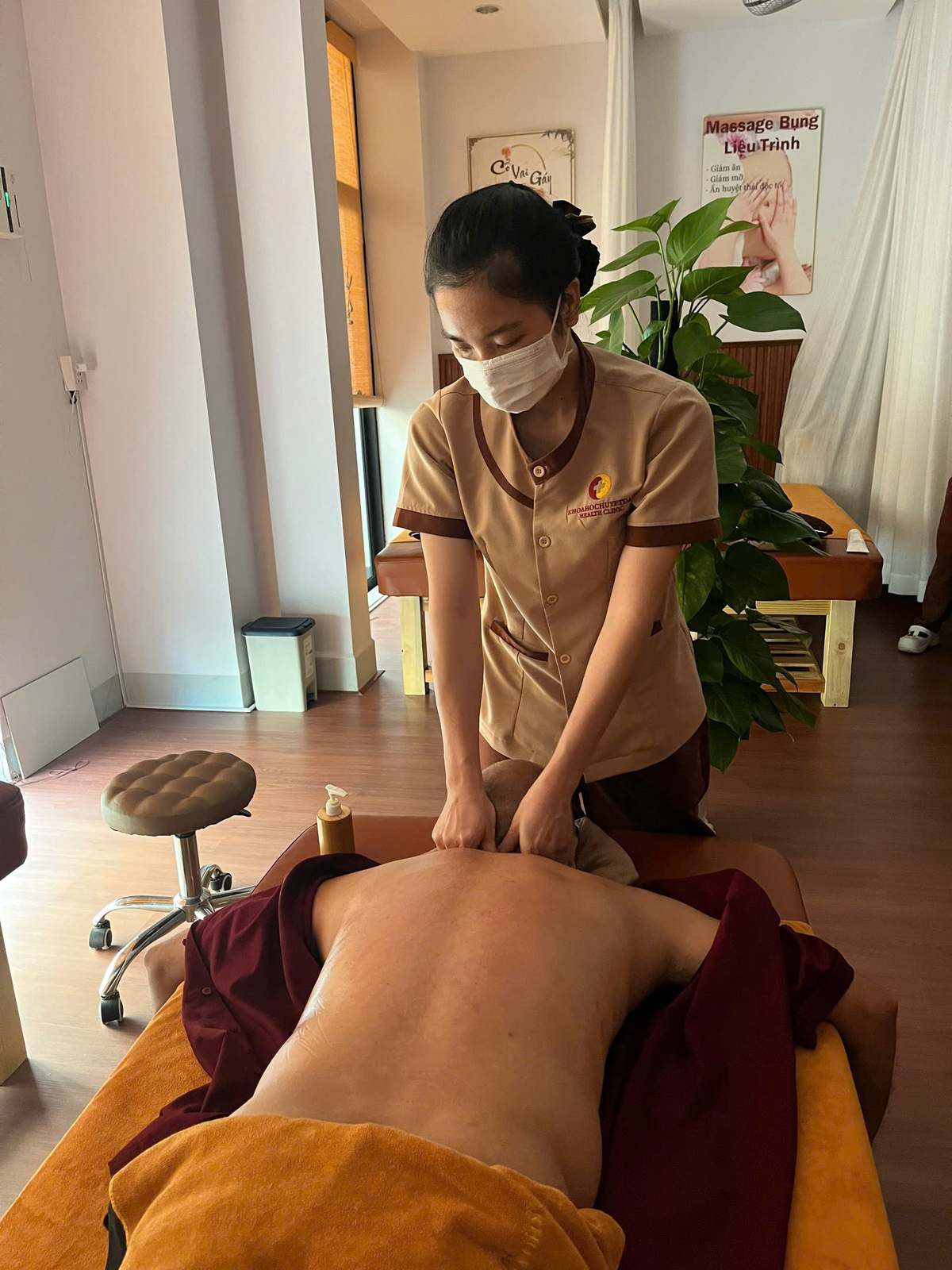
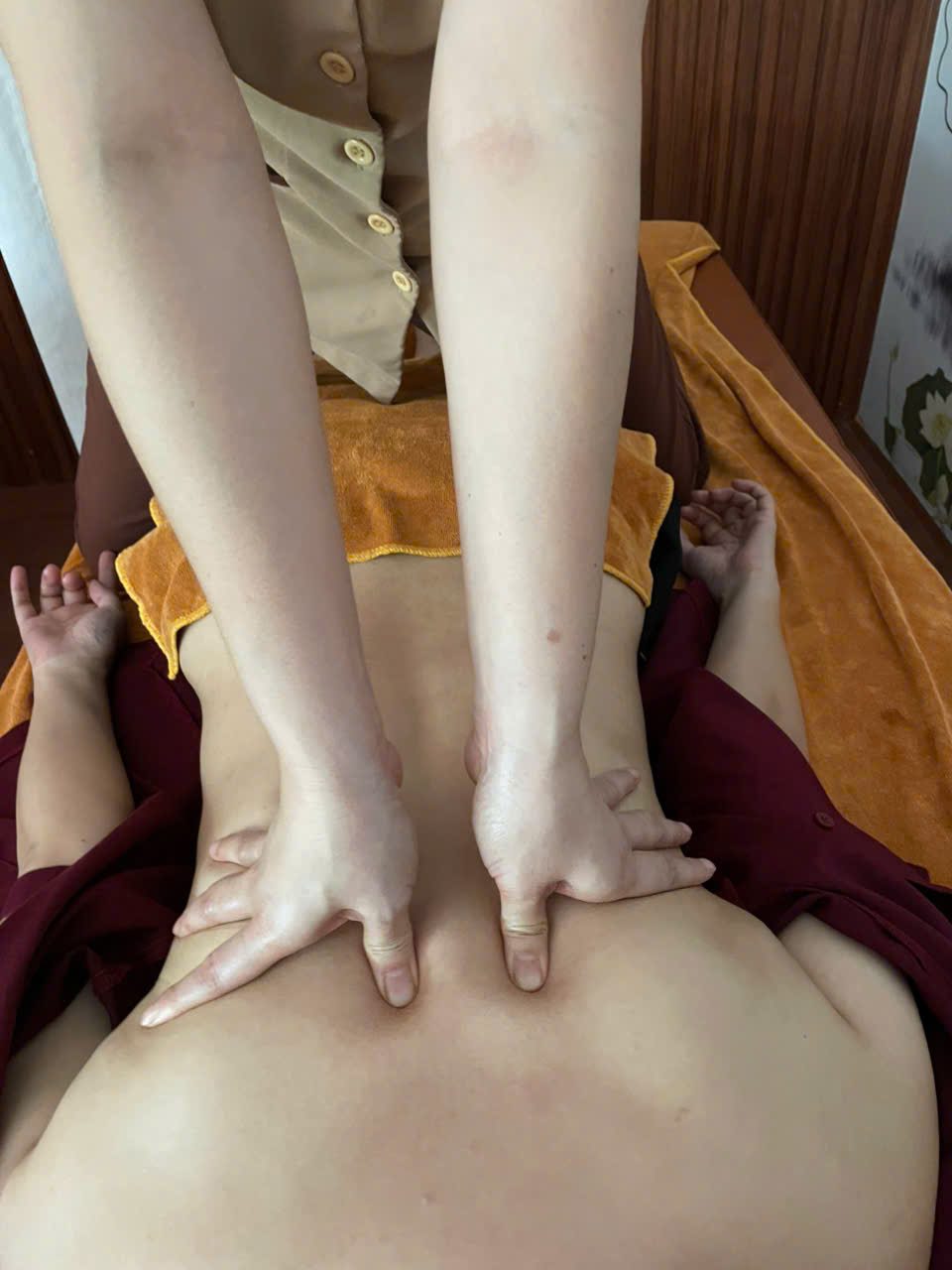
- Towels over unworked areas: uncover only the area you are working on. When you finish an area, cover it again. The lower back, belly and feet are the places to keep well covered. When the client turns over, keep the towel on them.
- Warm hands before touching: rub both palms until warm and test them on your own forearm. Make the first touch with the whole palm, resting still. If you read skin temperature, read it before applying oil.
- Warm oil: pour the oil into your palm and rub it warm before applying; never pour cold oil straight onto the back. The curriculum notes that herbs act locally through the skin, helping keep warmth and creating a sense of relaxation.
- After the session: have the client put their shirt on before leaving the room, sit for a while until the sweat dries, and advise them not to take a cold shower or go straight out into cold wind; people whose feet are often cold can take a warm foot soak in the evening. For seeing clients off, see also caring for clients after a massage session.
What not to do when keeping clients warm
- No hot compresses on areas that are swollen, hot, red or recently bumped.
- No hot compresses or hot oil for clients with reduced sensation in the hands and feet, such as people with long-term diabetes, because they can get burned without noticing.
- Do not work directly on cool, slack areas; warm the surroundings first, as in excited and inhibited areas on the back.
Lương Y Tống Văn Huynh teaches learners to warm first, then work
With more than 13 years in the trade and hundreds of learners trained, Lương Y Tống Văn Huynh tells the class: „While the client is still cold, the muscles are still guarding; warm first and they soften, once soft the hands can read the spine.“ In class, the person lying down may say „I'm cold“ at any time; the practitioner must stop, cover them with a towel and adjust the room before carrying on.
When to advise a client to see a doctor
Advise the client to get checked at a medical facility when: fingertips or toes turn white or bluish in the cold, with stinging numbness; one leg is clearly colder than the other, changes colour or hurts when walking; shivering comes with fever; feeling the cold lasts a long time with heavy tiredness, swelling or unexplained weight gain; a diabetic client has lost feeling in the feet. Cold hands and feet with chest pain, cold sweats or shortness of breath: call 115 at once. Long-lasting pain, numbness or weakness that keeps getting worse, or an underlying condition also need a medical check. Tong Gia offers wellness care, not a medical service.
Which level teaches this?
Preparing the room, towels, warm hands and the after-session advice are practised from L1 Foundation (1.500.000đ) and in the 90-minute session routine of L2 Basic Trade. The principle of temperature control and how to work inhibited areas are studied in depth in the Specialist Course (L3). Fees for L2–L4 are given by our advisors when you register. Read more about the teacher: Lương Y Tống Văn Huynh.
How to sign up
Beginners can come to the Sunday morning trial class, 9:00–12:00, with no fee, and the Sunday Y Tướng Học class, at căn T16-21 khu Manhattan, Vinhomes Grand Park, TP. Thủ Đức (unit T16-21, Manhattan block, Thu Duc City). Lương Y looks at your hand skills in the trial class and then suggests a suitable level. Tong Gia does not promise jobs or income after the course. Book a trial class or call the training hotline 0917 945 259.
Frequently asked questions
Why keep clients warm during wellness massage? When a client is cold, the vessels under the skin narrow, the muscles tense, relaxing is hard and the practitioner's hands struggle to read the spine. Warmth softens the muscles and makes the session safer.
Should every client get a hot compress? No. Areas that are swollen, hot and red, recently bumped, or clients with reduced sensation in the hands and feet such as people with long-term diabetes should not get hot compresses.
How do I warm massage oil safely? Pour the oil into your palm and rub it warm before applying. If you warm the whole bottle, test it on your own wrist before using it on the client.
At which level does Tong Gia teach keeping clients warm? It is practised from L1 Foundation and L2 Basic Trade, and the principle of temperature control is studied in depth in L3 Specialist at Vinhomes Grand Park, Thu Duc City. Hotline 0917 945 259.
Related articles
- The 3 'no's of Tong Gia's spinal balancing method: no needles, no medicines, no rough force
- 33 vertebrae and their regions: the spine map every wellness massage learner must know
- 4 objective factors when reading the spine by hand: let the hands record, not guess
- 5 vertebral forms – raised, sunken, shifted: reading the spine by hand in the Specialist Course
- All articles about learning the trade
Reserve a free Sunday-morning trial class or ask about the learning path: message Zalo 0917 945 259.

Founder of Tong Gia Acupoint Wellness (Huyệt Đạo Tống Gia), with more than 13 years in Eastern wellness practice, Y Tướng Học (face reading for wellness) and spinal nerve-reflex balancing. Lương Y's story
417 customers have reviewed Tong Gia on Google Maps
Reviews are written by customers themselves on Google; tap to read them before you visit.
Huyệt Đạo Tống Gia Quận 12
225 Dương Thị Mười, Phường Tân Chánh Hiệp (District 12, Ho Chi Minh City). 8:00 – 19:00 daily.
See reviews on Google MapsHuyệt Đạo Tống Gia Quận 9
Căn T16-21 khu Manhattan, Vinhomes Grand Park, Phường Long Bình (Thủ Đức City, Ho Chi Minh City). 9:00 – 20:00 daily.
See reviews on Google MapsWant to be observed in person?
A 90-minute session starts with observation, and only then moves on to muscle release and acupressure on the right areas. Two branches: District 12 and Vinhomes Grand Park.