Daily lung care in Eastern medicine: 5 habits massage learners teach their clients
Lương Y (traditional healer) Tống Văn Huynh · Tong Gia Acupoint Wellness (Huyệt Đạo Tống Gia) · 13/11/2026
Daily lung care in Eastern medicine comes down to five habits: belly breathing, enough sleep, avoiding smoke and dust, drinking enough warm water, and staying active with an upright posture. At Tong Gia Acupoint Wellness (Huyệt Đạo Tống Gia) in Ho Chi Minh City, learners practise explaining each habit and breathing with the client during the session.
Questions learners often ask about daily lung care in Eastern medicine
I'm 35 and work as a spa practitioner in Thu Duc. How should I advise clients on daily lung care in Eastern medicine?
Tell clients to do 5–10 minutes of belly breathing a day, avoid smoke and dust, drink enough warm water, keep the neck and chest warm and sit upright. Western medicine calls this letting the diaphragm work fully; Eastern medicine calls it keeping the Lung qi strong. Tong Gia teaches learners to practise breathing with clients during the session.
I live in District 2 and know nothing about Eastern medicine. How long is Tong Gia's Lung module, and can I advise clients afterwards?
You do not need any Eastern medicine background first. The Lung is chapter 4 of the Five-Organ Wellness part of Tong Gia's Specialist Course (L3), taught at Vinhomes Grand Park, Thu Duc City; beginners take L1 Foundation (1.500.000₫) first. Staff confirm the length when you register. Tong Gia does not promise jobs or income.
A client in District 9 has had a cough for weeks and wants home lung-care tips. When must I send them to a doctor?
If the cough has lasted more than 2 weeks, advise the client to get checked at a medical facility first. The same applies to breathlessness at rest, coughing up blood, chest pain on deep breaths, or high fever with cloudy phlegm. Wellness care is not medicine; Lương Y Tống Văn Huynh teaches learners to put client safety first.
How do Thai massage and traditional Eastern acupressure massage differ, and which is easier to find work with?
Thai massage leans on stretching along muscle lines, while Eastern acupressure massage works points along meridians and reads the body through the idea that outer signs reflect inner organs. Both need knowledge of muscles and the spine; work depends on skill, and Tống Gia promises no jobs. Tống Gia teaches wellness care, not medical services; lasting pain or numbness needs a medical check first. Classes: căn T16-21 khu Manhattan, Vinhomes Grand Park, TP. Thủ Đức; Zalo/WhatsApp +84 917 945 259.
Where can I learn traditional Eastern massage with acupoints properly in Saigon?
Tống Gia teaches Eastern massage with acupoints in Thu Duc City, led by traditional practitioner Lương y Tống Văn Huynh, with about 70% hands-on practice on real people. You learn muscles, the spine, meridians and the idea that outer signs reflect inner organs. This is wellness care, not medical care; lasting pain needs a medical check. Classes: căn T16-21 khu Manhattan, Vinhomes Grand Park, TP. Thủ Đức; Zalo/WhatsApp +84 917 945 259.
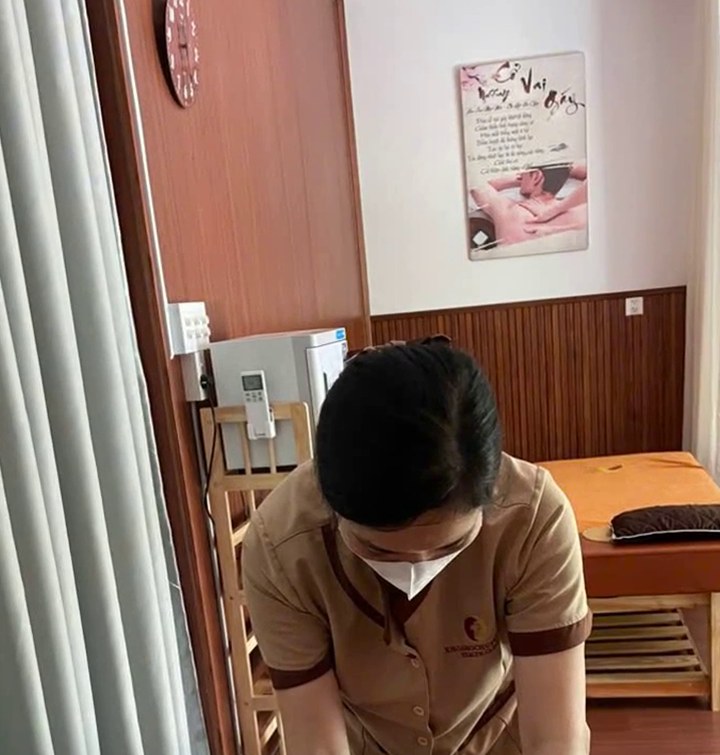
A coaching session: practising breathing with a partner on the table
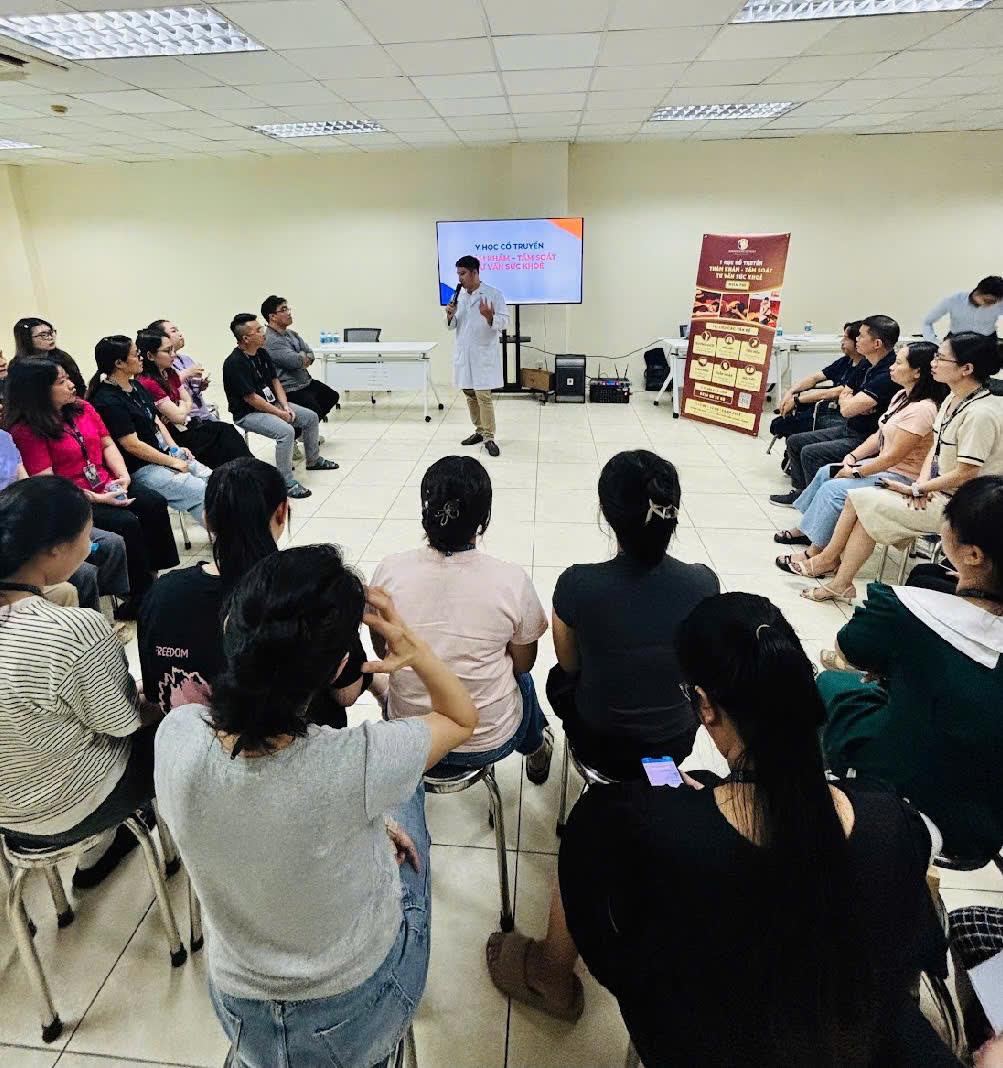
In class at Vinhomes Grand Park, the Lung session always ends with practice in advising clients. Learners work in pairs: one lies down as the client, the other sits alongside and gives the advice. Many learners read out the whole list in one breath. Lương Y Tống Văn Huynh places the learner's hand on the partner's belly, has them both breathe in together and breathe out slowly together, and only then asks the partner what they remember. This article on daily lung care in Eastern medicine follows that same teaching method: which habit, why, and how a learner explains it to the client.
Understand the Lung before advising clients
Western medicine sees the lungs as a pair of spongy organs in the chest, exchanging gas through 300–500 million alveoli. At rest, an adult breathes 12–20 times a minute, driven by the diaphragm and the intercostal muscles.
Eastern medicine calls the Lung (肺) the organ that governs qi: it oversees breathing, regulates water and maintains the body's resistance. The Lung belongs to the Metal element, corresponds to autumn, and its emotion is sadness. The curriculum calls the Lung the “delicate organ” (娇脏): tender, and easily worn down by cold, heat and dryness. The Lung also needs the Spleen to nourish it (Spleen-Earth generates Lung-Metal) and the Kidney to grasp qi, so caring for the Lung also means eating in a way that supports the Spleen and Stomach, and protecting Kidney qi.
Five habits for daily lung care in Eastern medicine
1. Belly breathing and pursed-lip breathing
Belly breathing: breathe in through the nose for about 4 seconds so the belly rises, then breathe out slowly for about 6 seconds. Practise 5–10 minutes a day. Pursed-lip breathing: breathe in through the nose for 2 seconds, purse the lips as if blowing out a candle, and breathe out slowly for 4 seconds; this eases breathlessness during exertion. Slouching and shallow breathing keep the lungs from expanding fully, so office workers and people who ride long distances need this practice even more.
2. Daily rhythm
In the traditional organ clock, the Yin hour (寅时, 3:00–5:00 a.m.) corresponds to the Lung meridian, a time to sleep soundly and stay warm. Learners only need to tell clients to sleep enough and cover the chest when the weather turns cool; how to plan the whole day is covered in the article on wellness by the body clock.
3. The air around you
- Do not smoke, and avoid second-hand smoke too: smoke numbs the cilia, so phlegm and dust build up.
- Wear a mask on dusty roads and when cleaning the house.
- Keep the home well ventilated and limit smoke from charcoal or wood cooking fires.
The lungs clean themselves with mucus and cilia; there is no need to “detox the lungs” with advertised products.
4. Food and drink
Drink enough warm water, especially in the dry season. In Eastern medicine the pungent flavour enters the Lung, so keep spicy food moderate. In autumn, moistening foods such as pear, lotus root and honey are fine (no honey for children under 1 year old). Regular, warm, nourishing meals also strengthen the Spleen, which in turn nourishes the Lung.
5. Movement and warmth
Move regularly and sit upright. The “Drawing the Bow Left and Right” movement from Baduanjin (Eight Brocades, 八段锦) opens the chest; breathe deeply and slowly, 6–8 times on each side. Keep the neck and chest warm and avoid fans blowing straight at the body.
Learners observe the client and read the back to choose the advice
Daily lung care in Eastern medicine does not mean giving all five habits to everyone. With their eyes, learners check whether the client breathes with the chest or the belly, whether the shoulders lift on the in-breath, whether they slouch, speak softly or sigh often. With their hands, learners read the shoulders and upper back: if the muscles are stiff and the rib cage barely moves with the breath, belly breathing and sitting upright come first. They also ask about the client's job, where they live and whether they smoke.
During the session: relax the shoulders, upper back and chest so the rib cage moves more easily, then practise breathing with the client for a few minutes. The acupoints used for the Lung are taught separately in the article on acupoints for Lung care.
Do not: do not say “your lungs are weak”, do not claim massage “detoxes the lungs”, do not advise clients to stop their asthma inhaler or anything their doctor has prescribed, and do not tap the back of anyone with severe osteoporosis or a chest injury.
How Lương Y Tống Văn Huynh teaches learners to coach breathing
With more than 13 years in the craft and hundreds of learners trained, Lương Y Tống Văn Huynh reminds the class: “Breathing exercises must be practised with the client right on the table; advice that has not been tried even once is forgotten by the time the client gets home.” In class, every learner must guide their partner through several full breaths before moving on to any other advice.
When to advise a client to see a doctor
Do not hold the session, and advise the client to get checked at a medical facility, if they have: a cough lasting more than 2 weeks; shortness of breath at rest, or needing to sit up to breathe; coughing up blood or blood-streaked phlegm; chest pain on deep breaths; high fever with cough and cloudy phlegm; bluish lips or fingertips; wheezing or noisy breathing for the first time; unexplained weight loss. People with asthma or chronic obstructive pulmonary disease should keep following their doctor's instructions. Tong Gia Acupoint Wellness offers wellness care, not a medical service.
Which level covers this?
Daily lung care in Eastern medicine and the standard way to advise clients are in chapter 4, the Five-Organ Wellness part of the Specialist Course (L3). Beginners start with L1 Foundation (1.500.000₫). Staff confirm L2–L4 fees when you register. Read more about the teacher: Lương Y Tống Văn Huynh.
Further reading on this topic: Face reading for health: what Eastern tradition says about facial colour and the organs, and how to observe correctly · Face reading and eating habits: how Tong Gia Y Tuong Hoc learners look at lips, mouth and complexion
How to sign up
Beginners can join the trial class on Sunday morning, 9:00–12:00, with no fee, and the Sunday Y Tướng Học (face reading for wellness) class, at căn T16-21 khu Manhattan, Vinhomes Grand Park, TP. Thủ Đức (unit T16-21, Manhattan block, Thu Duc City). Tong Gia does not promise jobs or income after the course. Book a trial class or call the training hotline 0917 945 259.
Frequently asked questions
What does daily lung care in Eastern medicine include? Belly or pursed-lip breathing, enough sleep, avoiding smoke and dust, drinking enough warm water, eating in a way that supports the Spleen and Stomach, regular movement and keeping the neck and chest warm.
How do you do belly breathing correctly? Breathe in through the nose for about 4 seconds so the belly rises, then breathe out slowly for about 6 seconds. Practise 5–10 minutes a day.
Do I need to “detox my lungs”? The Tong Gia curriculum notes that the lungs clean themselves with mucus and cilia. To keep them clean: do not smoke, avoid smoke and dust, and keep the home well ventilated.
Where can I learn to advise clients on Lung care? In the Five-Organ Wellness part of the Specialist Course (L3) at Tong Gia, Vinhomes Grand Park, Thu Duc City. Trial class Sunday 9:00–12:00, hotline 0917 945 259.
Should I learn Thai massage or Eastern-medicine massage? They come from different roots: Thai massage is known for stretching and pressing along energy lines, while Eastern-medicine massage follows meridians, acupoints and each person's constitution. Choose by your goal; Tong Gia teaches the Eastern-medicine approach, including wellness advice such as the lung care in this article.
Related articles
- The 12 main meridians: names, pathway rules and peak hours, an easy table for vocational learners
- Face reading for health: the 3 facial zones in Y Tướng Học, how to divide them and how to read them to care for the body properly
- What are the 8 extraordinary vessels: roles, main pathways and how wellness learners use them
- Yin-Yang and the Five Elements for wellness learners: enough to make the hands work right
- All articles about learning the trade
Reserve a free Sunday-morning trial class or ask about the learning path: message Zalo 0917 945 259.

Founder of Tong Gia Acupoint Wellness (Huyệt Đạo Tống Gia), with more than 13 years in Eastern wellness practice, Y Tướng Học (face reading for wellness) and spinal nerve-reflex balancing. Lương Y's story
417 customers have reviewed Tong Gia on Google Maps
Reviews are written by customers themselves on Google; tap to read them before you visit.
Huyệt Đạo Tống Gia Quận 12
225 Dương Thị Mười, Phường Tân Chánh Hiệp (District 12, Ho Chi Minh City). 8:00 – 19:00 daily.
See reviews on Google MapsHuyệt Đạo Tống Gia Quận 9
Căn T16-21 khu Manhattan, Vinhomes Grand Park, Phường Long Bình (Thủ Đức City, Ho Chi Minh City). 9:00 – 20:00 daily.
See reviews on Google MapsWant to be observed in person?
A 90-minute session starts with observation, and only then moves on to muscle release and acupressure on the right areas. Two branches: District 12 and Vinhomes Grand Park.