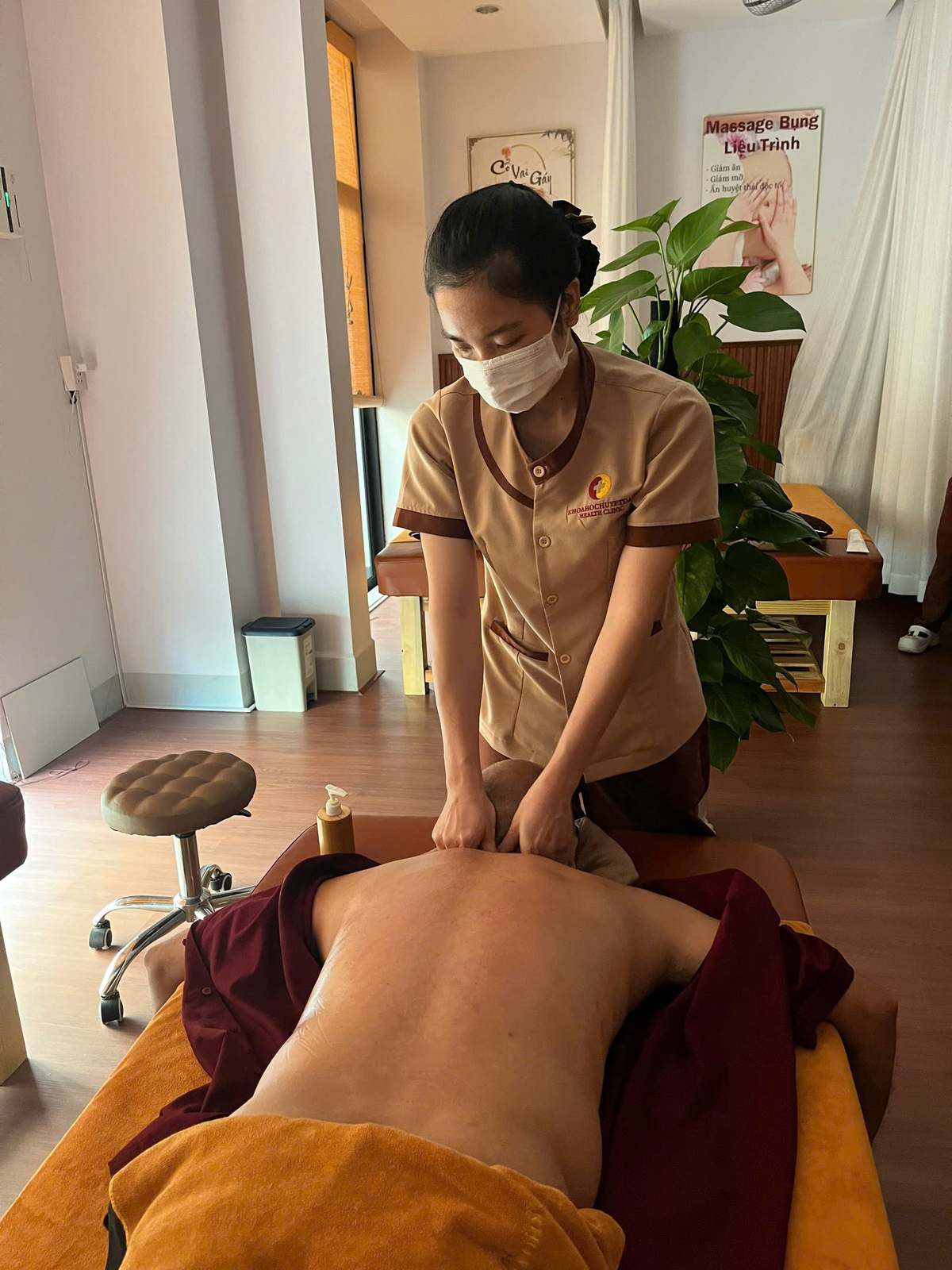
Back-shu points: a location chart by vertebra and how to find them on a real person
Lương Y (traditional healer) Tống Văn Huynh · Tong Gia Acupoint Wellness (Huyệt Đạo Tống Gia) · 07/11/2026
Quick answer: Back-shu points (bối du huyệt, 背俞穴) are a group of acupoints on the inner line of the Bladder meridian, 1.5 cun from the midline of the spine, each named after an organ, such as Phế Du (BL13, 肺俞), Tâm Du (BL15, 心俞), Can Du (BL18, 肝俞) and Thận Du (BL23, 肾俞). Eastern tradition sees them as the places where the qi of each organ pours out to the back, so practitioners use this group to care for the back in a clear order.
Short answer: Back-shu points lie on the inner line of the Bladder meridian, 1.5 cun from the spinal midline, each named after an organ, such as Ganshu or Shenshu, over the erector spinae muscles. Skip injured skin, and back pain with fever needs a clinic. Huyệt Đạo Tống Gia teaches them on real people. Zalo/WhatsApp +84 917 945 259.
Questions students often ask about the Can Du point (BL18, 肝俞)
I'm learning massage in Ho Chi Minh City: where is Can Du (BL18) on the back, how do I find it by hand, and who shouldn't get pressure there?
Can Du (BL18, 肝俞) sits on the back, level with the lower edge of the spinous process of the 9th thoracic vertebra (T9), 1.5 cun (about 2 finger-widths) out from the spinal midline on each side. To find it: take the lower angle of the shoulder blade as the T7 landmark and count down 2 vertebrae. Press light to moderate; do not press where the skin of the back is injured. For back pain that lasts, or comes with fever or yellowing skin, see a doctor at a medical facility.
What is the Shenshu point on the lower back, and how is it massaged?
Shenshu (BL23) lies level with the second lumbar vertebra, 1.5 cun out from the spine, over the erector muscles; Eastern tradition links it to the Kidney. Use steady pressure for 1–2 minutes. Back pain with burning urination, fever or leg numbness needs a clinic. Huyệt Đạo Tống Gia teaches it. Zalo/WhatsApp +84 917 945 259.
Where is the Ganshu point on the back?
Ganshu (BL18) is level with the ninth thoracic vertebra, 1.5 cun (about two finger-widths) out from the spine. Find the lower tip of the shoulder blade, roughly T7, and count down two vertebrae. Eastern tradition links it to the Liver. Avoid injured skin; lasting back pain needs a clinic. Zalo/WhatsApp +84 917 945 259.
Why are they called shu points?
“Shu” (du) means to pour or transport. Each back-shu point is seen as a gateway through which the qi of one organ pours out to the back of the body. The back-shu points line up vertically from the upper back down to the sacrum, roughly in the order of the organs inside: the Lung high up, the Kidney at the lower back, the Bladder at the sacrum.
Location chart by vertebra
All of them lie level with the lower edge of the spinous process of the matching vertebra, 1.5 cun from the midline:
- Phế Du (BL13, 肺俞): level with the 3rd thoracic vertebra (T3)
- Quyết Âm Du (BL14, 厥阴俞, Pericardium): level with T4
- Tâm Du (BL15, 心俞): level with T5
- Cách Du (BL17, 膈俞): level with T7, usually level with the lower angle of the shoulder blade when the arms hang down
- Can Du (BL18, 肝俞): level with T9
- Đởm Du (BL19, 胆俞): level with T10
- Tỳ Du (BL20, 脾俞): level with T11
- Vị Du (BL21, 胃俞): level with T12
- Tam Tiêu Du (BL22, 三焦俞): level with the 1st lumbar vertebra (L1)
- Thận Du (BL23, 肾俞): level with L2, close to the level of the Mệnh Môn point (GV4, 命门) on the Governing Vessel
- Đại Trường Du (BL25, 大肠俞): level with L4, close to the line joining the two iliac crests
- Tiểu Trường Du (BL27, 小肠俞), Bàng Quang Du (BL28, 膀胱俞): level with the 1st and 2nd sacral foramina
How to find the vertebrae on a real person
- Have the person receiving the session lie face down, arms along the body.
- Find C7: with the head tilted slightly forward, it is the most prominent spinous process at the base of the neck. Count down from there: T1, T2...
- Second landmark: the lower angle of the shoulder blade is usually level with T7.
- Third landmark: the line joining the two iliac crests is usually level with L4. From there, count back up to L2 to find Thận Du.
- From the spinous process, measure 1.5 cun out to each side; this usually falls on the highest point of the erector spinae muscle.
These landmarks vary from person to person. Learners use two or three landmarks to cross-check, not just one. The article how the 33 vertebrae are grouped into regions helps you understand the structure of the spine.
How to press back-shu points safely
- Warm the back first by rubbing and stroking along the Bladder meridian.
- Use the pad of the thumb in small circles, increase the pressure gradually and ask how the person receiving the session feels.
- Work from top to bottom and compare left and right: note which side is tighter or more tender under pressure.
- Do not press with the tip of the finger, and do not press straight onto the ribs or the spinous processes.
- On the lower back of older people or people with osteoporosis: use clearly lighter pressure.
Reading back-shu points is not for drawing conclusions about illness
A tender back-shu point does not mean that organ “is ill”. The muscles there may simply be tired from posture. A wellness practitioner notes it to choose which area needs more careful care, and does not tell clients any conclusions about illness. For lasting pain, numbness or weakness that keeps getting worse, or an existing health condition, advise the client to see a doctor at a medical facility.
Back-shu points in the Tong Gia method
The row of back-shu points is where the two pillars of Tong Gia meet most clearly. Y Tướng Học (face reading for wellness) looks at the face to picture which organ needs attention (“the organs are the cause, the signs are the effect”). Spinal nerve-reflex balancing places the hands on the right section of the spine, on the right back-shu point of that organ, to cross-check. Students on the 20-day applied traditional Eastern wellness course practise finding the row of back-shu points on classmates until their hands remember the landmarks.
Where can you learn this?
This article belongs to Part 3, Applied acupoint study (points of the head and face, neck and shoulders, back, arms and legs; locating, working and combining points) of the 20-day applied traditional Eastern wellness course, level L2 on the 4-level vocational ladder of Tong Gia, for people who want to change careers and start working as a wellness practitioner. About 70% of class time is hands-on practice on real people; classes are small, and Lương Y Tống Văn Huynh guides and corrects each person's technique. The L2 fee, the number of sessions and the start dates are given by a consultant when you register. Tong Gia does not promise a job or income after the course; for the paperwork issued after the course and its legal value, please ask reception before paying the fee.
How to register
Come to the free Sunday-morning trial class, 9:00–12:00, 10 places per session, at căn T16-21 khu Manhattan, Vinhomes Grand Park, Phường Long Bình, TP. Thủ Đức (unit T16-21, Manhattan zone, Vinhomes Grand Park, Thủ Đức City, Ho Chi Minh City). Lương Y looks at your hand skills and then suggests the right level. Reserve a place via Zalo 0917 945 259 (WhatsApp +84 917 945 259) with the message “YHCT 20 NGÀY”.
Frequently asked questions
What are back-shu points? They are the points on the inner line of the Bladder meridian, 1.5 cun from the spinal midline, each named after an organ.
Where is the Thận Du point (BL23, 肾俞)? Level with the lower edge of the spinous process of the 2nd lumbar vertebra, 1.5 cun from the midline on each side.
Where is the Phế Du point (BL13, 肺俞)? Level with the lower edge of the spinous process of the 3rd thoracic vertebra, 1.5 cun from the midline on each side.
How do I count vertebrae when looking for back-shu points? Use C7, which stands out at the base of the neck, the lower angle of the shoulder blade at T7 and the line joining the two iliac crests at L4, then count up or down.
If a back-shu point hurts when pressed, does it mean that organ is ill? You cannot conclude that. It may simply be tired muscles from posture; if the pain lasts, see a doctor at a medical facility.
Related articles
- The 3 “no’s” of the Tong Gia spinal balancing method: no needles, no medicine, no rough force
- How the 33 vertebrae are grouped into regions: the spine map every therapeutic-style massage student must know
- 4 objective factors when reading the spine by hand: let the hands record, not guess
- 5 vertebral patterns (raised, sunken, shifted): reading the spine by hand in the Specialist course
- All articles on learning the trade
Reserve a free Sunday-morning trial class or ask about the learning path: message Zalo 0917 945 259.

Founder of Tong Gia Acupoint Wellness (Huyệt Đạo Tống Gia), with more than 13 years in Eastern wellness practice, Y Tướng Học (face reading for wellness) and spinal nerve-reflex balancing. Lương Y's story
417 customers have reviewed Tong Gia on Google Maps
Reviews are written by customers themselves on Google; tap to read them before you visit.
Huyệt Đạo Tống Gia Quận 12
225 Dương Thị Mười, Phường Tân Chánh Hiệp (District 12, Ho Chi Minh City). 8:00 – 19:00 daily.
See reviews on Google MapsHuyệt Đạo Tống Gia Quận 9
Căn T16-21 khu Manhattan, Vinhomes Grand Park, Phường Long Bình (Thủ Đức City, Ho Chi Minh City). 9:00 – 20:00 daily.
See reviews on Google MapsWant to be observed in person?
A 90-minute session starts with observation, and only then moves on to muscle release and acupressure on the right areas. Two branches: District 12 and Vinhomes Grand Park.