Signs of a tired Liver in Eastern medicine: reading the signs, checking by hand and knowing when to send a client for a check-up
Lương Y (traditional healer) Tống Văn Huynh · Tong Gia Acupoint Wellness (Huyệt Đạo Tống Gia) · 13/11/2026
Signs of a tired Liver in Eastern medicine usually show as lasting dry or red eyes, brittle ridged nails, cramp-prone tendons and a dull complexion. These are only hints. At Tong Gia Acupoint Wellness (Huyệt Đạo Tống Gia) in Ho Chi Minh City, learners combine signs, check the D9–D11 back area by hand and refer clients when warning signs appear.
Questions learners often ask about signs of a tired Liver in Eastern medicine
I live in Ho Chi Minh City. Can looking at someone's eyes, nails and face really show a tired liver, or is that superstition?
It only gives hints, never a conclusion. Eastern medicine says the Liver opens into the eyes, shows in the nails and governs the tendons: the signs show outside, the organs lie inside. Tong Gia's Y Tướng Học (face reading for wellness) then checks by hand on the back, never predicting fate. Yellow skin or lasting fatigue: see a doctor.
I'm 35 and work as a massage practitioner in District 12. Where can I learn to spot tired-Liver signs to advise my clients?
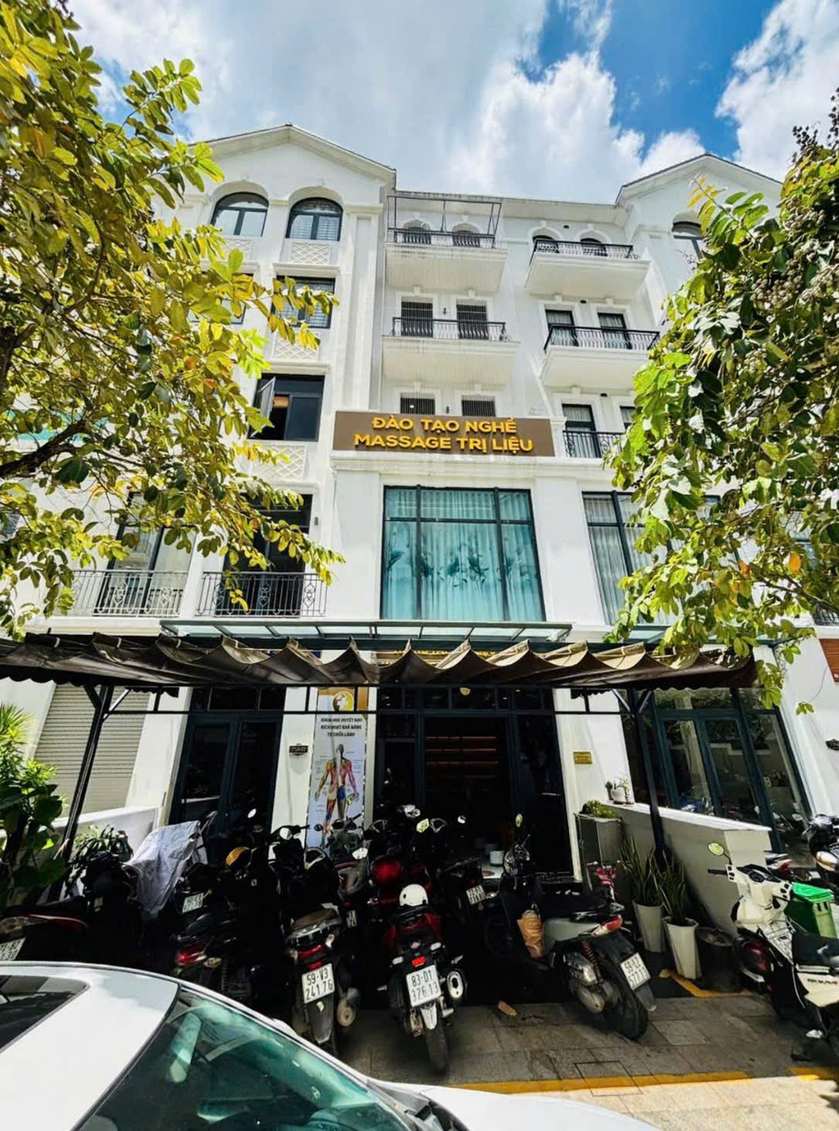
Tong Gia teaches the Liver section in the Specialist Course (L3), led by Lương Y Tống Văn Huynh at căn T16-21 khu Manhattan, Vinhomes Grand Park, TP. Thủ Đức (unit T16-21, Manhattan block, Thu Duc City). The District 12 branch serves clients only and runs no classes. Trial class on Sunday morning, Zalo 0917 945 259.
A client in Thu Duc is always tired, with dry eyes and night cramps. What should I do, and when do I refer them?
Ask about sleep and alcohol first, then read the D9–D11 back area by hand and work gently on the excited areas. In Eastern medicine, dry eyes and cramps hint at Liver blood deficiency, not an illness. Yellow skin, dark urine or weight loss mean advise a medical check. Tong Gia teaches this process, Zalo 0917 945 259.
The Liver class: look first, touch later
In class at Vinhomes Grand Park, the Liver section opens with an exercise where no one may place their hands yet: pairs sit face to face, look at each other's eyes, cheekbones and fingernails and write notes on paper, and only then does one lie face down so the other can read the back by hand. One learner once wrote "red eyes, must be liver heat" and pressed hard on a partner's back straight away. Lương Y Tống Văn Huynh held that learner's hands back and asked: "Have you asked what time your partner goes to sleep?" The lesson: signs of a tired Liver in Eastern medicine are not a single point to conclude from, but many pieces that must be put together.
The Liver in Eastern medicine and the liver in Western medicine
In Western medicine, the liver sits under the diaphragm on the right side. It processes sugar, protein and fat; stores glycogen, vitamins and iron; makes albumin and clotting factors; produces bile; and breaks down alcohol and many other substances.
The Liver in Eastern medicine is broader than the organ: it is a functional system that governs smooth flow, stores blood, governs the tendons, opens into the eyes, shows in the nails and is linked to the emotion of anger. The Tong Gia curriculum puts the two side by side: the liver stores energy and vitamins, which Eastern medicine calls the Liver storing blood. The liver makes clotting factors; Eastern medicine says that when blood is sufficient, bleeding does not come easily. The liver secretes bile to help digest fat; Eastern medicine says the Liver and Gallbladder are paired inside and outside. They meet in places but do not match exactly, as the article on liver heat in Eastern medicine explains clearly.
Signs of a tired Liver learners can spot by eye
Y Tướng Học says "the signs show outside, the organs lie inside". For the Liver, learners look at four places:
- Eyes and eyebrows: the Liver opens into the eyes. Dry eyes and blurred vision hint at Liver blood deficiency; eyes that stay red hint at Liver fire; twitching eyelids hint at Liver wind. Eyebrows that meet in the middle, with the muscles at Ấn Đường (EX-HN3, 印堂) always tense, are classed in the curriculum as Liver qi stagnation.
- Complexion: a dull, dark face, dark patches on the cheekbones and darkish lips are called Liver blood stasis in the curriculum. Sudden gloom or localised cystic spots at the two corners of the forehead hint at Liver–Gallbladder stagnant heat.
- Nails: the Liver shows in the nails. Thin, brittle, ridged, pale nails hint that the Liver's blood is not yet nourishing enough. See also the article on fingernails and the Liver.
- Tendons: the Liver governs the tendons. Frequent cramps, stiff tendons and muscles, joints that move less freely. People with high, bony cheekbones often have tight trapezius and back muscles.
Each sign can have other causes: red eyes from lack of sleep or allergies; darker skin from the sun. A single sign is not enough for a conclusion.
Which habits tire the Liver
Learners ask questions to link the signs with the way a person lives, not to judge. The curriculum lists: staying up late; alcohol; eating a lot of fat for a long time, which makes the liver work harder on fat, while cutting out fat completely for a long time makes the gallbladder contract less; taking "liver tonics" or herbs of unknown origin on one's own; and holding in anger for a long time. Useful questions: "What time do you usually go to sleep these days?", "Does your work often make you push yourself hard?".
Checking by hand on the back
Every reading from the face must be checked again by hand on the spine. For the Liver, the survey area is the mid-back, where the Back Shu points sit on the Bladder meridian: Can Du (BL18, 肝俞) level with D9, Đởm Du (BL19, 胆俞) level with D10, Tỳ Du (BL20, 脾俞) level with D11, each about 1.5 cun from the midline. For people with a 申-shaped (Thân) face and wide cheekbones, survey D7–D9 first.
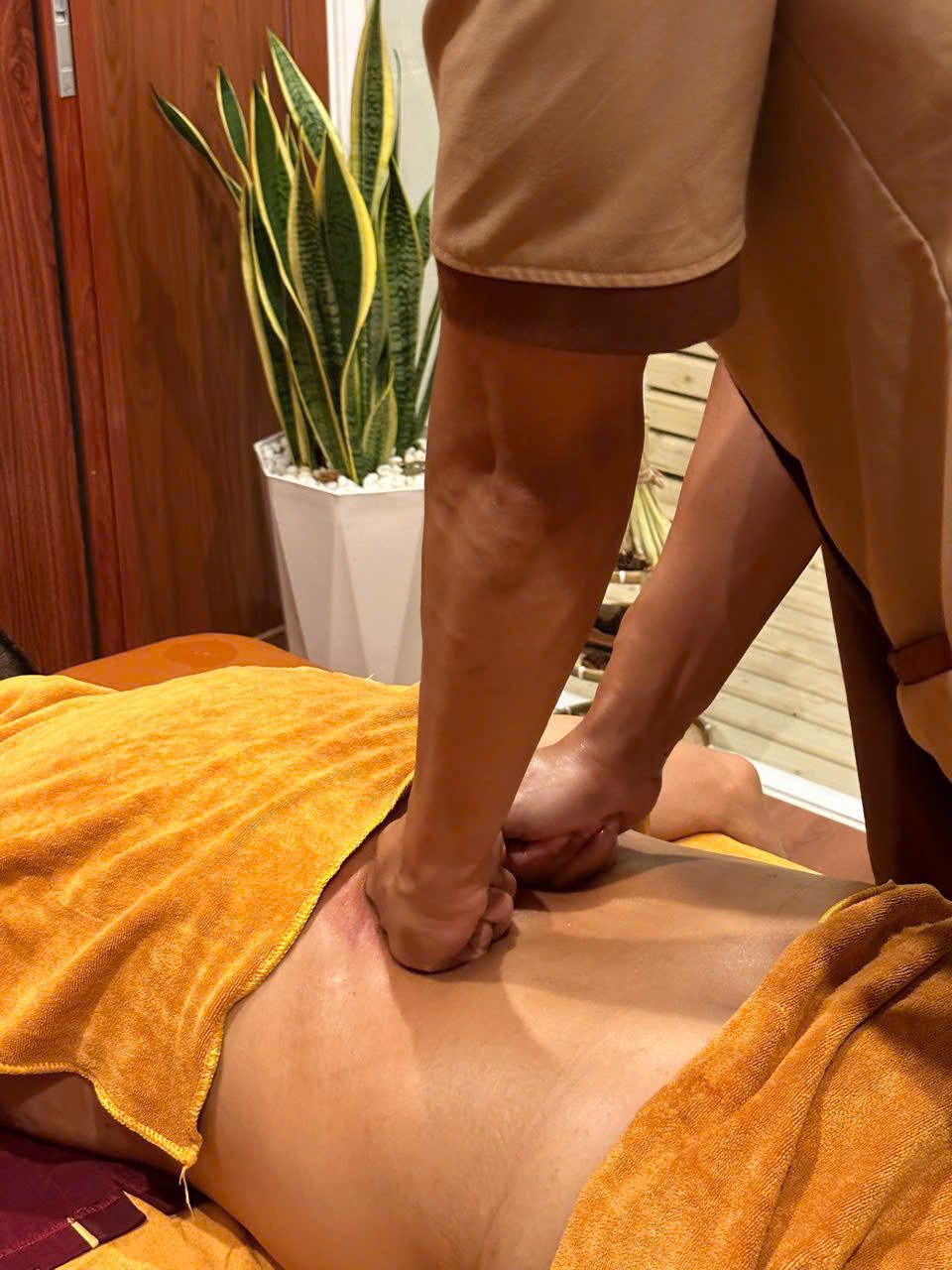
The hands rest flat to compare warmth on both sides, glide along the spinal grooves to find bunched muscle and roll lightly to find tender points. A warm area with stiff muscle and more tenderness when pressed is excited: focus there, following the 8 principles. A cool, slack area is inhibited: do not work on it directly. Only when the eyes, nails, tendons and back area all tell the same story does the learner add Liver care to the session: knead and press Can Du, Đởm Du and Tỳ Du, then remind the client to sleep earlier and drink less alcohol.
What to say to the client follows the standard communication sheet: never say "this pressing will detox your liver"; say the massage helps relax the muscles and ease tension in the back and, in Eastern medicine terms, supports Liver function.
How Lương Y Tống Văn Huynh teaches learners to put the Liver signs together
Lương Y Tống Văn Huynh, founder of Tong Gia, teaches this part with one sentence: "One sign on its own says nothing; when the eyes, nails, tendons and back all tell the same story, then we care for the Liver, and drawing conclusions about the liver itself is a doctor's job." Learners fill in the record sheet in the order look – ask – touch, and never write "weak liver" on it.
When to advise a client to get a medical check
Do not work, and advise the client to see a specialist at a medical facility, when you notice: yellow skin or yellow eyes; dark urine that lasts; pale stools; lasting pain under the right ribs; unexplained weight loss; swollen legs; a belly that grows quickly; easy bruising or bleeding gums; lasting fatigue. Clients already under follow-up for a liver condition should keep following their doctor. Tong Gia offers wellness care, not a medical service.
Which level teaches this part
Reading complexion and the Five Elements body types starts in L1 Foundation (1.500.000đ). Liver function, the Liver care routine, reading the eyes, eyebrows and cheekbones, and checking on the back are taught in the Specialist Course (L3); staff confirm the fee when you register. Read more about the teacher: Lương Y Tống Văn Huynh.
How to sign up
The trial class on Sunday morning, 9:00–12:00, with no fee, and the Sunday Y Tướng Học class are open to beginners, at căn T16-21 khu Manhattan, Vinhomes Grand Park, TP. Thủ Đức (unit T16-21, Manhattan block, Thu Duc City). Tong Gia does not promise jobs or income after the course. Book a trial class or call the training hotline 0917 945 259.
Frequently asked questions
What are the signs of a tired Liver in Eastern medicine? They often appear in the eyes (dry, blurry, red for a long time), the nails (thin, brittle, ridged), the tendons (cramps, stiffness), a dull, dark complexion and quick irritability. These are observation hints, not a conclusion about illness.
Is the Liver in Eastern medicine the same as the liver organ? Not entirely. The Liver is a functional system covering smooth flow, storing blood and governing the tendons, linked to the eyes and nails; it overlaps with liver function in Western medicine but does not match it exactly.
Which points on the back relate to the Liver? Can Du (BL18) level with D9, Đởm Du (BL19) level with D10 and Tỳ Du (BL20) level with D11, on both sides of the spine along the Bladder meridian.
When should someone get their liver checked? With yellow skin or eyes, dark urine, pale stools, lasting pain under the right ribs, weight loss, swollen legs or lasting fatigue with no clear reason.
Related articles
- The 12 main meridians: names, pathway rules and peak hours, an easy table for vocational learners
- Face reading for health: the 3 facial zones in Y Tướng Học, how to divide them and how to read them to care for the body properly
- What are the 8 extraordinary vessels: roles, main pathways and how wellness learners use them
- Yin-Yang and the Five Elements for wellness learners: enough to make the hands work right
- All articles about learning the trade
Reserve a free Sunday-morning trial class or ask about the learning path: message Zalo 0917 945 259.

Founder of Tong Gia Acupoint Wellness (Huyệt Đạo Tống Gia), with more than 13 years in Eastern wellness practice, Y Tướng Học (face reading for wellness) and spinal nerve-reflex balancing. Lương Y's story
417 customers have reviewed Tong Gia on Google Maps
Reviews are written by customers themselves on Google; tap to read them before you visit.
Huyệt Đạo Tống Gia Quận 12
225 Dương Thị Mười, Phường Tân Chánh Hiệp (District 12, Ho Chi Minh City). 8:00 – 19:00 daily.
See reviews on Google MapsHuyệt Đạo Tống Gia Quận 9
Căn T16-21 khu Manhattan, Vinhomes Grand Park, Phường Long Bình (Thủ Đức City, Ho Chi Minh City). 9:00 – 20:00 daily.
See reviews on Google MapsWant to be observed in person?
A 90-minute session starts with observation, and only then moves on to muscle release and acupressure on the right areas. Two branches: District 12 and Vinhomes Grand Park.