What “change the heart, change the face” means: how daily habits mark facial colour and posture, seen through Y Tuong Hoc
Lương Y (traditional healer) Tống Văn Huynh · Tong Gia Acupoint Wellness (Huyệt Đạo Tống Gia) · 29/11/2026
What “change the heart, change the face” means (chuyển tâm chuyển tướng): when a way of thinking and living changes, facial colour, expression and posture slowly change with it, as in the old saying “appearance arises from the heart and fades with the heart”. Appearance is not fixed like a verdict; it is the trace of sleep, meals and emotions repeated every day. At Tong Gia Acupoint Wellness (Huyệt Đạo Tống Gia), learners of Y Tuong Hoc use this idea to suggest wellness habits, not to judge.
Questions learners often ask about “change the heart, change the face”
Can reading a face really show which organ is weak, on what Eastern medicine basis, and how is it different from fortune-telling?
Reading a face gives hints, not conclusions. The basis is observation in Eastern medicine: spirit, colour, shape and bearing reflect the organs inside, “the organs are the cause, the appearance is the result”. Y Tuong Hoc looks in order to understand body condition and habits, then checks by hand; it does not predict wealth or fate. Lasting tiredness or pain needs a check at a medical facility.
I am 45, short-tempered, and my face always looks tense. If I change my habits, will my face change, and how long does it take?
It can change, but slowly. Facial colour and the tension of the face, neck and shoulder muscles usually soften first, after some weeks to some months of enough sleep, slow breathing and regular movement; deep lines and posture take longer and nobody can promise them in advance. The useful step is to keep one small habit long enough.
I live in Thu Duc and want to learn Y Tuong Hoc to advise my family on wellness. Where do I start?
Start with L1 Introduction to Y Tuong Hoc, 1,500,000 VND, at Tong Gia Acupoint Wellness, guided by Lương Y Tống Văn Huynh: reading facial colour, body shape, the 3 zones of the face and daily wellness habits. There is a Sunday Y Tuong Hoc session with no fee at unit T16-21, Manhattan block, Vinhomes Grand Park; training hotline 0917 945 259.
What “change the heart, change the face” means
To understand what “change the heart, change the face” means, take the two words apart. “Heart” (tâm) here is not only the organ; it is the way of thinking, the emotions that stay with a person, and the daily choices of living. “Face” or appearance (tướng) is what others can see: complexion, the look in the eyes, lines, the way of standing and walking. The old saying goes “appearance arises from the heart and fades with the heart”.
In everyday terms: a person who has frowned for years has a crease between the eyebrows; a person who sleeps enough and carries a light heart has a bright face. This is not magic, and it is not about altering a face to change a life. The change is slow, counted in months and years.
Why daily habits mark the face and posture
Anyone can check this part in front of a mirror:
- When the facial muscles repeat one expression, the skin creases along that expression.
- Long lack of sleep makes the skin dull, the eye area dark and the eyes less lively.
- Long tension lifts the shoulders, clenches the jaw and makes breathing shallow.
- Irregular eating changes the colour of the skin, lips and tongue.
Eastern medicine adds its teaching on emotions and the five organs: too much anger harms the Liver, too much worry harms the Spleen, long sadness harms the Lung, fear harms the Kidney, too much excitement harms the Heart. When an organ inside changes, it slowly shows outside, as in the saying the organs are the cause, the appearance is the result. You can read more in how emotions affect the five organs in Eastern medicine.
Table: habits, signs often seen, and wellness suggestions
| Habit | Signs often seen in appearance | Wellness suggestion |
|---|---|---|
| Late nights, little sleep | Dark circles, dull skin, tired eyes | Go to bed 30 minutes earlier each week, screens off before bedtime |
| Short temper, held-in anger | Vertical crease between the eyebrows, clenched jaw, tight neck and shoulders | Slow breathing, walking, saying what bothers you early instead of holding it in |
| Much worry, rushed or skipped meals | Pale yellowish complexion, pale lips, heaviness after eating | Regular meals, chew well, no eating while working |
| Much sitting, little movement | Rounded shoulders, neck pushed forward, hunched back, heavy face | Stand up once an hour, stretch the chest and shoulders |
| Long sadness, little contact with people | Drooping mouth corners, quiet voice, closed chest, shallow breathing | Deep breathing practice, early sunlight, meeting people close to you |
The middle column lists things that are often seen and related, not fixed laws. The same sign can come from many reasons: inborn features, age, outdoor work, or a health problem that needs a medical check.
Where Y Tuong Hoc comes from and what is good about the method
Since early times Eastern medicine has had four ways of getting to know a person: looking, listening, asking and touching. Y Tuong Hoc (Vietnamese medical face reading) is the appearance-reading view of Eastern medicine, grown from the “looking” part: observing spirit, colour, shape and bearing to understand body condition. It goes a different way from the old physiognomy books that discuss wealth and rank. A fuller account is in the history of Y Tuong Hoc.
What is good about the method comes down to three points:
- It needs no machines and can be done in the first few minutes of meeting.
- It reminds the practitioner to see the whole person before placing hands.
- It gives the person being cared for a mirror of their habits, with one piece of good news: appearance can change.
Looking to understand, not to judge or predict fate
- No reading of faces to predict fate, wealth or marriage.
- No conclusions about illness from a face.
- No criticism of anyone for how they look.
- Speak in caring questions, not in firm statements.
How to choose words in conversation is covered in reading appearance without judging. Anyone with lasting tiredness, weight loss, lasting pain, growing numbness or weakness, or an underlying condition needs a check at a medical facility. Tong Gia Acupoint Wellness is a wellness care service, not a medical service.
How learners use this understanding
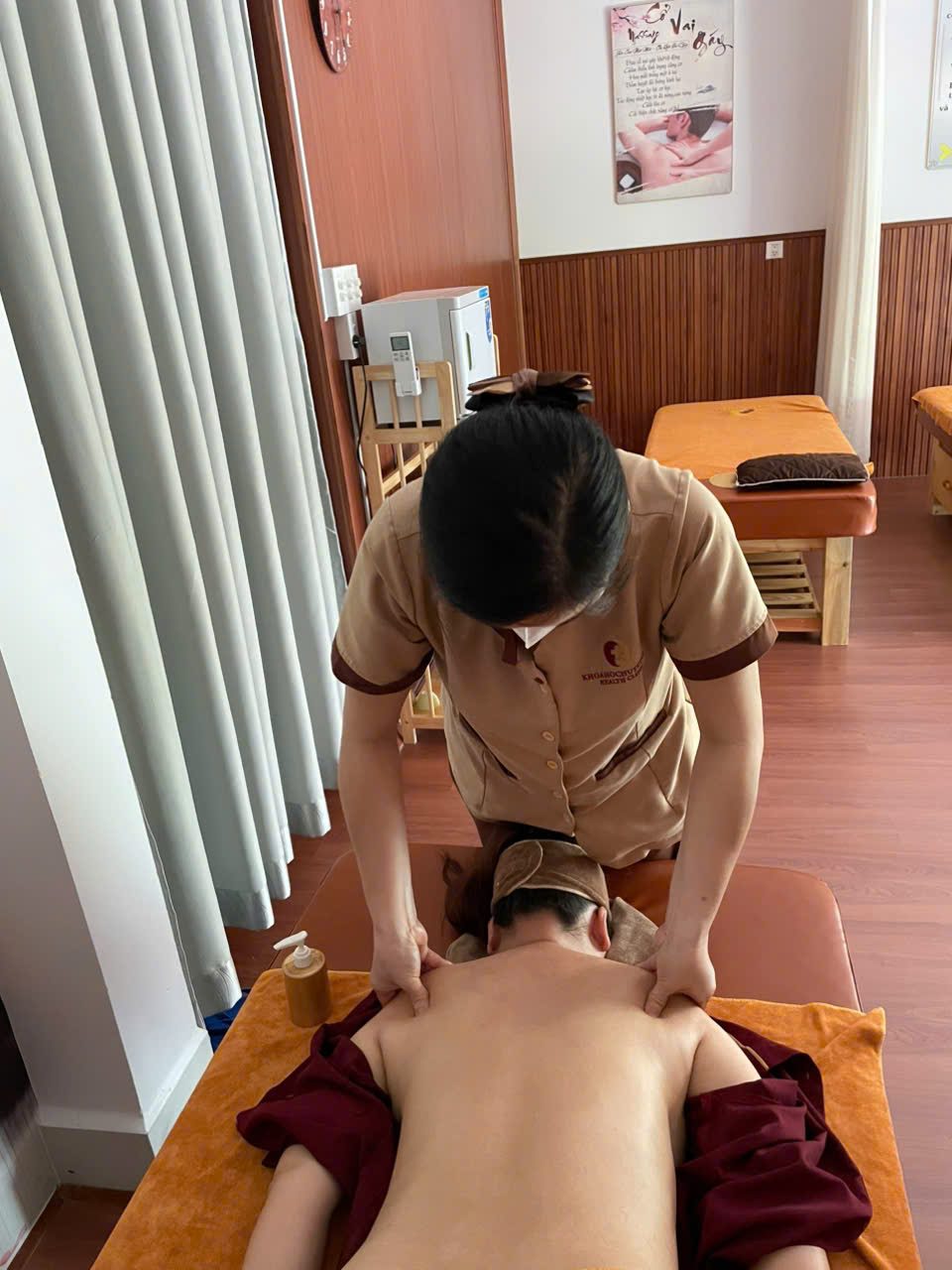
At Tong Gia Acupoint Wellness, Lương Y Tống Văn Huynh, with over 13 years in the trade, teaches two pillars together: Y Tuong Hoc to look first, and massage that balances the spinal nerve reflex system to check by hand. The rule is that every observation from the face has to be checked again by hand on the spine.
For example: seeing a crease between the eyebrows and lifted shoulders, the learner asks about sleep and work, places hands to check the neck and shoulder muscles and the upper back, then suggests one small habit. Changing the heart starts with small things like that: one habit, kept long enough.
This observation work is part of L1 Introduction to Y Tuong Hoc (1,500,000 VND). Fees and length of L2–L4 are given by the advisor at registration. Tong Gia does not promise jobs or income after the course.
How to register
The Sunday Y Tuong Hoc session with no fee and the Sunday morning trial class 9:00–12:00 (10 places) are the class schedule open to beginners, at unit T16-21, Manhattan block, Vinhomes Grand Park, Thu Duc City, Ho Chi Minh City. Book a trial class or call the training hotline 0917 945 259.
Frequently asked questions
What does “change the heart, change the face” mean? When a way of thinking and living changes, facial colour, expression and posture slowly change with it. Appearance is the trace of sleep, meals and emotions repeated every day.
How should “appearance arises from the heart and fades with the heart” be understood? Appearance comes into being with the heart and also fades with it. Heart here means the way of thinking, lasting emotions and life choices, not only the organ.
Can Y Tuong Hoc predict fate? No. Y Tuong Hoc is the appearance-reading view of Eastern medicine; it looks only to understand body condition and suggest wellness habits, and does not predict wealth, marriage or fate.
Does a crease between the eyebrows surely come from anger? Not surely. It is often seen in people who frown a lot, but it can also come from squinting in the sun, weak eyesight or age. Learners have to ask, not assert.
Is there a fee for the Sunday Y Tuong Hoc session at Tong Gia? The Sunday Y Tuong Hoc session has no fee, at unit T16-21, Manhattan block, Vinhomes Grand Park. The L1 Introduction to Y Tuong Hoc course is 1,500,000 VND; training hotline 0917 945 259.
Related articles
- The 12 main meridians: names, pathway rules and peak hours, an easy table for vocational learners
- Face reading for health: the 3 facial zones in Y Tướng Học, how to divide them and how to read them to care for the body properly
- What are the 8 extraordinary vessels: roles, main pathways and how wellness learners use them
- Yin-Yang and the Five Elements for wellness learners: enough to make the hands work right
- All articles about learning the trade
Reserve a free Sunday-morning trial class or ask about the learning path: message Zalo 0917 945 259.

Founder of Tong Gia Acupoint Wellness (Huyệt Đạo Tống Gia), with more than 13 years in Eastern wellness practice, Y Tướng Học (face reading for wellness) and spinal nerve-reflex balancing. Lương Y's story
417 customers have reviewed Tong Gia on Google Maps
Reviews are written by customers themselves on Google; tap to read them before you visit.
Huyệt Đạo Tống Gia Quận 12
225 Dương Thị Mười, Phường Tân Chánh Hiệp (District 12, Ho Chi Minh City). 8:00 – 19:00 daily.
See reviews on Google MapsHuyệt Đạo Tống Gia Quận 9
Căn T16-21 khu Manhattan, Vinhomes Grand Park, Phường Long Bình (Thủ Đức City, Ho Chi Minh City). 9:00 – 20:00 daily.
See reviews on Google MapsWant to be observed in person?
A 90-minute session starts with observation, and only then moves on to muscle release and acupressure on the right areas. Two branches: District 12 and Vinhomes Grand Park.